Showing posts with label Les Expos. Show all posts

Wednesday, March 16, 2011

Ultimate baseball league: Montréal Expos

The Expos could be the favourite in the NL Newbie division, which consists of expansion cousin San Diego, the Milwaukee Braves-Brewers and the trio that began play in the 1990s, the Arizona Diamondbacks, Colorado Rockies and Florida Marlins.

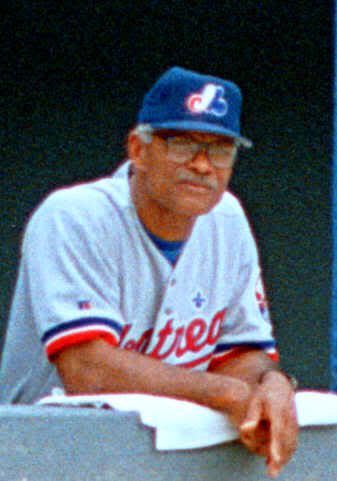
For starters, since a guideline was, when in doubt, put a player with the team which needs him more, Pedro Martínez (pictured), is on the Expos instead of the Boston Red Sox. The starting staff should be strong, although it leans right more than Steven Harper.

Offensively, how does Tim Raines-Andre Dawson-Vladimir Guerrero outfield (with Rusty Staub at DH and Gary Carter batting cleanup) grab you? Granted, manager Jonah Keri might have to get creative to optimize this lineup.

The infield is a weak spot. It still sucks that Hubie Brooks went down with a season-ending knee injury in 1986 when he was batting .340 and OPS-ing .956; otherwise he would have had the best season by a Montreal infielder. (The arbitary cutoff being observed here is 500 plate appearances for an everyday player, 400 for a utiltyman, 350 for a catcher. Brooks batted 338 times that season.)

STARTING LINEUP
  1. LF Tim Raines,# 1985 (7.5). For the Rock, we'll pick a quintenessential Rainesian season where he on-based .405 with some power, had 52 net stolen bases (70-for-79), scored 115 runs and played a lights-out left field. All that and he didn't crack the top 10 in MVP balloting. C'est la vie.

    In the present, of course, as a Raines supporter, it was gratifying that he is halfway to the Hall of Fame after garnering 37.5 per cent support in the 2011 Cooperstown voting. We all knew it would be a long process.

  2. RF Vladimir Guerrero, 1998 (7.1). The age-23 version of Vlady would provide plate coverage nonpareil out of the 2-hole, along with power and speed. He might have to come out for late-inning defence.

  3. DH Rusty Staub,* 1969 (5.9, 6.7 oWAR). Le Grand Orange was traded a lot during his career, but had his best three seasons with the early Expos.

  4. C Gary Carter, 1982 (7.8). Remember when he trying to get a a major league managing job? This space did have some fun with that. Here is hoping it will not have to be reenacted during the 2012 U.S. election.

  5. CF Andre Dawson, 1983 (6.6). One of his two seasons as runner-up for MVP; he was better in both than he was when he actually won with the last-place Cubbies in '87.

  6. 1B Andrés Galarraga, 1988 (5.1). It was a tough call to go with The Big Cat over Scoop, Al Oliver, but the .302/.340/.502 line Galarraga put up in '88 tops Oliver, who couldn't take a base on balls or field by the time he came to Canada.

  7. 2B Jose Vidro,# 2002 (4.6) / 2B Ron Hunt 1971 (4.9). Contrary to how some older writers remember it, the Expos did employ some decent second basemen after Rodney Scott was released in 1982. Vidro , who hit almost the same for his career from each side of the plate, was the best of the lot.

    Hunt was once described by Bill James as "being as bad a player as you can be with a .400 on-base percentage." He holds still holds the record with 50 hit-by-pitches in a single season.

  8. 3B Tim Wallach, 1985 (5.5). Was the National League's Gold Glove and Silver Slugger third baseman in 1985. Now you know when Michael Jack Schmidt moved across the diamond.

  9. SS Orlando Cabrera, 2001 (3.3). Every organization has that one black hole; the pool at shortstop was a little thin. Cabrera was good, as evidenced by the fact he's always with a team that makes the playoffs.
STARTING PITCHERS
  • RHS Pedro Martínez, 1997 (8.2). One would imagine it was a tough call whether to place Pedro with the Expos or with the Boston Red Sox, where he had his two best seasons according to WAR (10.1 in 2000, 8.4 in 1999). Then again, if you've ever met a Red Sox fan, you would know it was not a hard decision at all.


  • RHS Steve Rogers, 1982 (8.4). One of the better pitchers to never receive a single Hall of Fame vote. This is also a good time to remind people of Blue Monday. Yours truly once had the misfortune to work with an ex-Montrealer (know how you know someone is from Monreal? They tell you) who whenever the Expos came up in conversation, would say they had the tying run on third base with one out in the bottom of the ninth inning in that game. Nope; not true. The Expos never even got a runner past second base after the first inning that day.

  • RHS Dennis Martínez, 1991 (5.5). El Presidente, El Perfecto. That is all.

  • RHS Bill Stoneman, 1971 (5.4). No need to remind people Stoneman pitched the Expos first two no-hitters or that he was general manager of the Angels when they won the World Series in 2002. He almost he three no-nos; in his career-best season, 1971, he had a one-hit, one-walk, 14-strikeout game. Considering he led the NL with 146 bases on balls that season, a one-walk game was pretty extraordinary.

  • RHS Javier Vazquez, 2003 (5.4). How often does a NL pitcher throw a nine-inning complete game and lose? Vazquez did so in yours truly's last visit to the Big Owe. Mark McGwire couldn't even get a ball in play (three strikeouts and a pop foul) against him that night. And the Expos still lost.

  • RHS Liván Hernández, 2003 (5.3). Of indeterminate age and weight, but keeps on keeping on. Gave the Expos their last hurrah with a push for the wild card in '03.

BENCH
  • CF Marquis Grissom, 1992 (5.6). Former stolen base champ is the answer to a great trivia question: who was in centrefield when the 1995 and 1997 World Series ended? Grissom was on the winning Atlanta Braves in '95 and on the losing Clevelanders in '97, who lost on Edgar Renteria's 11th-inning walk-off single in Game 7.

    Grissom would provide some late-inning fielding insurance in place of Guerrero.

  • 4C Larry Parrish, 1979 (4.7). There will be some PAs at either infield corner or as the designated lefty-masher.

  • 2B Delino DeShields, 1992 (4.0). Apparently Delino was a demigod to first-gen gamers. He had an awesome name, so of course he passed it to his son, now a Houston Astros outfield prospect.

  • C Barry Foote, 1974 (2.2). Gary Carter would catch 95 per cent of the games, so it's not a worry there's no good alternative.
BULLPEN
  • CL John Wetteland, 1993 (4.6). He was out there. He is still out-out there.

  • RHR Tim Burke, 1987 (4.2). Made the Expos in '85 as a non-rostered player and wound up becoming their relief ace within two years; during that Year of the Homer in 1987, he gave up only three in 91 innings. Actual quote: "If Jesus were on the field, He'd be pitching inside and breaking up double plays."

  • RHR Jeff Reardon, 1982 (3.5). Gary Carter beat him to the trend of former Expos earning World Series rings by a season; Reardon got his with the 1987 Twins. Having him here is just an excuse to bask in some Steve Rushin brilliance the SI Vault, writing on the development of the closer:
    Baseball's closers have, historically, come from a can of mixed mustachioed nuts. And Reardon has closed more often than the most prolific of Century 21 agents: Through Sunday, Reardon's 339 career saves left him three short of breaking the alltime mark held by Hall of Famer-elect Rollie Fingers. Fingers, you'll recall, carried his teammates on the waxed handlebars of his curlicue mustache. Remember, too, the road-kill beards of Bruce Sutter (300 saves) and Gene Garber (218), the hood-ornament-steer-horns 'stache of Sparky Lyle (222) and the fearsome Fus of Goose Gossage (308) and Mike Marshall (178).

    Long before the invention of the Gillette Atra twin-blade razor, these flamboyant relievers were causing heads to pivot. But few got the attention, adulation or remuneration afforded today's premier closers. In fact, the term closer doesn't do justice to the glamorous head-liners of the 1990s. Does Sinatra close for Steve and Eydie? No. They open for him, much as starter Tom Browning opens for stopper Rob Dibble in Cincinnati. (Sports Illustrated, June 8, 1992)

  • RHR Mel Rojas, 1992 (3.5). Felipe Alou's nephew, Moises Alou's first cousin. You know that. Did you know the family business has reached a third generation? Mel Rojas Jr. is an outfielder in the Pittsburgh Pirates system. Mel Sr. was an efficient right-handed reliever on some contending Expos teams in the first half of the 1990s.

  • LHR Woodie Fryman, 1980 (2.5). The well-remembered 'Spos southpaw left this mortal coil recently; he was good for them in iterations as a starter on some bad teams and as a reliever on some good ones.
(* left-handed hitter; # switch-hitter)

Wednesday, January 27, 2010

Andre Dawson and availability bias

Please skip the cross-border shin-kicking and go straight to what was left out of the contrived debate about Andre Dawson's Hall of Fame plaque.

Dawson went there when, in conversation with a couple Chicago sports talk radio chuckleheads, he said he told the powers-that-be in Cooperstown: "I tried to explain, perhaps, the impact of what really catapulted me to Hall of Fame status, and pretty much what my preference was."

Typically, the articles have stated Dawson played longer with the Montreal Expos (1976-86), but won a National League MVP award with the Cubs. Being a former MVP probably did factor into the BBWAA's Chicago outfit, so-called, keeping his name in the discussion.

However -- and no one seems to talk about this -- Dawson or any Cubs player of that era had one huge advantage in MVP voting. In that era, from the late 1970s through the early '90s, the Chicago Cubs and Atlanta Braves each had almost all of their games broadcast on superstations (WGN and TBS) which were available to most U.S. cable subscribers and parts of Canada. Hear this out.

That wrinkle of the pre-digital era has probably been forgotten. It's been on my mind for a few weeks, but what hat a player has on his plaque is a trifle. I know that, because even as a serious baseball nut, I had to check whether Nolan Ryan represents the Texas Rangers, California Angels or Houston Astros on his plaque.

Everyone has the Internet and can compare traditional and advanced statistics. Serious Seamheads shell out for the MLB Extra Innings package. In Dawson's day, most teams only got North America-wide exposure if they were featured on the NBC Game of the Week, or ABC's equivalent, Monday Night Baseball.

The two franchises' ubiquity on cable TV even seeped into popular culture. There's a circa 1990 Simpsons episode where Homer, moved by Lisa's infectious moralizing, decides to cut the family's illegal cable hookup. Bart rhymes off all the reasons not to, "Monster trucks! Tractor pulls! Atlanta Braves baseball! Joe Franklin!"

Will Ferrell once said he got the idea for a Harry Caray impersonation, because when he came home for lunch around noon California time, he would flip on the Cubs telecasts on WGN.

Before MLB went to three divisions in 1994, it briefly discussed keeping two divisions and having the Cubs and St. Louis Cardinals play in the National League West with Atlanta and Cincinnati moving to the NL East. The Cubs' ownership refused because it would hurt their local TV revenues.

Coincidentally or perhaps not, the Braves and Cubs were overrepresented in the post-season awards in those days. In a 10-year span, 1982-91, those two franchises accounted for five MVP awards, even though only the '91 Braves reached the World Series. Dawson, as you need no reminder, won his award while playing on a last-place Cubs team. The BBWAA also votes for the Cy Young Award. The Cubs had three during that rough timespan (Bruce Sutter in 1979, Rick Sutcliffe in '84 and Greg Maddux in '92 before he won three more with guess who, the Braves).

Picture a hard-working beat grunt from an eastern city in 1987 on a West Coast road swing. He wakes up around 11 a.m. Pacific, understandable after covering a night game. The Cubs, who still played all day games at home, would be on TV. He would see Andre Dawson hitting all those home runs (49 that season, the most any player had hit since George Foster slammed 52 in 1977) and driving in all those runs, and it's not hard to go from there to casting a MVP vote for him, even though the Cubs could have finished last without him.

That is not meant to call out anyone well after the fact. The very definition of availability bias is people tend to go with the first information they receive. It's good to dig or try to build a more layered argument, but who has the time? They went with what they got first and it has carried down the line.

You can even see it in the coverage now, which typically has omitted that Dawson was second in MVP voting twice while with the Expos (1981 and '83 behind Dale Murphy of, wait for it, the Atlanta Braves). His only other top-10 finish also came in Montreal. That has been left out, even in Canada, since many media outlets just run the same wire service articles as every other website as part of their strategy for giving users something unique.

Dawson being MVP runner-up in Montreal twice, in a sense, is more impressive than winning it once in Chicago. The Expos were an afterthought to U.S. media and fans. Allen Barra once wrote that Tim Raines being selected to seven all-star teams while playing for Montreal was like winning the Pulitzer Prize while writing for a newspaper in North Dakota. It is somewhat Sisyphean to explain this to most Americans, who tend not to realize the one-sided natures of their conversations of the rest of the world (Eddie Izzard: "... in other countries; you do know there are other countries?).

The short answer is Cooperstown got this right and if you want to go there, it is a little pathetic for Chicago media to put a waiver claim in on Dawson's legacy. Far be it to say that's their egotism talking. Just now, Chicago media personality (and former Raptors TV voice) Chuck Swirsky was on the FAN 590 in Toronto, his former station, saying "the majority of baseball fans" remember Dawson as a Cub and that he performed "on the biggest stage in baseball, Wrigley Field," which hasn't hosted a World Series game since the year the Second World War ended. Please. That's just a reflection of selective memory.

Canadian sports likers get to see the Expos get a day in the sun. (Colby Cosh had the best line on Twitter: "The Andre Dawson news is great. Haven't been this happy since Ugueth Urbina announced he would enter prison as an Expo.")

The larger point is that in honouring past greats, baseball writers and fans tend to let themselves be controlled by factors they should be controlling for. They get caught up in whether someone lasted long enough to reach some arbitrary round number (300 wins, 500 home runs, 3,000 hits), or how he fared in MVP voting. We are well-aware how media members who votes for awards of this nature are fallible.

However, there probably hasn't been enough attention devoted to how playing for a team which had games aired coast-to-coast helped Dawson in 1987. He got a MVP award, and that helped keep his name out there until he was finally elected. Not that there's anything wrong with that, so long as it's properly acknowledged.

Related:
Dawson may wear Cubs hat for speech (ESPNChicago.com)

Sunday, December 20, 2009

Cooking the books: 'Evaluating Baseball's Managers'

Evaluating Baseball’s Managers: A History and Analysis of Performance in the Major Leagues, 1876–2008
Chris Jaffe
333 pg., McFarland Publishing, $39.95 (due out winter 2010)


Thanks to Chris Jaffe, you might never look at the men in the dugout the same way.
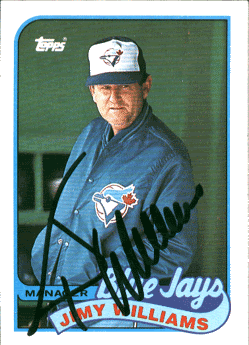
Most baseball fans today focus their venom on general manager and front office. The manager position is practically an anachronism, an ex-player who puts a uniform and tries not to get in the way of what's been put in place. How managers shape a ballclub sometimes gets downplayed.

That is why, based on two chapters he furnished, it seems like Jaffe's Evaluating Baseball's Managers is destined to become a big part of any baseball library. You might need a bit of the seamhead sickness to get into it, but Jaffe, who writes for The Hardball Times, has made some big strides.

Jaffe explains how changes in the sport have changed the job. It's much more professional now: Only two current MLB GMs actually played major-league ball and one of them is Billy Beane of Moneyball fame. His second big idea is rebutting the belief a skipper has the same impact in all areas of a ball club ("Place a man in a situation that fits his strengths, and he will look like a savant. Put that same individual on a team that highlights his weaknesses and people will call him a dullard.").

Jaffe's conclusions about the great Montreal Expos manager Felipe Alou and late-1980s Jays skipper Jimy Williams may be eye-opening for Canadian ball fans. There's some stuff about Cito Gaston, too. Since this is a Canadian sports blog, that is a good place to focus.

Jaffe sent me excerpts on the four Blue Jays managers who were active for at least a decade (Gaston, Williams, Bobby Cox and Jim Fregosi) and a section on managers from the 1998-to date era. The book, which is intended as a reference guide, has capsules on 89 managers who lasted at least 10 seasons.

The 1998-to date section was like an unexpected gift, just for the appreciation it provided of Alou. Not to give away too much, but Jaffe shows how MLB's racial issues kept Alou from having a longer managerial run. Major League Baseball is self-congratulatory about having more African-American and Latino managers than in the past, but qualified candidates often don't get a chance until well into middle age. I never thought about this, but when Alou took over the Expos, he was at an age (57) when some Hall of Fame managers were already out of the game.

Most people know about all the young players Alou had, such as Vladimir Guerrero and Pedro Martínez. Few probably know Alou's reliance on pitch counts kept Martínez happy and healthy and on the path toward the Baseball Hall of Fame. They might not also realize Alou set a great example for other managers. It is worth noting that in the much-praised article Seattle baseball writer Larry Stone wrote about new Mariners DH Milton Bradley, present-day manager Ken Macha, told Stone "he got advice on handling Bradley from a good friend, Felipe Alou." It is no surprise to hear that.

SBN's Houston Astros blog, The Crawfish Boxes notes, "What Jaffe does ... is highlight why (managers) were good or why they weren't successful. He does an excellent job of it, providing stats to back it up in each manager's capsule, but also backing it up with solid analysis. Bullpen usage, hitting for power, walks, and more are shown as trends for each manager as Jaffe does a good job of describing what kind of team each guy oversaw. It's exactly what history buffs would want and provides the kind of source material that analysts will be using for years."

The section on Cito Gaston was fairly familiar ground, so it had fewer surprises. It turns out Gaston's rep as the "ultimate minimalist," is spot-on. Jaffe uses stolen base success rates to show Gaston is not totally out of it during games.

As a 30-something Jays fan, Jaffe's method really hit home with the section on Jimy Williams, who managed Toronto from 1986-89. The next time you're talking to a serious baseball nut, ask her/him what manager in recent history got the most from the bullpen. One response might be, "Probably Tony La Russa" (perhaps sarcastically) or, "Well, I know it wouldn't be (insert someone who ran his favourite team)."

Jaffe finds that Williams put all of the so-called genius managers to shame when it came to using the bullpen. He never managed in a World Series, so this was largely lost on people. It also didn't help that the teams he ran each played in hitter-friendly ballparks that obscured the excellent work of their relievers. As Over The Monster noted in its review,, "Williams handled the pitching staff like no other manager has in big league history. Williams' tendencies to yank pitchers early kept his starters healthy, meaning down the line they were that much better. Williams didn't try to stretch his starters; he knew what they were capable of and didn't push them. As a result, his Red Sox teams in the second half always seemed to do better than in the first half."

It was a similar story with the Jays. According to baseball-reference.com, during Williams' three full seasons with the Jays, they were a .528 team before the all-star break and played .584 ball in the second half.

Williams, though, was fated to get fired before a team hit it big. The Blue Jays let him go in 1989 and won the World Series three seasons later. The Red Sox canned him in 2001 and, wait for it, won the World Series three seasons later. During that season, 2004, Williams was fired by the Astros, who made it to the Series the following season.

He certainly had a role in that, of course. Still, Jaffe findings are a bit of a requiem and, for readers, put their personal baseball history in a new light.

Jimy Williams had his brilliant points, who knew. It's a reminder of how people, not just the media, get an idea about someone and massage the facts selectively. Williams seemed like a crusty baseball lifer. (One of his habits in the dugout when he managed the Jays was putting his hand down the front of his pants, almost like Al Bundy.) Those guys tend to be viewed as replaceable.

Good sportswriting should increase understanding or stimulate thought. Evaluating Baseball's Managers hits it out of the park on each count.

(Over The Monster also noted Jaffe's writing didn't suffer even when he was discussing the game from decades ago:
"I didn't know actually how much information Chris would be able to get for most of the older managers. But to my surprise, every writeup was quite detailed. If the writeups were any indication of the rest of the book, it seems to be quite extensive."
Evaluating Baseball's Managers is available for pre-order; the Stone link is via Jonah Keri.)

Saturday, June 20, 2009

Zen Dayley: Cito and the DH thingy, Part 2

Sports And The City pointed out something that works as a follow-up to Friday's post about Cito Gaston getting away with botching a double switch. Jeff Blair noted in his column today
"Despite managing in the NL, Alou loved the designated hitter because it made managing the offensive side of the game more interesting.

" 'Strategy,' he told me one time with a frown. 'What's the strategy in having a guy with a bat in his hand not knowing how to use it? What play can I put on besides a bunt?' "
That cuts right to the heart of the matter. There is little strategy involved when the decision is dictated by the player's limited skills. Pitchers are OPSing a sub-sub-McGlovin .358 (ironically, their AL counterparts are doing slightly better, .369). This is better than having a NPH (nondescript professional hitter) in the lineup why?

As Bob Elliott noted, it was not the first time the Jays won a game in Philly despite Gaston not making a move out of Baseball 101, to use Mike Wilner's term.

A lot of the in-game decisions managers make comes out in wash, regardless of how much Seamheaded analyzing-to-death occurs after the fact. The Jays got out of it after going into the bottom of the ninth with only two pitchers left and a slim lead against a team which was very capable of forcing extra inings (the Phillies are far and away the NL's best-hitting team). The rub is you cannot logically credit Gaston just because it did not blow up in his face. It's like ascribing genius to someone who forgets to lock the front door of his apartment, goes out for a few hours and returns later to find out his place did not get burgled.

Gaston, via Blair, admitted as much:
" 'I thought about it, and then after I went to the mound, you couldn't do it,' Gaston said Friday night before the first game of a three-game series against the Nationals. 'You have to approach the umpire first and I went to the mound first. I had intentions of it (a double switch) but I screwed it up.

" 'The way it turned out was okay. But it's something you think about."
One can only imagine the fallout if Boston's Terry Francona or the Yankees' Joe Girardi goofed by not going to the umpire to make the substitution. Incidentally, both of those managers, as did Gaston, played in the National League, so they should be familiar with how it's done. Baseball is not as widely obsessed over in Toronto and we just figure, hey, Cito knows what he's doing, even when he admits he did not know what he was doing.

(The other time in Philadelphia, as you likely know, was that famous 15-14 slugfest in Game 4 of the 1993 World Series. The Blue Jays, aided and abetted by a near-historic meltdown by Mitch Williams, won a game where they were down by five runs with only five outs remaining.

Gaston just knew his guys would pull off greatest late-inning comeback in a World Series since 1929 in the eighth inning, so that is why he let reliever Tony Castillo bat for himself one inning earlier. Of course, if you were 16 years old, a Jays fan, and had been watching Mitch Williams self-destruct throughout the 1993 playoffs, you probably figured the good guys still had a chance.)

It's a couple days old, but FanGraphs' Dave Cameron has a look at the Jays' first-round draft choice, righty pitcher Chad Jenkins:
"The Blue Jays love groundball pitchers almost as much as I do, but the ones they've had success with have developed good secondary stuff. That's going to be the key for Jenkins as he gets into Toronto’s system. If he can refine his change-up and make it a real weapon against lefties, he has a chance to be one of my favorite pitchers in a few years. If he can’t, I hope he likes hanging out in the bullpen."
Related:
Second-guess Cito Gaston at your peril. Even when he appears to be wrong, things tend to work out for him (Bob Elliott, Sun Media)
Of double switches and Expos nostalgia; Cito Gaston's mistake on Thursday afternoon in Philadelphia ended up working out for the Blue Jays (Jeff Blair, globesports.com)
Felipe Alou is wise (Sports And The City)

Thursday, June 04, 2009

Mornings with Mr. Canoehead...

It's all raisins off an Oldsmobile, friends ... raisins off an Oldsmobile ... hey, The Tao of Stieb was interviewed by the Las Vegas Sun, awesome.

Former Senators goalie Ray Emery possibly signing with the Philadelphia Flyers and becoming their No. 1 goalie. Rush Limbaugh wants you to know, "What we have here is a little social concern in the NHL. The media has been very desirous that a black goaltender do well. There is a little hope invested in Emery, and he got a lot of credit for the performance of the 2007 Senators team that he didn't deserve. The defense carried that team."

Randy Johnson, who got his first major-league win as a Montreal Expo, going for his 300th against the Washington Nationals. There's a good case to hope that he doesn't get it today in front of a empty stadium in Washington, but gets it in his next start in Arizona, where he used to pitch.

TSN's Rod Black saying, "The Jays have arguably the best hitting in the major leagues" during last night's Angels-Blue Jays game when they are seventh in runs scored in a 14-team league, eighth in home runs and fifth in both on-base and slugging percentages (oh, but first in batting average, love). Granted, everything is an "arguably." Nevertheles, it was a cruel, cruel joke to hear that brilliant bit of misinformation on a night when there was a fellow Napaneean in the broadcast booth. (Avril Lavigne was there.)

The reaction earlier this week to a WNBA team, the Phoenix Mercury, selling sponsorship on their jerseys. Practically every square inch of every professional sports venue in North America is covered in advertising. The second a women's league sells advertising on the jersey, it's considered blasphemy. How dare a league for female athletes say, "Us, too," and try to make a buck. By the way, if you read any of the coverage of the Mercury, you are hereby obligated to watch the WNBA.

The 20th anniversary of opening Rogers Centre being a bigger news story in Toronto than the 10th anniversary of the last game at Maple Leaf Gardens. The latter passed with hardly a peep in February. Typical Toronto. They celebrate a monstrosity and ignore a place which had soul, since being reminded how the Gardens has been left to rot is just too embarrassing.

(Torontoist chronicled how all the tire-kicking in the 1960s and '70s over building a domed stadium that presaged two generations of sports fans being stuck with Rogers Centre. In other words, they could have built a dome in 1965, been hailed as visionaries, then it would have been obsolete by the 1990s, right in time for the retro ballpark craze. Instead, as Dan Shulman put it on Prime Time Sports last night, Southern Ontario sports fans have Rogers Centre for the next "30, 40, 50 years ... no one is building a 40,000-seat baseball stadium in Toronto any time soon.")

Seeing a headline in the Kingston Whig-Standard which has both "Frontenacs" and "major coup," only to find that owner Doug Springer and general mangler (not a typo) Larry Mavety are still running the show.

(The Frontenacs are hosting the OHL all-star game. That's nice.)

The ol' alma mater, Queen's University, killing its homecoming weekend and calling the spring reunion weekend which replaced the best Homecoming weekend in Canada a "success." It's not much of success when it passes without most alumni, including this one, didn't even know it was held.

Thursday, April 02, 2009

Batter up: Philadelphia Phillies

It's that mystical, wonderful time of year where you commit to a baseball team who you know fully well won't win. This season, in honour of an popular Internet meme, we'll present 25 things about each team. At bat: The Philadelphia Phillies.
  1. A gut feeling says they don't get back to the World Series due to the sheer randomness of post-season baseball. Besides, it's more fun, from afar, when Philadelphia teams are having a meltdown.

  2. The doomsday scenario involves a major injury to a regular, getting less from the four starting pitchers whose names don't rhyme with Whole Camels and having the fielding drop off badly, since Chase Utley and Jimmy Rollins (pictured) are bound to regress a bit after being so fabulous in 2008, while immobile Raúl Ibáñez evokes bad memories of Pete Incaviglia in left field. Brad Lidge also might actually blow a save one of these nights.

  3. First-year GM Ruben Amaro Jr. is walking into a buzzsaw, taking over a World Series champion team. At least he probably knows what happens in the NFL in no team scores after 15 minutes of overtime.

  4. There is little to no chance this is anything less than an 85-win team. They have so much offence, plus Cole Hamels is a Cy Young Award waiting to happen.

  5. The Phillies are moving into the post-Pat Gillick era. Ask a fan in Baltimore, Toronto or Seattle how that usually works out. The Phillies won't tail off for a while, but they were among the NL's older teams in 2008.

  6. It's a put up or shut up season for Ryan Howard, who's only averaged 51 homers and 144 RBI in the past three seasons but has been losing control of the strike zone, along with flailin' and failin' against left-handed pitching (.923 OPS in his 2006 MVP year, .826 in '07, .746 in '08).

  7. Their first five hitters, Rollins, centrefielder Shane Victorino, Utley, first baseman Ryan Howard and Ibáñez, each swing from the left side. That's not great for Howard unless he makes some drastic changes.

  8. The best way of expressing Jamie Moyer's age. Terry Mulholland played forever as a so-so starter, then as a pretty good middle reliever, then as a LOOGY (Lefty for Only One Guy) pitcher and finally retired in 2006. He's younger than Moyer by more than a year.

  9. Chan Ho Park won the No. 5 spot in the Phillies rotation, which promises to be interesting since Philly's ballpark is such a bandbox.

  10. J.A. Happ, one of the few 2007 Ottawa Lynx who's still in the Phillies organization, didn't win a spot in the rotation. He ain't happy, but he's starting the season in the majors, at least.

  11. What does it say that the Phillies' most major-league ready pitching prospect, Carlos Carrasco, couldn't beat out Chan Ho Park?

  12. By The Fielding Bible's reckoning, Jimmy Rollins was far and away the slickest-fielding shortstop in the biz in '08, yet he was on Team USA's bench when Derek Jeter made a crucial error during the semi-final of the World Baseball Classic. Pointing that out will never get tiresome.

    Rollins stole 47 bases last season with only three caught-stealings, not too shabby for a guy who was out a month after injuring an ankle.

  13. Nor will calling Shane Victorino the Flyin' Hawaiian.

  14. Lidge going 41-for-41 in save opportunities, plus another 7-for-7 in the playoffs and it probably wasn't even his best season. That probably came in with the Astros in 2004 (the year when he had 157 strikeouts and allowed just 57 hits).

  15. Seventh- and eighth-inning relief will be a question mark early on while lefty J.C. Romero sits out his 50-game suspension for a positive drug test.

  16. The Beep notes righty reliever Chad Durbin was third among NL relievers in double plays inducted in DP situations. Like Andy Van Slyke said during the last big recession in the early 1990s, who says there's an unemployment problem? Just give everyone a baseball stat to keep track of.

  17. The Phillies' three-game margin over the Mets last season came by virtue of their dominance of the Atlanta Braves. They were 14-4 vs. 'Lanta, while the Nye Mets were only 7-11. In 2007, both teams split their 18 games vs. Atlanta and Apu Naheesapeemapetilon's favourite squadron won the division by a game. There's the rub with the unbalanced schedule.

  18. Third baseman Pedro Feliz is coming off back surgery, and he's not that good when he's healthy. The Phillies have not been afraid to make moves, so third base could be a hole to fill, as long as they do it with a right-hander.
  19. Minor-league right-hander Kyle "Son of Doug" Drabek has a lot of promise. Of course, TNSTAAPP (There's No Such Thing As A Pitching Prospect).

  20. One similarity between the current Phillies and their successful early '80s teams (World Series in 1980, NL pennant in '83) is that it's a tough roster for a young player to crack. It is notable that prospects guru John Sickels did not give any of their top 20 prospects a grade higher than a B.

    In the '80s, the Phillies let Ryne Sandberg and George Bell get away from them. This time around, they don't have anyone who's quite that good. Does that mean the Blue Jays were smart not to trade A.J. Burnett to Philly last season and take the compensatory draft picks instead?

  21. It might bode poorly for recently released outfielder Geoff Jenkins that his old team "has long considered Jenkins and 41-year-old Matt Stairs to be too much alike." (Philadelphia Inquirer.) When your ballplaying analog is a short, stocky bald high school hockey coach who has half-a-dozen years on you, it doesn't bode well, although Jenkins will probably find work at the league minimum. If Kevin Mench could ....

  22. There is actually a Phillies fan upset with Jenkins (salary: $8 million) being cut instead of Stairs ($1 million). This confirms all of the Philly fan stereotypes.

  23. May 28 marks the 20th anniversary of Hall of Famer Mike Schmidt's final major-league game. Allen Barra's book Clearing The Bases is a few years old now, but he has a chapter arguing that Schmidt, not Willie Mays, should be considered baseball's greatest living player.

    Michael Jack Schmidt was a three-time MVP. He came third another time, but in retrospect it's really astounding that he could have a season like the one he had in 1977 and end up 10th in the voting. In '77, Schmidt OPS-plused 151 (fourth in the league), had 38 homers and 101 RBI while scoring more than 100 runs and drawing more than 100 walks, won the second of his 10 Gold Gloves at third base and just for good measure, was second in the league with 11 triples.

    Unfortunately for Schmidt, he hit third and Greg Luzinski, coming up behind him, hit 39 homers and 130 RBI. That was the last time a Phillies player was overlooked in MVP voting by a teammate with titillating counting stats, except for Chase Utley in 2006, 2007 and 2008.
  24. It is a wicked burn that the Phillies' Triple-A team got moved from the capital of a G8 country to a place that was the subject of a depressing song by Billy Joel.

  25. Matt Stairs, at age 40, finally got a World Series ring after playing for 23 teams in 20 seasons, in places such as Japan and Edmonton. Using Toronto media logic, you're supposed to feel bad for cheering for him.

Sunday, March 29, 2009

Batter up: San Francisco Giants

It's that mystical, wonderful time of year where you commit to a baseball team who you know fully well won't win. This season, in honour of an popular Internet meme, we'll present 25 things about each team. At bat: The San Francisco Giants.
  1. There's a rationale to borrowing a pic of third baseman Pablo Sandoval to polish the turd dress up this preview. Cy Young Award Tim Lincecum is everyone else's first point of reference with Los Gigantes, so it's only natural to go the other way.

    Sandoval, a 22-year-old hittin' machine, could be good for 40 doubles and 20 homers in his first full season. Expect some of the day-to-day focus to be on his fielding. He's basically a DH on a National League team.

  2. You owe it to yourself to read the Driveline Mechanics deconstruction of Lincecum and the Tom Verducci Sports Illustrated cover story. Both capture what LinCyYoung is all about; one just hopes that his unique pitching motion doesn't put too much torque on his right elbow.

  3. It is factual yet intellectually dishonest to refer to the Giants having three former Cy Young winners. Randy Johnson is 45 years old. Barry Zito posted a 5.15 ERA last season and handed out free passes like he was running the theme park in Adventureland.

  4. Something which can't be ignored before you try to look all smart by taking the Giants to win the NL West: Their 72-90 record was built on winning 13-of-18 games vs. San Diego, including a 7-0 mark in one-run games vs. the Padres. Some kind of evenout is probably coming.

  5. Manager Bruce Bochy is probably going to wear the sack after this season if the Giants don't play at least .500 ball. The Giants are a combined 143-181 the past two seasons. It's not Bochy's fault, but someone usually ends up having to pay.

  6. The Tao of Stieb has vowed to eat a pound of raw bacon if centrefielder Aaron Rowand ever has a 20-homer season during his San Fran tenure. He only hit 13 last year, so The Tao's arteries are safe.

  7. The future Giants starting rotation includes right-hander Matt Cain and 19-year-old lefty Madison Bumgarner as the Nos. 2 and 3 starters. Bumgarner impressed Keith Law when he watched him the other day, although some say his fastball is "so trackable." Another assessment is that Bumgarner, "basically got signed only one pitch." (Jonathan Mayo, MLB.com.)

  8. Left-hander Jonathan Sánchez, the No. 5 starter, averaged almost a strikeout per inning last season (157 in 158 frames) and almost no one noticed (guilty as charged).

  9. Another bright young hope is the 2008 first-rounder, catcher Buster Posey, who grades out well in Great Baseball Name quotient. The Giants have had only one catcher selected for the All-Star Game in the past 35 years, so you can imagine there's some breathless anticipation over Posey's ETA in the majors.

  10. The best guess at what happened to Zito is that word got around that he was toast if hitters could avoid laying off his famous curveball. His fastball topped out at 89 miles per hour last season, not enough to put fear into hitters. If the velocity comes back, the Giants might have something (or, not).

  11. Cain gets bonus points for telling reporters who were recently scrumming Lincecum, "Man, you guys are fishing. Those are the lamest questions I've ever heard." He was obviously just trying to save the newspaper industry.

  12. There is no truth that San Francisco bars are going to tie drink price to second baseman Emmanuel Burriss' slugging percentage (.329 last season).

  13. Is Bengie Molina that slow or were the hitters coming up behind him that bad? It's a little from column A, a little from column B. The catcher hit cleanup last season and scored only 46 runs all season. To his credit, he cut his passed balls from 16 in 2007 to just five, but he might have had a little to do with Lincecum's league-high 17 wild pitches.

  14. It's not every day you see a blog post listing a prospective Giants lineup which has Fred Lewis as the cleanup hitter and prediction that San Francisco will win the NL West, without even a hint of irony.

  15. Brian Wilson had 41 saves last season. It pays to be the closer for an anemic hitting team.

  16. Lefty Jeremy Affeldt should improve their middle-relief situation — or not.

  17. Is it mean to wonder if Rich Aurilia ever gets asked if he's the father or uncle of the Rich Aurilia who played shortstop for the Giants earlier this century?

  18. Flipping catcher Ronny Paulino to the Marlins for a low minor leaguer, pitcher Hector Correa, just seemed strange. Correa is a 21-year-old who hasn't got past Single-A, so he's not a big prize.

  19. Seventy-three per cent of respondents to a San Jose Mercury News poll, for what it is worth, believe the neighbouring Oakland Athletics should pursue a stadium deal in that city. The Giants, of course, can pull a MLSE to keep a team from invading their turf.

    It's not about the Giants, but reading Stephen Kaus' piece, Athletics Owner Wants Baseball in Oakland to Fail, sounds like the columns which should have been written in Montréal when Jeffrey Loria was killing off the Expos.
    "The TVs are few and far between and you cannot see the field while you wait. Combined with the indifferent "service" from the food servers, you can stand in line for two claustrophobic innings and not see a pitch or even hear a broadcast.

    "And the food is awful, particularly in comparison to the offerings at AT&T Park across the Bay. It is embarrassing to bring a Giants fan to a game. The staple is doughy hot dogs wrapped in tin foil. There are some specialty foods, but they taste like rubber. The only bright spot is some decent beer"

  20. Shortstop Edgar Renteria's numbers absolutely nosedived during his one season in Detroit and when that happens, it usually means a one-way ticket to San Francisco. The Giants put every team to shame with their sign-anyone-who-was-good-once policy.

  21. Renteria is still only 33 and has 2,070 career hits, but his dismal year in Detroit probably muted any talk of him getting to 3,000.

  22. Righty-hitting first baseman Angel Villalona bears watching; he's likely to start in high Single-A ball even though he won't be 19 years old until August.

  23. The Giants' Triple-A team, the Fresno Grizzlies, might have to re-jig their June 6 promotion, As Seen On TV night, in light of recent events:
    What do the Snuggie, the Clapper, the Chia Pet, and the ShamWow all have in common? They're all staples of the 'As Seen on TV' phenomenon known as the infomercial. "As Seen On TV" Night on Saturday, June 6th will honor all the products that seem appealing, at least when someone tries to sell them to you at 3 a.m. on a Saturday. The first 2,500 fans into the ballpark will receive their very own Grizzlies Shammy Cloth.
  24. It has next to nothing to do with the Giants, but you have to read this L.A. Times article about how a group of friends have rallied around a man named Pat Chawki, a high school teammate of the late Giants closer, Rod Beck. Chawki has "a rare disorder that renders him fully cognitive, but unable to move or speak."

    Chawki's old friends (including Beck's widow, Stacie), actually thought he had died — even announced it during their 20th high-school reunion.

  25. Barry Bonds will never spend day in jail.

Saturday, March 28, 2009

Batter up: Los Angeles Angels

It's that mystical, wonderful time of year where you commit to a team which you know fully well won't win. This season, in honour of an popular Internet meme, we'll present 25 things about each team. At bat: The Los Angeles Angels.
  1. They won the division by 21 games last season. That is way too big a gap for the rest of the AL West to make up in one year, right? Well ...
  2. Based on their run differential, L.A. should have won 88 games last season, not 100. Its starting rotation, according to those big Baseball Prospectus brains, was seventh-best of the eight playoff teams. Three starting pitchers are beginning the season on the disabled list and the front office lost the Mark Teixeira derby.

    What's the point? If they fall hard, everything will be blamed on the absence of someone who pitched less than 5% of their innings last season. They're probably still the favourite, for now.
  3. Halos Heaven has coined the phrase "Los Angeles Angels of Aspirinaheim" to describe a presumptive starting rotation of lefty Joe Saunders, Jered Weaver, Kelvim Escobar (who's coming back from arm troubles), Dustin Moseley and Nick Adenhart.
  4. No. 1 starter John Lackey is going to miss Opening Day again. It's becoming a tradition for him (yes, it's only his livelihood, make cheap jokes). Escobar and Ervin Santana are also starting the season on the DL. The Angelenos could begin the season with the AL's weakest rotation.
  5. Manny Ramirez would have looked good in Angels red and white, although ex-Yankee Bobby Abreu is an okay silver medal. L.A.'s left fielders hit an execrable .262/.316/.402 last season.
  6. Abreu — you all know you have a better chance of finding a bullfighter in Newfoundland than seeing him hit the wall to try to catch a long fly ball? — is entering his age-35 season. His closest comp, Brian Giles, had a big drop-off during his age-35 season, just saying.
  7. The Angels starting outfield has a combined age of 101 with Abreu, 35 and Guerrero, 33, at the corners and centrefielder Torii Hunter, 33. That's pushing it for a supposed championship team.

  8. If you could put Mike Napoli's pop and Jeff Mathis' catch-and-throw abilities into one body, you would have an all-star catcher.
  9. Vlady Guerrero OPSed .969 as a DH, compared to .850 when he was in right field, which is an indication of where he is headed.
  10. FanGraphs rates the Angels as MLB's 10th-best organization.
  11. One big reason why: They don't have a player among The Beep's top 50 prospects. Minor-league pitcher Jordan Walden checks in at No. 58.
  12. You'd swear second baseman Howie Kendrick's career is some kind of cosmic joke on fantasy baseball folk. He hits somewhere around .30o when he's healthy enough to play (92 games last season), and someone gets gulled into spending an early-round pick on him. Then they thick they hate a right to bemoan their lot in life when he ends up pulling a hamstring sometime in the middle of May.
  13. Outfielder Gary Matthews Jr. is not useless because he's a backup outfielder making $10 million a season. You can always bring him up when some Toronto knowitall starts whining about Vernon Wells having the worst contract in baseball.
  14. Saunders had just 103 strikeouts in 198 innings, which makes it pretty tough to sustain a 3.41 earned-run average.
  15. It's too funny by half that the Florida Marlins management made several players cut their cornrows. Guerrero's dreadlocks rate a spot on the all-time all-hair team and it hasn't affected his play.
  16. Once upon a time, Dallas McPherson and Brandon Wood were supposed to be the left side of L.A.'s infield, at third base and shortstop. That's half-right, since Wood might end up at third.
  17. The Angels' bullpen was not overtaxed last season since their starters often went deep into games. That could change this season.
  18. New closer Brian Fuentes apparently replaced Francisco Rodriguez or something,
  19. SI.com's team capsule includes former Jay Justin Speier as one of their key relievers. That is the same Justin Speier who was left off the post-season roster, if you're looking for a portent of doom.
  20. Remember the Seinfeld when Elaine gets turfed from Yankee Stadium for wearing a Baltimore Orioles hat in the owners' box? That was inspired by an incident which happened to Larry David at Angel Stadium, when it was known as Anaheim Stadium.

    (It was the one where Jerry dates an artist played by Catherine Keener, and they break up, and she sends him a letter that he thinks is heartfelt, until he realizes she ripped it off from Neil Simon's Chapter Two — "I don't offer happiness! James Caan didn't offer happiness!")
  21. Owner Arte Moreno has a home in Phoenix that's next door to former NFL coach Mike Holmgren. Moreno presumably has the grace not to bug Holmgren about the time he elected to kick a field goal with only two minutes left in the game when his team was down by four points (and ultimately lost by one).
  22. Sept. 30 will be the 25th anniversary of Mike Witt's perfect game. His game score for retiring all 27 Texas Rangers hitters that day was 97. In other words, he was perfect and still couldn't get 100. And you thought your teachers were tough graders.
  23. It's a total cheat to include it, but the baseball scene from The Naked Gun did include the Angels (even if it was actually shot at Dodger Stadium).


  24. No one who is not professionally mandated to do so calls them the Los Angeles Angels of Anaheim.
  25. Anaheim was a charter member of the late, great American Basketball Association, and ABA represents a theme for the division: Anybody But Angels. Sorry, but familiarity breeds contempt.

Thursday, March 26, 2009

That's what it's all about, from sea to sea

When one talks about John Brattain embodying the glue that ties together Canadian baseball fanatics, it stories like the one Jonah Keri related last night.

The punch line was perfect, but it's Jonah's, so click through, please.

Baseball Digest Daily has details: A memorial service will be held at the Kingdom Hall of Jehovah's Witnesses, 4183 Old Highway 2, Belleville, Ont., April 4 at 2 p.m. Joe Hamrahi (jhamrahi(AT)baseballdigestdaily.com will provide a private address for anyone wishing to send cards or flowers.

Related:
RIP John Brattain (JonahKeri.com)

Tuesday, February 10, 2009

The ATJs: A case of the 'Spos daze

One of us is owner of the the all-time Toronto Blue Jays team — the ATJs — in the Seamheads Historical League.

It figures the ATJs' first series loss would come courtesy of Jonah Keri's Montreal Expos.

Dropping the first two games of a three-game set at the Big O (a 17-1 curbstomping in the opener, followed by a 6-4 setback at the hands of Triple-A callup Charlie Lea hurts, man. The Expos have been just a memory for nearly five years, but it has not been forgotten that 'Spos fans never liked to admit anything about the Blue Jays is very good or useful. Toronto, after all, could never hold a candle to Montreal when it came to the finer things in life, no matter how many World Series titles or Canadian head offices of Fortune 500 companies it boasted. It sucks to see them gain imaginary bragging rights. These outrages will not be forgotten.

The Expos won the first all-Canadian interleague game. On June 30, 1997, the eve of Canada Day, Pedro Martínez, on his way to his first Cy Young, Award, beat Pat Hentgen, the Jays' first Cy Young winner, 2-1 in a tidy one hour and 57 minutes. (This is burned in memory since I was umping a ball game that night and had counted on getting home in time for the last couple of innings.) The Expos also won the final interleague game against the Jays, on the Fourth of July in a minor-league park in San Juan, Puerto Rico. The fact that Canadian Shawn Hill earned his first major-league W (to go with the one he now sports as a member of the Washington Nationals) provided the lone grace note.

Saying that it is just two games out of 154 is cold comfort. The ATJs are rolling otherwise, leading their division with a 23-12 record, good for a six-game lead over the D-Rox and the best record among the 12 expansion franchises.

Losing to the Expos sucked. The Jays have won 4-of-7 since the last update, scoring 48 runs in that stretch.

That day, he was Tom Terrible: Some of you might not know that the great Tom Seaver pitched for the Cincinnati Reds for a few seasons.

Cincinnati Tom could only get through three innings against the ATJs in a 15-3 shellacking on May 14. The starting corner infielders, Carlos Delgado and Troy Glaus, apparently begged out of starting against Seaver. In their stead, backup infielders Fred McGriff (3-for-5, three runs) and Rance Mulliniks (4-for-5, three runs) each got on base to start big rallies, a four-run second and a four-run fifth inning.

Grab some Bench: Right-hander Roy Halladay shaved his ERA down to 1.23 after pitching eight solid innings in a 4-1 win over the Reds on May 13. He struck out Johnny Bench, whom some consider the greatest catcher of all time, twice.

Clutchiness: Toronto's 9-2 record in one-run games does not include late-game breakthroughs they had in consecutive wins over the D-Rox on May 10-11, winning 15-8 (in 13 innings) and 7-3.

The lineup shuffle: The rule of thumb is you're supposed to stick with what works. Tony Fernandez, batting of the No. 9 spot, is on-basing .431 and is second on the team with 8.46 runs created per 27 outs. (Delgado leads at 9.31.) Fernandez has been more productive than leadoff man Lloyd Moseby (6.64 RC/27) and 2-hole hitter Robbie Alomar (5.22). Fernandez might rate some time in the 2-hole, much the same away that Cito Gaston flip-flopped Alomar and Paul Molitor in the lineup in 1993 depending whether the other team was starting a right- or left-handed pitcher.

Regardless, some changes might be coming. Cleanup man George Bell is racking up RBI (team-high 32 in 35 games), but his .245/.262/.396 rate stats are barely replacement-player level. Bell has come alive in the last week, so he stays put, for now. None of the other righty-hitting corner outfielders seem to offer much pop, so he's the best option.

Regrets, there a few: Not taking Dave Winfield based on his one season in Toronto in 1992 might have been a mistake, keeping in mind that the 40-year-old would have had to play the outfield every day. There's no need to double-check that Winfield only played the outfield 26 times during the regular season.

The not-as-cold corner: Third baseman Troy Glaus has hit safely in six consecutive games (big woop), including his first two homers. He's still hitting a tepider than tepid .196/.304/.278, which isn't cutting the mustard for a No. 6 hitter. He's lost at-bats to Mulliniks, who gets on base but offers no power.

The tall tactician: Jonah Keri has pulled out all the stops to keep his Expos around the .500 mark, going with a "seven-man rotation and a shuttle bus between Montreal and Ottawa," to cobble together a pitching staff.

How nuts is fretting over this? Well, not this nuts. (Tip of the cap to Baseball Over Here.)

Wednesday, December 31, 2008

Zen Dayley: You know what? The Hawk's a lock

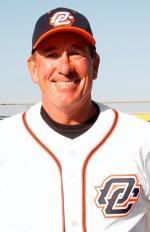
Out of Left Field is looking over the legitimate candidates for the Baseball Hall of Fame during the lead-up to the big vote on Jan. 12. Former Expos great Andre Dawson (second left in picture, beside the next manager of the Blue Jays) is getting closer to induction after receiving 65.9% support in 2008, his seventh try.
The biggest piece of context with Andre Dawson is that he was touched by the Mickey Mantle myth, which is a good thing.

Who knows, maybe sports talk radio has sucked the sympathy out of fans. The biggest piece of context with the great Expos outfielder is that he performed for a generation who had grown up on stories of athletes whose careers were cut short They knew the litany of legends whose careers had been cut short by bad knees -- Mantle, Bobby Orr in hockey, Gale Sayers and Joe Namath in football. It went double for him, since he was playing on the "concretelike turf of Montreal." (Sports Illustrated, June 15, 1987.) That should preface anything said below.

That was a very real phenomena that maybe isn't fully appreciated when you look through a stathead lens and see only the just-okay numbers -- 438 homers, 1,373 runs, 1,591 RBI, .323 on-base percentage. A gut feeling is that Dawson might make in this time. Getting past the 65% mark usually means it's inevitable a player will get the 75% needed for election.

Summing him up in three sentences: Eight-time Gold Glove winner. Won the MVP in 1987; was runner-up in 1981 and '83. One of only six players with 400 career home runs and 300 stolen bases.

Was he ever regarded as the best player in baseball? Did anybody, while he was active, ever suggest that he was the best player in baseball?

No, although he might have been one of the most respected men in the game.

Was he the best player on his team?

Dawson was a full-time player for 16 seasons and led his team in on-base plus slugging (OPS) only five times (1980, '81 and '83 with the Expos and '87-88 with the Cubs), which is low for someone who batted third or cleanup. Gary Carter was the runner-up for MVP in 1980 and Tim Raines had a monster season in 1983 -- 133 runs scored, 90 stolen bases, .393 on-base percentage.

That leaves Dawson with three seasons where he was his team's best player. One was strike-shortened.

Was he the best player in baseball at his position? Was he the best player in the league at his position?

He might been the best centrefielder in the majors in 1981. That was really the only season where he was the dominant player at his position. He was MVP runner-up to another centrefielder, Dale Murphy, in '83. In 1987, when Dawson was MVP (by that time, he had moved to rightfield), Darryl Strawberry was far more productive (.284/.398/.583) in Shea Stadium than Dawson (.287/.328/.568) did playing at Wrigley Field.

Did he have an impact on a number of pennant races?

He had an impact on four -- 1979, '80, '81 and '89. He had strong Septembers in '79-80 when the Expos were nosed out for the NL East pennant in the final days of the season (no one remembers it this way, but the team had strong finishes). He had a so-so final month in 1981, but on Sept. 21, homered in the 17th inning to give the Expos a 1-0 win over the Pirates; by the margin of that victory, they beat the Cardinals out by a half-game to win the second-half title.

Was he a good enough player that he could continue to play regularly after passing his prime?

Yes, he played until he was 41 years old and had his last season as a regular at age 39. The last six seasons of his career basically broke down to two average seasons with the Cubs, two seasons DHing about 80% of the time for the Red Sox and two seasons as a part-timer with the expansion Florida Marlins.

Is he the very best player in baseball history who is not in the Hall of Fame?

No. Raines, Ron Santo and Alan Trammell among others would rank ahead of him.

Are most players who have comparable career statistics in the Hall of Fame?

Five of Dawson's 10 comparables are in Cooperstown: Ernie Banks, Al Kaline, Dave Winfield, Billy Williams and Tony Pérez. Banks hit more than 500 homers, while Kaline and Winfield each made it to 3,000 hits, so they had no problems being inducted, plus they each played in big makrets. Williams needed six years to be elected and Pérez, who was a controversial, borderline case, got in on his ninth try in 2000.

Do the player's numbers meet Hall of Fame standards?

The magic 8-ball would say, "Outlook kind of hazy." His Triple Crown stats -- .279 average, 438 homers (only three seasons with more than 30), 1,591 RBI -- are such that you'd be looking for other stuff to put him over the top.

He's in a no-man's land when it comes to the HOF Standards test, scoring 44.1 -- not a lock, but more than a non-starter, and better than Jim Rice. He fares better on the HOF Monitor.

Is there any evidence to suggest that the player was significantly better or worse than is suggested by his statistics?

The testimonials to how he played through pain and had a throwing arm that was "legendary" (to quote Scott Miller, who's apparently a big Barney Stinson fan) suggest he was better than the numbers indicate. Contemporary evidence, namely that garden-variety .323 OBP, help make the case for "worse."

Joe Posnanski has debunked the myth that players of Dawson's vintage would have walked more if they had just appreciated the value of base on balls and a good on-base percentage. Poz found that walk rates have not budged in the past 30 years. The argument also falls apart when you compare Dawson's career OBP to other home run and RBI champions from the 1980s and early '90s. You could look it up.

Is he the best player at his position who is eligible for the Hall of Fame but not in?

No. Among centrefielders who played at the same time, there's Murphy, and there's Dwight Evans among rightfielders, to name just a couple. In the New Historical Baseball Abstract, James lists him as the 19th-best rightfielder, behind non-Hall of Famers Dave Parker, Bobby Bonds, Bobby Murcer and Ken Singleton.

How many MVP-type seasons did he have? Did he ever win an MVP award? If not, how many times was he close?

He had a MVP-like season in '81 (.302, 24 homers, 64 RBI, .553 slugging in the strike year) and again in '83 (.299-32-113, plus 104 runs scored and a Gold Glove). He won the award in the 1987, but in this day and age, he might not have won.

Nineteen eighty-seven was actually a watershed moment when it came to MVP voting: It was the last time that RBI champs were both MVPs. Neither Dawson of the Blue Jays' George Bell was the best player in their league.

Dawson had a ridiculous home/road split (1.041/.768). That was also the last full season of day baseball in Chicago, and he OPSed 1.016 by day and a .687 -- paltry -- by night. Sportswriters now would have made a much more informed choice.

How many All-Star-type seasons did he have? How many All-Star games did he play in?

He probably had about nine All-Star-type seasons. He was not picked in 1980 when he hit .308, scored 96 runs and had 41 doubles for a 90-win Expos team, but he was a near-automatic pick until he reached the other side of the hill.

Did most of the other players who played in this many go to the Hall of Fame?

Probably.

If this man were the best player on his team, would it be likely that the team could win the pennant?

A lot would have to go right for that to be the case -- like having Gary Carter and Tim Raines on your team.

What impact did the player have on baseball history? Was he responsible for any rule changes? Did he introduce any new equipment? Did he change the game in any way?

There was the matter of that blank contract he showed up at spring training with in 1987. It did prove to be a smoking gun in the players' collusion case against the owners.

Did the player uphold the standards of sportsmanship and character that the Hall of Fame, in its written guidelines, instructs us to consider?

He would not have got this close without it and there is not a thing wrong with that statement, other than the poor quality of the narration. Keep your fingers crossed he goes in at the same time as Jim Rice, to mitigate the Masshole love-in.

Post-script: Rob Neyer tackled Raines vs. Rice in an interview yesterday with Fire Brand of the American League.
"I can't support Jim Rice's Hall of Fame candidacy because I don't believe he's among the 20 best left fielders in major league history, or even among the five best corner outfielders who are today not in the Hall of Fame. Just to make the most obvious argument, Rice wasn't nearly the ballplayer that Tim Raines was. That's objectively true, and it's frustrating to me that so many Hall of Fame voters believe that Jim Rice was a great player, but Tim Raines was not."
Related:
Upon further review, Hawk belongs in Cooperstown (Scott Miller, CBS Sportsline)
My Hall of Fame Ballot -- Henderson, Blyleven, Raines, Morris (Dan Graziano, Newark Star-Ledger)
Hall of Fame ballot tests first-time voter (Joe Capozzi, Palm Beach Post)

Wednesday, December 03, 2008

Snark break...

One thing you as a Canadian do not mind voting for so often ... the Canadian Blog Awards, best sports blog category, Round 2.

Gary Bettman suspending Sean Avery for "conduct detrimental to hockey" is like Nero fining someone for playing the fiddle for too long. Like Puck Daddy says,
"Seriously, if the NHL were half as vigilant on hits to the head as they are for Sean Avery's nonsense, Simon Gagne might not hear church bells every time he closes his eyes."
At the same time, the WAGs are not fair game for trash-talk. It did rate a mention from TMZ: "Hockey Fun Fact: You can punch the hell out of an opposing player on the ice, but when you refer to his girlfriend as your 'sloppy seconds' — that's where the NHL draws the line." (Fist jab to Taking Note, and to play off Duane's post from last night, Sean Avery, Sean Avery, Sean Avery ... Sean Avery, Sean Avery, Sean Avery.)

It's like she has a reverse Midas touch or something. The world's most famous hockey mom, Alaska Gov. Sarah Palin, spoke in Augusta, Georgia on Monday, and the city's ECHL team folded on Tuesday.

An ECHL team folding is like a canary in a mine shaft in The Wonderful World of Gary Bettman. The Augusta Lynx were affiliated with the NHL's Tampa Bay Lightning, so really, the Lightning could just play out their remaining schedule. They're pretty much an ECHL team beyond Vinny Lecavalier, Martin St. Louis and the gentleman goalie from Verona, Mike Smith.

Future Hall of Famer Ken Griffey Jr. broke into the majors in 1989, the year the first President Bush took office. Nineteen years later, he's having trouble getting a contract, largely because of what happened while the second President Bush was in office. Maybe Griffey should have run for President.


Please read the Daily Norseman's take on Pat and Kevin Williams' suspensions -- it's about due process, not who took what: "The NFL completely and totally mishandled this case in so many ways that it's damn near comical."

From the department of Took Them Long Enough, the entire World Junior Hockey Championship will be broadcast in the U.S.

This post was worth nothing, but this is worth noting:

  • Dave Van Horne broadcast baseball in Canada for how many years (quite a few, Neate) and the Vancouver-centric media doesn't know there's an E in his last name. Way to spoil a nice article about Larry Walker!
  • Columbus Blue Jackets prospect Stefan Legein is ready to rejoin the AHL NHL team (TSN.ca; via Loose Pucks).
  • Matt Auffrey, who was a pretty decent forward for the Kingston Frontenacs in '06-07, was on that Augusta ECHL team which folded.
  • Fronts fans who long for better times (now why would they do that) should take note that former captain Cory Emmerton is on a bit of a roll with Grand Rapids of the AHL. Let's all start praying for an injury bug to hit the Detroit Red Wings, so he can wear the winged wheel. He earned the right to sport an iconic crest after those years wearing a Count Frontenac sweater.
(Sorry, no photo of Elisha Cuthbert to dress up this post. Find one your damn self.)

Monday, November 10, 2008

We Kid, because we love: Gary Carter can see Citi Field from his house, while Shea needs a new stadium

A lot of stuff gets missed over a weekend, but not the news Gary Carter is moving up the managerial food chain.

The Kid, wannabe major-league manager and walking punchline to sports journalists whom he might have put off a few times back in the day, was hired late last week to manage the Atlantic League's Long Island Ducks. He is getting closer to managing in the majors, at least geographically, since the Ducks' ballpark is not that far away from the new home of the New York Mets, whom Carter played for to no small amount of critical acclaim. Nevertheless, the critics only want to focus on the negative. Shame on them:
"He'll be in the New York media market now, and at some point, he'll say something dumb. Something that will increase the wedge between him and Mets ownership. That will hurt his reputation again.

"It'll be a complaint that the Mets didn't respect what he did for them. That he put in his time in the minor leagues, so why didn't he get a chance at the major-league level? Something within that theme.

"You can set your watch to it.

"Twice, in 2004 and again last year, Carter lobbied for the Mets' managing job while the office still was occupied, first by Art Howe and then by Willie Randolph. In last year's despicable sales pitch, on Sirius Satellite Radio, he said he could get out of his contract with the independent Orange County Flyers at a moment's notice. It led former teammate Keith Hernandez to shred Carter on an SNY telecast.

"Carter came to the All-Star Game festivities in New York, and at a media availability in Manhattan, he still didn't understand what he did wrong. I asked him if he thought that even if he intended no harm, he created a great deal of it.

" 'Obviously, I think what was transpiring was they were trying to take the heat off Willie at the time and throw me under the bus,' he said, the 'they' referring to Mets management.

"He just doesn't get it." — Ken Davidoff, Newsday
In the parlance of our time, that is cruel, Mr. Davidoff. It's mean-spirited. It's immature. It's unprofessional, and you guys are jerks if you came away with it, taking things out of context, and then tried to spread something about Gary Carter. It's not fair and not right.

The real Gary Carter is not the caricature put out by these dishonest leakers. The reality is he is a tough, capable, knowledgeable and focused baseball manager. He also had 1,225 career RBI in the majors, which makes him 1,225 more career ribbies qualified than current Amazin's manager Jerry Manuel to lead a major-league dugout.

Managerial experience? He had one thousand, two hundred twenty-five career RBI, people!

Meantime, in a story that seems unrelated but is in the same vein, Shea "Sinking Ship" Hillenbrand is contemplating a comeback. Hillenbrand played last season in, wait for it, the Atlantic League.
"I just had a bad year in '07. I was with the Angels and I thought I was going to be the full-time DH but they wound up having Vlad Guerrero and Garret Anderson take some time there, so I wasn't playing much and it was hard for me to stay in any kind of groove at the plate. It was just a bad year, but I never expected to be sitting out in '08. I played for York in the Independent League for half of a year and hit .340 so I know I can still hit and help someone. I had the problem up there in Toronto with John Gibbons (in 2006), so maybe that's followed me. But I've learned a lot and just want the chance to get back into the game.

"... I know my skills and they haven't gone away; in fact, they're better, because like I said, I'm entering my prime years right now. I know from all the players I've played with -- like Curt Schilling, Pedro Martinez, Barry Bonds - that I can really help a team with younger players." -- Boston Globe
One wishes him all the best, especially given that Hillenbrand, especially through his family's work with animals and underprivileged youth, does not fit the stereotype of a self-absorbed athlete (that's why it is a stereotype). He did hit .340 in 153 at-bats in the Atlantic League last season, but it was with his customary lack of power (two homers) and walks (five). It also came in a league where an entire team batted .303.

However, if he says he can still play, who are you to doubt him, you doubters? Take him on his word. Take Gary Carter on his, too. He might not be ready for the big stage yet, but don't rule him out in 2012.

Related:
Is Carter just a lame Duck? (Ken Davidoff, Long Island Newsday)
Previously:
The Kid can manage, I tells ya (June 17)