Showing posts with label CITO-mania. Show all posts

Sunday, December 20, 2009

Cooking the books: 'Evaluating Baseball's Managers'

Evaluating Baseball’s Managers: A History and Analysis of Performance in the Major Leagues, 1876–2008
Chris Jaffe
333 pg., McFarland Publishing, $39.95 (due out winter 2010)

Thanks to Chris Jaffe, you might never look at the men in the dugout the same way.

Most baseball fans today focus their venom on general manager and front office. The manager position is practically an anachronism, an ex-player who puts a uniform and tries not to get in the way of what's been put in place. How managers shape a ballclub sometimes gets downplayed.

That is why, based on two chapters he furnished, it seems like Jaffe's Evaluating Baseball's Managers is destined to become a big part of any baseball library. You might need a bit of the seamhead sickness to get into it, but Jaffe, who writes for The Hardball Times, has made some big strides.

Jaffe explains how changes in the sport have changed the job. It's much more professional now: Only two current MLB GMs actually played major-league ball and one of them is Billy Beane of Moneyball fame. His second big idea is rebutting the belief a skipper has the same impact in all areas of a ball club ("Place a man in a situation that fits his strengths, and he will look like a savant. Put that same individual on a team that highlights his weaknesses and people will call him a dullard.").

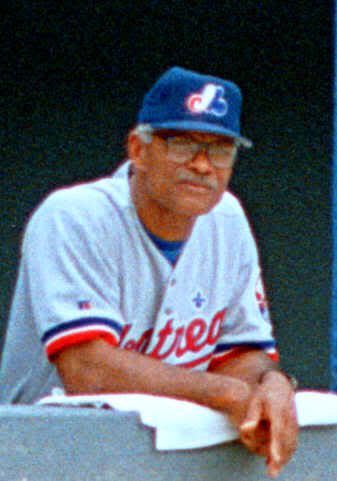
Jaffe's conclusions about the great Montreal Expos manager Felipe Alou and late-1980s Jays skipper Jimy Williams may be eye-opening for Canadian ball fans. There's some stuff about Cito Gaston, too. Since this is a Canadian sports blog, that is a good place to focus.

Jaffe sent me excerpts on the four Blue Jays managers who were active for at least a decade (Gaston, Williams, Bobby Cox and Jim Fregosi) and a section on managers from the 1998-to date era. The book, which is intended as a reference guide, has capsules on 89 managers who lasted at least 10 seasons.

The 1998-to date section was like an unexpected gift, just for the appreciation it provided of Alou. Not to give away too much, but Jaffe shows how MLB's racial issues kept Alou from having a longer managerial run. Major League Baseball is self-congratulatory about having more African-American and Latino managers than in the past, but qualified candidates often don't get a chance until well into middle age. I never thought about this, but when Alou took over the Expos, he was at an age (57) when some Hall of Fame managers were already out of the game.

Most people know about all the young players Alou had, such as Vladimir Guerrero and Pedro Martínez. Few probably know Alou's reliance on pitch counts kept Martínez happy and healthy and on the path toward the Baseball Hall of Fame. They might not also realize Alou set a great example for other managers. It is worth noting that in the much-praised article Seattle baseball writer Larry Stone wrote about new Mariners DH Milton Bradley, present-day manager Ken Macha, told Stone "he got advice on handling Bradley from a good friend, Felipe Alou." It is no surprise to hear that.

SBN's Houston Astros blog, The Crawfish Boxes notes, "What Jaffe does ... is highlight why (managers) were good or why they weren't successful. He does an excellent job of it, providing stats to back it up in each manager's capsule, but also backing it up with solid analysis. Bullpen usage, hitting for power, walks, and more are shown as trends for each manager as Jaffe does a good job of describing what kind of team each guy oversaw. It's exactly what history buffs would want and provides the kind of source material that analysts will be using for years."

The section on Cito Gaston was fairly familiar ground, so it had fewer surprises. It turns out Gaston's rep as the "ultimate minimalist," is spot-on. Jaffe uses stolen base success rates to show Gaston is not totally out of it during games.
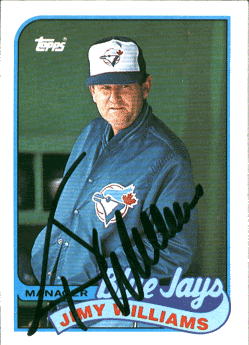
As a 30-something Jays fan, Jaffe's method really hit home with the section on Jimy Williams, who managed Toronto from 1986-89. The next time you're talking to a serious baseball nut, ask her/him what manager in recent history got the most from the bullpen. One response might be, "Probably Tony La Russa" (perhaps sarcastically) or, "Well, I know it wouldn't be (insert someone who ran his favourite team)."

Jaffe finds that Williams put all of the so-called genius managers to shame when it came to using the bullpen. He never managed in a World Series, so this was largely lost on people. It also didn't help that the teams he ran each played in hitter-friendly ballparks that obscured the excellent work of their relievers. As Over The Monster noted in its review,, "Williams handled the pitching staff like no other manager has in big league history. Williams' tendencies to yank pitchers early kept his starters healthy, meaning down the line they were that much better. Williams didn't try to stretch his starters; he knew what they were capable of and didn't push them. As a result, his Red Sox teams in the second half always seemed to do better than in the first half."

It was a similar story with the Jays. According to baseball-reference.com, during Williams' three full seasons with the Jays, they were a .528 team before the all-star break and played .584 ball in the second half.

Williams, though, was fated to get fired before a team hit it big. The Blue Jays let him go in 1989 and won the World Series three seasons later. The Red Sox canned him in 2001 and, wait for it, won the World Series three seasons later. During that season, 2004, Williams was fired by the Astros, who made it to the Series the following season.

He certainly had a role in that, of course. Still, Jaffe findings are a bit of a requiem and, for readers, put their personal baseball history in a new light.

Jimy Williams had his brilliant points, who knew. It's a reminder of how people, not just the media, get an idea about someone and massage the facts selectively. Williams seemed like a crusty baseball lifer. (One of his habits in the dugout when he managed the Jays was putting his hand down the front of his pants, almost like Al Bundy.) Those guys tend to be viewed as replaceable.

Good sportswriting should increase understanding or stimulate thought. Evaluating Baseball's Managers hits it out of the park on each count.

(Over The Monster also noted Jaffe's writing didn't suffer even when he was discussing the game from decades ago:
"I didn't know actually how much information Chris would be able to get for most of the older managers. But to my surprise, every writeup was quite detailed. If the writeups were any indication of the rest of the book, it seems to be quite extensive."
Evaluating Baseball's Managers is available for pre-order; the Stone link is via Jonah Keri.)

Monday, July 06, 2009

A Jay a Day: Free John McDonald (sort of)

John McDonald is actually starting a game today.

The non-use of McDonald is an entry point for discussing one of the more enigmatic aspects of how Blue Jays manage their 25-man roster. It's a bit dated, but Marc Hulet pointed out recently at FanGraphs that Cito seems to be playing a game of burnout with his regulars. Four Jays have started at least 78 of the team's 83 games. Marco Scutaro, who has been awesome at shortstop, has started every game (and yes, finding a picture from 2007 of McDonald and Scutaro together was deliberate). If you use 78 starts as the threshold, the Red Sox, Rays and AL Central-leading Detroit Tigers have each used two regulars that often. The Yankees have only one, second baseman Robinson Cano.

Hulet's point bears reiterating since it helps fill in the picture with the Jays, who are 15-27 since May 19 and will be at .500 for the first time all season if they lose vs. the Yankees today. The perfect storm of arm ailments, the equivalent of an entire starting rotation on the disabled list, has been a huge culprit, but Hulet raised a good point about the over-use of five players.
"As of June 20, the Jays club had played 78 games (41-37). Five regulars had played 76 games or more: Aaron Hill, Marco Scutaro, Adam Lind, Vernon Wells, and Alex Rios. Two of those players (Rios and Wells) have been terrible this season and were also left in the No. 3 and 4 holes in the lineup until mid-June.

"Two other players are obviously being over-worked by the manager. Hill appeared in just 55 games last year due to a concussion. Despite the time off, the manager has failed to ease the second baseman back into regular play. Scutaro, the club’s undisputed spark plug in the first two months, had never really been a full-time player until last year when he appeared in 145 games. At 33, he’s no spring chicken.

"... As a side note, I’d also like to point out the disappointing use of veteran back-up infielder John McDonald. The fifth-year Jay has been used in just 28 games this season with just 26 at-bats. That is the most embarrassing use of any player in the Majors this season ... That, ladies and gentlemen, is not the way to use you bench ... Or treat your veteran players. You know, the ones you’d have to turn to if your starting shortstop or second baseman suddenly got hurt."
Obviously, no right-thinking fan wishes Hill or Scutaro ill just so he can say, "Told you so." Hill, the all-star second baseman, has emerged as the Jays' best all-around player. Scutaro, by the numbers, has been the best-fielding shortstop in the American League. The fact remains is that, after leading off and playing short every game and batting a league-high 395 times (this is someone who's only had 500 plate appearances once in his career, and that was last season), Scutaro has dropped off with the stick.
April & May: .305/.408/.457
Since June 1: .244/.336/.350
The rub is John McDonald is still on the team, two seasons after a lot of bandwidth was burned up debating whether his combination of web gem-worthy fielding and hide-your-eyes hitting made him an acceptable as a No. 1 shortstop. It's not about whether he should get more starts at the expense of Hill and Scutaro. The point is that the Jays should have somebody who can spell off their starting middle infielders.

Today marks only the fourth start all season for McGlovin, three at second base and one at third (oddly enough, he had a rare two-hit game that day, both singles, in a 10-0 loss to the Philadelphia Phillies). The way McDonald has been utilized is tantamount to wasting the 25th spot on the roster.

The onus is not necessarily on Cito Gaston as the field manager. It could be that the front office has not stocked the team with viable options to spell off Hill, Scutaro, Rios and Wells (Jose Bautista has been a decent find, but he can only play the corner positions). Point being, overplaying the regulars too much tempts fate.

The Jays ought to make a decision on McDonald, who is in the back half of a two-year contract, before the end of the season. Give him his freedom to find another organization where he might actually get to start a game more than once a month.

(For point of comparison, Gaston does not like to use his bench much, but it was nothing like this back in the glory days. On the 1992 team, Devon White was the heaviest-used regular, starting 151 games in centrefield, while Roberto Alomar started 149. The following season, Alomar, Ed Sprague and Joe Carter, who shuffled between the corner outfield spots, each started at least 150 games.

The '93 World Series-winning Jays used the 25th spot on a Rule 5 draft pick named Willie Canate, who got 47 at-bats all season, got caught in a rundown during his only appearance in the World Series and never appeared in the majors again. They had nothing on the 1985 team, which carried two Rule 5 picks, Manuel Lee and Lou Thornton, meaning it played the whole season with 23 guys. That was obviously before Tony La Russa invented the 12-man pitching staff.)

Saturday, June 20, 2009

Zen Dayley: Cito and the DH thingy, Part 2

Sports And The City pointed out something that works as a follow-up to Friday's post about Cito Gaston getting away with botching a double switch. Jeff Blair noted in his column today
"Despite managing in the NL, Alou loved the designated hitter because it made managing the offensive side of the game more interesting.

" 'Strategy,' he told me one time with a frown. 'What's the strategy in having a guy with a bat in his hand not knowing how to use it? What play can I put on besides a bunt?' "
That cuts right to the heart of the matter. There is little strategy involved when the decision is dictated by the player's limited skills. Pitchers are OPSing a sub-sub-McGlovin .358 (ironically, their AL counterparts are doing slightly better, .369). This is better than having a NPH (nondescript professional hitter) in the lineup why?

As Bob Elliott noted, it was not the first time the Jays won a game in Philly despite Gaston not making a move out of Baseball 101, to use Mike Wilner's term.

A lot of the in-game decisions managers make comes out in wash, regardless of how much Seamheaded analyzing-to-death occurs after the fact. The Jays got out of it after going into the bottom of the ninth with only two pitchers left and a slim lead against a team which was very capable of forcing extra inings (the Phillies are far and away the NL's best-hitting team). The rub is you cannot logically credit Gaston just because it did not blow up in his face. It's like ascribing genius to someone who forgets to lock the front door of his apartment, goes out for a few hours and returns later to find out his place did not get burgled.

Gaston, via Blair, admitted as much:
" 'I thought about it, and then after I went to the mound, you couldn't do it,' Gaston said Friday night before the first game of a three-game series against the Nationals. 'You have to approach the umpire first and I went to the mound first. I had intentions of it (a double switch) but I screwed it up.

" 'The way it turned out was okay. But it's something you think about."
One can only imagine the fallout if Boston's Terry Francona or the Yankees' Joe Girardi goofed by not going to the umpire to make the substitution. Incidentally, both of those managers, as did Gaston, played in the National League, so they should be familiar with how it's done. Baseball is not as widely obsessed over in Toronto and we just figure, hey, Cito knows what he's doing, even when he admits he did not know what he was doing.

(The other time in Philadelphia, as you likely know, was that famous 15-14 slugfest in Game 4 of the 1993 World Series. The Blue Jays, aided and abetted by a near-historic meltdown by Mitch Williams, won a game where they were down by five runs with only five outs remaining.

Gaston just knew his guys would pull off greatest late-inning comeback in a World Series since 1929 in the eighth inning, so that is why he let reliever Tony Castillo bat for himself one inning earlier. Of course, if you were 16 years old, a Jays fan, and had been watching Mitch Williams self-destruct throughout the 1993 playoffs, you probably figured the good guys still had a chance.)

It's a couple days old, but FanGraphs' Dave Cameron has a look at the Jays' first-round draft choice, righty pitcher Chad Jenkins:
"The Blue Jays love groundball pitchers almost as much as I do, but the ones they've had success with have developed good secondary stuff. That's going to be the key for Jenkins as he gets into Toronto’s system. If he can refine his change-up and make it a real weapon against lefties, he has a chance to be one of my favorite pitchers in a few years. If he can’t, I hope he likes hanging out in the bullpen."
Related:
Second-guess Cito Gaston at your peril. Even when he appears to be wrong, things tend to work out for him (Bob Elliott, Sun Media)
Of double switches and Expos nostalgia; Cito Gaston's mistake on Thursday afternoon in Philadelphia ended up working out for the Blue Jays (Jeff Blair, globesports.com)
Felipe Alou is wise (Sports And The City)

Friday, June 19, 2009

Zen Dayley: Cito and the DH thingy

Plus more Vernon Wells vitriol and a short dissertation about tradition...

Just another day from the "Cito Gaston is not the brilliant tactician I thought he was" files. The same manager who complained about pitchers having to bat in National League parks after closer Scott Downs injured his big toe running out a ground ball almost ended up running out of pitchers on Thursday because he did not double-switch in the eighth inning in order to, wait for it, avoid the pitcher's turn in the order. As Mike Wilner put it:
"The Baseball 101, incredibly obvious, only correct move - especially since the Jays only had two pitchers left in the bullpen ... was to bring Rod Barajas in to catch as part of a double-switch, with (Jason) Frasor coming in to bat in the 8th spot and Barajas, the new catcher, batting ninth and leading off the ninth.

"Instead, Gaston only brought in Frasor, with the intention of having him lead off the ninth inning if he had been able to hold the lead." (The Phillies tied the game.)

" ... It was a ridiculous non-move to make, and almost cost the team the game. If Gaston didn't realize that the double-switch was the move, then one of former National League manager Nick Leyva or former National League coach Brian Butterfield should have been screaming in his ear. Just terrible.
You know the rest of the story. The Blue Jays ended up winning, 8-7, by the margin of Barajas' pinch-hit home run in the ninth inning (a fastball up and away that he hit over the centrefield fence 401 feet from home place). The dude who replaced the dude who was replaced by the dude who hurt himself running to first base (duuuuude, just say Jeremy Accardo got the save) ended up getting the save. The Jays won the damn game to complete a series sweep of the World Series champions (which was probably just an evenout since they could not be as bad as they were last weekend vs. the Florida Marlins), so what is it to anyone if the manager and his coaches flunked Baseball 101?

There is much less receptiveness for playing armchair manager when the team ends up winning the game. However, talk about a manager flirting with disaster The amusing part, speaking personally, was arriving at work shortly after 4 p.m., having forgotten the Jays had a day game and assuming it was over. It took all of 10 seconds to establish that the score was tied and, hey, what was regular catcher Barajas doing batting .in a day game after a night game? It seemed strange it had come to that point. It was even stranger that Gaston, after saying, "My pitchers don't take batting practice every day and don't run, so things like this are going to happen," would risk putting another pitcher in that situation only two days later. But hey, he is the manager.

To be fair, he did have a point

Gaston's rant did blow the dust off the DH debate. Whether it should be in both leagues, or just used for all interleague games (there is no political will to change it, since the AL is dominating once again in the interleague play contagion).

Not to over-intellectualize it, but one's position might hinge on a working definition of tradition. It seems like to some tradition connotes doing something the way you believe it's always been done just because. Tradition, though, means something is handed down, passed over to another generation. It's more like a trust to keep and if there's a way to improve on it without making a radical change, you do it.

Sun Media's Bob Elliott, to whom this author is very indebted, wrote a follow-up column on the skipper's comments. Elliott quite rightly pointed out that it was a bit of a CYA move to complain about Downs getting hurt. As he noted, the Jays knew interleague was coming. Downs had also hit before, plus running to first base should not be beyond a pro athlete's grasp. Plus, the Jays had left a lot of runs on the table.
"Gaston had every reason to be angry, but not at the National League designated hitter rules.

"He could have been angry at Alex Rios having a brain cramp and neglecting to tag with the Jays down 3-2 in the eighth when Marco Scutaro lined to left-centre.

"Or he could have been angry at the Jays hitting 2-for-17 with men in scoring position, or leaving 15 men on base in regulation."
Those were all good points. The rub is eight of those 15 stranded runners were a byproduct of starting pitcher Ricky Romero batting in a real game for the first time in his professional career. Romero struck out three times. On eleven pitches. José Bautista or Kevin Millar would have stood a far greater chance of driving in a couple of those runners.

The craw-sticker, though, was the closer, "Pitchers hit in the NL, and it's how baseball was created." That is very well and good. However, the counter to that is that the players would still go without gloves if everything was done according how baseball was created.

Games and sports evolve. Football pays a lot of lip service to tradition. However, with regard to specialized roles, they stopped asking the quarterback to double as a free safety generations ago. You don't see the starting split end (as wide receivers used to be called) coming off the field to get his kicking shoe on before he tries a field goal, straight-ahead style.

The best compromise as an American League guy is that the NL is free to keeps its antiquated rules. It's not necessary that the so-called senior circuit swings with the times. It just can't impact on any meaningful game affecting an AL fan's favourite team, or any game of significance. Sound fair?

P.S. ... about Vernon...

What was that about how Vernon Wells' production (his OPS is down to .676) might be about as good it gets?
"Of course, there was no mention of something most sentient Jays fans have already contemplated, that maybe this is as close to as good it gets for Wells. Five minutes of reading The Hardball Times or FanGraphs combined with a willingness to reason will show anyone that 40% of the way into a major league baseball season, a player's production has usually close to finding its own level, just like water."
Take it away, Fangraphs:
"ZiPS doesn’t see Wells improving all that much this season with the bat, ultimately finishing with a .254/.310/.400 line. The projected 15 HR and 18 SB help elevate the wOBA to .316, but a below average rate like that coupled with a UZR perhaps on pace to be worse than -15 runs makes Wells a replacement player. In a full season in 2007, Wells produced just 1.2 wins. He added another 0.8 more last year albeit in just 108 games. This year: -1.0 wins. Rios is proving that he can be a good, not fantastic player, while Wells is showing that he does not deserve a starting spot in the big leagues, let alone one at such an important position." (Emphasis mine.)

Friday, June 12, 2009

A Jay A Day: Statistics say, keep Wells and Rios together, just much lower in the lineup

You can see by the look of Vernon Wells' numbers it's time to get into this again.

One wonders what was behind Wells having been written into the fourth spot in the lineup day after day. (Tony Ambrogio's Twitter says he'll hit third, with Adam Lind — finally! — hitting cleanup and Alex Rios dropping to the six-spot. Why did it take this long? Was it part of a power struggle, with Paul Beeston as the permanent interim president and J.P. Ricciardi trying to stay employed? Is it the cult of personality around Cito Gaston that kept Toronto baseball writers from saying, "My wife, she has been most vocal on the subject of Vernon Wells. Where is he hitting today? When are you going to move him out of the cleanup spot? And so forth."

The Jays are not dumb on the baseball side. Someone working for them must be aware that 274 plate appearances into the season, a player's numbers are pretty much are what they are. The upside of fan anger, best represented by Sports And The City's Vernon Wells Hatred Advisory System, is that at least there's a way to show leaving Wells in the cleanup spot on faith is unsubstantiated baloney, in the parlance of our times.

Baseball Musings has a lineup analysis tool which anyone can use to determine the best batting order. You type in the on-base and slugging percentages of nine hitters, hit the submit button and voilà, find out that yes, it is crazy for Cito (more like Sito, since he's sitting on his hands) to keep writing Wells into the middle of the order. The $126-million-dollar man has the worst slugging (.387) and second-worst on-base percentage (.307) among the Jays' everyday players, for pete's sake. This is the best possible Jays lineup that it returned, with each's players on-base and slugging percentages in brackets:
  1. Marco Scutaro, SS (.400/.451)
  2. Lyle Overbay, 1B (.397/.553)
  3. Scott Rolen, 3B (.382/.455)
  4. Adam Lind, LF or DH (.381/.562)
  5. Aaron Hill, 2B (.346/.500)
  6. Rod Barajas, C (.303/.408)
  7. Alex Rios, RF (.319/.423)
  8. Vernon Wells, CF (.307/.387)
  9. José Bautista, LF or DH (.400/.368)
For argument's sake, the team's splits vs. lefties suggest that against southpaws, Overbay could be dropped to the sixth spot, with Barajas sliding into the 5-hole and Hill batting second.

In a run-neutral setting, that collection of data representing Blue Jays hitters would average 5.82 runs per game. The worst possible lineup, which would have Barajas, the paunchy catcher, in the leadoff spot with Wells batting second, would still average 5.25 runs.

The current Jays are averaging 5.03 runs (above the league average, 4.78). That's good, but it suggests they could be more productive if Wells wasn't dragging them down.

Another feature of BM's tool is that it shows outcomes for a number of possible lineups. The constants are Marco Scutaro hitting leadoff, some combination of the two lefties, Lind and Overbay, and the righty-hitting infielders, Hill and Rolen, in the 2-5 slots, and Wells being well down in the lineup. There were a few that show the Jays could get away with Alex Rios as the No. 3 hitter.

Data representing Blue Jays players does not fully capture their mental or physical well-being, or if they have just been hitting a lot of at-'em balls, or have a flaw in their swing which can be corrected. If you liken the baseball swing to a golf swing on another plane, Wells does not look like he was what golf nuts call "quiet hands," which makes it harder for him to square up and make solid contact. That might explain his low batting average on balls in play (.258) and why any improvement the rest of the way will probably be marginal.

The point is as a fan, either take it on faith that Wells will snap out of it or accept that in a snug-panted exercise in statistic memorization such as baseball (fist bump: Jay Pinkerton), there's usually a reasonable projection of how someone's going to produce. Wells is nearing 300 times at bat for the season. The water has found its own level. FanGraphs has Wells projected to end up with 15 homers and 75 RBI. Those aren't cleanup hitter numbers in any generation.

Meantime, the FAN 590's Mike Wilner said Gaston will consider making a change in "a month" if things don't improve. A month? We have seen enough already.

The bottom line is the sample sizes are big enough to know Wells will only improve somewhat over the last 100 games of this season. As The Tao of Stieb noted today, he has not produced to the point where it is costing the ballclub:
"In the 32 games since Vernon Wells last hit a ball out of the park (May 6th versus Anaheim), he has posted a .574 OPS and driven in a grand total of seven runs in 134 plate appearances. Each one of which, it should be noted, with him hitting fourth in the Jays batting order, just to beat that dead horse again.

"And dare we mention that Travis Snider was exiled to Las Vegas after posting an OPS of .686 in 108 plate appearances? If that sort of performance merits a demotion - and it did - then shouldn't Vernon receive some sort of demotion himself? Like maybe a week or two of hitting seventh or eighth in the lineup?

"Most importantly, the Jays have gone 14-18 in those games. We'd hazard a guess that not many teams would do much better with their cleanup hitter putting up numbers that could be bested by the fourth outfielder on their Triple-A team."
Personally, there was reluctance to get into this, since it would be running over some well-trod ground.

Most Jays and/or Toronto sports blogs have been harping about this for several weeks. It seemed best to just to fall back on the old standby adopted by office drones the world over, "You don't want to know what I think." However, there was a spur to speak up after hearing Gaston tell Jerry Howarth prior to last Sunday's game that he wasn't giving consideration to dropping Rios and Wells. The gist of it, from Gaston's point of view, was that "you don't want to panic." He also said you can't "hide" struggling hitters in the lineup, which did not answer the question of why he would keep them in the two spots in the lineup which get the most chance to produce runs, either by driving in the table-setters or. Now he's going to wait a month?

The irony is that there is a counter-argument that the Jays might be reluctant to take decisive action since Rios and Wells are perceived as their two highest-paid players. They would open themselves up to criticism if they take two players due to earn close to $200-million US through the 2014 season and hit them 7-8. (Technically, the Jays' highest-paid position players are actually Rolen and Overbay.)

However, there is a lot of cynicism in the Toronto sports market. Jays attendance is down a bit this year, although their TV ratings have risen about 7%. There is interest in this team, but not blind devotion. A demotion for Wells and Rios probably would be good from a bottom-line point of view.

A strong organization would ride it out and make the best of being stuck with Wells, instead of exacerbating the worst of it.

Wednesday, May 20, 2009

The first secret of armchair managing: Stay seated

The proof is in the eating, eh? Dave Cameron (of USS Mariner fame), writing for The Wall Street Journal, figures Cito Gaston is on to something by not pinch-hitting.
"Toronto has sent a pinch-hitter to the plate only five times this season, fewer than any club in the AL. Despite conventional wisdom that says managers should play the percentages (bat righties against lefties, etc.), Mr. Gaston prefers to stick with his starters. Rather than making a knee-jerk replacement of a lefty hitter like Lyle Overbay when the other manager brings in a left-handed pitcher, Mr. Gaston simply stands pat.

The numbers support Mr. Gaston's strategy. So far in 2009, AL pinch-hitters are batting a paltry .187 AVG/.275 OBP/.301 SLG, compared to the average AL starter that is batting .268/.340/.428. So when your local announcers are babbling about how hard it is to sit around for three hours and then be asked to pick up a bat and hit, they are actually making good sense.

"In fact, there appears to be a league-wide trend away from pinch-hitting."
Earl Weaver, who went to extremes with pinch-hitting, was of the belief that it can hurt the team if the manager doesn't make a move that everyone in the dugout realizes is begging to be made. Cameron's example would be such a situation, given Lyle Overbay's career platoon split, which includes a .118 average vs. left-handers this season. However, Cito Gaston is managing people, not actuarial tables.

Two games stand out in particular with regard to the way Gaston manages his roster, and this is not necessarily related to pinch-hitting. Last Saturday vs. the Chicago White Sox, José Bautista made a rare start vs. a right-handed starting pitcher, Bartolo Colón, as he filled in for the veteran Scott Rolen. Bautista, a righty, historically, has OPS'd about 130 points better vs. lefty pitching.

Gaston ended up having Kevin Millar replace lefty Travis Snider against a left-handed reliever in the bottom of the seventh and the Jays down by one run. Millar struck out, but as Mike Wilner noted, he stayed in the game at an unfamiliar defensive position:
"My guess is that Cito: A - really wanted to give (Scott) Rolen the whole day off, and 2 - didn’t want (John) McDonald coming up to bat in the 8th or 9th in a big situation. But wow - it was Millar's first action at third base since 2002, when he played all of 11 innings there with the Marlins. For some strange reason, Alexei Ramirez didn't drop a bunt down the third-base line leading off the 8th. Millar didn't wind up making a play, with (pitcher Robert) Ray throwing a 3-up, 3-down inning on two fly balls and a strikeout.

"Rolen wound up coming in to watch the 9th, anyway, having as busy an inning as Millar did. So this may well be our only chance to say that Kevin Millar and Scott Rolen were defensive equals at third base in the same game."
And what happened? Bautista ended up getting the game-winning hit, off a right-hander, no less. Rolen, refreshed and recharged after one inning as a defensive replacement, made about three highlight-reel plays over the final two games of the Chicago series. One of them was critical, since it came one batter before Chicago's Scott Podsednik hit a triple.

The other example came a month ago, an eventual extra-inning win vs. Texas on April 22. That is more remembered as the night B.J. Ryan lost the closer job after coughing up a three-run lead in the top half of the ninth inning and Darren O'Day made his major league debut while wearing Kason Gabbard's jersey (and Gabbard was traded the next day).

After Ryan blew the save, Rolen and Millar were due up second and third in the bottom of the ninth. It seemed quite possible that Gaston would have Overbay pinch-hit. Instead, he burned Travis Snider by using him a pinch-runner for Adam Lind, and left Millar in the game. It was a major tooth-gnasher, since that move amounted to having a slightly faster runner forced out at second base when Millar rapped into an inning-ending double play.

Of course, you know the rest of the story: Two innings later, Vernon Wells cadged a leadoff walk, was bunted ahead to second base by Snider. After an intentional walk, Millar came up with the winning run in scoring position. There was no chance of seeing Overbay. Millar promptly drove in the game-winning run, off a right-hander.

Point being, Gaston's way of trusting players to do a job seems to have some wisdom. It ma only seem brilliant because the Jays are winning right now.

Related:
Toronto's Secret Strategy: Don't Pinch Hit (The Wall Street Journal)
Cito Gaston realizes that less is more (Craig Calcaterra, Circling the Bases)

Thursday, April 02, 2009

Clemens and Cito: Fascinating reading, or misreading ...

Toronto will never be a true sports city until it learns to laugh stuff like this off.

Blue Jays manager Cito Gaston making an unflattering anatomical comparison with Roger Clemens over decade-old events got a lot of play today. The funny part, if you read the Jeff Pearlman book a certain way, the author did not say flat-out that Clemens got Gaston fired in 1997. Gaston is mentioned by name only twice in the entire book. It's not even the most scandalous thing Pearlman says about Toronto as a sports city.

(Pearlman addresses it: "What my book says is that Clemens had a heavy hand in the hiring of Tim Johnson, Gaston's eventual replacement. But that didn’t take place until well after Gaston was gone.")

It's a good thing for Cito and the friendlies in the press corps to run with. Ripping a disgraced drug cheat a new cornhole is the ultimate in low-hanging fruit, but it's damn entertaining:
"Author Jeff Pearlman made the allegation in his new book The Rocket That Fell to Earth and adds that Clemens pushed for the hiring of Tim Johnson, who was fired after one season for lying about his military service." — The Canadian Press

"Pearlman says Clemens vetoed qualified men such as Davey Johnson, Paul Molitor, Willie Randolph and Larry Bowa. Instead, he backed the hiring of Tim Johnson, who was fired after one season for lying about his fictional military service record."
— Sun Media
Here's what it actually says in the book, on pgs. 204-205:

Pearlman notes that Clemens approached the Jays about signing Jose Canseco before 1998 season, which they did, even knowing, as then-GM Gord Ash said, "what the history was been there." At the time, people would have taken that to mean Canseco was injury-prone and that he had played for the Oakland Athletics when they were one of the Jays' rivals:

Pearlman adds:
"That wasn't Clemens' only tinkering. Having fired manager Cito Gaston with five remaining in the 1997 season, the Blue Jays held an extensive search for a replacement, interviewing such Grade-A candidates as Davey Johnson, Larry Bowa, Paul Molitor and Willie Randolph. But who did Ash and Co. end up hiring? Tim Johnson, an unexceptional yet bubbly man who had just finished guiding the Triple-A Iowa Cubs to a 74-69 mark. Rarely considered big-league managerial timber, Johnson possessed three major attributes:
  1. Gobs of boyish enthusiasm. 'I'll communicate with each of players every day,' he vowed upon being hired, 'Even if it's just to say, Hi, how's the family?'
  2. He had been a coach with the Red Sox when Roger Clemens was there
  3. Clemens really liked him."
It sounds more like the front office made its choice knowing what would make their highest-paid player the happiest, like that has never happened before in pro sports. Reality sandwich, people, sorry it doesn't jibe with What Should Be.

It doesn't say Clemens tried to get Cito Gaston fired, it just says he was fired. Pearlman's books are exhaustively reported, so if that did happen, chances are he and the reporters he had helping him might have flipped over that rock.

The only other mention of Gaston comes a few earlier, it notes that Clemens knew the manager was "a strategic lightweight" before he decided to join the Jays. That's an opinion that many people would have agreed with before Toronto's baseball clock became permanently stuck at 11:39 p.m., Oct. 23, 1993.

Pearlman is pretty smart. Reading between the lines, saying, "That wasn't Clemens' only tinkering," which seems like a direct accusation, could also just be a a transition to a new paragraph. Either way, it seems like it was put it out there like a bucket of fresh fish for a bunch of baying seals and let the reporters in Toronto connect the dots, you know, the way they didn't 11 years ago when Tim Johnson was telling people he fought in Vietnam and half the Blue Jays team was goosed up on steroids.

The biggest takeaways from the two chapters on Clemens' Jays years was that he found an absence of celebrity and tabloid culture in Toronto. He got annoyed when National Golf Club actually expected him to pay his green fees ($1,000 for a foursome) and just wouldn't take 10 Red Sox-Jays tickets in lieu, like a lot of posh courses in the U.S might have.

More tellingly, Pearlman also notes that playing in Toronto meant he had no reason to worry about people unearthing the skeletons in the closet.
"Clemens had found the right place for a guy trying to keep his personal life off the radar. He certainly didn't have to worry about the Toronto Star or The Globe and Mail digging up dirt about Mindy McCready or any of the other women he was involved with. He also didn't have to worry about the second major scandal (for lack of a better word) in his life — the rapid decline of his brother, Randy, whose drug addiction was a tightly guarded secret restricted to family members." — pgs. 192-93
Granted, that is not Sportscentre-sexy. Taken one way, it makes Toronto sound less like a world-class city than a hockey-obsessed Hooterville, so that's why you're not hearing it repeated breathlessly.

The bottom line is Pearlman is an awesome writer and the Clemens book compares favourably with his other three efforts. Here is hoping this juices his Canadian sales, as it were, since there's a lot more to it than recounting all the nasty things he's done. He is supposed to be appearing on Drunk Jays Fans podcast in the next little while, so there will be a chance for discussion.

Think about, though: It's well-established that in 1998 the Blue Jays had about half the team on steroids, had two of baseball's most disgraced drug cheats in their lineup, one of whom was nailing a Woman Not His Wife who was also a chart-topping country singer. However, Cito Gaston is saying Roger Clemens tried to get him fired when he was presiding over a fourth straight losing season and it's a bloody outrage.

Oh, well, it makes Ottawa seem less parochial by comparison, which takes some doing. (The bar has been raised awfully high, or low, in the last little while.)

Some of us younger old fogeys still maintain there's a value to actually reading an entire book from start to finish and in that order. I'll try to have a review up in the next couple days.

Related:
Gaston has foul memories of Rocket (Sun Media)
Cito launches Rocket (Globe & Mail)
Cito Gaston has sharp words for Roger Clemens; Book on Clemens says he pushed Jays to fire Gaston in '97 (Morgan Campbell, Toronto Star)

Thursday, November 27, 2008

Zen Dayley: One more for the MLBTV chorus

Please check out the piece The Tao has penned on the possibility of the MLB Network being available to Canada.

One takeaway is that you-know-who, Rogers Communications, "already holds a license in Canada for an all-baseball-all-the-time diginet, but they haven't moved on it." Please hold off the Rogers-bashing -- please don't say that greatest oxymoron going in corporate Canada is "Rogers Communications" -- and say that one hopes that this gets picked up by the bigger media outlets and that Rogers does move on this in time for the network's Jan. 1, 2009 debut. As The Tao notes, Rogers recently made College Sports Television (CSTV) available to digital subscribers (those ratings to watch Pac-10 women's volleyball must be sky-high in Guelph and Kitchener).

The NFL Network, which as Bob McCown has harped on, is "unwatchable," is on basic digital packages. Soccer fans have GolTV and Setanta Sports. MLSE has its Leafs TV and Raptors NBA TV offerings. True, some of those channels are struggling, which might be why Rogers is reluctant to add carriage.

The hardcore Seamheads, a niche audience but a desired niche audience, are only right if they want to pay a little more to get something outside the traditional Jays-focused coverage, where people who believe Russ Adams would make a quality designated hitter are not only humoured but taken seriously.

So, just to add to the Seamhead echo chamber: "I want my MLBTV."

(Quick, photo of Matt Stairs coaching hockey or the latest about Madonna and A-Rod, what turns your crank more? There is no wrong answer, or right one.)

Let Ken Slate enjoy his turkey, dammit!

It's a bit of gas -- you have to understand, people who grow up outside Bath, Ontario maintain a very low amusement quotient -- to read Hindustan Times piece about R&D, the Pittsburgh Pirates' Indian pitching prospects Dinesh Patel and Rinku Singh.
Both have been signed by five-time World Series Champion club Pittsburgh Pirates for an undisclosed sum that may be in crores of rupees, their families indicated, and in doing so have sparked a remarkable interest in the hitherto unknown American sport of baseball in their backward, dusty Uttar Pradesh villages.
The biggest difference between sports writing in North America and South Asia is probably seeing "World Series Champion" and "Pittsburgh Pirates" in the same sentence. The article says Patel has inspired a "baseball mania" in his village, which one hopes makes the New Jersey sportswriter who slammed the signing as "outsourcing" choke on his turkey, just for a second.

The other amusing part is that Singh, back home, was considered a "loafer" for being a jock. A loafer? Does that not evoke John Kruk's famous, "I ain't an athlete, I'm a ballplayer" line?

Damn, the Jays

  • Big League Stew's 101 things to be thankful for include Dan Shulman and The Tao of Stieb.

  • Our sportsnet.ca columnist Scott Carson would obviously know this better than some ass-talker, but is Mike Mussina really "the least favourite human being" of Cito Gaston's? Time forgives, and Cito's supposed to be a class act ... but anyway, this deserved to have some soy sauce slathered over it:
    "So the debate now begins, whether or not 'The Moose' belongs among the greats of the game in the Hall of Fame. I say NO. His career win total only ranks him 33rd all-time and if Bert Blyleven with 287 wins and 3,701 strikeouts (fifth all-time) can't get in with his numbers then Mussina's doesn't quite cut it either. Plus, in my 16 seasons on the baseball beat, I never came across a more condescending athlete than Mussina. I witnessed him talking down to many sportswriters and broadcasters."
    Thank god "talking down" to people doesn't get one disqualified from other honours -- we'd have no Golden Globes or Academy Awards, or serious literary prizes. Carson's main blurbage was a piece on the Jays, that frankly, was seven kinds of crazy.

    Forget the fact that win totals are a poor barometer for a second. Mussina's 270 wins is fifth among pitchers whose have pitched in the era of 5-man rotations, after guys named Maddux, Clemens, Glavine and Johnson. He has the same .638 winning percentage as Jim Palmer, who wasn't exactly smiles and sunshine. Who said being nice was a prereq for a ballplayer, anyway?

  • The Jays were involved in two of the five best pitching performances of last season. Remember Jesse Carlson's effort in that May game where A.J. Burnett lost it in relief?
Related:
From UP villages to US baseball fields (Anuraaq Singh, Hindustan Times)

Thursday, September 25, 2008

We have clearance, Clarence

Oz has spoken -- without much fanfare, the Rogers Jays have given Cito Gaston a two-year contact extension.

It's an easy sell, bottom line. The Jays are 48-36 under Clarence (compared to 35-39 under John Gibbons). Throw in that Gaston is good enough, smart enough and doggone it, people like him.

Bob McCown was being all high-dudgeon about the release from the Jays being worded, "the Toronto Blue Jays announce." There was no mention of either half of Godcciardi.

Hey, at least they didn't find a way to lose 100 games with a $100-million payroll.

Related:
Cito Gaston agrees to extension through 2010 (Toronto Star)
Gaston signs two-year extension to remain as manager (National Post)
Gaston will return (globesports.com)

Thursday, August 07, 2008

Zen Dayley: Requiem for Russ Adams; can't spell sob story without SOBs

Russ Adams is best known for not being something.

Let's think about what that says about us, rather than what it says about the first-round pick who was once the answer to the Jays' shortstop situation. Being a sports fan and cheering for a bunch of jocks employed by a multinational corporation, because it's your team, is an ultimate act of naive sentiment. It's odd how it's rare that any of that is saved for a bright hope who fell flat on his face.

(Maybe it's an offshoot of the self-loathing that builds up from having spent your waking hours worrying about the outcome of games you cannot control. To think I believed in Russ Adams?! He's dead to me.)

There's names for the exemplars of this phenomenon -- bust, flop, fizzle, dud, Ryan Leaf. It might be the worst ignominy to own in sports, on par with being a cheater. People will let an athlete off the hook for being an out-and-out rat bastard, but not for failing like Russ Adams has as a major-leaguer.
"I don't see playing baseball professionally, playing over two years in the majors, if someone thinks that's failing, I don't know what planet they live on. I'm not going to be sitting at home at 40 and think I'm a failure in life because I didn't play 20 years in the big leagues. That won't dictate my happiness." -- Syracuse Post-Standard
Hands up, everyone whose knee-jerk reaction was something along the lines, "Oh, go cry me a river." It might create the mental picture of Adams, barring some near-miraculous turnaround, spending the next 20 years dreaming of a parallel universe where he was the American League's answer to Chase Utley.

A lot of sports fans probably look it that way. It's not clear that the ballplayers actually do.

It's undeniable what springs to mind after seeing that quote from Adams, whose Triple-A rate stats in Syracuse this summer (.232/.322/.378) scream, "quintessential Quadruple-A player." This, of course, is from someone who as every Jays fan must know by now, was drafted ahead of Scott Kazmir, Nick Swisher and Joey Votto (not just a Toronto boy, but a paisano of J.P. Ricciardi).

It's actually straight of out of the novel North Dallas Forty. There's a scene where the antihero Phil Elliott (Nick Nolte played him in the movie) recalls commiserating with a player who had been traded, dumped by a team that had publicly proclaimed he would be brilliant:
"He seemed like the only survivor of a ten-car collison who was trying to explain how it happened. Several times during the course of our conversation he had stopped to stare off into his disastrous past, thinking of all those glories he had only tasted slightly."
There's a double-edge to that analogy. It could seem empathetic or just downright cruel. But it's c'est la vie for a human footnote.

For anyone who needs a refresher, the Jays advanced Adams quickly through the minors after he was drafted in 2002 (Matt Cain and Cole Hamels, both now top-flight starters in the NL, were also available when Ricciardi made the 14th overall selection).

In 2005, he put up a decent enough first season as a rookie shortstop. According to his Baseball-Reference.com page, his age-24 season compared pretty favourably with that of Orlando Cabrera, who's been an adequate, sometimes all-star shortstop for a decade.

He had the throwing yips in '06. You can't presume to know what's in a player's mind, but the stats make it look like he was taking his defensive problems up to bat with him. The Jays eventually had to send him to Syracuse to learn how to play second base, which was a give-up play.

Inside of two years, the Shortstop of the Future has become one of among the couple hundred Triple-A veterans -- roster flotsam who move about the minors, their names known only to the most hardcore baseball fans. They're valued by MLB organizations for what might be called their overdeveloped flexibility. Most of them, almost as a survival skill, have learned to play several positions (good for when the big club is shuffling players around). They've been around long enough that they don't need to be babysat by their manager. They're also fully comfortable with the hard reality that they can traded, demoted, promoted, or released at any time.

Who knows why it didn't work out for Adams. One historical note is that left-handed hitting shortstops are a rarity. (Stephen Drew of the Arizona Diamondbacks is the only everyday SS in the majors who bats lefty.)

The thing is, though, is that most fans don't fully appreciate that it does take exceptional skill, the kind not found in 99% of the population, to even be a career minor leaguer. People also don't get, or don't care, that's it debatable whether failing as an everyday shortstop actually hurt Russ Adams as a person. He got far enough to get all his illusions about playing baseball shattered, but a lot of men never will.

Some day in the not too distant future, the Jays will probably waive him. Drunk Jays Fans and the like will write a blog post for shits and giggles. Maybe someone will do up a Top 10 list of Toronto sports busts, slotting Adams in with Rafael Araujo and Ricky Williams, but Russ Adams will just go on living his life. The wicked burn won't be on him.

Errata
  • So Joba Chamberlain goes on the disabled list on the same day that Jeff Karstens, the young pitcher whom the Yankees just traded to the Pirates, took a perfect game into the eighth inning. Yankees haters are travelling around in go-carts powered by their own sense of self-satisfaction, just like Ed Begley Jr.
  • Padres rightfielder Brian Giles has reportedly been claimed on waivers. Please make note of which playoff contenders need some help in rightfield.
  • Meantime, fellow Epic Carnival-ites Nick Underhill and Bill Baer had a little point-counterpoint over whether or not the L.A. Angels closer, Francisco Rodriguez, should be the front-runner for American League MVP because he's on pace to set a record for saves.

    Not gonna take sides, but relievers shouldn't be eligible for the MVP -- they already have the Cy Young Award.
  • Forty-six years ago today, 46-year-old Satchel Paige won a 1-0 game in 12 innings.
Damn, the Jays
  • Shaun Marcum was awesome last night.
  • The uber-prospect, Travis Snider, is going to get called up to Triple-A. J.P. Ricciardi said that would happen during his weekly fireside chat on the FAN 590. It's a fireside chant because the GM's pants are usually on fire by the end, for some reason.

    J.P. also said that "Cito Gaston will definitely be the manager next year."
  • Brett Cecil had a mixed result in his first start since being called up to Syracuse: Two runs (both earned) on six hits over five innings, with three walks and seven strikeouts. It was enough for him to get the win.

    (Danny Sandoval, last season's Ottawa Lynx shortstop, was 5-for-5.)
  • Drunk Jays Fans has already fired a preemptive strike against "all these people are jumping on the Rays' bandwagon just because they've played their first four months of good baseball in franchise history." It seemed to be tongue-in-cheek. The operative word is seemed.
  • The article on MLB.com states "a competition (is) brewing atop the Blue Jays' rotation" almost likes an act of mawebolence aimed at the anti-A.J. Burnett types, stat geeks and the I Heart Halladay folk and combos thereof.

    Well, congratulations, because using the pitchers' matching win totals as a premise for an article worked. Pay no attention to any differences in their respective ERAs (Burnett, 4.57; Roy Halladay, 2.77), baserunners allowed per inning (1.437 to 1.021) or run support (4.65 for A.J., 3.91 for Roy). it worked. There's actually a small grain of truth to comparisons of between Burnett and that are based on the premise they each have 13 wins.

    A quick check at FanGraphs.com does show the pair is only a half-run apart in fielding-independent pitching (basically, what a pitcher's ERA would be with an absolutely average group of fielders behind him). Halladay's FIP is 3.00. Burnett's is 3.50 -- suggesting there's more than anecdotal evidence that his teammates have let him down.

    Of course, that's A.J. Burnett's just desserts for being just good enough to make you scream.

Wednesday, June 25, 2008

Zen Dayley: Split over the Santo clause

While you wondering if the Jays had even had 21 hits all month, before tonight's shellacktacular vs. Cincy. Thank god Bronson Arroyo isn't as revenge-minded as Charles Bronson ...

The Baseball Hall of Fame will always believe greatness and those gifted by circumstances are one and the same.

The Veterans' Committee's new two-pronged voting system should help Ron Santo, the slugging Cubs third baseman of the 1960s and early '70s, finally get into Cooperstown.

The blind spot on this end comes from having never seen Santo play. A good decision is based on knowledge and not numbers (that's from either Plato, or Richard Griffin). Long story short, under the new voting procedures, the Veterans' Committee will whittle a list of candidates down to a 10-player shortlist next month, then vote in the fall with 75% support required for induction.

Santo would probably be a shoo-in, especially since Joe Morgan, who's got a lot of sway with the VC, has pushed hard for him. That's great for Santo, but perhaps the baseball writers were right the first 15 times -- when they didn't vote him into Cooperstown.

There's a real sticking point with Santo's case. A commenter at ShysterBall, the source of the above link, noted that the change to the VC is probably too little, too late for Darrell Evans and Bill Madlock, two third basemen from the 1970s who played through the '80s and compiled borderline Hall of Fame careers.

That prompted comparing the three players' career splits. Santo had one helluva advantage during his career -- he played all of his home games during daylight hours at Wrigley Field. Almost all hitters produce better numbers at home than on the road and most do better in day games than at night under the lights. Santo, as his splits show, cashed in big-time from playing all of his home games during the day.

Home/Road OPS (on-base plus slugging)
Santo: 905 / 747
Madlock: 826 / 790
Evans: 806 / 778

Day/Night OPS
Santo: 875 / 717
Evans: 837 / 768
Madlock: 815 / 802
The fact is that Santo, when you took him out of Wrigley, was a less potent hitter than Evans or Madlock. That's not meant to paint him as a creation of his home ballpark, but it should reaffirm that people are awfully selective about who they choose to see as great or very good.

Neither Evans' nor Madlock's case will get very far with the Veterans' Committee. Neither got much support from the baseball writers. (For argument's sake, Dick Allen's home/road split was .932/.892 and his day/night split was .957/.888. If the Veterans' Committee new procedure gets him into the Hall of Fame, so much the better.)

How about those Blue Jays?
  • The Jays' two-game win streak has their record at 37-41 -- the same as it was after 78 games the first time Cito Gaston took over as manager in mid-season.

    Just sayin'.
  • Speaking of Griffin, did everyone catch his line that last night was "a chance to see future hall of famer Ken Griffey Jr. for the first time at the Rogers Centre?"

    Apparently, the 11 seasons Griffey where came to to Toronto with the Seattle Mariners don't count, because the stadium had a different name.
  • Try to remain calm at the news that the Jays might let deposed batting coach Gary Denbo come within 100 feet of their minor-league hitting prospects (Travis Snider and there's got to be another one -- right, Scott Campbell, J.P. Arencibia).
  • Jays minor-league pitcher Robert Ray, a right-hander who pitched a shutout tonight (10 strikeouts, zero walks!) from the Double-A team in New Hampshire, is going to bear further watching.

    Ray's not considered a big-time prospect. He's 24 and just getting to Double-A, but Shaun Marcum wasn't on many radar screens in 2005.
  • Jerry Reed can take care of the post-game wrapup.


    The best games are the ones you don't attend because the team is sucking out loud and then you get pleasantly surprised.
(Last but not least, buy the July/August issue of Quill & Quire -- our man Dan Rowe has an article in there.)

Tuesday, June 24, 2008

A modest proposition

Tonight if you are heading out to the ball park in Toronto you should participate in two standing ovations. One when Cito comes out to make his first pitching change--the man never got enough credit during the glory years--and the second when the Reds' Adam Dunn comes to the plate.

Now that would be funny.
