Showing posts with label Roger Clemens. Show all posts

Friday, July 24, 2009

Zen Dayley: Bill James, 'your grandchildren are going to be steroid users'

Thank goodness Bill James can put into words what the rest of us can't.

James has written an essay, "Cooperstown and the 'Roids," for billjamesonline and the Bill James Gold Mine 2010 annual which argues that all those disgraced PED-using pariah ballplayers are going to be in the Baseball Hall of Fame — Mark McGwire, Alex Rodríguez, Roger Clemens, Sammy Sosa, Rafael Palmeiro and "probably even Barry Bonds." It's available as a PDF and The Sporting Blog and TheScore.com blog have linked to it. For the most part, it's new to people who don't go down the rabbit-holes which are the hardcore Seamhead sites, plus the Hall of Fame's induction day is on Sunday, so it's topical.

James is far from the only person who has espoused a belief ballplayers affected by what he calls MLB commissioner Bud Selig's "periodic spasms of self-righteousness" will be judged more fairly over time. A lot of people have felt that way for the past couple years while listening to kneejerkers in the media prattle on about PEDs.

It's hard to argue their points, oversimplified though they might be. However, the way some commentators have Plasckhed on and on about fans moving on before sportswriters gave them the OK has never set right. It goes double when it contradicts what a writer said previously. Thank god for Bill James:
"The fact is that, with time, the use of drugs like steroids will not disappear from our culture. It will, in fact, grow, eventually becoming so common that it might almost be said to be ubiquitous. Everybody wants to stay young. As we move forward in time, more and more people are going to use more and more drugs in an effort to stay young. Many of these drugs are going to be steroids or the descendants of steroids.

" ... we can reliably foresee a time in which everybody is going to be using steroids or their pharmaceutical descendants. We will learn to control the health risks of those drugs, or we will develop alternatives to them ... If you look into the future 40 or 50 years, I think it is quite likely that every citizen will routinely take anti-aging pills every day.

"How, then, are those people of the future — who are taking steroids every day — going to look back on baseball players who used steroids? They're going to look back on them as pioneers. They're going to look back at it and say 'So what?'
At that point, all the moralizing you've heard over the past few years won't have a leg to stand on.
"The argument for discriminating against PED users rests upon the assumption of the moral superiority of non-drug users. But in a culture in which everyone routinely users steroids, that argument cannot possibly prevail. You can like it or you can dislike it, but your grandchildren are going to be steroid users. Therefore, they are very likely to be people who do not regard the use of steroids as a moral failing. They are more likely to regard the banning of steroids as a bizarre artifice of the past."
Whether the self-improvement of future generations actually involves "steroids and their pharmaceutical descendants" is beside the point. For all we know, genetic enhancement might be the future. That is no different from a moral/ethical standpoint, and that is James' focus.

The normalization of steroids is merely the first argument. The others are as follows.
  1. Eventually, some players who have been associated with steroids are going to get into the Hall of Fame.

    Right now, the "extreme position" that no steroid users should ever be inducted still holds sway. Mark McGwire's weak support in his first two years on the ballot is a case in point. The man hit 583 home runs and he's 12th all-time in park-adjusted OPS, but he hasn't cracked 25% on the ballot.

    However, it only takes one. Basically, as James says, once there is "no longer a firm consensus at an extreme position, there (is) an fluid standand that moved inevitably toward more and more openness ... It was like a battle line that disintegrated once the firing started. The important of holding the battle line, in old-style military conflict, was that once the line was breached, there was no longer an organized point of resistance."

  2. History is forgiving. Statistics endure.

    James uses the example of 1960s and '70s slugger Dick Allen, who was kind of the Albert Belle or Milton Bradley of his time, a productive power hitter who was a hothead and careened from team to team. Allen dropped off the Hall of Fame ballot when he was first eligible despite having the numbers, albeit over a relatively short career. However, the Veterans' Committee might put him in someday.

    Another example is Shoeless Joe Jackson. There was a time when it was unfathomable a player banned for life would ever be inducted, but more people than not believe he should be in posthumously. Professional lobbyists are working to get Jackson into Cooperstown, almost 60 years after his death.

    People forget, in time.

  3. Old players play a key role in the Hall of Fame debate. It seems unlikely to me that aging ballplayers will divide their ex-teammates neatly into classes of 'steroid users' and 'non-steroid users.'

    Some players who are quote-unquote untainted will be elected. They will speak up for teammates. Off the cuff, Pedro Martínez lobbies hard for Manny Ramírez. Pudge Rodríguez goes to bat for Palmeiro. Mike Mussina, Mariano Rivera or Randy Johnson speaks up for Alex Rodríguez, and so on and so on.

  4. ... was there really a rule against the use of Performance Enhancing Drugs? At best, it is a debatable point.

    That is the big matzo ball hanging out there for the steroids = cheaters crowd. James notes:
    " 'Rules,' in civilized society, have certain characteristics. They are agreed to by a process in which all of the interested parties participate ... The 'rule' against Performance Enhancing Drugs, if there was such a role before 2002, by-passed all of these gates. It was never agreed to by the players, who clearly and absolutely have a right to partipate in the process of changing any and all rules to which they are subject."
Perhaps the rank-and-file of sports columnists who make a fetish out of simplicity don't want to hear it. When it comes to grey areas with the Steroid Era, a lot of them are like the grown-up brat played by Isla Fisher in Wedding Crashers, holding their breath, sticking their fingers in their ears and stomping their feet until Daddy, played by Christopher Walken, gives in and says, "OK, I will go along with your vision of baseball as it existed when you were 11 years old and say no steroid users in Cooperstown."

Andrew Stoeten of Drunk Jays Fans fame made a good point that James has added "a layer of complexity that we can't just barge our way around by screaming that PEDs are illegal and whoever did them is a cheater." It's an important arrow to have in the quiver.

People are coming around. Former Chicago White Sox pitcher Jim Parque wrote an op-ed where he confessed to using human growth hormone to try to come back from an injury. He now runs a youth baseball academy, and as he told it, enrolment went up after he told people he had taken HGH and regreted it.

People are forgiving. The Hall of Fame might, as Craig Calcaterra noted, be "owed just as much reverence as Wal-Mart, Google, Congress or any other useful yet ultimately self-interested institution," but ultimately it is going to reflect the principles of society of general. It will take pressure and time. The pressure will likely be economic; as Pete Rose said in February, what's going to happen if in 10-15 years, no players are getting in? It's hard to have an induction weekend when there was no one to induct.

Related:
The Hall of Fame: it's all about the money (Craig Calcaterra, Circling The Bases)

Saturday, April 04, 2009

Batter up: Houston Astros

It's that mystical, wonderful time of year where you commit to a baseball team who you know fully well won't win. This season, in honour of an popular Internet meme, we'll present 25 things that are tangentially about each team. At bat: The Houston Astros.
  1. Senators owner Eugene Melnyk wants you to know anyone who thinks the Astros should blow up their roster should get a bomb and blow themselves up. They fluked out an 86-win season, but now have an aging lineup and strange as it might sound for a team in Texas, have about run out of bullets.

  2. Astros great Craig Biggio is now coaching his son's high school baseball team. People have been saying they're better than they get credit for, but everyone will soon realize that they have just been overachieving.

  3. It might have been better to come up with a list of 25 beejos than 25 things about the Astros.

  4. Houston ace Roy Oswalt's closest comparable is Roy Halladay. And they have the same name!

  5. It's best to not go looking for a picture of Astros owner Drayton Moore and just picture him as the Rich Texan from The Simpsons. Carlos Lee and Miguel Tejada's contracts are on par with owning the world's fattest racehorse.

  6. They had the oldest team in the majors before signing a 37-year-old catcher universally known as Pudge. Ivan Rodriguez hasn't been a league-average hitter since 2004.
  7. If you want to know why Nolan Ryan pitched forever, check the expression he gets on his face just before he reaches back to squirt Charlie Kerfeld with champagne. It's right at the end.


  8. At one point this spring they had overwhelmed one opponent, underwhelmed 16 and whelmed three. Their overall spring training record was 11-19-1. It only means something if you let it mean something.

  9. FanGraphs gives their farm system an F.

  10. Centrefielder Michael Bourn's 41 steals were the most for a Houston player since Craig Biggio swiped 50 in 1998. This is about the only similarity between them as players.

    It's always a laugh-and-a-half to read that a player could be good "if he can get his on-base percentage up." That's almost like telling a basketball player, "be taller."

    Bourn could crack .300 if he started getting hit by pitches at a more Biggio-esque rate. He was plunked only twice last season.

  11. There's a sneaking suspicion that the Baseball Prospectus people listed catcher Jason Castro as the 76th-best prospect just so people could say they didn't have anyone in the top 75. That was downright decent of them.

  12. Mixing and matching interleague opponents really mushroomed once the Astros, an NL Central team, started playing the Texas Rangers, an AL West team (in the first couple years, the West played the West, and so on). There are some great ideas to make interleague better, but don't expect it to happen.

  13. The most glamourous thing about middle reliever Geoff Geary is that he's represented by the Beverly Hills Sports Council. Somewhere there's a 25-year-old guy trying to use, "I worked on Geoff Geary's contract" to impress women.

  14. Lance Berkman has on-based .413 and slugged .560 in his career, which are big-time numbers for a 10-year veteran. He's kind of a poor man's Jim Thome.

  15. Has everyone forgotten that it was reported last spring that a Houston trainer supplied steroids to retired Astros great Jeff Bagwell, along with Roger Clemens and Andy Pettitte?

  16. Jose Valverde (pictured) is a dominant closer, but the Astros having him might be a bit like GM execs keeping their private jets. It's going to be a long season in Houston.

  17. Please show some love for Wandy Rodriguez, who's among the best pitchers no one outside of fantasy leaguers has ever heard of.

  18. This Roger Clemens Sports Illustrated cover from five years ago is pretty ironic.

  19. Tuesday is the 30th anniversary of former Astro Bob Forsch throwing what was then the earliest no-hitter in baseball history. His cather that night was The FAN 590's Alan Ashby, who the good Lord willing, will get to commentate the next Blue Jays no-hitter.

  20. You probably knew that veteran outfielder Darin Erstad was the punter for the Nebraska Cornhuskers when they won the NCAA football title in 1994, but did you know he actually caught a pass that season? You do now. It's around the 2:00 mark of the clip. Apparently, the Cornhuskers were using an old Ottawa Rough Riders playbook: Have the holder drop the snap, pick up wildy run around wildly and heave it downfield and hope something good happens.


  21. From the department of "good to know," the franchise record for losses in a season is 97, set the first year the team was known as the Astros.

  22. The best baseball team in Houston right now is probably the Rice Owls. They're 19-7 this season.

  23. Minute Maid Park could stand to lose Tal's Hill in centrefield. How someone hasn't broken their neck running up that incline is absolutely amazing.

  24. Lance Berkman's spouse is named Cara and knowing that is not the least bit pathetic.

  25. Cecil Cooper could be the first manager fired this season, one of the risks of working for the Rich Texan.

Friday, April 03, 2009

Cooking the Books...

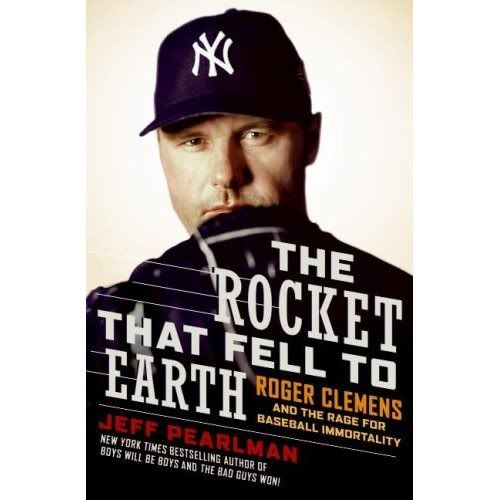
The spirit has been willing, but the flesh is weak and the hours are never long enough, but here's some recent reads, offerings from authors Jeff Pearlman (yes, the Clemens book), L. Jon Wertheim and David Harris:

The Rocket That Fell To Earth: Roger Clemens And The Rage For Baseball Immortality
By Jeff Pearlman (348 pp.)
Amazon.ca: $22.04


The test of a book such as Pearlman's is whether there's enough there outside of what tends to stir up manufactured outrage.

Pearlman's books work on two levels. He'll always have a couple of fish to throw to the hungry seals tied to the 24-hour news cycle and make for some juicy excerpts on at Yahoo! Sports. Try as one might, there's no forgetting the passage in his last book, Boys Will Be Boys, that 1990s Dallas Cowboys star Charles Haley masturbated in front of teammates or that Pro Football Hall of Famer Michael Irvin stabbed a fellow player in the neck. Of course, recounting dirt isn't writing; it's typing.

Unless the author cares about the people he/she is writing about, you don't have a book worth plunking $20-30 on; you have Richard Ben Cramer's Joe DiMaggio biography from about 10 years ago. Rocket works by inviting the reader to re-imagine Roger Clemens as part tragic hero, part baseball geek.

The Clemens sports fans have come to know and loath, except when he was pitching for your favourite team, is more Ogre than nerd. Pearlman quotes author Pat Jordan describing the pitcher's much-hyperbolized workout regimen as "mindless activity for a mindless person."

The first couple hundred pages, though, explore how Clemens kind of matured backwards as a ballplayer and as a person. That mushroomed into everything which has made him seem like the American Idiot (steroids, retiring, unretiring and re-retiring, jumping from team to team, jumping into bed with a briefly famous country-music cutie, and so on).

Clemens, as most ball fans know, developed pinpoint control before developing a major-league fastball, which runs counter to the usual maturation for power pitchers. He was also, as Pearlman details, a wise beyond his years teen, which might surprise people who remember his 38-year-old self throwing part of a broken bat at Mike Piazza during the 2000 World Series.

Thanks to dogged reporting, Pearlman unearths details like how at age 16, Clemens attended a local high school championship game with his brother, Randy, with the understanding he would transfer to the school which won the game. He cast his lot with the team which had lost: "The players were crisp, disciplined and uncommonly professional."

It was the kind of informed decision that can be beyond people much older than 16. It explains how Clemens was "never the thinking man's athlete, there was some intelligence about him, along with this drive to become a once-in-a-generation pitcher.

Unfortunately, as the book relates, he had a funny way of showing his intelligence. Clemens prevailed against all odds (he didn't get a single NCAA Division I scholarship offer coming out of high school) by putting in the time and being smart, on some level. Once he received his due, becoming a big man on campus at the University of Texas, a first-round draft pick and winning his first Cy Young at age 24 with the Boston Red Sox, Clemens started to lapse into into adolescent behaviour and outright jackassery.

The addiction to being Roger Clemens took hold, especially as he outgrew a childhood of relative poverty. Pearlman, who knows what scandalizes but also knows people deserve some benefit of the doubt, is a perfect tour guide to two-decade-long train wreck. Clemens' fatal flaw seems to be that, like most geeks, he could never quite explain himself to the norms (here one remembers the "misremembered" comment). He was doomed in the court of public opinion all along, which all built up to him and his former trainer, Brian McNamee, more or less agreeing to a policy of mutually assured destruction.

Rocket helps humanize Clemens. No one will be printing up "Free Roger" T-shirts if he ends up facing federal perjury charges in the U.S., but the Roger Clemens you come to know will keep you rapt for 300-plus pages.

Recommendation: Twenty-two bucks is pretty reasonable and it certainly would work as an Easter or Father's Day gift. Pearlman's first three books each made it to paperback, so hopefully Rocket will too, although this is a much tougher market for sports titles.

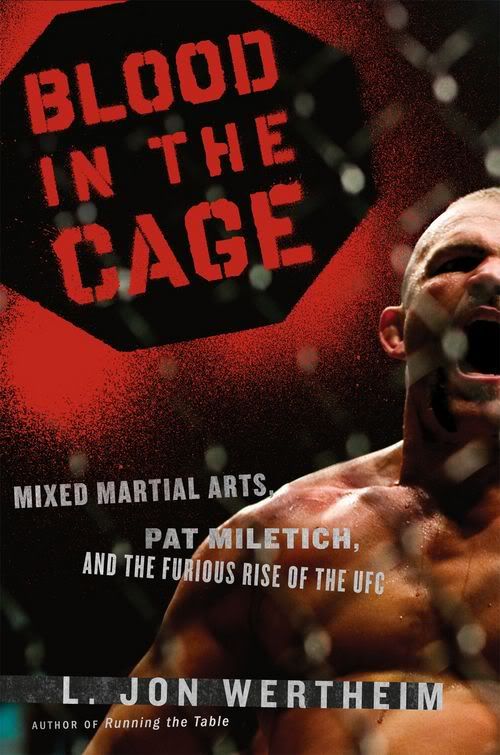
Blood In The Cage: Mixed Martial Arts, Pat Miletich, And The Furious Rise Of The UFC
by L. Jon Wertheim (251 pgs.)
Amazon.ca price: $21.39

Blood In The Cage probably is one of the more important sports books of 2009, even if it was actually published in December.

It raises the question of who knows less about the UFC, the people who swear by it or those who swear it's a sure sign of the downfall of western civilization. Werthheim, who mostly covers tennis for Sports Illustrated (tennis is a blood sport disguised as a refined game; that's why they wear all-white attire at Wimbledon), is a convert to mixed martial arts. However, he's not preachy about it, like a lot of its fans. It's just that a sports fan in 2009 has to accept MMA as part of the sportsgeist. If anything, it's not growing as fast as it could.

The heart of the first half of the book is Pat Miletich -- whom you could say was an Ultimate Fighting champion before they became famous -- and is now a respected trainer, running a gym in his hometown in Iowa. UFC president Dana White is at the heart of the second half.

Miletich's story hints at why some people recoil from the UFC, although Wertheim wisely goes about telling a fast-moving story instead of taking side trips into sociology. It is worth wondering if some people recoil from UFC because there's no feeling of separation like there is when you're reading about an NBA or NFL player who overcame poverty. Most of its fighters are from a fairly middle-class upbringing and, as any fan of The Ultimate Fighter knows, had to fight to prove something they cannot define.

One common thread, though, seems to be a turbulent home life. It hits too close to home when the athletes simply grew up in a dysfunctional family like, well, everyone. Similarly, you could argue the sport has risen because, in a lot of smaller American towns, the loss of well-paying manufacturing jobs has left a lot of young white men at loose ends with how to define their roles.

Anyway, enough eggheading it up. The sections on Miletich, whose first 30 years of his life included the death of a sibling, his parents' divorce, a string of dead-end job and the occasional dumpster-dive, are very well-done, and you should come away with an appreciation of what makes a fighter tick. Wertheim also takes time to explain how various combat sports, including grappling and jiu-jitsu, were melded together to create what's now known as MMA, defeating the idea it's some designer sport.

Appropriately enough, for a book about a sport that is officially less than 20 years old, the book is pretty open-ended. Wertheim punches holes in the myth that Dana White's leadership saved the UFC from folding,, but he gives its controversial president plenty of credit. He does ultimately wonder if White will be good for the sport in the long run: "Can an organism continue to grow if it doesn't always expose itself to light?" That's a pretty prescient comment, considering White is currently having to apologize after a vlog where he says "fuck" 42 times in less than eight minutes and uses anti-gay slurs. That line pretty much predicted White's gaffe.

Wertheim has another book due out May 7 called Strokes of Genius: Federer, Nadal and the Greatest Match Ever Played.

Recommendation: Bug your neighbourhood librarian for it, or get it in paperback. It's written more for a general audience than a hardcore fan.

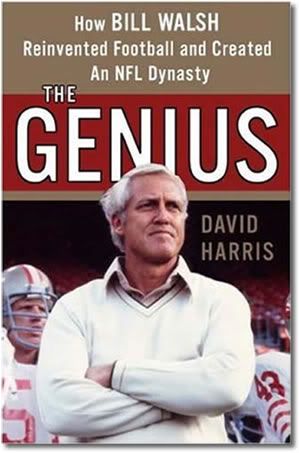
The Genius: How Bill Walsh Reinvented Football and Created An NFL Dynasty
by David Harris (384 pp.)
Amazon.ca: $18.90

Harris' 10th book is an adulatory look at the late Bill Walsh, who died in 2007 at the age of 75.

There's a bit of an Outliers vibe to Walsh's story. Malcolm Gladwell seized on the idea that if you spend 10,000 hours working to become good at something, it's practically an inevitability. Walsh, who coached the San Francisco 49ers to three Super Bowl championships in the 1980s (they won a fourth the year after he retired), waited much longer than he should have to become a NFL coach. Harris does a good job relating why that was, how Walsh looked critically at how people did things in a business and a sport where orthodoxy tends to rule the day. (One of the great quotes in the book: "Bill changed the way NFL teams practiced.")

Harris fills in the kind of details that show that Walsh seemed almost destined to re-design how offensive football was played in the NFL. Like many coaches, he was a frustrated quarterback; as a high school football player, he seldom got to play QB since his family moved a lot and coaches in those days seldom let left-handed people play the position. As a young high school coach, Walsh had his teams running the three wide receiver formations decades before it was commonplace in the NFL. His first jobs at the college and the pro level both came on the defensive side of the ball. That kind of football curriculum vitae no doubt helped Walsh.

The Genius is not a warts-and-all portrait. Walsh's personal life is barely mentioned, which is a stark contrast to the definite NFL coach bio, David Maraniss' Vince Lombardi bio, When Pride Mattered. (A key difference there was Maraniss was writing about someone long after he was dead; Harris had access to Walsh during his final two years.) There's probably a little too much space given to play-by-play details of 20-year-old football games. Cripes, if you want to know how the 49ers beat the Dallas Cowboys in 1982, the entire winning drive is on YouTube.

Those are small misgivings. It's a pretty thorough bio of the greatest coach in NFL history, pure and simple.

Recommendation: Check the library or wait until it comes down in price, unless you're a total NFL nut.

Thursday, April 02, 2009

Clemens and Cito: Fascinating reading, or misreading ...

Toronto will never be a true sports city until it learns to laugh stuff like this off.

Blue Jays manager Cito Gaston making an unflattering anatomical comparison with Roger Clemens over decade-old events got a lot of play today. The funny part, if you read the Jeff Pearlman book a certain way, the author did not say flat-out that Clemens got Gaston fired in 1997. Gaston is mentioned by name only twice in the entire book. It's not even the most scandalous thing Pearlman says about Toronto as a sports city.

(Pearlman addresses it: "What my book says is that Clemens had a heavy hand in the hiring of Tim Johnson, Gaston's eventual replacement. But that didn’t take place until well after Gaston was gone.")

It's a good thing for Cito and the friendlies in the press corps to run with. Ripping a disgraced drug cheat a new cornhole is the ultimate in low-hanging fruit, but it's damn entertaining:
"Author Jeff Pearlman made the allegation in his new book The Rocket That Fell to Earth and adds that Clemens pushed for the hiring of Tim Johnson, who was fired after one season for lying about his military service." — The Canadian Press

"Pearlman says Clemens vetoed qualified men such as Davey Johnson, Paul Molitor, Willie Randolph and Larry Bowa. Instead, he backed the hiring of Tim Johnson, who was fired after one season for lying about his fictional military service record."
— Sun Media
Here's what it actually says in the book, on pgs. 204-205:

Pearlman notes that Clemens approached the Jays about signing Jose Canseco before 1998 season, which they did, even knowing, as then-GM Gord Ash said, "what the history was been there." At the time, people would have taken that to mean Canseco was injury-prone and that he had played for the Oakland Athletics when they were one of the Jays' rivals:

Pearlman adds:
"That wasn't Clemens' only tinkering. Having fired manager Cito Gaston with five remaining in the 1997 season, the Blue Jays held an extensive search for a replacement, interviewing such Grade-A candidates as Davey Johnson, Larry Bowa, Paul Molitor and Willie Randolph. But who did Ash and Co. end up hiring? Tim Johnson, an unexceptional yet bubbly man who had just finished guiding the Triple-A Iowa Cubs to a 74-69 mark. Rarely considered big-league managerial timber, Johnson possessed three major attributes:
  1. Gobs of boyish enthusiasm. 'I'll communicate with each of players every day,' he vowed upon being hired, 'Even if it's just to say, Hi, how's the family?'
  2. He had been a coach with the Red Sox when Roger Clemens was there
  3. Clemens really liked him."
It sounds more like the front office made its choice knowing what would make their highest-paid player the happiest, like that has never happened before in pro sports. Reality sandwich, people, sorry it doesn't jibe with What Should Be.

It doesn't say Clemens tried to get Cito Gaston fired, it just says he was fired. Pearlman's books are exhaustively reported, so if that did happen, chances are he and the reporters he had helping him might have flipped over that rock.

The only other mention of Gaston comes a few earlier, it notes that Clemens knew the manager was "a strategic lightweight" before he decided to join the Jays. That's an opinion that many people would have agreed with before Toronto's baseball clock became permanently stuck at 11:39 p.m., Oct. 23, 1993.

Pearlman is pretty smart. Reading between the lines, saying, "That wasn't Clemens' only tinkering," which seems like a direct accusation, could also just be a a transition to a new paragraph. Either way, it seems like it was put it out there like a bucket of fresh fish for a bunch of baying seals and let the reporters in Toronto connect the dots, you know, the way they didn't 11 years ago when Tim Johnson was telling people he fought in Vietnam and half the Blue Jays team was goosed up on steroids.

The biggest takeaways from the two chapters on Clemens' Jays years was that he found an absence of celebrity and tabloid culture in Toronto. He got annoyed when National Golf Club actually expected him to pay his green fees ($1,000 for a foursome) and just wouldn't take 10 Red Sox-Jays tickets in lieu, like a lot of posh courses in the U.S might have.

More tellingly, Pearlman also notes that playing in Toronto meant he had no reason to worry about people unearthing the skeletons in the closet.
"Clemens had found the right place for a guy trying to keep his personal life off the radar. He certainly didn't have to worry about the Toronto Star or The Globe and Mail digging up dirt about Mindy McCready or any of the other women he was involved with. He also didn't have to worry about the second major scandal (for lack of a better word) in his life — the rapid decline of his brother, Randy, whose drug addiction was a tightly guarded secret restricted to family members." — pgs. 192-93
Granted, that is not Sportscentre-sexy. Taken one way, it makes Toronto sound less like a world-class city than a hockey-obsessed Hooterville, so that's why you're not hearing it repeated breathlessly.

The bottom line is Pearlman is an awesome writer and the Clemens book compares favourably with his other three efforts. Here is hoping this juices his Canadian sales, as it were, since there's a lot more to it than recounting all the nasty things he's done. He is supposed to be appearing on Drunk Jays Fans podcast in the next little while, so there will be a chance for discussion.

Think about, though: It's well-established that in 1998 the Blue Jays had about half the team on steroids, had two of baseball's most disgraced drug cheats in their lineup, one of whom was nailing a Woman Not His Wife who was also a chart-topping country singer. However, Cito Gaston is saying Roger Clemens tried to get him fired when he was presiding over a fourth straight losing season and it's a bloody outrage.

Oh, well, it makes Ottawa seem less parochial by comparison, which takes some doing. (The bar has been raised awfully high, or low, in the last little while.)

Some of us younger old fogeys still maintain there's a value to actually reading an entire book from start to finish and in that order. I'll try to have a review up in the next couple days.

Related:
Gaston has foul memories of Rocket (Sun Media)
Cito launches Rocket (Globe & Mail)
Cito Gaston has sharp words for Roger Clemens; Book on Clemens says he pushed Jays to fire Gaston in '97 (Morgan Campbell, Toronto Star)

Tuesday, March 24, 2009

Zen Dayley: Schilling was one Hall of a pitcher

History will probably be kind to Curt Schilling, who was often kind to history.

No doubt some of the hagiography for Schilling, who announced his retirement this morning on 38 Pitches, will note he was always grateful to those who came before him. He had the good sense to at least position himself as someone who still evoked what it was like to be a fan (use Alex Rodriguez as a straw man right here).

He named one of his children after Lou Gehrig. he once proudly owned a Brooklyn Dodgers jersey of his pitching coach, Johnny Podres. He also tried to bridge the jocks vs. nerd divide through his involvement in the Seamheads Historical League. There was also his stand, which might have been a bit preachy, that Roger Clemens should have had to prove his innocence when he said he didn't use steroids. He also campaigned for George W. Bush (win some, lose some), but a lot of people would like to take that one back.

The question becomes if a pitcher with just 216 career wins, who received Cy Young Award votes in only four seasons, will find favour with Baseball Hall of Fame voters. There might be a halo effect if he's perceived as someone who pitched during the Steroids Era and came out clean as a bean. Having played in Boston and having been on playoff teams in six of his last eight seasons won't hurt, either. Give us a hour, and we'll run a Keltner test.

Was he ever regarded as the best player in baseball? Did anybody, while he was active, ever suggest that he was the best player in baseball?

No.

Was he the best player on his team?

He was probably the best player on the 1997 Phillies, because someone had to be (they finished 68-94). He was on the same staff as Randy Johnson in Arizona, which answers that question.

Was he the best player in baseball at his position? Was he the best player in the league at his position?

No. Schilling was runner-up for the Cy Young Award three times, in '01-02 behind Johnson and in 2004 to Johan Santana in the American League. He only received five first-place votes in his career. He won his only ERA title in 1992 with the Phillies.

Did he have an impact on a number of pennant races?

He was on seven playoff teams ('93 Phillies, 2000-02 D-Backs and '04-'05-'07 Red Sox). He was exceptional during the stretch drive in '93. Schilling went 7-1 with 3.71 ERA after August 1, and the Phillies won 12 of his last 15 starts as they hung on to finish three games ahead of Montreal.

Schilling was only so-so in 2000 after going to Arizona in a deadline deal. In '01, when Arizona won the NL West by two games, from Aug. 1 on he won seven of his last eight decisions, posting a 2.74 ERA with 101 strikeouts (and just 11 walks) in 82 innings.

In '02, the Diamondbacks won the division by 2½ games over the Barry Bonds San Francisco Giants. Schilling won six starts in a row during a stretch in June and July. He also beat San Fran three times out of four that season, including a game in early September which gave Arizona an 8½-game lead with just 23 remaining.

Was he a good enough player that he could continue to play regularly after passing his prime?

Yes. He pitched effectively (15-7, 3.97 ERA, 1.216 WHIP) as a 39-year-old for the Red Sox in 2006, working more than 200 innings. At age 40, he was half-decent in 2007 (9-8, 3.87, 1.245) and helped win an elimination game in the league playoffs against Cleveland.

Is he the very best player in baseball history who is not in the Hall of Fame?

No. Among eligible players, Tim Raines is ahead of him.

Are most players who have comparable career statistics in the Hall of Fame?

Yes, with a but. Only three of his 10 comparables are in the Hall of Fame, and it took some intense lobbying to get two of them, Don Drysdale and Catfish Hunter, inducted. The most comparable player to Schilling is actually Kevin Brown, who's probably not electable.

Schilling pitched 3,261 innings and ERA-plused 127 (i.e., his earned-run average was 27% above league average over his entire career). Brown pitched 3,256 1/3 innings with the same ERA-plus, and he won't get within a hundred miles of being elected when he goes on the ballot in 2011. He wasn't exactly Mr. Congeniality.

However, first-ballot Hall of Famers Bob Gibson and Tom Seaver each ERA-plused 127, the same as Schilling did in a higher-scoring era. Schilling outperformed the league average by more than his contemporaries Mike Mussina (123) and Tom Glavine (118), whom he'll be measured against when he appears on the Hall of Fame ballot. He's tied with John Smoltz, whose ERA probably benefited from the four seasons he spent as a one-inning reliever.

It is odd how Schilling and Mussina's career arcs dovetail. Schilling had 216 career wins but had three 20-win seasons. Mussina, who got an earlier start and avoided injuries, had 270 wins, but won 20 only once.

Do the player's numbers meet Hall of Fame standards?

Yes, but it's complicated. Schilling toes the line on three of the four Jamesian tests, but kills it on the HOF Monitor, scoring 171 (100 means the player is a worthy candidate and 130 says he's a lock).

Voters will also be asked to consider that Schilling is one of only two pitchers to amass more than 3,000 strikeouts with fewer than 1,000 bases on balls, the other being Hall of Famer Fergie Jenkins. Schilling's strikeout-to-walk ratio, 4.38, is the highest for anyone who pitched after 1900. Wins are a

Is there any evidence to suggest that the player was significantly better or worse than is suggested by his statistics?

This is a chance to swing the question around to his post-season performance, though we need not mention the Bloody Sock. Schilling deserved the reputation Jack Morris had a post-season performer more than Jack Morris. He was 10-2 with a 2.23 ERA in 19 post-season starts, striking out 120 and walking just 25 in 133 1/3 innings. He was MVP of the National League playoffs in 1993 (Mitch Williams blew the save in both of his starts, but the Phillies won both games) and co-World Series MVP with Johnson in 2001.

As Baseball Digest Daily noted, Schilling's teams never lost when he started in a game where faced elimination. He pitched 39 1/3 innings when his team had to win to keep its season going and posted a 1.37 ERA, just four bases on balls and 33 strikeouts.

BDD's Craig Brown, did the initial number-crunching but omitted Oct. 21, 1993, when Schilling shut out the Blue Jays 2-0 in Game 5 of the World Series, buying Philly another 48 hours' life before "touch 'em all, Joe." Schilling scattered five singles and three walks over nine innings. This came against a team which hit .335/.405/.568 in the series' other five games, and he shut them out.

Is he the best player at his position who is eligible for the Hall of Fame but not in?

The temptation is to go with Blyleven.

How many MVP-type seasons did he have? Did he ever win an MVP award? If not, how many times was he close?

Not, he didn't; he's a pitcher. He was 14th in the NL balloting in 1997, 10th in both 2001 and 2002 and 12th in the American League voting in 2004. Please keep in mind that since the wild-card era began in 1994, only one starting pitcher (Pedro Martinez in '99) has had a top-three finish in MVP voting.

How many All-Star-type seasons did he have? How many All-Star games did he play in? Did most of the other players who played in this many go to the Hall of Fame?

He had seven such seasons — 1992, when he won the NL ERA title but was overlooked despite a 2.75 ERA at mid-seasoned. He was picked from from 1997-99 and again in 2001-02 and '04.

A gut instinct says that's a bit low. It Is About The Money, Stupid noted Mike Mussina was selected to only five all-star teams. John Smoltz is looked at a legit HOF candidate and has been selected for eight All-Star Games. Pedro Martínez has been selected for eight.

If this man were the best player on his team, would it be likely that the team could win the pennant?

Not likely, although he and The Big Unit were the best the 2001 Diamondbacks had when they won the World Series.

What impact did the player have on baseball history? Was he responsible for any rule changes? Did he introduce any new equipment? Did he change the game in any way?

Well, he was an early adaptor when it came to interacting with fans.

Did the player uphold the standards of sportsmanship and character that the Hall of Fame, in its written guidelines, instructs us to consider?

By all accounts, yes. Major League Baseball has three awards for, loosely paraphrasing, players who combine on-field performance with strong work in the community: The Hutch Award, the Roberto Clemente Award and and Lou Gehrig Memorial Award. Schilling has received all three. That probably will work in his favour.

Thursday, February 26, 2009

Zen Dayley: Carlos and the Bagman

It's been around the blogosphere and back, but a pre-eminent baseball writer batting out a column calling ex-Jay Carlos Delgado "the lost slugger of the Steroid Era" demands a response, especially when you totally called this spin:
"It's been hard, as a Jays fan, to shake the idea that Carlos Delgado's reputation might improve even though there's no way to presume anyone was clean as a bean."
-- Feb. 10, 2009
Discretion seemed like the better part of beating the Delgado drum two weeks ago.

It is zero-sum to play the guessing game of who was clean and who was juicing in baseball in the 1990s and 2000s. Tom Verducci, though, makes six figures writing about baseball (oh, the envy is just dripping off the computer screen), so maybe he can feel a little safer stepping out on to that ledge. The rest of us, who don't have editors and advertisers to answer to so much, can, as Jason at It Is About The Money, Stupid did, call this a "fool's errand." There is no way of knowing, so you can't turn Delgado into this smiling, ebullient bald-headed beacon.

It is also curious, mildly, whom Verducci doesn't seize upon as the Lost Slugger as he did his tour of spring training camps, carrying a lantern in the daytime. Delgado hit the ninth-most home runs in baseball from 1996 to 2003, which is taken to be the full run of the Steroid Era, to which Jules in Superbad would say, "Wow, that's a bit of an oversimplication there." Another first baseman of that period, Jeff Bagwell, is tied for sixth on the list (with Mark McGwire, who actually didn't play in two of those seasons).

Bagwell was not forgotten. He was simply underrated. He is also retired as a player, plus there was a New York Daily News report last spring that a trainer supplied drugs to him, Roger Clemens and Andy Pettitte when all three played in Houston. It didn't have much of stickiness factor, perhaps since "the rules of American sports journalism prohibit steroid allegations from being directed at average-sized Caucasian ballplayers on teams based in Red States." (OOLF, Dec. 15, 2006.)


Point being, Jeff Bagwell is not as good a literary device as Delgado. He's also not as a big skin to hang on the wall compared to Rodriguez, Barry Bonds, Sammy Sosa or Clemens and Mark McGwire. Being underrated and playing your whole career in a football state has its perks. (As an aside, someone claimed the spike in Bagwell's home-run rates was fishy, failing to point out he hit only four homers in his Double-A season in 1990 because he played in an extremely pitcher-friendly league; no one on his team hit more than five homers, and Bagwell led the league in doubles, which is an indicator of a burgeoning home-run stroke.)

Getting back to Delgado, it's easy to see why he would put on such a pedestal. He plays for the other New York ballclub and he could soon be in rare company when it comes to his counting stats.
"This season, be it anything close to ordinary for him, Delgado will become only the 11th player in baseball history with 500 home runs, 500 doubles and 1,500 RBIs. It is a club with no back door. The others: Babe Ruth, Ted Williams, Hank Aaron, Willie Mays, Frank Robinson, Eddie Murray, (Ken) Griffey, (Manny) Ramirez, (Rafael) Palmeiro and (Barry) Bonds. And yet Delgado never is talked about as a first-ballot Hall of Famer, and is rarely discussed as a Hall of Famer at all."
It's a fun thought, although piling up the big career hit, home run and RBI totals is somewhat a combination of longevity and the era where someone played. The first five names on that list are all-time greats beyond that doubt. The next five involve a guy who played forever and four who had the benefit of playing in the ArenaBall era, including two whom most people would call drug cheats.

Delgado should not be turned into a hero after the fact. He was a terrific hitter in Toronto. The vibe with him was the same as it has been with Roy Halladay since the start of the 2005 through on or around July 31, 2009,. He made it feel like the Blue Jays would always have some hope as long as he was as around. Perhaps Hall of Fame voters, who tend to give a lot of credence to someone having won a MVP award or Cy Young Award, will consider looking at it as if he won in 2003, when he was edged by Alex Rodriguez.

The bottom line, as ShysterBall noted, it's really hard to except people to believe who was clean and who was dirty.
"Look, I appreciate what Verducci is trying to do here. He, like so many of us, wants to bring some kind of certainty to bear on steroids' impact on baseball. He wants to draw a line around certain players and statistics so we can at least have some kind of a foothold for assessing the era in which we find ourselves. The fact of the matter, however, is that no analysis, such as it is, like this one going to achieve that certainty or allow us to separate the wheat from the chaff. Rather, it's going to take a lot of time and a lot of reporting and scholarship. In the meantime, we're just going to have to live with our vague senses about this stuff and have some faith that the enduring nature of the game -- and the work of history -- will sort all of this stuff out for us."
In the meantime, Carlos Delgado is 31 homers from 500. He'll probably achieve the milestone in September. Sure, it would have been great if he could have done it in a Blue Jays uniform.

Bloggers can't be choosers, though. Only Sports Illustrated gets make such choices.

Related:
Appreciating Carlos Delgado, the lost slugger of the Steroid Era (Tom Verducci, SI.com)