Deadspin has a nice tribute to Sports Illustrated's Dr. Z, Paul Zimmerman, the long-time NFL writer who was stricken by a pair of strokes last November.
Zimmerman always wrote to increase understanding, which is one of the two nobler goals of sports writing, and he didn't blow smoke up the superstars. One way to appreciate Dr. Z is to harken back on one of his more memorable pieces, from S.I.'s 1989 NFL preview, which had Randall Cunningham on the cover with the words, The Ultimate Weapon. It was one of those end-of-decade pieces, envisioning how football might look in the 1990s. It might be fun to wonder, two decades on, how prescient he was.
Dr. Z's predictions:
"The defensive emphasis in the years ahead will shift to big people who can run — 'tweener types, 220-pound linebacker-strong safety combinations and 250-pound linebacker-defensive ends." Partially right. There are plenty of NFL stars who could fit that loose description. Off the 2008 All-Pro team alone, one could pick out the Miami Dolphins' All-Pro linebacker Joey Porter (started his college career on offence and then moved to defensive line), the Arizona Cardinals' 230-lb. strong safety, Adrian Wilson and the Steelers safety Troy Polamalu (who plays in the tackle box on a majority of plays). The Chicago Bears linebacker Brian Urlacher, who was a college safety, could also fit in ther.
"Offensive coaches will give some thought to the emergence of this new monster and then come up with one of their own, thereby fortifying the most neglected position in football, tight end. They'll convert college linebackers and quick defensive ends." In 1988 and '89, no tight ends were among the top 20 NFL receivers in yards gained (yes, it's still strange the NFL ranks players by receptions instead of yardage). In 2007, three tight ends were among the top 20. In 2008, then-Kansas City Chief Tony Gonzalez was 12th and Dallas' Jason Witten was 25th.
"Players on both sides of the ball will be taller but lighter, because an effective anti-steroid policy will be implemented, preferably in consort with the Players Association (more on that later." Swing and a miss. Chalk this up to wishful thinking.
"Teams will load up on running backs, carrying as many as seven regulars, as more and more good runners come out of college. Teams will attack in waves, with three sets of running backs, to ensure that the offense always has fresh legs in the game. The heavy-duty 1,500-yard back could become obsolete." Forty-two NFL running backs had at least 100 carries in 1989, in a 28-team league. Forty-nine toted the synthetic leatherskin at least 100 times in 2008, in a 32-team league, about the same average per team. There might be more good running backs, but only so man coaches are willing to use regularly.
"With the emergence of mobile, more athletic quarterbacks from the colleges, NFL teams may put an extra passer in the back-field, much the way the Dolphins sometimes used backup quarterback Crash Jensen with (Dan) Marino in the mid-'80s." Talk about prescient. The evolutionary process has not been as quick as one might like. However, between the emergence of the Wildcat formation, the Miami Dolphins drafting a dual-threat quarterback such as Pat White of West Virginia, he might have been on to something.
(Kissing Suzy Kolber, of course, did this way better last summer.)
Type rest of the post here
Showing posts with label Xs-and-Os. Show all posts
Showing posts with label Xs-and-Os. Show all posts
Wednesday, May 20, 2009


Thursday, April 23, 2009
Woody Hayes never thought of this!
There's a great scene in North Dallas Forty (well, there really isn't a bad scene in it) where Phil Elliott says apologetically, "I learned all my social graces from football coaches."
Things have changed, but Jeff Pearlman had an amusing post about a Division III coach in the NCAA who vowed to bar the student paper from talking to his players. He recanted within the course of a day, but the point was, he still went on his power trip, and Pearlman got off on a pretty good rant.
This is as good a time as any to advance a personal theory that the football coach stereotype Pearlman was touching on seems less prevalent in Canada. There are yellers and screamers, the same as there are with any team in any sport, but it's a little different in Canada. The personality type up here, seems tilted more toward someone who's a teacher, patient and stern, trying to help guys learn a very complex game. Who knows why, maybe it's because coaches in Canada don't take mass participation for granted, so they have to be sensitive while working with who they do have. Meantime, the stereotypical coach down in the States can't understand why the kids are down at the skatepark instead of putting on the pads, like a man.
Related:
The really, really, really misguided Division III college football coach (Jeff Pearlman)
Type rest of the post here
Things have changed, but Jeff Pearlman had an amusing post about a Division III coach in the NCAA who vowed to bar the student paper from talking to his players. He recanted within the course of a day, but the point was, he still went on his power trip, and Pearlman got off on a pretty good rant.
"So this morning I read about Lance Leipold, the head football coach at the University of Wisconsin—Whitewater, who has banned the student media from covering his team next season. Leipold was angry about an editorial in the college newspaper that accused three football players of acting arrogantly. (College football players … arrogance … noooooooo!)It is not unheard of and you can see where a coach is coming from: He's sticking up for his guys, pure and simple. Still, he's a university employee and his team represents the university, so he can't stiff the campus paper.
"I' ve had myriad chats with my wife about why I never, ever want my kids to play organized football. It has nothing to do with injury/bodily harm, and everything — absolutely everything – to do with men like Leipold. Put simply, I hate football coaches. Not all of them obviously. In fact, not most of them. But there’s a certain breed that, well, just irks the hell out of me. They bark out inanities like, 'Real men eat steel!' and 'Be the ball!'; call their teams 'programs'; think sensitivity is for wimps. They lack any sort of world view, seeing only the green grass (or turf) that covers 100 yards of glory."
This is as good a time as any to advance a personal theory that the football coach stereotype Pearlman was touching on seems less prevalent in Canada. There are yellers and screamers, the same as there are with any team in any sport, but it's a little different in Canada. The personality type up here, seems tilted more toward someone who's a teacher, patient and stern, trying to help guys learn a very complex game. Who knows why, maybe it's because coaches in Canada don't take mass participation for granted, so they have to be sensitive while working with who they do have. Meantime, the stereotypical coach down in the States can't understand why the kids are down at the skatepark instead of putting on the pads, like a man.
Related:
The really, really, really misguided Division III college football coach (Jeff Pearlman)
Type rest of the post here
Friday, April 03, 2009
Cooking the Books...
The spirit has been willing, but the flesh is weak and the hours are never long enough, but here's some recent reads, offerings from authors Jeff Pearlman (yes, the Clemens book), L. Jon Wertheim and David Harris:
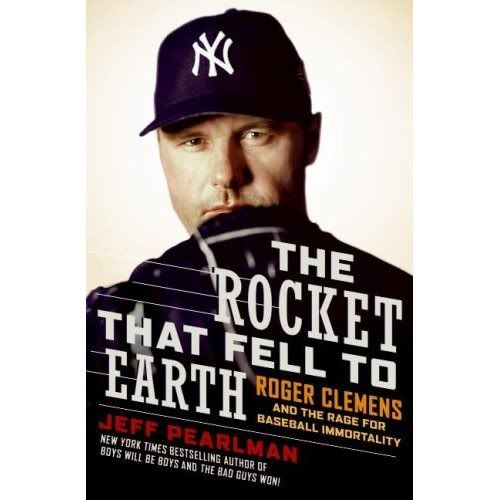 The Rocket That Fell To Earth: Roger Clemens And The Rage For Baseball Immortality
By Jeff Pearlman (348 pp.)
Amazon.ca: $22.04
The test of a book such as Pearlman's is whether there's enough there outside of what tends to stir up manufactured outrage.
Pearlman's books work on two levels. He'll always have a couple of fish to throw to the hungry seals tied to the 24-hour news cycle and make for some juicy excerpts on at Yahoo! Sports. Try as one might, there's no forgetting the passage in his last book, Boys Will Be Boys, that 1990s Dallas Cowboys star Charles Haley masturbated in front of teammates or that Pro Football Hall of Famer Michael Irvin stabbed a fellow player in the neck. Of course, recounting dirt isn't writing; it's typing.
Unless the author cares about the people he/she is writing about, you don't have a book worth plunking $20-30 on; you have Richard Ben Cramer's Joe DiMaggio biography from about 10 years ago. Rocket works by inviting the reader to re-imagine Roger Clemens as part tragic hero, part baseball geek.
The Clemens sports fans have come to know and loath, except when he was pitching for your favourite team, is more Ogre than nerd. Pearlman quotes author Pat Jordan describing the pitcher's much-hyperbolized workout regimen as "mindless activity for a mindless person."
The first couple hundred pages, though, explore how Clemens kind of matured backwards as a ballplayer and as a person. That mushroomed into everything which has made him seem like the American Idiot (steroids, retiring, unretiring and re-retiring, jumping from team to team, jumping into bed with a briefly famous country-music cutie, and so on).
Clemens, as most ball fans know, developed pinpoint control before developing a major-league fastball, which runs counter to the usual maturation for power pitchers. He was also, as Pearlman details, a wise beyond his years teen, which might surprise people who remember his 38-year-old self throwing part of a broken bat at Mike Piazza during the 2000 World Series.
Thanks to dogged reporting, Pearlman unearths details like how at age 16, Clemens attended a local high school championship game with his brother, Randy, with the understanding he would transfer to the school which won the game. He cast his lot with the team which had lost: "The players were crisp, disciplined and uncommonly professional."
It was the kind of informed decision that can be beyond people much older than 16. It explains how Clemens was "never the thinking man's athlete, there was some intelligence about him, along with this drive to become a once-in-a-generation pitcher.
Unfortunately, as the book relates, he had a funny way of showing his intelligence. Clemens prevailed against all odds (he didn't get a single NCAA Division I scholarship offer coming out of high school) by putting in the time and being smart, on some level. Once he received his due, becoming a big man on campus at the University of Texas, a first-round draft pick and winning his first Cy Young at age 24 with the Boston Red Sox, Clemens started to lapse into into adolescent behaviour and outright jackassery.
The addiction to being Roger Clemens took hold, especially as he outgrew a childhood of relative poverty. Pearlman, who knows what scandalizes but also knows people deserve some benefit of the doubt, is a perfect tour guide to two-decade-long train wreck. Clemens' fatal flaw seems to be that, like most geeks, he could never quite explain himself to the norms (here one remembers the "misremembered" comment). He was doomed in the court of public opinion all along, which all built up to him and his former trainer, Brian McNamee, more or less agreeing to a policy of mutually assured destruction.
Rocket helps humanize Clemens. No one will be printing up "Free Roger" T-shirts if he ends up facing federal perjury charges in the U.S., but the Roger Clemens you come to know will keep you rapt for 300-plus pages.
Recommendation: Twenty-two bucks is pretty reasonable and it certainly would work as an Easter or Father's Day gift. Pearlman's first three books each made it to paperback, so hopefully Rocket will too, although this is a much tougher market for sports titles.
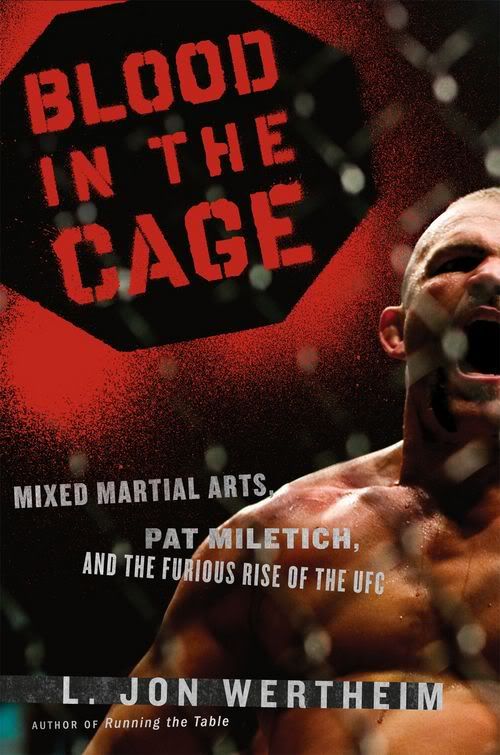 Blood In The Cage: Mixed Martial Arts, Pat Miletich, And The Furious Rise Of The UFC
by L. Jon Wertheim (251 pgs.)
Amazon.ca price: $21.39
Blood In The Cage probably is one of the more important sports books of 2009, even if it was actually published in December.
It raises the question of who knows less about the UFC, the people who swear by it or those who swear it's a sure sign of the downfall of western civilization. Werthheim, who mostly covers tennis for Sports Illustrated (tennis is a blood sport disguised as a refined game; that's why they wear all-white attire at Wimbledon), is a convert to mixed martial arts. However, he's not preachy about it, like a lot of its fans. It's just that a sports fan in 2009 has to accept MMA as part of the sportsgeist. If anything, it's not growing as fast as it could.
The heart of the first half of the book is Pat Miletich -- whom you could say was an Ultimate Fighting champion before they became famous -- and is now a respected trainer, running a gym in his hometown in Iowa. UFC president Dana White is at the heart of the second half.
Miletich's story hints at why some people recoil from the UFC, although Wertheim wisely goes about telling a fast-moving story instead of taking side trips into sociology. It is worth wondering if some people recoil from UFC because there's no feeling of separation like there is when you're reading about an NBA or NFL player who overcame poverty. Most of its fighters are from a fairly middle-class upbringing and, as any fan of The Ultimate Fighter knows, had to fight to prove something they cannot define.
One common thread, though, seems to be a turbulent home life. It hits too close to home when the athletes simply grew up in a dysfunctional family like, well, everyone. Similarly, you could argue the sport has risen because, in a lot of smaller American towns, the loss of well-paying manufacturing jobs has left a lot of young white men at loose ends with how to define their roles.
Anyway, enough eggheading it up. The sections on Miletich, whose first 30 years of his life included the death of a sibling, his parents' divorce, a string of dead-end job and the occasional dumpster-dive, are very well-done, and you should come away with an appreciation of what makes a fighter tick. Wertheim also takes time to explain how various combat sports, including grappling and jiu-jitsu, were melded together to create what's now known as MMA, defeating the idea it's some designer sport.
Appropriately enough, for a book about a sport that is officially less than 20 years old, the book is pretty open-ended. Wertheim punches holes in the myth that Dana White's leadership saved the UFC from folding,, but he gives its controversial president plenty of credit. He does ultimately wonder if White will be good for the sport in the long run: "Can an organism continue to grow if it doesn't always expose itself to light?" That's a pretty prescient comment, considering White is currently having to apologize after a vlog where he says "fuck" 42 times in less than eight minutes and uses anti-gay slurs. That line pretty much predicted White's gaffe.
Wertheim has another book due out May 7 called Strokes of Genius: Federer, Nadal and the Greatest Match Ever Played.
Recommendation: Bug your neighbourhood librarian for it, or get it in paperback. It's written more for a general audience than a hardcore fan.
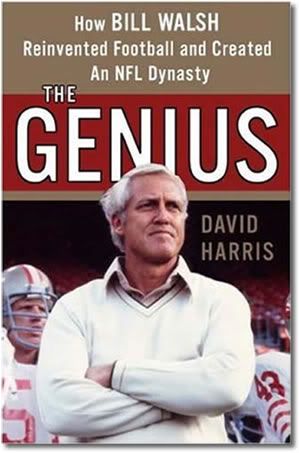 The Genius: How Bill Walsh Reinvented Football and Created An NFL Dynasty
by David Harris (384 pp.)
Amazon.ca: $18.90
Harris' 10th book is an adulatory look at the late Bill Walsh, who died in 2007 at the age of 75.
There's a bit of an Outliers vibe to Walsh's story. Malcolm Gladwell seized on the idea that if you spend 10,000 hours working to become good at something, it's practically an inevitability. Walsh, who coached the San Francisco 49ers to three Super Bowl championships in the 1980s (they won a fourth the year after he retired), waited much longer than he should have to become a NFL coach. Harris does a good job relating why that was, how Walsh looked critically at how people did things in a business and a sport where orthodoxy tends to rule the day. (One of the great quotes in the book: "Bill changed the way NFL teams practiced.")
Harris fills in the kind of details that show that Walsh seemed almost destined to re-design how offensive football was played in the NFL. Like many coaches, he was a frustrated quarterback; as a high school football player, he seldom got to play QB since his family moved a lot and coaches in those days seldom let left-handed people play the position. As a young high school coach, Walsh had his teams running the three wide receiver formations decades before it was commonplace in the NFL. His first jobs at the college and the pro level both came on the defensive side of the ball. That kind of football curriculum vitae no doubt helped Walsh.
The Genius is not a warts-and-all portrait. Walsh's personal life is barely mentioned, which is a stark contrast to the definite NFL coach bio, David Maraniss' Vince Lombardi bio, When Pride Mattered. (A key difference there was Maraniss was writing about someone long after he was dead; Harris had access to Walsh during his final two years.) There's probably a little too much space given to play-by-play details of 20-year-old football games. Cripes, if you want to know how the 49ers beat the Dallas Cowboys in 1982, the entire winning drive is on YouTube.
Those are small misgivings. It's a pretty thorough bio of the greatest coach in NFL history, pure and simple.
Recommendation: Check the library or wait until it comes down in price, unless you're a total NFL nut.
The Rocket That Fell To Earth: Roger Clemens And The Rage For Baseball ImmortalityBy Jeff Pearlman (348 pp.)
Amazon.ca: $22.04
The test of a book such as Pearlman's is whether there's enough there outside of what tends to stir up manufactured outrage.
Pearlman's books work on two levels. He'll always have a couple of fish to throw to the hungry seals tied to the 24-hour news cycle and make for some juicy excerpts on at Yahoo! Sports. Try as one might, there's no forgetting the passage in his last book, Boys Will Be Boys, that 1990s Dallas Cowboys star Charles Haley masturbated in front of teammates or that Pro Football Hall of Famer Michael Irvin stabbed a fellow player in the neck. Of course, recounting dirt isn't writing; it's typing.
Unless the author cares about the people he/she is writing about, you don't have a book worth plunking $20-30 on; you have Richard Ben Cramer's Joe DiMaggio biography from about 10 years ago. Rocket works by inviting the reader to re-imagine Roger Clemens as part tragic hero, part baseball geek.
The Clemens sports fans have come to know and loath, except when he was pitching for your favourite team, is more Ogre than nerd. Pearlman quotes author Pat Jordan describing the pitcher's much-hyperbolized workout regimen as "mindless activity for a mindless person."
The first couple hundred pages, though, explore how Clemens kind of matured backwards as a ballplayer and as a person. That mushroomed into everything which has made him seem like the American Idiot (steroids, retiring, unretiring and re-retiring, jumping from team to team, jumping into bed with a briefly famous country-music cutie, and so on).
Clemens, as most ball fans know, developed pinpoint control before developing a major-league fastball, which runs counter to the usual maturation for power pitchers. He was also, as Pearlman details, a wise beyond his years teen, which might surprise people who remember his 38-year-old self throwing part of a broken bat at Mike Piazza during the 2000 World Series.
Thanks to dogged reporting, Pearlman unearths details like how at age 16, Clemens attended a local high school championship game with his brother, Randy, with the understanding he would transfer to the school which won the game. He cast his lot with the team which had lost: "The players were crisp, disciplined and uncommonly professional."
It was the kind of informed decision that can be beyond people much older than 16. It explains how Clemens was "never the thinking man's athlete, there was some intelligence about him, along with this drive to become a once-in-a-generation pitcher.
Unfortunately, as the book relates, he had a funny way of showing his intelligence. Clemens prevailed against all odds (he didn't get a single NCAA Division I scholarship offer coming out of high school) by putting in the time and being smart, on some level. Once he received his due, becoming a big man on campus at the University of Texas, a first-round draft pick and winning his first Cy Young at age 24 with the Boston Red Sox, Clemens started to lapse into into adolescent behaviour and outright jackassery.
The addiction to being Roger Clemens took hold, especially as he outgrew a childhood of relative poverty. Pearlman, who knows what scandalizes but also knows people deserve some benefit of the doubt, is a perfect tour guide to two-decade-long train wreck. Clemens' fatal flaw seems to be that, like most geeks, he could never quite explain himself to the norms (here one remembers the "misremembered" comment). He was doomed in the court of public opinion all along, which all built up to him and his former trainer, Brian McNamee, more or less agreeing to a policy of mutually assured destruction.
Rocket helps humanize Clemens. No one will be printing up "Free Roger" T-shirts if he ends up facing federal perjury charges in the U.S., but the Roger Clemens you come to know will keep you rapt for 300-plus pages.
Recommendation: Twenty-two bucks is pretty reasonable and it certainly would work as an Easter or Father's Day gift. Pearlman's first three books each made it to paperback, so hopefully Rocket will too, although this is a much tougher market for sports titles.
Blood In The Cage: Mixed Martial Arts, Pat Miletich, And The Furious Rise Of The UFCby L. Jon Wertheim (251 pgs.)
Amazon.ca price: $21.39
Blood In The Cage probably is one of the more important sports books of 2009, even if it was actually published in December.
It raises the question of who knows less about the UFC, the people who swear by it or those who swear it's a sure sign of the downfall of western civilization. Werthheim, who mostly covers tennis for Sports Illustrated (tennis is a blood sport disguised as a refined game; that's why they wear all-white attire at Wimbledon), is a convert to mixed martial arts. However, he's not preachy about it, like a lot of its fans. It's just that a sports fan in 2009 has to accept MMA as part of the sportsgeist. If anything, it's not growing as fast as it could.
The heart of the first half of the book is Pat Miletich -- whom you could say was an Ultimate Fighting champion before they became famous -- and is now a respected trainer, running a gym in his hometown in Iowa. UFC president Dana White is at the heart of the second half.
Miletich's story hints at why some people recoil from the UFC, although Wertheim wisely goes about telling a fast-moving story instead of taking side trips into sociology. It is worth wondering if some people recoil from UFC because there's no feeling of separation like there is when you're reading about an NBA or NFL player who overcame poverty. Most of its fighters are from a fairly middle-class upbringing and, as any fan of The Ultimate Fighter knows, had to fight to prove something they cannot define.
One common thread, though, seems to be a turbulent home life. It hits too close to home when the athletes simply grew up in a dysfunctional family like, well, everyone. Similarly, you could argue the sport has risen because, in a lot of smaller American towns, the loss of well-paying manufacturing jobs has left a lot of young white men at loose ends with how to define their roles.
Anyway, enough eggheading it up. The sections on Miletich, whose first 30 years of his life included the death of a sibling, his parents' divorce, a string of dead-end job and the occasional dumpster-dive, are very well-done, and you should come away with an appreciation of what makes a fighter tick. Wertheim also takes time to explain how various combat sports, including grappling and jiu-jitsu, were melded together to create what's now known as MMA, defeating the idea it's some designer sport.
Appropriately enough, for a book about a sport that is officially less than 20 years old, the book is pretty open-ended. Wertheim punches holes in the myth that Dana White's leadership saved the UFC from folding,, but he gives its controversial president plenty of credit. He does ultimately wonder if White will be good for the sport in the long run: "Can an organism continue to grow if it doesn't always expose itself to light?" That's a pretty prescient comment, considering White is currently having to apologize after a vlog where he says "fuck" 42 times in less than eight minutes and uses anti-gay slurs. That line pretty much predicted White's gaffe.
Wertheim has another book due out May 7 called Strokes of Genius: Federer, Nadal and the Greatest Match Ever Played.
Recommendation: Bug your neighbourhood librarian for it, or get it in paperback. It's written more for a general audience than a hardcore fan.
The Genius: How Bill Walsh Reinvented Football and Created An NFL Dynastyby David Harris (384 pp.)
Amazon.ca: $18.90
Harris' 10th book is an adulatory look at the late Bill Walsh, who died in 2007 at the age of 75.
There's a bit of an Outliers vibe to Walsh's story. Malcolm Gladwell seized on the idea that if you spend 10,000 hours working to become good at something, it's practically an inevitability. Walsh, who coached the San Francisco 49ers to three Super Bowl championships in the 1980s (they won a fourth the year after he retired), waited much longer than he should have to become a NFL coach. Harris does a good job relating why that was, how Walsh looked critically at how people did things in a business and a sport where orthodoxy tends to rule the day. (One of the great quotes in the book: "Bill changed the way NFL teams practiced.")
Harris fills in the kind of details that show that Walsh seemed almost destined to re-design how offensive football was played in the NFL. Like many coaches, he was a frustrated quarterback; as a high school football player, he seldom got to play QB since his family moved a lot and coaches in those days seldom let left-handed people play the position. As a young high school coach, Walsh had his teams running the three wide receiver formations decades before it was commonplace in the NFL. His first jobs at the college and the pro level both came on the defensive side of the ball. That kind of football curriculum vitae no doubt helped Walsh.
The Genius is not a warts-and-all portrait. Walsh's personal life is barely mentioned, which is a stark contrast to the definite NFL coach bio, David Maraniss' Vince Lombardi bio, When Pride Mattered. (A key difference there was Maraniss was writing about someone long after he was dead; Harris had access to Walsh during his final two years.) There's probably a little too much space given to play-by-play details of 20-year-old football games. Cripes, if you want to know how the 49ers beat the Dallas Cowboys in 1982, the entire winning drive is on YouTube.
Those are small misgivings. It's a pretty thorough bio of the greatest coach in NFL history, pure and simple.
Recommendation: Check the library or wait until it comes down in price, unless you're a total NFL nut.
Tuesday, March 17, 2009
Leaching off the system-QB label
Texas Tech's Mike Leach is obviously crazy for thinking NFL coaches should be expected to do some coaching:
Hmmm. It's almost life Leach is a little chapped that the NFL isn't busting down the maverick coach's door.
Related:
Texas Tech's Mike Leach has an offer for the NFL (Dallas Morning News)
"Leach, who scoffs at the system quarterback label, just about blew a gasket when I asked about the concern regarding Harrell's ability to work from under center and drop back to pass.Leach adds that he would charge $10,000 to teach a quarterback how to do a proper three-, five- or seven-step drop, but he'll settle for 50 bucks.
" 'You bring up easily the most pitiful NFL cop-out of all!' he hollered. 'And you can send that message to the whole NFL. Any coach who has ever said or uttered those words or considers that a concern, here's my message for them: How could you possibly look yourself in the mirror and consider yourself an NFL coach and not be able to teach a guy to run back three steps, five steps and seven steps? I can teach a child that!
" 'Any coach in the NFL who can't do that ought to be fired!' "
Hmmm. It's almost life Leach is a little chapped that the NFL isn't busting down the maverick coach's door.
Related:
Texas Tech's Mike Leach has an offer for the NFL (Dallas Morning News)
Sunday, December 28, 2008
Stratagems: Not punting the football
Someone else is using math to ruin sports.
Gregg Easterbrook at ESPN.com has often Don't Punt proselytizers who have produced analyses saying that punting the ball away on fourth down is a poor percentage play. The pointyheads have evidently got to a high school coach in Little Rock, Arkansas, named Kevin Kelley. His team, the Pulaski Bruins, won the state championship without punting all season.
The numbers say that Kelley is right to go for it on every fourth down and, according to the Rivals High article, go for an onside kick on about 75% of the team's kickoffs.
In a general sense, these are fun ideas to play around with on a Sunday morning before settling in for a NFL Sunday. It comes back to a key principle of being a sports fan that some sports geeks can forget. When a crucial situation comes up, don't think of it in terms of of what a certain coach or team might do, suggest what they should try. You'll live longer.
This is apropos since Denver and San Diego play tonight for the AFC West title – someone has to win it, and laying aside what you might think of Ray Lewis or Bill Belichick, you should be annoyed that an 8-8 team might go into the playoffs ahead of the 10-6 Baltimore Ravens or New England Patriots. In those teams' first meeting this season, as you know, Denver beat San Diego 39-38 after passing up a sure extra point to go for a 2-point conversion in the final minutes.
Right before that play, a newsroom colleague said, "They should go for two." Someone pointed out, "They never do that in the NFL," and he replied, "So what? I want to see them go for two, they should go for two. Don't tell me what you think the coaches will do, tell me what you think they should do." Weak, OK-you-win reply: "Go for two, then."
In that spirit, teams should punt less. Kicking the ball away when the other team knows a punt is coming often does seem like a give-up play. Now there are numbers that confirm as much.
Obviously, field goals are another kind of apple. That involves putting points on the scoreboard. Media types who have roasted the New England Patriots' Bill Belichick and USC's Pete Carroll for ill-fated fourth-down gambles in big games had a point. Going for it on fourth-and-13 in the Super Bowl when your offensive line is being owned will always be dumb.
The quick kick on third down, where the quarterback lines up in the shotgun formation, inches back a few steps and boots the ball away, is also separate.
A fourth-down punt only seems worth it when the punter has a chance to pin a team inside its own 10-yard line. There was a perfect example Saturday of where Don't Punt might have helped a team. The Wisconsin Badgers were down by only four points late in the first half in their Champs Sports Bowl capitulation against Florida State, facing fourth-and-2 on their own 15-yard line. They punted. About 40 seconds later, Florida State scored a touchdown to open a double-digit lead and went on to win 42-13.
It might have ended up that way anyhow (big, slow Big Ten team vs. a big, swift southern team, don't you know). It didn't have to, though.
It's always enjoyable to think about unorthodox strategies. The Don't Punt strategy seems like a winner. It will not appear in the NFL any time soon, but anything that requires more brainwork for the players and more excitement for fans should be welcome, even the bastards have to resort to introducing empirical evidence.
Related:
Arkansas coach punts traditional game plan (Jeff Merotin, Rivals High; via JonahKeri.com)
Gregg Easterbrook at ESPN.com has often Don't Punt proselytizers who have produced analyses saying that punting the ball away on fourth down is a poor percentage play. The pointyheads have evidently got to a high school coach in Little Rock, Arkansas, named Kevin Kelley. His team, the Pulaski Bruins, won the state championship without punting all season.
The numbers say that Kelley is right to go for it on every fourth down and, according to the Rivals High article, go for an onside kick on about 75% of the team's kickoffs.
If Pulaski converts on fourth down, it creates a momentum change similar to a turnover. Other high school coaches have told Kelley they would rather see his team punt.Anyone who has covered high school football, speaking from experience, has probably wondered why the stronger teams don't call for onside kicks at least half the time, aside from situations where the outcome is not in doubt. The up men on the return team often have little experience handling the ball. The sight of the ball coming toward them when it's not expected can cause a young athlete to panic.
The Bruins even avoid punting when the defense has stopped them inside their own 10-yard line.
"You can just tell people are in the stands thinking, 'You're an idiot,' " Kelley said.
... If Pulaski has a fourth-and-8 at its own 5-yard line, Kelley said his explosive offense likely will convert a first down at least 50 percent of the time. If it fails to convert, statistical data from the college level shows that an opponent acquiring the ball inside the 10-yard line scores a touchdown 90 percent of the time. If Pulaski punts away (i.e., a 40-yard punt with a 10-yard return) the other team will start with the ball on the 38-yard line and score a touchdown 77 percent of the time. The difference is only 13 percent.
In a general sense, these are fun ideas to play around with on a Sunday morning before settling in for a NFL Sunday. It comes back to a key principle of being a sports fan that some sports geeks can forget. When a crucial situation comes up, don't think of it in terms of of what a certain coach or team might do, suggest what they should try. You'll live longer.
This is apropos since Denver and San Diego play tonight for the AFC West title – someone has to win it, and laying aside what you might think of Ray Lewis or Bill Belichick, you should be annoyed that an 8-8 team might go into the playoffs ahead of the 10-6 Baltimore Ravens or New England Patriots. In those teams' first meeting this season, as you know, Denver beat San Diego 39-38 after passing up a sure extra point to go for a 2-point conversion in the final minutes.
Right before that play, a newsroom colleague said, "They should go for two." Someone pointed out, "They never do that in the NFL," and he replied, "So what? I want to see them go for two, they should go for two. Don't tell me what you think the coaches will do, tell me what you think they should do." Weak, OK-you-win reply: "Go for two, then."
In that spirit, teams should punt less. Kicking the ball away when the other team knows a punt is coming often does seem like a give-up play. Now there are numbers that confirm as much.
Obviously, field goals are another kind of apple. That involves putting points on the scoreboard. Media types who have roasted the New England Patriots' Bill Belichick and USC's Pete Carroll for ill-fated fourth-down gambles in big games had a point. Going for it on fourth-and-13 in the Super Bowl when your offensive line is being owned will always be dumb.
The quick kick on third down, where the quarterback lines up in the shotgun formation, inches back a few steps and boots the ball away, is also separate.
A fourth-down punt only seems worth it when the punter has a chance to pin a team inside its own 10-yard line. There was a perfect example Saturday of where Don't Punt might have helped a team. The Wisconsin Badgers were down by only four points late in the first half in their Champs Sports Bowl capitulation against Florida State, facing fourth-and-2 on their own 15-yard line. They punted. About 40 seconds later, Florida State scored a touchdown to open a double-digit lead and went on to win 42-13.
It might have ended up that way anyhow (big, slow Big Ten team vs. a big, swift southern team, don't you know). It didn't have to, though.
Keeping the offense on the field on fourth down allows for more creative play-calling. Third-and-long does not have to be a passing down. The Little Rock school can run the ball, throw a screen pass or use any number of formations. Defenses do not know whether to use a nickel or dime defense. And Pulaski's offense has less pressure on third down.On the previous play, the Badgers faced third-and-6. In their minds, they had one chance to get six yards, not two, so they lined up in a formation that screamed Obvious Passing Situation. Wisconsin is famous for its power running game, but Florida State knew it could sell out for a pass. The Wisconsin receiver caught a short pass and was quickly dropped two yards short of the first down, boom went the punt and soon enough, the rout was on.
It's always enjoyable to think about unorthodox strategies. The Don't Punt strategy seems like a winner. It will not appear in the NFL any time soon, but anything that requires more brainwork for the players and more excitement for fans should be welcome, even the bastards have to resort to introducing empirical evidence.
Related:
Arkansas coach punts traditional game plan (Jeff Merotin, Rivals High; via JonahKeri.com)
Thursday, November 13, 2008
Portrait of the coach as 'mad artist'
Author Michael Lewis (he wrote this thing called Moneyball — ever heard of it?) was early getting on the Mike Leach/Texas Tech bandwagon, and he shared some thoughts on the coach whose team, honestly, has been the most fun to watch in college football since Reggie Bush was at USC:
Related:
"Mike Leach is sitting there almost like a birdwatcher, waiting for something to happen so he can think about what that means. And the players, they feel like they’ve walked into the funhouse. They come out of high school and all of a sudden then find themselves on 4th and 16 in their own territory and the coach is sending in a play. It liberates the players.Just wait until the A-11 offence starts taking the NCAA by storm in about 10 years.
"... if he had gone to say, U.S.C., 10 years ago and installed his system there, it would be comical. He would score every time - and he would have a defense by default because he would get great athletes.
Related:
Texas Tech at the Top? Michael Lewis Isn't Surprised (The New York Times, PLAY magazine)
Subscribe to:
Posts (Atom)


 Posts



