Showing posts with label Malcolm Gladwell. Show all posts

Saturday, June 13, 2009

Hoserdome 2009: Malkin from Mlodinow as Pens collect Cup

The Pittsburgh Penguins are walking around with Stanley Cup-sized hangovers and meantime, we should all be reading The Drunkard's Walk.

That Stanley Cup final which wrapped up last night is a good chance to reflect on randomness, which ruled this series. Randomness is good in sports. You don't want the odds-on fave winning all the time, it would be boring. So randomness it is for choosing a tell-all for the decider, where the Penguins beat the Detroit Red Wings 2-1. Why the hell not?

The road team won — which had not happened in Game 7 of the final since 1971. The Penguins beat the Red Wings, who almost never lose at home at the playoffs. The Pens were outscored 17-14 in the series, including 12-4 at Detroit's Joe Louis Arena. They won even though Sidney Crosby had many points in the final series as non-factor Marian Hossa. Crosby was also knocked out of Game 7 halfway through after his left knee was squished between the Wings' Johan Franzen and the boards. That should disabuse anyone of the notion the Penguins winning was some inside job orchestrated by the NHL to keep NBC happy.

The offensive hero of the decider, Max Talbot, who scored both Penguins goals, was not mentioned in a pregame Yahoo! Sports column on which listed twenty-seven potential Game 7 heroes. In the final two minutes, the Red Wings nearly forced overtime; a shot by Niklas Kronwall pinged the crossbar and ricocheted out instead of into the net and Pittsburgh goalie Marc-André Fleury made the save of his life, sliding cross-crease to deny Nicklas Lidström with one second left.

For this ass-talker's purposes, random is as much of a descriptive for this series as great. The choice here before Game 1 two weeks ago was "Pittsburgh in 7." It was not borne out of believing that Pittsburgh was the better team. It was steeped more in a passage from Leonard Mlodinow's best-seller, The Drunkard's Walk: How Randomness Rules Our Lives, which sports economist David Berri posted at The Wages of Wins Journal a couple weeks back:
"... if one team is good enough to warrant beating another in 55% of its games, the weaker team will nevertheless win a 7-game series about 4 times out of 10. And if the superior team could beat its opponent, on average, 2 out of 3 times they meet, the inferior team will still win a 7-game series about once every 5 match-ups. There is really no way for a sports league to change this."
It seemed like a good bit of back-pocket knowledge, especially since well before the playoffs, James Mirtle had written something along the lines of, "I'm starting to think this will be a year where we see a random Stanley Cup champion." It also provided basis for going against the grain beyond being, shudder, a contrarian for contrarian's sake.

Detroit seemed like the superior team, but not vastly superior to the Penguins, especially to someone who had no way of knowing for sure about each team's injuries. The Penguins were good enough to win a Stanley Cup and as Outliers argued, you don't have to be super-qualified, you just have to be qualified.

Berri's predictions for the NBA's conference finals indirectly (or perhaps not) illustrated the point. His analysis backed up what everyone who only half-follows hoops knew, that the Cleveland Cavaliers and L.A. Lakers were supposed to win in a pair of walkovers, five games maximum. You know the rest of the story. The Cavaliers were upended in six games by the Orlando Magic. Berri penned a follow-up called, "Fooled By Randomness," explaining,well, shit happens. As sports fans, we shouldn't run from it. We should embrace it.
"The small sample we see in the playoffs imposes an element of randomness on the outcome. This randomness makes it interesting, but it also makes decision-making complicated."
The New York Times' review of The Drunkard's Walk explains how people don't appreciate randomness when they're making predictions:
"... Anyone who has ever bought a mutual fund because it has been on a roll or bet that a racehorse will extend its winning streak has fallen into the same confusion. Chances are the champion will regress toward the mean and another will have its glory day. In all life's games, some players are better than others, but randomness maintains the upper hand.

Hardest of all for our blinkered brains are cases involving Bayesian statistics, where one must gauge how the probability of one event hinges on that of another."
One event hinging on that of another? That sounds much like the hockey media's tendency to form an opinion of what's going to happen in the next game based on the last game, or the last one in the arena of the team which has home ice. The way the Stanley Cup final played out certainly left everyone covering the series totally bumfuzzled.

The Red Wings won the first two games in Detroit, which was taken to mean that the Penguins were too young and and immature. The young and immature Penguins bounced back by winning the next two games, which indicated the Red Wings were old and tired. The old and tired Red Wings then blew the Penguins off the ice in a 5-0 rout in Game 5 last Saturday, chasing Fleury halfway through the game, hence the Penguins were done. At that point, the Anna Faris character from House Bunny (oh, don't act like you didn't download it) would have chimed in, "Ya, hence!"

Of course, Pittsburgh won three nights later at home to force Game 7. No one really knew what to believe anymore. It's not clear if the predictions for the winner-take-all game broke down along any blogger-vs. MSM lines. Puck Daddy surveyed eight hockey guys who write mostly for a web audience and five chose the Penguins.

Maybe everyone was just tired of Detroit winning. There are also straightforward hockey explanations. For one, Pittsburgh's rookie coach Dan Bylsma made some adjustments in Game 6 (James Mirtle, From The Rink). Marc-André Fleury had one hell of an evenout in Game 7 after struggling terribly in his previous outings in Detroit.

Secondary scoring also helps. Scratch a hockey coach whose team just lost a tightly contested series and he'll often tell you it could have been different if someone off the second and third line could have just popped a couple goals. The Penguins' winning goals in Games 6 and 7 came from Tyler Kennedy (15 goals and 35 points in the regular season) and Talbot (12 and 22). Meantime, the Red Wings also had five forwards who were, in hockey parlance, squeezing the stick exceptionally hard. Hossa, Tomas Holmström, Hart Trophy finalist Pavel Datsyuk (who was dealing with a foot injury), Jiri Hudler and Mikael Samuelsson all went goal-less in the final, finishing with scoring droughts ranging between eight and 19 games.

There's a randomness to that. Could anyone have foreseen Talbot scoring four goals in the final after scoring two in the first three playoff series? Could have anyone have predicted all five of those players going stone-cold at the same time? Likely not. Mlodinow's point about what can happen when one team should beat the other 55% of the time seems to apply.

It would be nice to say yours truly had the courage of his convictions throughout the past two weeks, but I turtled. On Kinger's sports talk radio show on CFRC 101.9 in Kingston, I stuck by the Pittsburgh pick, simply saying, "I'm going to ride it out, like George Costanza when he had that bad stock." It turns out that was the smart play (and in that Seinfeld episode, George ends up with a financial windfall after deciding to "go down with the ship.")

The Penguins were full value for their effort. Writing this is just a way to point out that while everything is so black-and-white in how sports are presented, with winners and losers, really it's not. There was some randomness to how this went down; that's one simplification among dozens.

At the very least, it is one way to disabuse anyone who says the Red Wings are over the hill when, as Mirtle says, "Detroit's got the top minds in the game in the front office and behind the bench, and I have no doubt they'll be back in the finals in the near future."

In sports, sometimes the winning team is the one that executes when an opportunity comes along. It can be completely random, like outcomes in everyday life. It sure made for a hell of a series.

P.S. Did anyone else have an issue with Hockey Night in Canada's Don Cherry referring to the season as "nine months of war" last night? War metaphors in sports are usually a no-no and it seems kind of hypocritical coming from someone who's always talking about Canadian soldiers in Afghanistan. It's almost like Cherry, a smart man, should be more aware of the distinction.

Related:
Playing The Odds (George Johnson, The New York Times, June 8, 2008)

Sunday, May 24, 2009

Windsor wins Memorial Cup, scores one for Malcolm Gladwell

The Windsor Spitfires, junior hockey champions, were a great third-period team.
And a great second-quarter team.

The wordsmiths covering the Memorial Cup can capture the spirit of Windsor's triumph for the papers and the sportscasts. The Spitfires, representing a city devastated by the bottoming-out of the U.S. auto industry, are the first team to win the Memorial Cup after losing its first two games of the tournament. They are just a year removed from captain Mickey Renaud's death from a rare heart ailment age 19, which GM Warren Rychel said at the time was "the biggest tragedy in Spitfire history."

(Puck Daddy has did it justice, brilliantly.)

A broader if not necessarily larger truth could be Rychel and coach Bob Boughner, who as our own Trevor Stewart explained last November, have a special eye for talent. This is kind of a complicated post and you're excused for not reading.

The book Outliers shone a light on the disproportionate number of elite hockey players born in the first three months of the year. The Spitfires actually had the fewest (7) of the four teams at the tournament. The tourney MVP, good Kingston boy Taylor Hall, is a November baby, who is not eligible for the NHL draft until 2010. Windsor's captain and No. 1 goaltender were also born late in the year. The runners-up, the Kelowna Rockets, whose Western Hockey League drafts players at age 15 (a year earlier than the other two leagues), had the most, 10, which is fairly typical. The point is the obvious: Maybe one way to get a read on a major junior team's front office is to see how many regulars it has who were born outside the Jan. 1-March 31 window.

This does not explain the outcome of today's game. That debate could be steered around to the ridiculously long layoff Kelowna had between meaningful games. The Spitfires scored on their first three shots before the Rockets could even skate off the rust from four days between games, for pity's sake. As defenceman Ben Shutron told Gare Joyce of sportsnet.ca, they were "the best-conditioned team in the tournament."

However, what made that possible? They had to get there first. Looking at the rosters for the two finalists hints at Malcolm Gladwell's point in Outliers about how we are not "always particularly smart about how to make the best use of our talent." (ESPN.com, Dec. 8, 2008.) It might also illustrate how Rychel/Boughner are smarter than most of their competition.

As Gladwell explains, there is a huge blind spot with identifying good hockey players. The major junior teams which can negotiate around this might be the ones who put themselves in position to pull off something like Windsor did:
"It's a beautiful example of a self-fulfilling prophecy. In Canada, the eligibility cutoff for age-class hockey programs is Jan. 1 ... Coaches start streaming the best hockey players into elite programs, where they practice more and play more games and get better coaching, as early as 8 or 9. But who tends to be the 'best' player at age 8 or 9? The oldest, of course — the kids born nearest the cut-off date, who can be as much as almost a year older than kids born at the other end of the cut-off date. When you are 8 years old, 10 or 11 extra months of maturity means a lot."
The Windsor brain trust's wisdom might be borne out when you group the Spitfires' and Rockets' Memorial Cup rosters by which quarter of the year the players were born in (January-February-March; April-May-June; and so on.)
Kelowna: 10-4-6-3
Windsor: 7-10-4-5
Kelowna's 10 players born between Jan. 1-March 31 include star defenceman Tyler Myers (Feb. 1, 1990) and starting goalie Mark Guggenberger (Jan. 10, 1989). The Rockets were considered an improbable WHL champion, but the team they upset in the championship series, the Calgary Hitmen, had a somewhat similar birthday distribution: 10-6-4-2. The main reason to cite Kelowna and Calgary is to show what the age distribution often tends to be with major junior teams: Lots of players born early in the year, very few born in the summer and fall. It doesn't explain why Windsor won, it's just background for how they rebuilt in two years.

At age 16, when players are drafted in the OHL, the advantage early-birthday kids have can wreak havoc with teams' evaluations. It evens out somewhat by the time those players are 18, 19 and 20. The Windsor team which Warren Rychel assembled has several contributors born in the second quarter of the year, between April 1 and June 30 (hence second-quarter team):
  • Greg Nemisz (June 5, 1990) — Nemisz, who had seven points in six games at the Memorial Cup, was thought of as a bit of reach when he was taken with the No. 7 overall pick in the 2006 OHL draft. Two years later, the 6-foot-4, 200-lb. winger became a first-round pick in the NHL (25th overall to Calgary).

  • Dale Mitchell (April 9, 1989) — Like Nemisz, Mitchell went in the same round of the NHL draft that he did in the OHL draft (third round to the Leafs in 2007 and third round by Oshawa in '05). Mitchell, a trade deadline pickup, scored a natural hat trick in the tie-breaker game vs. Rimouski and some thought he, not Hall, could have been the MVP.

  • Andrei Loktionov (May 30, 1990) — Also notched seven points during the tournament. Kind of a wild card since he's Russian.

  • Mark Cundari (April 23, 1990)— One of Windsor's top defencemen; was able to take a regular shift in the OHL as a 16-year-old rookie in 2006-07, when Boughner and Rychel went with a youth movement.

  • Ben Shutron (June 14, 1988) — A feel-good story, since he played for Kitchener in the '08 Memorial Cup and was a whipping boy while he was with the human comedy which is the Kingston Frontenacs. Gare Joyce wrote a nice piece about Shutron for sportsnet.ca ahead of Sunday's final.
Windsor was the only team at the tourney with more April-May-June birthdates than Jan.-Feb.-March (Drummondville, the Quebec league champ, had eight of each).

Meantime, three of Windsor's veteran role players were all "wrong birthdays" who were acquired in trades:
  • Rob Kwiet (Aug. 2, 1988) — An overage defenceman who started out with the Mississauga St. Michael's Majors. Scored the third Windsor goal.

  • Lane MacDermid — A tough guy who was a valuable penalty killer during the playoff run. Originally taken 159th overall in the 2005 draft by the Owen Sound Attack.

  • Scott Timmins (Sept. 11, 1989) — Centre who was with Kitchener last season. Originally a fifth-round pick.
Last but not least, there are the fourth-quarter players:
  • Andrew Engelage (Oct. 28, 1988) — A kind of OHL version of the Red Wings' Chris Osgood (often criticized, but his teams win) who was originally a 13th-round draft choice. Ended up being in net for 64 wins this season after Windsor was criticized in some corners for not trading for a more ballyhood goalie, such as Red Wings prospect Thomas McCollum.

  • Taylor Hall (Nov. 14, 1991) — One wonders what Hall's progress would have been if his family had not moved from Western Canada to Kingston before he was exposed to the draft. Hall's father was a pro athlete (CFL), which means he has the genes to counter his wrong birthday.

  • Harry Young (Nov. 12, 1989) — The team captain and a Windsor native, Young was a fourth-round pick in 2005 by Guelph. Windsor got him via trade.
Of course, by this point, you might have figured out, "Hey, smartass, Windsor's best NHL draft prospect, Ryan Ellis, was born Jan. 3! Doesn't that blow the theory out of the water?"

Ellis, who just became the 20th player to win a world junior gold medal and a Memorial Cup in the same season, is an outlier. Concerns about his size (5-foot-10, 173 lbs.) led to the offensive defenceman slipping through the entire first round in the 2007 OHL draft before Windsor snapped him up in the second. If you read the feature story Sun Media's Ryan Pyette wrote about Ellis ahead of today's game, you see traces of that "ten thousand hours" theory:
" 'I was constantly shooting pucks,' Windsor Spitfires star defenceman Ryan Ellis said of growing up in Freelton, Ont., near Hamilton. 'We had a (white) garage door my dad tried to repair a million times. But it didn't work. There was really nothing left of it. It had brick in the middle but it just covered the net.

" 'I basically destroyed the door.'

"... Boughner remembers, a couple of years ago, pulling into the Ellis driveway to interview the Spitfires' potential draft pick. He saw the garage door with the terrible dents.

" 'Warren (GM Warren Rychel) said I have to see this kid play and after I did, I went to meet him,' Boughner said. 'You watch him knock down bouncing pucks at the blue line and he has the most unbelievable hand-eye co-ordination I've ever seen. It's innate talent, but he works harder than anyone at it. He shoots a ton of pucks. In the games, he doesn't shoot enough for my liking. I'm always on him to shoot more.' "
You know the rest of the story. Ellis scored the sealer today, the fourth goal in a 4-1 win, on a slapshot from the point after some nice work along the end boards by the November baby, Taylor Hall.

Obviously, junior teams should not draft or trade based on birthdates. Maybe they should use it a check when they try gauge the upside of a 15- or 16-year-old player. (Oddly enough, the Belleville Bulls are losing P.K. Subban, who went from sixth-round pick in the OHL to a top prospect for the Montreal Canadiens and a two-time world junior defenceman. Subban's birthday? May 13, making him another second-quarter player.)

All this might go to show is how well each team stickhandles around a built-in bias in hockey toward players born in January, February and March. It might show how well teams do with evaluating a player who is not a finished OHL-ready product at age 16, which is almost every player.

It is interesting if you look at the birthdates of players on an also-ran team. Selecting one at random ... the Kingston Frontenacs.

It turns out the Frontenacs are absolutely top-heavy with January, February and March birthdates, 12 in total. In the 2007 OHL priority selection, they didn't take a single player born between July 1-Dec. 31. Coincidentally or not, the only selections from that '07 draft who have panned out were the first two picks, forward Ethan Werek (June 7) and d-man Taylor Doherty (March 2). Doherty is coming off a disappointing second season, but will get drafted into the NHL because teams can't teach size (6-foot-8, 220 lbs. give or take).

Only two players on this past season's team, defenceman Brian Lashoff (July 16, 1990) and winger George Lovatsis (Nov. 30, 1989), were born in the second half of the year. Lashoff ended up being signed by the Detroit Red Wings after being passed over in the 2008 NHL draft, which makes him a late bloomer. Lovatsis proved to be a fan favourite last season. They were, on balance, decent additions.

As you might expect with a 19th-place hockey club, the Frontenacs make a lot of in-season trades. One of general mangler Larry Mavety's trademarks is to deal for a former high draft choice, telling anyone who will listen that he's bound to realize his potential with the Fronts.

This season the Frontenacs traded for three forwards who had each gone relatively high in the draft, Kelly Geoffrey, Colt Kennedy and Mitch Lebar. You know where this is going: Their birthdays fall within a five-day span in late January, the 25th, 28th and 29th. Perhaps it is true they haven't found the right fit. Based on the evidence, it might be that starting from an early age, they had a leg up on their peers. That made them seem better than they really were, and now their peer group has closed the gap.

Windsor has an abundance of players who didn't have the benefit of an early birthday and/or were not drafted early at age 16. They're the champs. Kingston, the Siberia of major junior hockey, has all these players with early birthdays who were taken high and are now perceived as not playing to potential. In the words of an old Twilight Zone episode, how many coincidences add up to a fact?

There are other factors in building a winner in the OHL. How players are treated, fan and community support, being able to bend the draft rules, each play a role. The best this analysis can do is be a gauge for who can find the hidden gem, and who doesn't know their ass from a hole in the ground.

(In the recent draft, the Frontenacs used the 37th and 42nd overall picks on players not born in January, February and March. Winger Brett Morgan, a late second-rounder, was born Aug. 12. Clark Seymour, the defenceman taken early in the third, was born May 18. There might be hope yet for this franchise!)

Friday, April 03, 2009

Cooking the Books...

The spirit has been willing, but the flesh is weak and the hours are never long enough, but here's some recent reads, offerings from authors Jeff Pearlman (yes, the Clemens book), L. Jon Wertheim and David Harris:

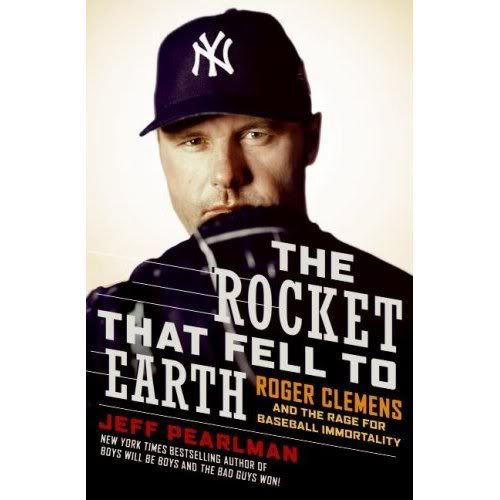
The Rocket That Fell To Earth: Roger Clemens And The Rage For Baseball Immortality
By Jeff Pearlman (348 pp.)
Amazon.ca: $22.04


The test of a book such as Pearlman's is whether there's enough there outside of what tends to stir up manufactured outrage.

Pearlman's books work on two levels. He'll always have a couple of fish to throw to the hungry seals tied to the 24-hour news cycle and make for some juicy excerpts on at Yahoo! Sports. Try as one might, there's no forgetting the passage in his last book, Boys Will Be Boys, that 1990s Dallas Cowboys star Charles Haley masturbated in front of teammates or that Pro Football Hall of Famer Michael Irvin stabbed a fellow player in the neck. Of course, recounting dirt isn't writing; it's typing.

Unless the author cares about the people he/she is writing about, you don't have a book worth plunking $20-30 on; you have Richard Ben Cramer's Joe DiMaggio biography from about 10 years ago. Rocket works by inviting the reader to re-imagine Roger Clemens as part tragic hero, part baseball geek.

The Clemens sports fans have come to know and loath, except when he was pitching for your favourite team, is more Ogre than nerd. Pearlman quotes author Pat Jordan describing the pitcher's much-hyperbolized workout regimen as "mindless activity for a mindless person."

The first couple hundred pages, though, explore how Clemens kind of matured backwards as a ballplayer and as a person. That mushroomed into everything which has made him seem like the American Idiot (steroids, retiring, unretiring and re-retiring, jumping from team to team, jumping into bed with a briefly famous country-music cutie, and so on).

Clemens, as most ball fans know, developed pinpoint control before developing a major-league fastball, which runs counter to the usual maturation for power pitchers. He was also, as Pearlman details, a wise beyond his years teen, which might surprise people who remember his 38-year-old self throwing part of a broken bat at Mike Piazza during the 2000 World Series.

Thanks to dogged reporting, Pearlman unearths details like how at age 16, Clemens attended a local high school championship game with his brother, Randy, with the understanding he would transfer to the school which won the game. He cast his lot with the team which had lost: "The players were crisp, disciplined and uncommonly professional."

It was the kind of informed decision that can be beyond people much older than 16. It explains how Clemens was "never the thinking man's athlete, there was some intelligence about him, along with this drive to become a once-in-a-generation pitcher.

Unfortunately, as the book relates, he had a funny way of showing his intelligence. Clemens prevailed against all odds (he didn't get a single NCAA Division I scholarship offer coming out of high school) by putting in the time and being smart, on some level. Once he received his due, becoming a big man on campus at the University of Texas, a first-round draft pick and winning his first Cy Young at age 24 with the Boston Red Sox, Clemens started to lapse into into adolescent behaviour and outright jackassery.

The addiction to being Roger Clemens took hold, especially as he outgrew a childhood of relative poverty. Pearlman, who knows what scandalizes but also knows people deserve some benefit of the doubt, is a perfect tour guide to two-decade-long train wreck. Clemens' fatal flaw seems to be that, like most geeks, he could never quite explain himself to the norms (here one remembers the "misremembered" comment). He was doomed in the court of public opinion all along, which all built up to him and his former trainer, Brian McNamee, more or less agreeing to a policy of mutually assured destruction.

Rocket helps humanize Clemens. No one will be printing up "Free Roger" T-shirts if he ends up facing federal perjury charges in the U.S., but the Roger Clemens you come to know will keep you rapt for 300-plus pages.

Recommendation: Twenty-two bucks is pretty reasonable and it certainly would work as an Easter or Father's Day gift. Pearlman's first three books each made it to paperback, so hopefully Rocket will too, although this is a much tougher market for sports titles.

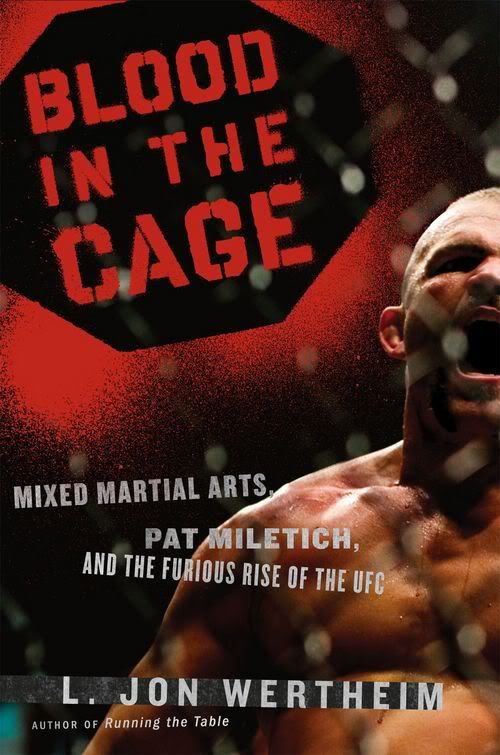
Blood In The Cage: Mixed Martial Arts, Pat Miletich, And The Furious Rise Of The UFC
by L. Jon Wertheim (251 pgs.)
Amazon.ca price: $21.39

Blood In The Cage probably is one of the more important sports books of 2009, even if it was actually published in December.

It raises the question of who knows less about the UFC, the people who swear by it or those who swear it's a sure sign of the downfall of western civilization. Werthheim, who mostly covers tennis for Sports Illustrated (tennis is a blood sport disguised as a refined game; that's why they wear all-white attire at Wimbledon), is a convert to mixed martial arts. However, he's not preachy about it, like a lot of its fans. It's just that a sports fan in 2009 has to accept MMA as part of the sportsgeist. If anything, it's not growing as fast as it could.

The heart of the first half of the book is Pat Miletich -- whom you could say was an Ultimate Fighting champion before they became famous -- and is now a respected trainer, running a gym in his hometown in Iowa. UFC president Dana White is at the heart of the second half.

Miletich's story hints at why some people recoil from the UFC, although Wertheim wisely goes about telling a fast-moving story instead of taking side trips into sociology. It is worth wondering if some people recoil from UFC because there's no feeling of separation like there is when you're reading about an NBA or NFL player who overcame poverty. Most of its fighters are from a fairly middle-class upbringing and, as any fan of The Ultimate Fighter knows, had to fight to prove something they cannot define.

One common thread, though, seems to be a turbulent home life. It hits too close to home when the athletes simply grew up in a dysfunctional family like, well, everyone. Similarly, you could argue the sport has risen because, in a lot of smaller American towns, the loss of well-paying manufacturing jobs has left a lot of young white men at loose ends with how to define their roles.

Anyway, enough eggheading it up. The sections on Miletich, whose first 30 years of his life included the death of a sibling, his parents' divorce, a string of dead-end job and the occasional dumpster-dive, are very well-done, and you should come away with an appreciation of what makes a fighter tick. Wertheim also takes time to explain how various combat sports, including grappling and jiu-jitsu, were melded together to create what's now known as MMA, defeating the idea it's some designer sport.

Appropriately enough, for a book about a sport that is officially less than 20 years old, the book is pretty open-ended. Wertheim punches holes in the myth that Dana White's leadership saved the UFC from folding,, but he gives its controversial president plenty of credit. He does ultimately wonder if White will be good for the sport in the long run: "Can an organism continue to grow if it doesn't always expose itself to light?" That's a pretty prescient comment, considering White is currently having to apologize after a vlog where he says "fuck" 42 times in less than eight minutes and uses anti-gay slurs. That line pretty much predicted White's gaffe.

Wertheim has another book due out May 7 called Strokes of Genius: Federer, Nadal and the Greatest Match Ever Played.

Recommendation: Bug your neighbourhood librarian for it, or get it in paperback. It's written more for a general audience than a hardcore fan.

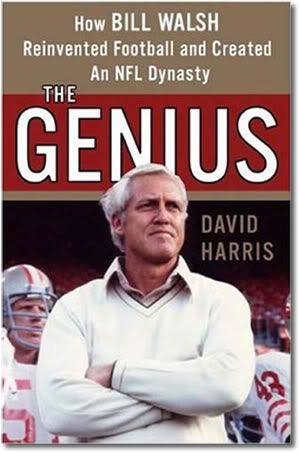
The Genius: How Bill Walsh Reinvented Football and Created An NFL Dynasty
by David Harris (384 pp.)
Amazon.ca: $18.90

Harris' 10th book is an adulatory look at the late Bill Walsh, who died in 2007 at the age of 75.

There's a bit of an Outliers vibe to Walsh's story. Malcolm Gladwell seized on the idea that if you spend 10,000 hours working to become good at something, it's practically an inevitability. Walsh, who coached the San Francisco 49ers to three Super Bowl championships in the 1980s (they won a fourth the year after he retired), waited much longer than he should have to become a NFL coach. Harris does a good job relating why that was, how Walsh looked critically at how people did things in a business and a sport where orthodoxy tends to rule the day. (One of the great quotes in the book: "Bill changed the way NFL teams practiced.")

Harris fills in the kind of details that show that Walsh seemed almost destined to re-design how offensive football was played in the NFL. Like many coaches, he was a frustrated quarterback; as a high school football player, he seldom got to play QB since his family moved a lot and coaches in those days seldom let left-handed people play the position. As a young high school coach, Walsh had his teams running the three wide receiver formations decades before it was commonplace in the NFL. His first jobs at the college and the pro level both came on the defensive side of the ball. That kind of football curriculum vitae no doubt helped Walsh.

The Genius is not a warts-and-all portrait. Walsh's personal life is barely mentioned, which is a stark contrast to the definite NFL coach bio, David Maraniss' Vince Lombardi bio, When Pride Mattered. (A key difference there was Maraniss was writing about someone long after he was dead; Harris had access to Walsh during his final two years.) There's probably a little too much space given to play-by-play details of 20-year-old football games. Cripes, if you want to know how the 49ers beat the Dallas Cowboys in 1982, the entire winning drive is on YouTube.

Those are small misgivings. It's a pretty thorough bio of the greatest coach in NFL history, pure and simple.

Recommendation: Check the library or wait until it comes down in price, unless you're a total NFL nut.

Tuesday, December 09, 2008

Snark break...

As you were wondering what happened to 10 years' worth of issues of Word Up magazine....

Construction is being delayed
on a NFL stadium in the Los Angeles area, which might help Rogers Communications' chances of stealing liberating the Buffalo Bills. Or not.

In case you weren't feeling old enough already, there is talk of the Boston Red Sox drafting Carl Yastrzemski's grandson. Mike Yastrzemski is an outfielder, too.

Shame on Citigroup -- they keep their name on the New York Mets' stadium, but can't come with the $240,000 to sponsor a holiday toy train exhibit. Today's youth need to learn about riding the rails.

And you wonder why Canadians are smug toward the U.S. ... it's a little hard not to be when someone who's a "Philadelphia lawyer" believes that winning "143 seats in Canada's 278-seat Parliament" does not make a majority (it would, if not for those 30 additional seats) and that there's a province of Ottawa.

So the Sens gave up the lead three times last night against a Florida Panthers team which was missing five regulars to injury? That's a shame (really).

From the National Lampoon Sports Minute: "The chairman of the Chicago Cubs said he expects the team to be sold by spring training. And that will fix everything."

This post is worth nothing, but this is worth noting:
  • It probably has no chance of succeeding, but a fan group is planning to sue the Bowl Championship Series.
  • The Kurtenblog guys pretty well nailed it in regard to Boots Del Biaggio and Gary Bettman. Hockey's a great sport to survive the people who are supposedly in charge.
  • People in Chicago ain't happy about Ron Santo not getting into the Hall of Fame.
  • You really should read this interview with Outliers author Malcolm Gladwell. (Seriously, though, do Americans not know about hockey players having early birthdays? The assumption here was everyone knew.)
  • Erik Bedard is likely safe with the Seattle Mariners, as much as that's possible.