Showing posts with label Cooking the Books. Show all posts

Sunday, December 20, 2009

Cooking the books: 'Evaluating Baseball's Managers'

Evaluating Baseball’s Managers: A History and Analysis of Performance in the Major Leagues, 1876–2008
Chris Jaffe
333 pg., McFarland Publishing, $39.95 (due out winter 2010)

Thanks to Chris Jaffe, you might never look at the men in the dugout the same way.

Most baseball fans today focus their venom on general manager and front office. The manager position is practically an anachronism, an ex-player who puts a uniform and tries not to get in the way of what's been put in place. How managers shape a ballclub sometimes gets downplayed.

That is why, based on two chapters he furnished, it seems like Jaffe's Evaluating Baseball's Managers is destined to become a big part of any baseball library. You might need a bit of the seamhead sickness to get into it, but Jaffe, who writes for The Hardball Times, has made some big strides.

Jaffe explains how changes in the sport have changed the job. It's much more professional now: Only two current MLB GMs actually played major-league ball and one of them is Billy Beane of Moneyball fame. His second big idea is rebutting the belief a skipper has the same impact in all areas of a ball club ("Place a man in a situation that fits his strengths, and he will look like a savant. Put that same individual on a team that highlights his weaknesses and people will call him a dullard.").

Jaffe's conclusions about the great Montreal Expos manager Felipe Alou and late-1980s Jays skipper Jimy Williams may be eye-opening for Canadian ball fans. There's some stuff about Cito Gaston, too. Since this is a Canadian sports blog, that is a good place to focus.

Jaffe sent me excerpts on the four Blue Jays managers who were active for at least a decade (Gaston, Williams, Bobby Cox and Jim Fregosi) and a section on managers from the 1998-to date era. The book, which is intended as a reference guide, has capsules on 89 managers who lasted at least 10 seasons.

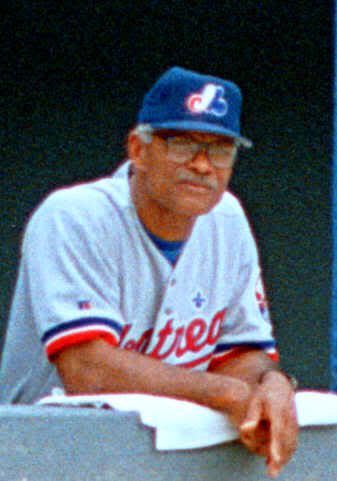
The 1998-to date section was like an unexpected gift, just for the appreciation it provided of Alou. Not to give away too much, but Jaffe shows how MLB's racial issues kept Alou from having a longer managerial run. Major League Baseball is self-congratulatory about having more African-American and Latino managers than in the past, but qualified candidates often don't get a chance until well into middle age. I never thought about this, but when Alou took over the Expos, he was at an age (57) when some Hall of Fame managers were already out of the game.

Most people know about all the young players Alou had, such as Vladimir Guerrero and Pedro Martínez. Few probably know Alou's reliance on pitch counts kept Martínez happy and healthy and on the path toward the Baseball Hall of Fame. They might not also realize Alou set a great example for other managers. It is worth noting that in the much-praised article Seattle baseball writer Larry Stone wrote about new Mariners DH Milton Bradley, present-day manager Ken Macha, told Stone "he got advice on handling Bradley from a good friend, Felipe Alou." It is no surprise to hear that.

SBN's Houston Astros blog, The Crawfish Boxes notes, "What Jaffe does ... is highlight why (managers) were good or why they weren't successful. He does an excellent job of it, providing stats to back it up in each manager's capsule, but also backing it up with solid analysis. Bullpen usage, hitting for power, walks, and more are shown as trends for each manager as Jaffe does a good job of describing what kind of team each guy oversaw. It's exactly what history buffs would want and provides the kind of source material that analysts will be using for years."

The section on Cito Gaston was fairly familiar ground, so it had fewer surprises. It turns out Gaston's rep as the "ultimate minimalist," is spot-on. Jaffe uses stolen base success rates to show Gaston is not totally out of it during games.
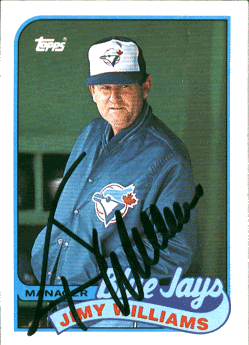
As a 30-something Jays fan, Jaffe's method really hit home with the section on Jimy Williams, who managed Toronto from 1986-89. The next time you're talking to a serious baseball nut, ask her/him what manager in recent history got the most from the bullpen. One response might be, "Probably Tony La Russa" (perhaps sarcastically) or, "Well, I know it wouldn't be (insert someone who ran his favourite team)."

Jaffe finds that Williams put all of the so-called genius managers to shame when it came to using the bullpen. He never managed in a World Series, so this was largely lost on people. It also didn't help that the teams he ran each played in hitter-friendly ballparks that obscured the excellent work of their relievers. As Over The Monster noted in its review,, "Williams handled the pitching staff like no other manager has in big league history. Williams' tendencies to yank pitchers early kept his starters healthy, meaning down the line they were that much better. Williams didn't try to stretch his starters; he knew what they were capable of and didn't push them. As a result, his Red Sox teams in the second half always seemed to do better than in the first half."

It was a similar story with the Jays. According to baseball-reference.com, during Williams' three full seasons with the Jays, they were a .528 team before the all-star break and played .584 ball in the second half.

Williams, though, was fated to get fired before a team hit it big. The Blue Jays let him go in 1989 and won the World Series three seasons later. The Red Sox canned him in 2001 and, wait for it, won the World Series three seasons later. During that season, 2004, Williams was fired by the Astros, who made it to the Series the following season.

He certainly had a role in that, of course. Still, Jaffe findings are a bit of a requiem and, for readers, put their personal baseball history in a new light.

Jimy Williams had his brilliant points, who knew. It's a reminder of how people, not just the media, get an idea about someone and massage the facts selectively. Williams seemed like a crusty baseball lifer. (One of his habits in the dugout when he managed the Jays was putting his hand down the front of his pants, almost like Al Bundy.) Those guys tend to be viewed as replaceable.

Good sportswriting should increase understanding or stimulate thought. Evaluating Baseball's Managers hits it out of the park on each count.

(Over The Monster also noted Jaffe's writing didn't suffer even when he was discussing the game from decades ago:
"I didn't know actually how much information Chris would be able to get for most of the older managers. But to my surprise, every writeup was quite detailed. If the writeups were any indication of the rest of the book, it seems to be quite extensive."
Evaluating Baseball's Managers is available for pre-order; the Stone link is via Jonah Keri.)

Thursday, November 12, 2009

Bill Simmons has Masshole appeal, any way you thin-slice it

People will decide for themselves whether Bill Simmons The Book of Basketball is worth picking up (it's 700-plus pages, so lift with your legs) but it's worth pointing out a couple of the more splenetic reviews.

The joke, whoever, might on Charles Pierce at Deadspin ("Somewhere in these pages is a real book, and somewhere in that book is a very real heart and a very redeemable soul") and Josh Levin at Slate ("He'd be twice as funny — and a lot less repetitive — with half the jokes.

Sorry, fellas, calling out Bill Simmons is as dated as the phrase "calling out." Some loser did it 10 months ago:
"Simmons' act was fresh in the late '90s and in the 2000s, but it's become the sport media's analog to Will Ferrell's man-child act. It ticked the giggly in the late '90s and early 2000s, when people — especially men who realized that you're not going to be young forever, but you can at least be immature — just needed to disappear into, say, one of Ferrell's comic constructs and laugh like a hyena for 92 minutes. Eventually, you wonder when someone who's a NBA guy in his medium will stop making an ABA movie, to paraphrase one review of Ferrell's thin 2008 vehicle, Semi-Pro. It is often a similar deal with Simmons' references to 1980s pop culture, the Boston Celtics of that era, gambling, Grady Little and porn."
— January 16, 2009
Ha!

Like Sean Kealey of Troy Nunes Is An Absolute Magician said, "What were the odds (Deadspin's) review of Bill Simmons' book would be negative? 1:100?" Neverthless, those who relish the carve-up of genius will dig Pierce's takedown ...
"He did not reinvent sports writing, or even the way people write about sports, which is not the same thing. He didn't even really break down the formidable 'kicked in the gonads' barrier as far as the language of journalism goes. (Did anyone arguing that point ever actually read Fear and Loathing on the Campaign Trail? Hunter Thompson wrote some pretty wild stuff before he got to ESPN.com.) He didn't pioneer the use of pop culture reference in sportswriting; Andre Laguerre's Sports Illustrated did that and, anyway, Simmons' vaunted pop-cult knowledge is carved out of a very thin loaf of Wonder Bread. He did very little that was new. But he did it on the Internet. He created a gig for himself and sold it well. That should be good enough.

"But, alas, he seems to have bought into a lot of this messianic bullshit, and it shows."
... and Levin's:
"Simmons wouldn't be Simmons without the pointless asides. One of the Sports Guy's biggest flaws, though, is that he tries too hard to entertain: He'd be twice as funny—and a lot less repetitive—with half the jokes. Simmons clearly gets a rise out of mixing sex and sports. Three pages after the Moses Malone-Marilyn Chambers analogy, he says that Shaquille O'Neal is like porn star Peter North — 'dominant, but not the best." He also likens Karl Malone to a 'fake-boobed Asian stripper' and Jason Kidd to "a smoking-hot girl … wearing a 32A." (The small bra size is a reference to Kidd's poor shooting ability. It kind of makes sense in context.)"
Does anyone else find the sports-porn analogies a bit creepy? People consume porn is mass quantities, but it's the low-hanging fruit on the analogy tree. The rub is Simmons created the taste which he is to be savoured by, so screw aiming higher.
There's some depth there, but he serves as a very flattering mirror for similarly stunted males to gaze upon their own reflection and say, "Nothing needs changing here."

It's very Guyland, which is why he needs to be stopped. The possible irony is those who set the bar a little higher, the blogging sober and thinking too hard types, might be the ones who are out to lunch. You will never know for sure.

Related:
Bill Simmons: Bigger, Longer, and Uncut; The Sports Guy's The Book of Basketball is a crude, fantastic mess. (Josh Levin, Slate)
You Are Not The Cosmos: A Review Of Bill Simmons' Book Of Basketball (Deadspin)

Wednesday, June 03, 2009

Lost Classic: George Plimpton's 'Open Net' back in print

It always seemed like people weren't aware the late George Plimpton penned a hockey book after attending Boston Bruins training camp as a goaltender and playing in an exhibition game.
Well, good news: Open Net will be back in print in September, along with the late author's four other participatory sports tomes, with identical cover designs (The Bogey Man, Paper Lion, Out Of My League and Shadow Box). Come on, you owe to yourself to read a book that has this description of playing goal:
"With the puck at the other end, it was not unlike (it occurred to me) standing at the edge of a mill pond, looking out across a quiet expanse at some vague activity at the opposite end almost too far to be discernible - could they be bass fishing out there? - but then suddenly the distant, aimless, waterbug scurrying becomes an oncoming surge of movement as everything - players, sticks, the puck - starts coming on a direct line, almost as if a tsunami, that awesome tidal wave of the South Pacific, had suddenly materialized at the far end of the mill pond and was beginning to sweep down toward one."
Presumably, the reason Open Net hasn't endured in memory the same way Plimpton's other books has to do with the fact it was essentially a late-'70s Sports Illustrated magazine article which he fleshed out to book length in 1985. It probably wouldn't have anything to do with hockey fans having very little appetite for an outsider's irreverent take on their sport.

However, the Bruins players accepted Plimpton as one of their own, for the most part. Some of them are still familiar names, since Don Cherry has name-dropping with Stan Jonathan and Wayne Cashman for the past 30 years.

Plimpton's portrayal of Cherry was also a far cry from Grapes' TV persona. Cherry came off as much less of a blowhard, with far less singularity to his personality than his critics and his defenders alike see in him three decades later. It's worth a read, for sure.

Here's what The New York Times had to say when Plimpton's book was published.)

Sunday, May 17, 2009

Numbers don't lie, but lies can be entertaining

Memory fails exactly who said Selena Roberts' Alex Rodriguez takedown was a book-length National Enquirer article, but her former newspaper, blew the accusation about pitch-tipping out of the water:
"If a tipping conspiracy were in place, one would expect that Rodriguez and rival middle infielders in games he played to have hit better in low-leverage situations than in high-leverage ones. Using a fairly loose definition of high leverage as a L.I. above 1.5 and low leverage as below 0.7, the data provide a resounding answer: either no tipping was going on or it was pathetically ineffective.

"Contrary to his reputation as a choker, Rodriguez was actually at his best when the game was on the line as a Ranger. According to data compiled by Sean Forman of Baseball-Reference.com, his combined on-base and slugging percentages (O.P.S.) from 2001 to 2003 was 1.076 in high-leverage situations, compared with 1.017 for medium leverage and .982 in low leverage. Opposing second basemen and shortstops showed the same pattern. They registered an .899 O.P.S. when leverage was high, .825 when it was middling, and .817 when it was low. Unless Rodriguez’s behavior was even more nefarious — tipping only when it mattered most — the numbers give no reason to believe he was involved."
At the end of the day, Roberts can always fall back on what Yankees fans have so often during the Alex Rodriguez era, by yelling, albeit in not so few words, "Score-board! Score-board!" The advance alone was probably more money than you or I will see any time soon. (Subway Squawkers had the definitive takedown of the Roberts book.)

Related:
Rodriguez Didn’t Tip Pitches, Numbers Indicate (Dan Rosenheck, The New York Times)

Thursday, April 30, 2009

You can't spell 'Alex Rodriguez' without AIG

People probably will spend 22 bucks to read about Alex Rodriguez since the public appetite is whetted for scandal.

It's better from a mental health point of view to only concern yourself with this Narcissus in pinstripes only in terms of his statistical impact on a ball game, which of course, means that your interest might be piqued because A-Rod, according to the New York Daily News story, is accused ... "of 'pitch tipping' when he was with the Rangers — letting a friendly opponent at the plate know which pitch was coming in lopsided games." That might be worse than the 'roids.

Stripping him of all the A-Rod artifice seems like a fitting punishment, since he did eff up royally. This is all about keeping in mind that there is always some pretty good scratch to be made ballyhooing a sports scandal at a time of great upheaval. It draws eyes away from the real outrages, of which there seem to be a lot of in the United States these days.

The beauty of it is that it's not hard to find like-minded people who also refuse to play ball. With all due respect to Selena Roberts, being told a thickheaded jock possibly shooting steroids as far back as high school and such is like being told a lot of Hollywood actresses are bulimic. Well, duh! Paraphrasing the late, great David Foster Wallace, it's one of those things it's better not to know about. It kind of spoils the whole sustaining illusion that keeps the sports-industrial complex going, which is that you or I could do what Alex Rodriguez does. You have to start taking steroids in high school? Forget it.

That's not to cast aspersions on Ms. Roberts. Plenty of people, including ShysterBall, which noted that much of her reporting on the 2006 Duke lacrosse case did not hold water, are doing that already. (Granted, a lot of people got taken in by the Duke story, and you know how that turned out: The prosecutor got disbarred.) At the end of the day, sportswriters are mostly entertainers, just less well paid and schlumpier than most athletes and performers. By and large, they do not write with the aim of increasing understanding, stimulating serious thought, doing public good or respecting the right to due process.

They're trying to write something people will read, which is still noble. Roberts is keeping us entertained and presumably got a Jesus-big advance for the third major Yankees-focused book to come out in the past three months in the past three months of so. (Previously there was Joe Torre's The Yankee Years and Jeff Pearlman's bio of Roger Clemens, The Rocket Who Fell To Earth. It promises to be a lulu:
Rumoured to be on the verge of a personal and professional collapse so profound it would rate as one of the most dramatic falls in major league history. Through exhaustive reporting and interviews, Roberts will detail A-Rod as a plunge-in-progress, a once-in-a-generation baseball talent tortured by an internal struggle between the polished family man he wants to be and the unabashed hedonist he has become. The storyline will include his dalliances with strippers, infatuation with Madonna, details of his record-breaking $315-million contract, shady real estate empire and further evidence of steroid use, but will also tunnel deeper into his behavior. Roberts will reveal the root of Alex's identity crisis - the night his father abandoned him - and, in so doing, answer the question: who is the real A-Rod?
Let the record show that the witness made the "What-ever" sign with his thumbs and forefingers, like the kids did. The upshot is this has no impact on one's appreciation of baseball. It's probably good for someone who feels like he's going out of the house naked if he doesn't have a morning shot of Haterade.

You don't have to get sucked in. Enjoy the game for the game's sake.

There are tens of thousands of people who will attend a major league baseball game this summer without having devoted a second to thinking about what Alex Rodriguez did, who he did, how he did it or where he did it. That's not keeping one's head in the sand, because the Baseball Hall of Fame voting could be a full-on gong show for the next 10-20 years in the wake of the juiced-ball era and the perception steroids fueled the home run explosion of the 1990s and early 2000s.

Really, though, it's not a revelation that people who are disproportionately rewarded for being able to perform a socially irrelevant act like hitting home runs can be needy and emotionally fragile, and capable of rotten behaviour. Make no mistake about that. That's not keeping one's head in the sand, it's just some cagey compartmentalizing.

Related:
A-Rod took steroids while with Yankees, and as teen, claims new book (New York Daily News)
Previous:
Thirteen thoughts on the baseball Judas (Feb. 10, 2009)

Friday, April 17, 2009

Ali Brunt Ba Yay...

FirstShowing.net has a neat find — the Apple trailer for an upcoming documentary called Facing Ali, directed by the apparently Vancouver-based Pete McCormack.

It is based on Stephen Brunt's book of the same name. Not to oversell it, but it looks pretty promising, with remastered fight footage and Glory Of Their Times-style interviews with 10 of Muhammad Ali's opponents, including the great Canadian heavyweight, George Chuvalo.

Brunt's book included interviews with 15 fighters, most of whom appear in the doc's trailer.

Anyway, sounds like McCormack has come up the with a winner:
"Three-time world heavyweight champion Muhammad Ali defeated almost every top fighter of the golden age of boxing and symbolized the sport for generations of fans. Now, ten of his acclaimed rivals pay tribute to perhaps the world’s most beloved and inspiring athlete in FACING ALI, a riveting documentary from director Pete McCormack (Uganda Rising) and producer Derik Murray (Legends of Hockey). From the moment he captured the gold at the 1960 Summer Olympics, the fighter who first came to prominence as Cassius Clay electrified the world and transformed the art of boxing. Articulate, handsome, charismatic and outspoken, he became an icon of the burgeoning civil rights movement and a hero to millions around the globe."
(No word of a lie, last night's late movie on A-Channel: Ali.

Brunt's next book, Gretzky's Tears: Hockey, Canada, and the Day Everything Changed, is due to be published Oct. 6 by Knopf Canada. It's actually going to be printed in the U.S. as Gretzky's Tears: Hockey, America, and the Day Everything Changed. Now that's smooth.

Related:
Must Watch: Fantastic Documentary Trailer for Facing Ali (Alex Billington, FirstShowing.net)

Friday, April 03, 2009

Cooking the Books...

The spirit has been willing, but the flesh is weak and the hours are never long enough, but here's some recent reads, offerings from authors Jeff Pearlman (yes, the Clemens book), L. Jon Wertheim and David Harris:

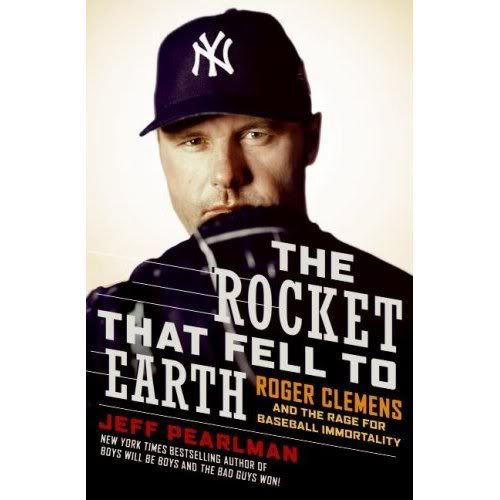
The Rocket That Fell To Earth: Roger Clemens And The Rage For Baseball Immortality
By Jeff Pearlman (348 pp.)
Amazon.ca: $22.04


The test of a book such as Pearlman's is whether there's enough there outside of what tends to stir up manufactured outrage.

Pearlman's books work on two levels. He'll always have a couple of fish to throw to the hungry seals tied to the 24-hour news cycle and make for some juicy excerpts on at Yahoo! Sports. Try as one might, there's no forgetting the passage in his last book, Boys Will Be Boys, that 1990s Dallas Cowboys star Charles Haley masturbated in front of teammates or that Pro Football Hall of Famer Michael Irvin stabbed a fellow player in the neck. Of course, recounting dirt isn't writing; it's typing.

Unless the author cares about the people he/she is writing about, you don't have a book worth plunking $20-30 on; you have Richard Ben Cramer's Joe DiMaggio biography from about 10 years ago. Rocket works by inviting the reader to re-imagine Roger Clemens as part tragic hero, part baseball geek.

The Clemens sports fans have come to know and loath, except when he was pitching for your favourite team, is more Ogre than nerd. Pearlman quotes author Pat Jordan describing the pitcher's much-hyperbolized workout regimen as "mindless activity for a mindless person."

The first couple hundred pages, though, explore how Clemens kind of matured backwards as a ballplayer and as a person. That mushroomed into everything which has made him seem like the American Idiot (steroids, retiring, unretiring and re-retiring, jumping from team to team, jumping into bed with a briefly famous country-music cutie, and so on).

Clemens, as most ball fans know, developed pinpoint control before developing a major-league fastball, which runs counter to the usual maturation for power pitchers. He was also, as Pearlman details, a wise beyond his years teen, which might surprise people who remember his 38-year-old self throwing part of a broken bat at Mike Piazza during the 2000 World Series.

Thanks to dogged reporting, Pearlman unearths details like how at age 16, Clemens attended a local high school championship game with his brother, Randy, with the understanding he would transfer to the school which won the game. He cast his lot with the team which had lost: "The players were crisp, disciplined and uncommonly professional."

It was the kind of informed decision that can be beyond people much older than 16. It explains how Clemens was "never the thinking man's athlete, there was some intelligence about him, along with this drive to become a once-in-a-generation pitcher.

Unfortunately, as the book relates, he had a funny way of showing his intelligence. Clemens prevailed against all odds (he didn't get a single NCAA Division I scholarship offer coming out of high school) by putting in the time and being smart, on some level. Once he received his due, becoming a big man on campus at the University of Texas, a first-round draft pick and winning his first Cy Young at age 24 with the Boston Red Sox, Clemens started to lapse into into adolescent behaviour and outright jackassery.

The addiction to being Roger Clemens took hold, especially as he outgrew a childhood of relative poverty. Pearlman, who knows what scandalizes but also knows people deserve some benefit of the doubt, is a perfect tour guide to two-decade-long train wreck. Clemens' fatal flaw seems to be that, like most geeks, he could never quite explain himself to the norms (here one remembers the "misremembered" comment). He was doomed in the court of public opinion all along, which all built up to him and his former trainer, Brian McNamee, more or less agreeing to a policy of mutually assured destruction.

Rocket helps humanize Clemens. No one will be printing up "Free Roger" T-shirts if he ends up facing federal perjury charges in the U.S., but the Roger Clemens you come to know will keep you rapt for 300-plus pages.

Recommendation: Twenty-two bucks is pretty reasonable and it certainly would work as an Easter or Father's Day gift. Pearlman's first three books each made it to paperback, so hopefully Rocket will too, although this is a much tougher market for sports titles.

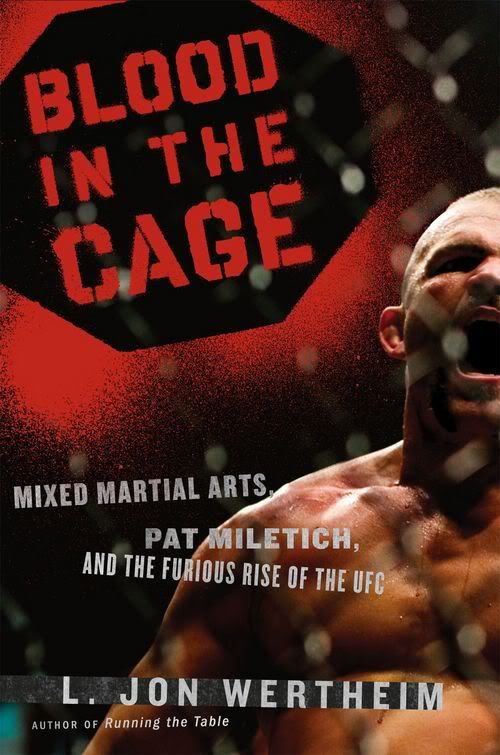
Blood In The Cage: Mixed Martial Arts, Pat Miletich, And The Furious Rise Of The UFC
by L. Jon Wertheim (251 pgs.)
Amazon.ca price: $21.39

Blood In The Cage probably is one of the more important sports books of 2009, even if it was actually published in December.

It raises the question of who knows less about the UFC, the people who swear by it or those who swear it's a sure sign of the downfall of western civilization. Werthheim, who mostly covers tennis for Sports Illustrated (tennis is a blood sport disguised as a refined game; that's why they wear all-white attire at Wimbledon), is a convert to mixed martial arts. However, he's not preachy about it, like a lot of its fans. It's just that a sports fan in 2009 has to accept MMA as part of the sportsgeist. If anything, it's not growing as fast as it could.

The heart of the first half of the book is Pat Miletich -- whom you could say was an Ultimate Fighting champion before they became famous -- and is now a respected trainer, running a gym in his hometown in Iowa. UFC president Dana White is at the heart of the second half.

Miletich's story hints at why some people recoil from the UFC, although Wertheim wisely goes about telling a fast-moving story instead of taking side trips into sociology. It is worth wondering if some people recoil from UFC because there's no feeling of separation like there is when you're reading about an NBA or NFL player who overcame poverty. Most of its fighters are from a fairly middle-class upbringing and, as any fan of The Ultimate Fighter knows, had to fight to prove something they cannot define.

One common thread, though, seems to be a turbulent home life. It hits too close to home when the athletes simply grew up in a dysfunctional family like, well, everyone. Similarly, you could argue the sport has risen because, in a lot of smaller American towns, the loss of well-paying manufacturing jobs has left a lot of young white men at loose ends with how to define their roles.

Anyway, enough eggheading it up. The sections on Miletich, whose first 30 years of his life included the death of a sibling, his parents' divorce, a string of dead-end job and the occasional dumpster-dive, are very well-done, and you should come away with an appreciation of what makes a fighter tick. Wertheim also takes time to explain how various combat sports, including grappling and jiu-jitsu, were melded together to create what's now known as MMA, defeating the idea it's some designer sport.

Appropriately enough, for a book about a sport that is officially less than 20 years old, the book is pretty open-ended. Wertheim punches holes in the myth that Dana White's leadership saved the UFC from folding,, but he gives its controversial president plenty of credit. He does ultimately wonder if White will be good for the sport in the long run: "Can an organism continue to grow if it doesn't always expose itself to light?" That's a pretty prescient comment, considering White is currently having to apologize after a vlog where he says "fuck" 42 times in less than eight minutes and uses anti-gay slurs. That line pretty much predicted White's gaffe.

Wertheim has another book due out May 7 called Strokes of Genius: Federer, Nadal and the Greatest Match Ever Played.

Recommendation: Bug your neighbourhood librarian for it, or get it in paperback. It's written more for a general audience than a hardcore fan.

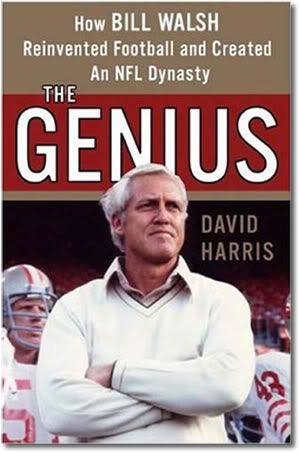
The Genius: How Bill Walsh Reinvented Football and Created An NFL Dynasty
by David Harris (384 pp.)
Amazon.ca: $18.90

Harris' 10th book is an adulatory look at the late Bill Walsh, who died in 2007 at the age of 75.

There's a bit of an Outliers vibe to Walsh's story. Malcolm Gladwell seized on the idea that if you spend 10,000 hours working to become good at something, it's practically an inevitability. Walsh, who coached the San Francisco 49ers to three Super Bowl championships in the 1980s (they won a fourth the year after he retired), waited much longer than he should have to become a NFL coach. Harris does a good job relating why that was, how Walsh looked critically at how people did things in a business and a sport where orthodoxy tends to rule the day. (One of the great quotes in the book: "Bill changed the way NFL teams practiced.")

Harris fills in the kind of details that show that Walsh seemed almost destined to re-design how offensive football was played in the NFL. Like many coaches, he was a frustrated quarterback; as a high school football player, he seldom got to play QB since his family moved a lot and coaches in those days seldom let left-handed people play the position. As a young high school coach, Walsh had his teams running the three wide receiver formations decades before it was commonplace in the NFL. His first jobs at the college and the pro level both came on the defensive side of the ball. That kind of football curriculum vitae no doubt helped Walsh.

The Genius is not a warts-and-all portrait. Walsh's personal life is barely mentioned, which is a stark contrast to the definite NFL coach bio, David Maraniss' Vince Lombardi bio, When Pride Mattered. (A key difference there was Maraniss was writing about someone long after he was dead; Harris had access to Walsh during his final two years.) There's probably a little too much space given to play-by-play details of 20-year-old football games. Cripes, if you want to know how the 49ers beat the Dallas Cowboys in 1982, the entire winning drive is on YouTube.

Those are small misgivings. It's a pretty thorough bio of the greatest coach in NFL history, pure and simple.

Recommendation: Check the library or wait until it comes down in price, unless you're a total NFL nut.

Wednesday, March 25, 2009

Cooking the Books: Feschuk, Grange lampooning Leafs

Mike Myers failed to wring great mirth from the Toronto Maple Leafs' 40 years in the hockey desert, but Toronto sportswriters Michael Grange and Dave Feschuk are going to try.

Hockey Book Reviews has the low-down on their joint effort, which will be published at the start of the 2009-10 NHL season:
Leafs AbomiNation: The dismayed fans' handbook to why the Leafs stink and how they can rise again - Dave Feschuk and Michael Grange have an interesting book coming. It looks like it could almost comical - the listed price: $19.67.
This could be a big seller in Ottawa, especially at that price.

It is the first book for the Star's Feschuk and The Globe & Mail's Grange, if memory serves. Each of them, as you know, usually has the basketball beat at their papers, so they probably should bring a fresh take on MLSE's hockey operation.

Their vigour and willingness to take this all the way should be saluted. It beats becoming passive-aggressive about the Leafs, or having to pretend not to care about Canada's dominant sports franchise, save for occasionally being prolix about the permanent stain of Harold Ballard or the legacies of Wendel Clark and Doug Gilmour.

Incidentally, on the sports publishing front, you should check out the excerpt from Jeff Pearlman's The Rocket Who Fell To Earth, his biography of Roger Clemens. All efforts are being exhausted to secure a review copy.

Monday, January 26, 2009

Jerry West: The man behind the silhouette

Those who enjoy a good sports tome might enjoy hearing that Jerry West, the greatest NBA player turned executive, is planning to pen his memoir:
"With the help of critically acclaimed writer Jonathan Coleman, bestselling author of Long Way to Go: Black and White in America and Exit the Rainmaker, West will candidly and poignantly recount the fascinating, complex life of one of sports' greatest heroes — on and off the court."
Book Deals For The Book Publishing Industry
There has been a need for a West bio ever since 1996. A writer named Ken Fuson penned a piece called, "The Man Who Loves Basketball Too Much; The Exquisite Torment of Jerry West."

The Fuson piece was included in The Best American Sports Writing 1997. That collection, edited by George Plimpton, got criticized for being a wee bit phallocentric, prattling on about "men of letters" and then including only one piece written by a woman. It was redeemed by having the late David Foster Wallace's "The String Theory," a profile on obscure tennis pro Michael Joyce.

It ran in Esquire right before Infinite Jest was published. It was something else, all right. It referred to the American player Michael Chang having, "an expression of deep and intractable unhappiness, as unhappy a face as I have seen outside a graduate creative writing program," which no doubt influenced more than a few wannabe writers' future schooling and career choices, perhaps for the better. It was later anthologized in Wallace's collection, A Supposedly Fun Thing I'll Never Do Again.

Getting back to West, remembering that Fuson piece certainly whets the appetite for a full-length book treatment. Basketball, contrary to Plimpton's rule that "the smaller the ball, the better the writing," tends to lend itself to good character studies. West's journey from an impoverished upbringing in backwoods West Virginia — he didn't care for his college nickname Zeke from Cabin Creek — to assembling the Showtime Lakers of the '80s should be a joy. West was someone who absolutely could not stand to lose, yet his Lakers lost eight of nine NBA Finals during his career, mostly thanks to Bill Russell and the Boston Celtics.

West is still the only player to be NBA Finals MVP while playing on the losing team. He did so 1969, when the Lakers kept Wilt Chamberlain on the bench in the closing minutes of Game 7 and lost by two points. West put up 42 points, 13 rebounds and 12 assists on, get this, a torn hamstring.

Those are facts. West turned 70 last year, so he's at the age where people are usually pretty open about the details of their own life. It's a promising piece of news.

(Meantime, a good read is the interview Michael Joyce did with Tennis Week in the wake of Wallace's suicide last summer.)

Related:
Basketball Legend Jerry West to Publish His Autobiography (BookCatcher.com)

Wednesday, January 21, 2009

Blog blast past: Paul Quarrington, on life boxes and bullet-counters

Toronto author Paul Quarrington died earlier Thursday from lung cancer. One obit remembered him as a "hockey bard." As a small token of appreciation, here is a post from June 3, 2009, when news of his illness went public.

One way to stay positive about the sad news about Toronto author Paul Quarrington is to reflect on something taken from his work.

Quarrington, who has been diagnosed with Stage 4 lung cancer, has has indulged his sports sweet tooth for a couple of his comic novels. Home Game revolved around baseball, while King Leary traded on hockey.

He also provided two concepts serious sports obsessives probably should have a greater appreciation for, Life Boxes and bullet-counters. The first was from a sports book but covered life its ownself. It was the opposite with the latter, which is in keeping with how it goes with Quarrington. He usually turns it all inside-out to reveal any kind of truth.

LIFE BOXES

Life Boxes comes from Quarrington's Hometown Heroes. The book is kind of obscure. Quarrington hung around with the Canadian national hockey team during the months leading up to the 1988 Calgary Olympics. It's out of print and might not have a ton of appeal to either literary types or sports nuts (Canada doesn't have a national hockey team anymore). It was valuable for Quarrington's theory that the grid of career statistics that sports fans memorized off the back of trading cards in the days before Baseball-Reference.com or hockeyDB should be called Life Boxes.
"I have learnt about Life Boxes.

"No-one else calls them Life Boxes, although the name seems fairly obvious to me. Media people, scouts, creatures of this ilk, make a concerted effort to sum up a man's professional career in a box about yea big:"


"You see enough of these Life Boxes, you learn some things."
Quarrington wasn't the only one to muse how one could infer details about an athlete just from the rows of numbers. Bill James also covered it off in one of his Baseball Abstracts. However, the idea of a Life Box has some appeal. It offers clues about how someone lived, what kind of hopes they woulod have had early in their life, their personal frustrations, the bumps in the road and how it ended.

It reaffirms that pro athletes are blessed. Their Life Boxes are filled out for them. The rest of us are on our own. Most of us, frankly, don't have a screw's clue how to fill in the blanks if your life was laid out in the style of a hockey card.
2001-02 University of King's College ?
2002-03 Portage Daily Graphic ??
2003-04 Portage Daily Graphic ???
2004-05 Simcoe Reformer ????
2005-06 Simcoe Reformer ?????
2006-07 Ottawa Sun ??????
2007-08 Ottawa Sun ???????
2008-09 Ottawa Sun ????????
Thankfully, life isn't broken up into chunks. Don't miss the point, though. The appeal is in wishing it could be that simple.

BULLET-COUNTERS

Bullet-counters speaks to the old saw about never letting the facts get in the way of a good story. It comes up with writing about sports. There are so many statistics and names to that must be correct and every sport attracts it share of knowitalls and the literal-minded, God love 'em, plus a few honest-to-goodness dullards. Screw one detail up and all the blood, sweat and tears which went into capturing the spirit of the thing is null and void.

The way it works is there's no coming back from having all that meticulously crafted prose unravel on a nail thanks to a misspelled last name or writing a 25-yard pass was a 30-yard pass. The person pointing it out, take it from someone who's been on both ends, usually means well. However, the proper huffy response is to receive them as another those-who-can't type, as Quarrington's main character in The Ravine, Phil Quigley, a producer on a TV Western set in the 19th century, explains to an underling.
" 'See, the thing is, Willy, there is magic in television. But no one around here ever trusts the stuff. We don't need to get an actual hundred-and-sixteen-ear-old typewriter. We could shoot a dishwasher and just say it's a hundred-and-sixteen-ear-old typewriter, and everyone — everyone except Ernst Kibble — would believe us. Send it back.'

"Ernst Kibble, in case you are wondering, is a man who lives in, I don't know, a rabbit warren in Northern Ontario. He watches Padre faithfully, but has no interest in the show beyond the spotting and reporting of historical inaccuracies. He's the supreme bullet-counter. You know what I mean, right? For example, in the crowd at the Galaxy Odeon there were at least four kids who, upon commencement of any gunfight in the Old West, would start counting aloud the bullets fired. If there was ever a seventh bullet discharged from a six-shooter these little creatures would howl derisively. Bullet-counters grow up to be accountants, although Ernst Kibble has the syndrome too profoundly to function in society. He once pointed out to us — via an email, a godsend to the insane — that the stars in the night sky were in an alignment that belied our stated time of year. 'That is simply not a November vistage!' "
Bullet-counters seems like a good term for people who get hung up on something tiny and ancillary. They might be right. They're wrong if they can't see the magic that just happened, although the existence of such is usually a function of the writer's ego.

Who knows what fate awaits Paul Quarrington, since the survival rates for people diagnosed with Stage 4 lung cancer are not overly promising. He made the magic happen, and trying to popularize a couple of his concepts is just a modest way to join the people wishing him well in his fight.

Related:
Quarrington says lung cancer diagnosis 'surreal'; Writer and musician hopes to see some projects through (John Doyle, Globe & Mail; via Quill & Quire)

Tuesday, November 04, 2008

Pearls of wisdom, and Michael Irvin anecdotage

The lads over at Hugging Harold Reynolds have an interview posted with Jeff Pearlman about his book on the 1990s Dallas Cowboys, Boys Will Be Boys.

Tuesday, September 16, 2008

Cooking the Books: Jack Falla dead at 62

The second edition of Cooking the Books is in the hoppers. Meantime, it has to be noted that there's an eerie quality to the news that Jack Falla died over the weekend, right in the wake of his essay collection Open Ice: Reflections and Confession of a Hockey Lifer.
It's certainly not the first time someone has left us right after completing a major work. Warren Zevon just hung enough to see The Wind released; everyone knows how Charles Schulz died the day after the last Peanuts strip ran.

It just so happens that yours truly has a copy of Open Ice, so it will be in the next set of book reviews. It sounds as if Jack Falla's life and work, to use the epigram he quoted in his opening chapter, offered a number of "lenses through which we read our own minds."
"The word passion is so overused now, but there was no question about his love of being out on skates and playing it, watching it, reporting it, writing it (and) teaching how to write it." — Kevin Dupont, Boston Globe
There's also on Ottawa connection to the Falla story — in the preface, he talked hopefully of being able to skate on the Rideau Canal in his 80s in the manner of Aurele Joliat, the great Montréal Canadiens forward of the 1920s and '30s. It also captured the spirit of thing about what it means to hold a game sacred.
"Writing Open Ice helped me see what I've long felt: that the game is important to me for reasons that transcend standings, statistics in score. I remember a day years ago when I had finished giving a guest lecture in a friend's summer term class at Boston University. As we talked briefly in the corridor after my presentation, I told my professor friend that I was headed to Buffalo to attend the NHL Entry Draft. 'Why do you go to the draft? They don't play hockey there,' he said.

" 'I go to see my friends,' I said, explaing that the NHL is like a tribal gathering. I'd walked a few steps down the corridor and my friend was just closing the door to his classroom when I called back, 'Hockey is the only tribe I belong to.' "
Related;
Veteran sports reporter Jack Falla is dead at 62 (Vivian Ho, BU Daily Free Press)

A couple of other titles have been tossed in the hopper:
  • Declan Hill's The Fix could be milked for several posts. It's a tough slog, 350-plus pages, but I'll try to get through it soon.
  • Jeff Pearlman's Boys Will Be Boys: The Glory Days and Party Nights of the Dallas Cowboys Dynasty is being published today. Kissing Suzy Kolber has bullet-pointed the most scandalous bits. It's go
  • The Times has a profile of the Gary Smith, who's got a new collection of Sports Illustrated pieces in stores.
  • Hockey Book Reviews notes that Wayne Scanlan's excellent 2004 bio of Roger Neilson, Roger's World, is now retailing for $4.99 at Chapters. (Man, it must suck to have something you created be selling for five bucks. It's a good book.)

Saturday, August 23, 2008

Snark break...

While you were trying to figure how many nights on the couch buying a $300 Lego set would cost you ...

  • The Jays' lack of power officially hit self-parody with the addition of Jose Bautista, who washad been sent to the minors even though he had more homers in the majors this season (12) than any Toronto hitter (11).

    It's too bad that comedy trope had to die one day before Willie Harris of the Washington Nationals has now cracked the magical 12 homers before the end of August plateau. Harris came into the season with seven homers in seven years, plus his double-flap batting helmet and smallish stature make him look like even more of a Triple-A player than playing for the Washington Nationals does.  

    (jamiecampbell actually referred to the Jays' "double-digit home runs club" last night.)
  • The modern pentathlon, whatever that is, might not be much longer for the Olympics. If it's eliminated, it would a tragedy on par with the demise of the nickel steak.
  • Who hasn't wanted to correct grammar and spelling on a public sign?
  • The individuals at Entertainment Weekly responsible for the claim that Jerry Maguire is "Cameron Crowe's most quotable script" should be strapped into a chair with their eyeballs propped open Clockwork Orange-style and forced to watch Say Anything, Fast Times At Ridgemont High and Almost Famous on a continuous loop until they're so bumfuzzled they think Lloyd Dobler and Jeff Spicoli were competing for Penny Lane.
  • The judge in Kingston hockey player Jamie Arniel's drunk-driving case feels like he might have got off a little lightly.

The last time this many Cards were wasted, Dennis Green was still coaching in Arizona.


Stuff that's kind of a big deal (but not so big to get its own post)
  • For those of you who have been following Puck Daddy's "5 Ways I'd Change The NHL" feature, James Mirtle will be posting on Monday. It should be good.
  • Remember the name: Rush end Arnaud Gascon-Nadon, of Montreal, was judged the top newcomer during the Rice Owls' training camp.
  • Some half-assed effort -- no, three-quarters assed effort -- will be to get an advance reading copy of Drew Magary's Men With Balls for a future "Cooking the Books."

Monday, July 28, 2008

Cooking the Books ...

The spirit has been there to add sports books reviews to Out of Left Field for quite some time -- and that day is finally here.

Promise you this: The reviews will neither be timely nor professionally written, but will be helpful if you’re looking for some new reading material or for a gift for the sports-loving bookworm or book-loving sportsworm in your life. This is open to commentators – if you want to write a review, or merely have a recommendation, fire off an e-mail to neatesager@yahoo.ca.

That's probably enough of an introduction. This edition of "Cooking the Books" (the title was Keith Borkowsky's idea) includes titles by Pat Jordan, Will Leitch, Kenny Mayne, Ralph Mellanby and Deadspin editor Clay Travis, after the jump.

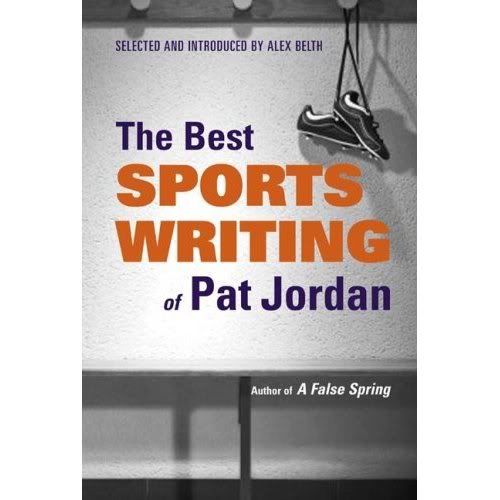
The Best Sports Writing of Pat Jordan
By Pat Jordan with Alex Belth (editor)
Amazon.ca price: $17.61

Gay Talese is said to have popularized fly-on-the-wall literary sportswriting with the Joe DiMaggio profile back in 1966. Jordan has perfected the craft. It's made him the sportswriter’s sportswriter and enabled him to keep his own hours, but it's worked against achieving the fame and fortune of Rick Reilly, say.

Jordan just disappears so thoroughly into his subject and is such a straightforward writer that it's easy to forget how many major pieces flowed out of his fingertips. That piece where the famously reticient Hall of Fame pitcher Steve Carlton talked about the "12 Jewish bankers" who control the world? That was Jordan. That article when Deion Sanders' mother called her famous son's future wife "trash"? Jordan. Three guesses who got sued in the early 1980s by Steve and Cyndi Garvey for a profile that basically left readers to infer that baseball’s poster couple were on the verge of splitting up – which they did, inside of a year later.

There’s a lot the wound-and-the-bow to Jordan’s choice of topics. Since he pitched in baseball’s minor leagues, pitchers are a favourite subject, so along with Carlton, there’s in-depth looks at Roger Clemens, Rick Ankiel (when he had his control problems) and the author's friend, Tom Seaver.

The scenes with Seaver provides insight into the mind of an elite ballplayer. It put Blue Jays ace Roy Halladay's recent uncharacteristic "Groundhog Day" comments into some perspective. Jordan and Belth, the editor, subdivided the book into two sections, Fame and Obscurity, so there's plenty of variety if you prefer to read the book piecemeal, one chapter at a time. Another masterstroke was a Q-and-A between Belth and Jordan that explains interviewing and journalism better than a reporter with 20 years' experience ever could.

Recommendation: If you only buy one book about sports this year, make it this one. It's perfect for a true sports connoisseur or anyone who is interested in writing, period.

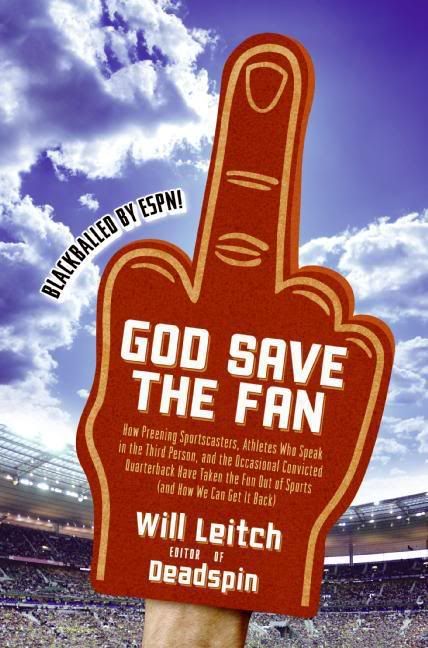
God Save The Fan: How Preening Sportscasters, Athletes Who Speak in the Third Person, and the Occasional Convicted Quarterback Have Taken The Fun Out of Sports (And How We Can Get It Back)
By Will Leitch (founding editor, Deadspin)
Amazon.ca price: $16.35

Some would say that title tail ended up wagging the content dog in God Save The Fan. Leitch was rapped because many reviewers believed that his criticism of the American sportscape came up short with the pars construens, where one makes constructive suggestions about how to change a singularly rotten system.

That overlooks the reality that any good Gen-Xer writer born after 1975 knows the most you can hope to do is change attitudes. Whatever God Save The Fan lacked in remedies is made up for the fact that it rides along on a wave of indignation that sustains it across 200-odd pages -- no mean feat. It's the same vibe that makes offerings from comedians such as Bill Maher or the late George Carlin readable, not to mention, re-readable. Including a glossary that tweaks each major pro team’s fanbase? ("Raptors, Toronto: Quite pleased, actually, that Vince Carter pulled that stunt because it opened up an outlet to release anger, in a polite Canadian way, of course." It's nice to think this had something to do that item.) That's what Carlin might do to avoid getting too preachy and keep making with The Funny.

The energy is enough. The thrust of Leitch's rally-the-troops argument to sports fans – "It's about embracing the matters you do have control over" – shines through loud and clear. ESPN, or TSN, isn't going to change. But we can.

Recommendation: God Save The Fan is apparently due out in paperback early next year. You could wait a few months and save a few bucks. It would make a good gift for someone who likes sports, but not to the point where they would read a book about it. It also should be required reading for anyone who’s contemplating working in the sports industry.

Dingers: Contemporary Baseball Writing
The Moosehead Anthology 11
Edited by David McGimpsey
Amazon.ca price: $13.83

Books directed to those oddball Canadians whose favourite sport isn't played on ice are few and far between, so on that alone, Dingers is worth having on your radar screen.

Short-story collections can be hit-and-miss. This offering from DC Books, has a few misses, but hey, that's inevitable for a book dedicated to sport where a hitter who fails six times out of 10 is a superstar.

The one story that I kept coming back to was Ian McGillis' "Who Needs Your Stinking Pennant?" An Expos fan, McGillis explores the phenomenon of how, as a fan of a team, "the position of the one being stomped upon is a place that can grow comfy; even reassuring."

That might be the most honest sentence ever written about being a diehard sports fan. It's bound to end poorly -- especially in the case of the late and lamented Expos -- but there's a security in knowing ahead of time. It's something that's appreciated more and more over time, as you get farther and farther away from the adolescent who expects championships to just fall out of the sky (i.e., like 90% of Toronto sports fans).

Dingers also includes selections from Dave Bidini, George Bowering and the Governor General's Award-nominated Kevin Connolly.

Recommendation: It's probably too scattershot a collection for some tastes, but there's enough good stuff there to look for it at a library or a second-hand store.

Walking With Legends: The Real Stories of Hockey Night in Canada
By Ralph Mellanby with Mike Brophy
Amazon.ca price: $16.48 hardcover, $14.56 paperback (due Sept. 1)

Mellanby's memoir was a timely read. It was picked up shortly after CBC Sports’ Hockey Night in Canada wrapped up its coast-to-coast cornfest for the summer.

It’s part memoir, part insider account, but a big takeaway – intended or not – is the rebuke of Canada’s longest-running sports series. Mellanby and Brophy use the behind-the-scenes stories of the show's stars from the ’60s,’70s and ’80s to illustrate the vision he had for Hockey Night in Canada – a truly national broadcast, that was educated and opinionated (in that order), which prided itself on being ahead of the curve in producing good sports television and wasn't afraid to take a stand.

Considering the current state of HNIC, it’s almost like unearthing a secret history to read that Mellanby hired Helen Hutchinson as the show’s first woman host some three decades before Cassie Campbell working as a colour commentator practically provoked a national outcry. He also introduced a World Hockey Report as an intermission feature. Mellanby also tells of how he tried to convince NHL owners to adopt rules intended to make the game faster and more exciting – such as allowing coaches to only change players on the fly, not during stoppages in play. (One warning is that Mellanby is a bit of a figjammer, but it takes one to know one.)

It’s fair to say he never would have stood for HNIC obsessing over the Leafs, hired P.J. Stock as a so-called studio analyst or let the talent's egos get bigger than the show. If you don’t need that, though, Mellanby – who was part of the TV production of both the 1972 Canada-USSR Summit Series and the 1980 Miracle on the Ice – has more than enough anecdotes about the famous games and names – broadcasters and players – to be entertaining.

Recommendation: At $29.95 in hardcover at Chapters, Walking With Legends was veering way too close to the typical overpriced bit of tripe from the Canadian hockey mafia. It's best to wait for the paperback edition or visit a library. It's an essential read for any long-time hockey fan who is interested in TV production.

An Incomplete and Inaccurate History of Sport: … and other Random Thoughts from Childhood to Fatherhood
By Kenny Mayne
Amazon.ca price: $17.61

This came out just in time for Father’s Day and well, no one ever went broke by preying on the average white guy’s strained relationship with his Pops. "What to get Dad? Hey, look, that guy from ESPN who always does those off-beat segments that are cute-funny but not actually laugh-out-loud funny has a book out? Maybe he’ll like that instead of some Old Spice."

The hell of it is that on some level, it works, somewhat.

Recommendation: Stick with the Old Spice on Father's Day next year.

Dixieland Delight: A Football Season On The Road In The Southeastern Conference
By Clay Travis (co-editor of Deadspin)
Amazon.ca price: $12.05

Canadians always view big-time college football in the U.S. the same way a shopaholic looks at Saks Fifth Avenue – nose pressed up against the glass, looking at something extravagant that you'll never know for yourself.

Whatever the reasons, we're not the type to abandon ourselves to tailgating, filling an 80,000-seat stadium, figuring out which school has the most beautiful women and placing the origin of Bama 'Bangs. That might be a good thing. Travis, with his irreverent style, is an ideal writer to take readers through a tour of all 12 SEC stadiums in the fall of 2006 -- the premise for the book was that he would travel without tickets, hotel reservations or even a map. As a graduate from the law school at Vanderbilt, the SEC's perennial doormat, Travis was aided by a plethora of former classmates who cheer for teams across the conference. (It's bit of an inside joke that, like most college football fans, Tennessee Volunteer-loving Travis cheers for a team from a school he didn't actually attend.)

This isn't a book for peeling back the onion on the South's obsession with college football, which is fine, since sports are supposed to be a respite from daily drudgery. Even at 384 pages, this goes down superbly -- you can get through it in a day and a half.

Recommendation: Dixieland Delight was a $6.99 find at a second-hand bookstore on Front St. E. in Toronto, so that might be the best way to seek it out. It's more accessible to a non-football fan than you would think.

Notes

Jeff Pearlman, the author of (among other works) of the Barry Bonds bio Love Me, Hate Me, has a blog on his eponymous website. Without it, I wouldn't have found it until much later that his Boys Will Be Boys: The Glory Days and Party Nights of the Dallas Cowboys Dynasty, will be published by HarperCollins on Sept. 1 … the Washington Post has reviewed Stefan Fatsis' much-anticipated A Few Seconds of Panic: A 5-foot-8, 170-pound, 43-year-old Sportswriter Plays In The NFL ... Joe Pelletier has a site called hockeybookreviews.com.