Showing posts with label Baseball. Show all posts

Monday, February 28, 2011

Sixty (starting) nines, dude: the all-time baseball league

Baseball is the intellectual's game since all the action takes place in the observer's head — which could also be why it takes nearly three hours to complete seven minutes of action.

That's the best way of introducing a fun little side project borne from a secret shame: creating a 25-player roster for all 30 current MLB franchises, plus another 30 historical rosters. Sixty nines, as it were.

This sort of ties with the concept of metafandom, along with having personal and professional obligations that proscribe any blogging on baseball. Talking about a game will never replace watching the best players in the world do their thing. However, there is a lot to be said for the idea a lot of Seamheads, as Craig Calcaterra put it recently, have come "to love or obsess about the game — through something other than actually sitting down and watching it."

For yours truly, the gateway drug into being a stat geek was a computer simulation from called Earl Weaver Baseball that was released in the late 1980s. There is general awareness that John Madden Football was catalytic for sports video games, but Weaver was innovative in its own right (you could play an entire season and it recreated different stadiums). Its era-specific rosters using Hall of Fame players, this being before people realized using one's name and likeness without compensation was probably actionable, was a better introduction to baseball history than Ken Burns' Baseball (not being hyperbolic, it really was).

From about 1989 through 1996, a shameful number of hours were wiled away playing games between, for instance the AL 00-30 team with its Ty Cobb-Tris Speaker-Babe Ruth outfield (and two .400 hitters, Harry Heilmann and George Sisler, sitting on the bench) and the likes of the AL 61-75 team, on which the 1961 version of Roger Maris was the fourth outfielder behind Mickey Mantle, Frank Robinson and Carl Yastrzemski. Even more time was pissed away typing in contemporary players' stats from the backs of baseball cards to make rosters of current players to make imaginary teams.

As a 15-year-old loner growing up in a rural area, it was either that or learn how to hunt or fish. Remember, this was before kids out in the boonies had the Internet or meth labs. Besides, who wouldn't have been curious to see what kind of power numbers Frank Thomas would have put up if he was 'created' and placed on a team that played in Fenway Park?

Suffice to say, that's always been there. So, if all this goes according to plan, by Opening Day each roster should be posted.

Here is a rough format:
  • Franchises will be grouped by vintage. The Blue Jays and their 34-season history aren't competing with Red Sox and Yankees, whose lineups can be drawn from nearly a century. Feel free to read that as a protest against MLB wrecking a good thing, being a sport, no salary cap, with a bad thing, unbalanced schedules and too many divisions.

    That expanded playoff format cannot happen soon enough.

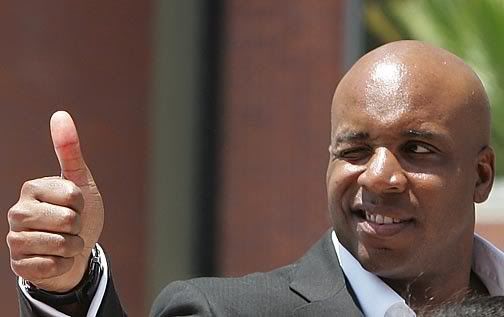
  • No player may be used twice. Rob Neyer of sbnation.com, a few years ago, published his Big Book of Baseball Lineups. When it came out, I was all, "How dare he have the drive and work ethic to see to fruition an idea I never acted on!" However, Neyer's objective was just picking the best lineup. This exercise is under the guise that there's some realm where these teams would actually play, so Barry Bonds can't be on the Pittsburgh Pirates and San Francisco Giants.

    A couple years ago, yours truly also managed the Blue Jays in a Seamheads.com sim league. Again, players could be used more than once. This is more pure.

  • Each player will be chosen by his most representative season. The criteria is to use WAR (Wins Above Replacement) to pick a 25-player roster with a batting order using a designated hitter, bench, starting rotation and bullpen.
  • Context counts. That's a way of dealing with suspect Steroid Era seasons or one-year wonders. For instance, Brady Anderson's 50-home run 1996 season (6.6 WAR) should get tossed out, but his '92 campaign (5.4) that better reflected his overall body of work is permissible. Some emphasis will be given to more contemporary players, since baseball has become more competitive over time. In other words, anyone from the pre-Jackie Robinson era or Dead Ball Era (before 1920) will have to be more exceptional than a latter-day player.

Here are the divisions:

AMERICAN LEAGUE
  • Classic: The charter franchises — Boston Red Sox, New York Yankees, Chicago White Sox, Cleveland Indians, Detroit Tigers.

  • Modern: Teams that took their current form in the 1950s and '60s — Baltimore Orioles, Minnesota Twins, Los Angeles Angels, Oakland Athletics.

  • Newbies: The under-40 (as in seasons) teams — Kansas City Royals, Texas Rangers, Seattle Mariners, Toronto Blue Jays, Tampa Bay Rays. Some allowance is being made for the Royals' small-market woes.

NATIONAL LEAGUE

  • Classic: Chicago Cubs, Cincinnati Reds, Philadelphia Phillies, Pittsburgh Pirates, St. Louis Cardinals.

  • Modern: Los Angeles Dodgers, San Francisco Giants, Houston Astros, New York Mets, Atlanta Braves (dating from 1966).

  • Newbie: San Diego Padres, Montreal Expos, Milwaukee Brewers, Colorado Rockies, Florida Marlins, Arizona Diamondbacks. The Milwaukee team would draw on seasons when that city had a NL team.
INTERNATIONAL LEAGUE

  • North Division: Buffalo Bisons (Mets B), Lehigh Valley IronPigs (Phillies B), Pawtucket Red Sox (Boston B), Scranton/Wilkes-Barre Yankees (Yankees B), Rochester Red Wings (all-time Washington Nats/Twins B), Syracuse Chiefs (players born in '40s).

  • South Division: Brooklyn Dodgers, Charlotte Knights (Chisox B), New York Giants, Norfolk Tides (all-time Browns/Orioles B)

  • West Division: Columbus Clippers (Cleveland B), Indianapolis Indians (Pittsburgh B), Louisville Bats (Cincinnati B), Toledo Mud Hens (Detroit B).
PACIFIC COAST LEAGUE

  • American North: Iowa Cubs (Chicago Cubs B), Memphis Redbirds (St. Louis B), Nashville Sounds (Brewers AL-only, 1969-97), Omaha Storm Chasers (Kansas City B).

  • American South: Albuquerque Isotopes (Dodgers B), New Orleans Zephyrs (players born in '50s), Oklahoma City RedHawks (Houston B), Round Rock Express (Senators/Rangers B).

  • Pacific North: Colorado Springs Sky Sox (players born in '60s), Tucson (Padres B), Salt Lake Bees (Angels B), Tacoma Rainiers (Mariners B).

  • Pacific South: Fresno Grizzlies (Giants B), Las Vegas 51s (Blue Jays B), Sacramento River Cats (Athletics B), Reno Aces (players born in '70s and '80s).
Hope this can be pulled off!

Saturday, June 26, 2010

Blog blast past: Putting Bonds into some perspective

U.S. federal prosecutors on Friday decided not to challenge a ruling that tossed out evidence in their case against baseball's home run king Barry Bonds. Between the World Cup, NHL draft and Arizona Diamondbacks pitcher Edwin Jackson throwing a "lame no-hitter," it probably didn't get much coverage. It seems like the case that was supposed to go to trial 15 months ago is flagging. From Nov. 16, 2007, here's a post from when Bonds was first indicted:

Dave Zirin of the Edge of Sports sums up the lunacy and self-serving hypocrisy of the U.S. Department of Justice (or as he calls it, "Just-Us") vis-a-vis Barry Bonds:
"The actual indictment parses in language that would shame a Clinton. It reads, 'During the criminal investigation, evidence was obtained including positive tests for the presence of anabolic steroids and other performance enhancing substances for Bonds and other athletes.'

"This is idiocy raised to the level of law. It makes me wonder what they're teaching at Jesus-land Legal Academy these days. Did Bonds actually test positive for steroids or were pharmaceuticals only found in these mysterious un-indicted 'other athletes'? And what is a 'performance enhancer'? That's not even a legal or medical term; it's sports radio shorthand. The cortisone shot into Curt Schilling's ankle in the 2004 playoffs was a performance enhancer. The Viagra coursing through Bob Dole's veins is a performance enhancer. Whatever keeps that smile glued to Laura Bush's face is a performance enhancer. It's a colloquial phrase that tells us nothing. It only raises the question whether the indictment was written by Mike or the Mad Dog."
To a serious person, the Bonds indictment is more laughable than anything else. He's a huge jerk, and no baseball fan outside the Bay Area will miss him.

However, there are no white-hat types here; if anything, Bonds' hat is a lighter shade of gray than that of the people trying to put him in jail. (Thirty years? He won't serve a day.) The same U.S. Department of Justice that's trying to take down Barry Bonds is the same one that authorized torture not too long ago. It's the same legal system that, as Zirin notes, drags its feet on hate crimes against African-Americans.

Consider this the denouement, the final unravelling, of Bush-Cheney America. Like Chuck Klosterman wrote shortly before Bonds surpassed Babe Ruth 18 months ago:
"... it's been a half-decade where many long-standing fears about how America worked (and what America represented) were gradually -- and then suddenly -- hammered into the collective consciousness of just about everyone, including all the people who weren't paying attention to begin with.

"Here was a man" -- Bonds -- "accomplishing unbelievable things ... but we did not really believe or disbelieve; we just sort of watched it happen, and then we watched it get out of control, and then we expressed shock without feeling a grain of surprise, and then we tried to figure out how we were supposed to reconcile an alien reality we unconsciously understood all along."
Now the U.S. establishment is going to make up for it on the back of Barry Bonds. Anything's possible, considering all this has already done something seemingly impossible -- make Barry Bonds seem like one of the good guys by comparison. Last word to Dave Zirin:
"The idea that they (the U.S. Department of Justice) have no time for Megan Williams, but invest years in the prosecution of Barry Bonds should make any good person of conscience utterly enraged."
Related:
It was never about Barry, and of course it always was (Deadspin)

That's all for now. Send your thoughts to neatesager@yahoo.ca.

Sunday, December 20, 2009

Cooking the books: 'Evaluating Baseball's Managers'

Evaluating Baseball’s Managers: A History and Analysis of Performance in the Major Leagues, 1876–2008
Chris Jaffe
333 pg., McFarland Publishing, $39.95 (due out winter 2010)


Thanks to Chris Jaffe, you might never look at the men in the dugout the same way.
Most baseball fans today focus their venom on general manager and front office. The manager position is practically an anachronism, an ex-player who puts a uniform and tries not to get in the way of what's been put in place. How managers shape a ballclub sometimes gets downplayed.

That is why, based on two chapters he furnished, it seems like Jaffe's Evaluating Baseball's Managers is destined to become a big part of any baseball library. You might need a bit of the seamhead sickness to get into it, but Jaffe, who writes for The Hardball Times, has made some big strides.

Jaffe explains how changes in the sport have changed the job. It's much more professional now: Only two current MLB GMs actually played major-league ball and one of them is Billy Beane of Moneyball fame. His second big idea is rebutting the belief a skipper has the same impact in all areas of a ball club ("Place a man in a situation that fits his strengths, and he will look like a savant. Put that same individual on a team that highlights his weaknesses and people will call him a dullard.").

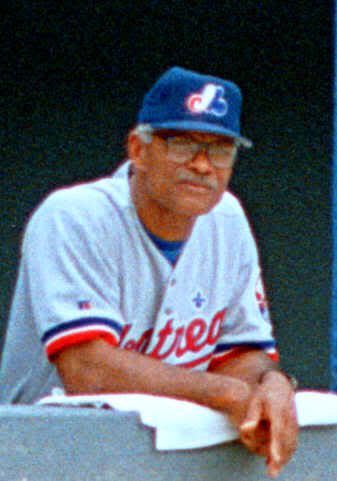
Jaffe's conclusions about the great Montreal Expos manager Felipe Alou and late-1980s Jays skipper Jimy Williams may be eye-opening for Canadian ball fans. There's some stuff about Cito Gaston, too. Since this is a Canadian sports blog, that is a good place to focus.

Jaffe sent me excerpts on the four Blue Jays managers who were active for at least a decade (Gaston, Williams, Bobby Cox and Jim Fregosi) and a section on managers from the 1998-to date era. The book, which is intended as a reference guide, has capsules on 89 managers who lasted at least 10 seasons.

The 1998-to date section was like an unexpected gift, just for the appreciation it provided of Alou. Not to give away too much, but Jaffe shows how MLB's racial issues kept Alou from having a longer managerial run. Major League Baseball is self-congratulatory about having more African-American and Latino managers than in the past, but qualified candidates often don't get a chance until well into middle age. I never thought about this, but when Alou took over the Expos, he was at an age (57) when some Hall of Fame managers were already out of the game.

Most people know about all the young players Alou had, such as Vladimir Guerrero and Pedro Martínez. Few probably know Alou's reliance on pitch counts kept Martínez happy and healthy and on the path toward the Baseball Hall of Fame. They might not also realize Alou set a great example for other managers. It is worth noting that in the much-praised article Seattle baseball writer Larry Stone wrote about new Mariners DH Milton Bradley, present-day manager Ken Macha, told Stone "he got advice on handling Bradley from a good friend, Felipe Alou." It is no surprise to hear that.

SBN's Houston Astros blog, The Crawfish Boxes notes, "What Jaffe does ... is highlight why (managers) were good or why they weren't successful. He does an excellent job of it, providing stats to back it up in each manager's capsule, but also backing it up with solid analysis. Bullpen usage, hitting for power, walks, and more are shown as trends for each manager as Jaffe does a good job of describing what kind of team each guy oversaw. It's exactly what history buffs would want and provides the kind of source material that analysts will be using for years."

The section on Cito Gaston was fairly familiar ground, so it had fewer surprises. It turns out Gaston's rep as the "ultimate minimalist," is spot-on. Jaffe uses stolen base success rates to show Gaston is not totally out of it during games.

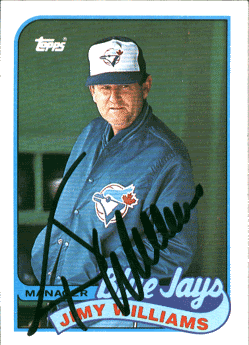
As a 30-something Jays fan, Jaffe's method really hit home with the section on Jimy Williams, who managed Toronto from 1986-89. The next time you're talking to a serious baseball nut, ask her/him what manager in recent history got the most from the bullpen. One response might be, "Probably Tony La Russa" (perhaps sarcastically) or, "Well, I know it wouldn't be (insert someone who ran his favourite team)."

Jaffe finds that Williams put all of the so-called genius managers to shame when it came to using the bullpen. He never managed in a World Series, so this was largely lost on people. It also didn't help that the teams he ran each played in hitter-friendly ballparks that obscured the excellent work of their relievers. As Over The Monster noted in its review,, "Williams handled the pitching staff like no other manager has in big league history. Williams' tendencies to yank pitchers early kept his starters healthy, meaning down the line they were that much better. Williams didn't try to stretch his starters; he knew what they were capable of and didn't push them. As a result, his Red Sox teams in the second half always seemed to do better than in the first half."

It was a similar story with the Jays. According to baseball-reference.com, during Williams' three full seasons with the Jays, they were a .528 team before the all-star break and played .584 ball in the second half.

Williams, though, was fated to get fired before a team hit it big. The Blue Jays let him go in 1989 and won the World Series three seasons later. The Red Sox canned him in 2001 and, wait for it, won the World Series three seasons later. During that season, 2004, Williams was fired by the Astros, who made it to the Series the following season.

He certainly had a role in that, of course. Still, Jaffe findings are a bit of a requiem and, for readers, put their personal baseball history in a new light.

Jimy Williams had his brilliant points, who knew. It's a reminder of how people, not just the media, get an idea about someone and massage the facts selectively. Williams seemed like a crusty baseball lifer. (One of his habits in the dugout when he managed the Jays was putting his hand down the front of his pants, almost like Al Bundy.) Those guys tend to be viewed as replaceable.

Good sportswriting should increase understanding or stimulate thought. Evaluating Baseball's Managers hits it out of the park on each count.

(Over The Monster also noted Jaffe's writing didn't suffer even when he was discussing the game from decades ago:
"I didn't know actually how much information Chris would be able to get for most of the older managers. But to my surprise, every writeup was quite detailed. If the writeups were any indication of the rest of the book, it seems to be quite extensive."
Evaluating Baseball's Managers is available for pre-order; the Stone link is via Jonah Keri.)

Saturday, August 08, 2009

A rabbi, a monk and Paul Beeston walk into a bar....

While I didn't see the reunion game in Toronto (the Manitoba Senior Baseball League finals were assigned to me), I did see the uniform choice the Jays made.

If the New York Yankees can keep the same uniforms for decades, why can't the Jays go back to their original shirts, or the 1992 vintage? Combine the Friday Blues as a button up and the 1992 whites and you've got a winner.


• Word has it Paul Beeston will have a replacement for himself in 30-60 days. Here's hoping he hires himself.
• The BC Lions have finally figured out exactly how to win a football game. Please don't pass the secret to the Winnipeg Blue Bombers or we won't hear the end of it from Mike Kelly (shout out to Jordie, who seemingly requested my Mike slam. You're welcome).
• Bring back the Jets. Surely they won't require $23 million worth of incentives per year to keep the franchise afloat in Winnipeg. You could put that team in Kamloops, B.C., and not require that. And you'd get better attendance too. That, and in both locations, there's no territorial conflict with the Toronto Maple Leafs, or anyone else in the NHL.
• Red Deer will be reconstructed in Nerf before the NHL changes their minds about Jim Balsille. If you read James Mirtle's blog and the extra documents he posts, you can kind of see their point.
• If Balsille wins the auction for the Coyotes, given the NHL's mistrust of him, would they take the bold step of disbanding the franchise?
 Hank Aaron has asked for the list of steroid users to be released en masse. It may not pass the fourth amendment test, but it would pass the smell test once and for all.
• But here's the thing. If as Jose Cansenco claims 95 per cent of MLB ball players were steriod users, would it really affect the Hall of Fame? Don't people make comparisons amongst other players of the same time period, at least at some level, to determine greatness? Does anyone compare Dave Stewart with Catfish Hunter? I don't. But I would and should compare his record to the one put up by Jack Morris. Same goes for David Cone. The absolute best players of their time should make the cut. Right Tim Raines?
• On Pete Rose, what has a greater effect on the integrity of baseball? Taking a banned substance or gambling on baseball? I'd argue gambling on the game you take part in could have a greater impact, as proven in other sports where point shaving has taken place. That said, if you make a case for Barry Bonds and Ty Cobb, you make a case for Pete Rose. They are a package deal, and take Shoeless Joe Jackson with them.
• Jack Morris has pitched in Winnipeg as a member of the Northern League's St. Paul Saints. (The Saints play in the American Association now.) It didn't go well for him. I was at that game, I believe it was in 1996, in the old ball park/football stadium, now known as CanadInns Stadium, has a gap between two sets of stand that at 7 p.m., sometimes sent a powerful ray of sunlight directly to the pitcher's mound. Jack didn't like this and protested for a delay. As everyone else just played on, he was expected to as well. He didn't last much past the third and gave up on his playing career that year.
 Theo Fleury wants back in the NHL because his stint in senior hockey, which included a season playing with the Steinbach North Stars and an appearace at the 2009 Allan Cup. No doubt, he could play in his day, but there's a lesson Jack Morris displayed all too well in Winnipeg. Cue Kenny Rogers. Know when to fold'em. Everybody now....

Sunday, May 31, 2009

Zen Dayley: About that college pitcher who threw 12 hitless innings

Texas Longhorns pitcher Austin Wood was so awesome the state capital has been renamed after him.

It's been Deadspinned. Nevertheless, it is impossible to resist passing along word about the longest college baseball game ever player, a 25-inning marathon between Texas and Boston College in a NCAA Regional game on Saturday Wood (pictured), Texas' senior closer, threw 12 1/3 innings of no-hit ball on a night when the game-time temperature was 95 F. He came on in the seventh inning and was pulled in the 20th after Boston College finally reached him for two hits. Austin Dicharry threw 5 2/3 innings of one-hit ball to earn credit for the 3-2 win.
"With the game tied 2-2 in the 20th inning, the Longhorns finally decided it was time to lift Wood, who was visibly trying to stretch out because of cramps in his leg. But when he left the field, the 5,000 or so fans still at UFCU Disch-Falk Field gave him a standing ovation. Even the Boston College players got into the act." — Rivals.com
That's pretty cool, for lack of a more profound word, to see that kind of sportsmanship.

Wood threw 169 pitches (John Gibbons joke goes here), 120 for strikes, fanning 14 Boston College hitters. Guys on basketball message boards were hanging on every out. Rivals.com's Kendall Rogers called Woods' performance "one of the best ever by a UT pitcher," and before you spout back, "Gee, ya think?" please keep in mind that Roger Clemens is a Texas alumni.

The game was played a couple thousand miles away, in another world, really (Texas), but it was easy to imagine what it must have been like. It scarcely matters that college baseball, at least to a Canadian, has always seemed like a foreign curiosity.

There's that unsettling ping when someone makes contact with those metal bats that help entire teams hit .340 and lead to games being decided by football scores such as 19-10. That backdrop throws Wood's performance into even sharper relief. Throwing 13 shutout innings in high-run conditions such as that is like throwing back-to-back no-hitters at the new Yankee Stadium, on consecutive days.

Regardless, Austin Wood gave Seamheads everywhere something to marvel over. He's not a big-time prospect. He was a 36th-round draft choice by the Houston Astros last spring. Left unsaid is that major-league clubs are often wary of pitchers from top-ranked college teams. A big reason is that a head baseball coach (not manager, what's up with that?) will do something like letting a young pitcher throw close to 200 pitches in a weekend, since they put winning ahead of the health of young arms. (Wood threw 30 pitches in Texas' win Friday.) Who knows, perhaps Wood's performance shouldn't even be celebrated, but criticized.

Meantime, as Chris Lynch pointed out at A Large Regular, people should not forget this was made possible by some great pitching by Boston College. Reliever Mike Belfiore pitched the equivalent of a complete-game shutout, entering in the ninth and coming out after the 18th with the score still tied 2-2. He struck out 11 with no bases on balls.

However, there are times when you have to let up a little on the wonder-why and just get into the spirit of the thing. It was such a game that Boston College's head baseball coach, Mik Aoki, didn't even seem too bummed that his team lost. It was as if he realized a 25-inning game was bigger than anyone on the field.


Friday, May 08, 2009

OOLF Hot Audio: Bart Given

Today, your humble pseudo-blogger had the pleasure of welcoming former Toronto Blue Jays Assistant GM, Sportsnet columnist, and proprietor of insidethemajors.com, Bart Given, to Offsides, Kingston's most listened-to hourlong sports talk program. And as always, we're sharing the audio here on Out of Left Field, because it's swanky to do so.

So listen on for insights on Bart's rise from in-game entertainment to baseball operations, the methods by which J.P. Ricciardi ran his front office, and finally a few bouts of prognostication, including on Roy Halladay.


(you'll have to boost your volume a bit - I forgot to amplify the mp3 and with how slow my rural internet is, it's not worthwhile to re-upload it)

Also, since my brain was not working well today (flu not quite gone yet apparently), feel free to guffaw at my frequent inability to formulate complete sentences. It's hard to concentrate when you've got to keep your finger on the cough button. Listening to it now at times my voice cracks so much that I almost sound like one of Stewie Griffin's "how about that novel you been workin' on" rants.

Friday, April 17, 2009

Reality Check: Brian Cashman gets owned by Matt Taibbi


Criticism of anything to do with the New York Yankees' fifedom baseball club is like an episode of Two and a Half Men: far too easy to predict in nature and ultimately pointless. But an article by the brilliant and highly caustic Matt Taibbi -- check out Taibbi's full evisceration of people involved in the corridors of American power in the wake of the ongoing financial crisis -- is the rawest, most corrosive attack on the Yankees' General Manager Brian Cashman in recent memory.

Did Taibbi go too far?


It's hard to say. Taibbi writes a sports column for a free weekly in the Boston area, but the man honed his journalistic chops on exposing abuses of power in politics and business (needless to say, Matt's had quite a busy last few years). In some respects, he's ideal to write up on Cashman -- a guy whom has expertly played the highly political game of keeping rivals off-balance and appeasing The Boss at the same time with the eventual endgame of rising to the position of General Manager of the New York Yankees. Let's just say Cashman's several big steps above George Costanza here when it comes to managing the power game.

Taibbi is positively acidic in his treatment of Cashman in the article. Some choice and very funny quotes:

"What Brian Cashman has accomplished as GM of the Yankees over the past few years, in turning a perennial World Series champ into a third-place also-ran, is like walking into a backstage party for Led Zeppelin with a two-pound bag of coke and a 28-inch penis and failing for a whole night to get laid."

"Cashman managed to discover the one avenue through which limitless money and power under the current Major League Baseball rules can be a competitive disadvantage. He found that if you pack your roster from top to bottom with pathologically needy, egomaniacal, paranoid megamillionaires aged 30 and up, you can more or less permanently block the development of the choice, hungry, 25- to 30-year-old talent group that serves as the core of virtually all winning baseball teams."

All potentially valid comments -- the last three sub-par Yankee seasons are solid supporting evidence -- that Taibbi makes, we'll give him that. Taibbi calls out Cashman as a masterful politician who can insulate himself against bad free agent signings as easily as he can take credit for good ones simply because of The Man, The Legend, Steinbrenner and his Spawn.

Taibbi's effectively insinuating with his column that Cashman's simply a politician that knows how to work the system and not baseball (never mind the fact being the GM that works for George Michael Steinbrenner III doesn't really mean much anyway -- check out the following video to see what "power" has meant in Yankees Land over the years).


Taibbi makes a lot of valid criticisms -- The Boss isn't known for his hands-off approach to the Yankees -- of the Insane Clown Yankee Posse, but the column ultimately misses the point, as ShysterBall points out as a response to Taibbi's column.

For one, Taibbi's piece smacks of really annoying New Yawk provincialism. Referring to the Tampa Bay Rays as a "Cape Cod League team?" Toronto's a "low-intensity" environment? Um, what?

ShysterBall also rightly points out that Cashman is in a no-win situation: any choice he makes in terms of player development, free agent signings or anything else to do with the on-field product is tempered by a whole host of pressures other than just George Steinbrenner. New York City is not an easy environment for anyone trying to succeed; imagine a media as rabid in their coverage of the Toronto Maple Leafs, only about 10 times larger than Toronto's and far, far less forgiving. This isn't excuse-making for Cashman -- to describe his player development approach as having mixed results is charitable at best -- but it does smack of Taibbi not getting the subtle nature of management in baseball's professional ranks.

Taibbi's column is superficially smart, funny and engaging. But it lacks real depth and understanding of the role of General Manager for any baseball team.

Tuesday, April 07, 2009

In Defence of Toronto Sports Fans

From the perspective of a 500 level fan at the Blue Jays Home Opener last night....

From my seat at the game, third row from the top of the 500 level down the first-base line (that's right, spared no expense!), I chuckled and shook my head as person after person failed to launch a paper airplane from the 500s on to the field. Only two seemed to make it all the way — from my vantage point anyways — out of the good hundred or so that were launched. The farthest one from our side was sent gliding out to the middle of centrefield, with the crowd going wild as the paper plane caught an updraft and just kept on going. The plane rested between the outfielders for a while before being scooped up by grounds staff.

Hey, blame it on Detroit, the fans have to do something to stay entertained when the score is 9-1 (PLEASE please note the sarcasm!). For the most part the fans on the night were vociferous but happy, rowdy yes but in good spirits. But there's always that 3% out there, that splinter of the population that, as the cliché goes, "ruins it for the rest of us."

Unable to see the balls that were thrown onto the field like many others (heard about it only after the game), and thanks to Rogers Centre staff sitting on their hands for what seemed like forever, I assumed like some others it was the paper planes that caused the stoppage in the game, which was rather confusing. While I don't condone throwing balls onto the field at players in any way, it was isolated - it's not like the incident was an epidemic. While it doesn't change the seriousness of it all, it does take the blame off of more than 48,000 in attendance. I think that need be remembered.

The number of fights in the 500 level were surprisingly low considering how many Detroit fans seemed to make the trip up for the game. Not to say that there weren't some fights last night, just that they paled in comparison to last year's Home Opener, as well as the first few Toonie Tuesday games of last season. There were 500-level alcohol bans on Toonie Tuesday's following swiftly behind those games and rightly so as I was in the attendance at the Tuesday game just before the banning. Last night the crowd failed to match that tenacity though, last night does not warrant any bans.

The crowd was drunk and rowdy yes but not more so than usual, and certainly not overly violent. Paper planes were the main distraction for the masses this season, unlike streakers and fights at last year's home opener. Yet Toronto sports fans are once again en masse taking the blame for the isolated incidents that took place. The fans of Toronto are no more to blame here than our very own culture of sports. And maybe it's time to give that one another look over.

It is built into our nature it seems to allow these "few bad apples" to thrive at sporting events. The hecklers are cheered on and even encouraged by the crowd when they're giving it to an opposing fan or player, spurred to the point where some of them eventually take it too far with violence or interacting with the field of play. While North Americans appear deathly afraid of the term "hooliganism" it is already present in all major sports and tolerated as well. Of course it's tolerated just up until that point of violence, that is, and that's when some people are suddenly disgusted with the actions of these people and become self-righteous. This is not just isolated to one place, it's a common occurrence while heading out to games anywhere it seems!

An entire fan base cannot be painted negatively as a whole for the actions of the very relatively few, that will never help the situation. When an entire city, across all its sports organizations, starts to get labelled as violent and out of control that's not helping to curb this stream of "hooliganism." There's elements that do warrant it but it certainly doesn't apply to all. Since the TFC incident though and now after this Jays Home Opener there are speculative eyes taking aim with seemingly every sports fan residing in Toronto, but you just can't paint them all with that same negative brush. Negative portrayal and stereotyping, that's what they do in Russia.

Reasonable, well thought out plans can actually deter some of these issues altogether. Some incidents can be blamed more on poorly thought out planning than anything else. Not all, but definitely a good number. With this increased interest in fan activities and interaction at sporting events recently, hopefully the time to pay more attention to planning will finally arrive. Odds of that happening...

Like it or not Toronto is not only not that bad, but no different than any other sports city across the country/continent/likely the world. Once we face up to facts that it is not the geographical location of a team that dictates the temperament of its fans but something deeper maybe things can be addressed. Until then though punishing and labeling a group will only makes things worse. Before everyone starts pointing fingers and playing the blame game, it's time to put some perspective on this whole matter.

Monday, April 06, 2009

OOLF Hot Audio: Bob Elliott

Had the opportunity to welcome the Toronto Sun's Bob Elliott last Friday on Kingston's most listened-to hourlong sports talk program, to discuss all things Jays. Figured it was best to start sharing the few legitimately big-shot guests I'm able to get on my rag-tag radio show with the wider blog audience.

Plus, it can't hurt to diversify the blog-radio offerings in Jaysland. Where's my hosting and advertisement, The Score?*


*Nowhere. As it should be.

Thursday, April 02, 2009

Batter up: Los Angeles Dodgers

It's that mystical, wonderful time of year where you commit to a baseball team who you know fully well won't win. This season, in honour of an popular Internet meme, we'll present 25 things about each team. Now batting: the Dodgers of Los Angeles.
  1. It's Vin Scully's 60th (60th!) year broadcasting Dodger baseball. Just thought everyone should know.
  2. In case you forgot, they made the playoffs last year. They actually won a round (okay, it was against the Cubs). Including October, they went 88-82, which, wouldn't you know it, is a worse record than three American League teams who didn't get invited.
  3. Dave Cameron at Fangraphs called them the 13th-best organization in baseball, dinging the (sometimes clueless) front office with a D+.
  4. For those who want to keep in touch with the team, like U.S.S. Mariner, Jon Weisman's Dodger Thoughts (now part of the Los Angeles Times) tells you pretty much everything.
  5. Strong points last year? Hitting...nah. Pitching...maybe. Dodger Stadium makes anyone look good. That doesn't apply to Chad Billingsley, who Dodger Thoughts pegged as the most indispensable (or least dispensable) Dodger, or #2 on-the-same-list Clayton Kershaw (not to be confused with Clayton Andrews; really, don't confuse them). Solid pitchers, both.
  6. MannyBManny is only third? Weisman knows more than I do, and there's no way an OPS+ of 219 holds up over more than 53 games, but that is surprising.
  7. So who is this Kershaw, anyway? Worth the hype? Sure is. Lefty. He was born in (sigh...) 1988. Drafted 7th overall three years ago out of a Texas high school. 276 strikeouts and 91 walks in 221 minor league innings. Struck out nearly a batter per inning in his first season in the majors last year. At age 20. Young pitchers will break your heart, but that's half the fun, isn't it?
  8. Let's not forget the impact the studly Russell Martin may have on the pitching staff. Or his decision to go by J. Martin this year--his mother's maiden name is his third middle name, Jeanson. Or his quitting of the chewing tobacco.
  9. Then again, any positive results from the pitchers, or J. Martin, will quickly be nullified if certain conditions come to pass.
  10. But wait! Unless Orlando Hudson has something to say about it as he replaces the he's-still-a-second-baseman-really?-huh-that's-odd Jeff Kent. Hudson, interestingly, joined the Dodgers on a huge incentives contract: if he reaches 569 plate appearances (three-year average), he gets $7.18 million instead of $3.38M. He is worth it. Nobody is allowed to disparage the O-Dog, who is was one of the best defensive second basemen in the game and would win every mayoral election of any city in which he has spent five or more minutes.
  11. Sadly, if Hudson does have something to say about it, you will need a good rewind button to figure out what he said. (Ten points to anyone who can transcribe this.)
  12. Last note on the pitching: Randy Wolf, far from young, "has not put together a full season of above-average pitching since 2002" (link) but is somehow in their starting rotation.
  13. 2009 predictions: 84 wins and too close to call from the CHONE system (one of the best predictors), 92 from PECOTA (probably the only better one), and a first-place 91 wins from a math prof at NJIT. All of those are enough to win the West.
  14. They open April with a lot of games on the road. The quick-to-snark fan would say "because clearly it makes no sense to play early games in warm and snowless Los Angeles" but their April road games are in San Diego, Phoenix, Houston, and Denver. You, the Southern Ontarian reader, were not fooled by today's high of 17 and would take a trip to those cities in a second.
  15. There's a joke about "you have the wrong Blake!" but someone else will have to put it together: Casey Blake (age: 35) may or may not start over Blake DeWitt at third (age: much less than 35). I must be missing something. Casey B. is tolerable, but B. DeWitt apparently wasn't handsome enough to tempt Joe Torre.
  16. They do have a good roster of young and talented players, though. Come October, Matt Kemp will be just 25, James Loney only 24 and Andre Ethier all the way up there at 27. Career OPS+ for each of them: 116, 114, 109. It doesn't matter which is which. All three are also at that early stage of their careers where they are ridiculous, ridiculous bargains.
  17. No, seriously, check out that lineup.
  18. Unrelated, but possibly interesting: both Kemp and Ethier hit fly balls in the 2008 NLCS that stayed in the air for six seconds before landing in a glove. Hang time, even on outs, is supposed to be a pretty good indicator of a hitter's power.
  19. Their manager is Joe Torre. Ever heard of him? Conventional widsom: he's one of the best. One statistical view (David Gassko in the 2008 THT Annual): he's about a win below average; good with hitters but awful with pitchers. Paul Quantrill's Overworked Right Arm: agrees.
  20. "Big Bill McCloskey coming up. As soon as he pops out, we'll go right to the post-game show." Wondering who used to have their AAA team in Las Vegas? It was in fact the Dodgers. Thanks to the Blue Jays (well, not really, but work with me), Ken Levine can now mention the Albuquerque Isotopes references during Dodger Talk without collecting residuals (well, he didn't write that episode, but work with me)
  21. Hey, look. Fernando Valenzuela, pitching cereal.
  22. There's nobody at this site who would like to publish a book one day, right? Good.
  23. The Sons of Steve Garvey: Great April Fool's Day gag or greatest April Fool's Day gag?
  24. For almost the bottom line, back to Weisman: "The possibility of having Ramirez, Rafael Furcal and an improving Kershaw for full seasons ought to mitigate many of the concerns that this can’t be as good a team as [last year's]."
  25. And finally...this retrospective-from-the-future could, plausibly, happen: "The Dodgers went 92-70 in 2009 because of an NL-best offense, a young, athletic defense improved by the absences of retired 2B Jeff Kent and Juan Pierre (traded in June), and a bend-but-not-break pitching staff led by Clayton Kershaw. Jason Schmidt stepped in as the team's closer when Jonathan Broxton went on the DL for the month of August, and cemented his 9th inning role with gritty saves in a September pennant race against the Giants, his former team."

Friday, March 06, 2009

Batter up: World Baseball Classic, Pool D

The 2009 World Baseball Classic officially began in the wee hours of Thursday morning. Most teams, including these ones, get started on the weekend.

Next up: a preview of Pool D (San Juan): Dominican Republic, Puerto Rico, Panama, and the Netherlands.
This pool was much the same in 2006, except with Cuba instead of the D.R. This time around, none of these teams will face Cuba until the semifinal.

DOMINICAN REPUBLIC
  • Opener: Saturday, March 7 vs. the Netherlands (11 a.m., all times Eastern)
  • WBC 2006: 4th overall: 5-1 in group play, lost to Cuba 3-1 in semifinal.
  • Players to watch: SS Jose Reyes (Mets), DH David Ortiz (Red Sox), RHP Edinson Volquez (Reds), 2B Robinson Cano (Yankees), SS Miguel Tejada (Astros), SP Pedro Martinez
  • Who's missing: Adrian Beltre and some guy named Rodriguez.
  • Pitching: Jose Arredondo, Juan Cruz, Damaso Marte, and Rafael Perez are varying degrees of dangerous out of the bullpen: Perez has had more strikeouts than innings in every major-league season. And with Volquez and Johnny Cueto, the Dominicans are probably No. 1 in "2008 pitcher performance minus 2007 pitcher performance." But they also have Pedro in camp, who considers himself "the old goat in this group."
  • Hitting: Without Beltre or A-Rod, it's not as scary as it was a week ago. But it's still better than most in this tournament. Willy Aybar can fill in at third in their absence.
  • Fielding: First base and outfield is a little less packed than second, third, and short (Cano, Reyes, Tejada, Hanley Ramirez can play too). Willy Tavares is probably in CF by default. Nelson Cruz can handle RF, but Jose Guillen and Moises Alou have never been great so Jose Bautista might show up in one of the corners by default.
  • Predicted Round 1 finish: First place.
  • Tournament potential: They're good enough to make the final four. They'll have to beat two of these teams (easy enough) then probably two more of Puerto Rico/USA/Venezuela. Their pitching may not carry them all the way to the final, though.
PUERTO RICO
  • Opener: Saturday, March 7 vs. Panama (5 p.m.)
  • WBC 2006: 5th overall: 4-2 in group play and did not make semifinals. They beat Cuba 12-2, but lost to them 4-3 in the second round.
  • Players to watch: RHP Javier Vazquez (Braves), C Geovany Soto (Cubs), OF Alex Rios (Blue Jays), 1B Carlos Delgado (Mets), OF Carlos Beltran (Mets), other Mets named Carlos
  • Who's missing: Not too many pitchers available. Only 17 Puerto Rican pitchers have made their major-league debut in the last 10 years. A big loss is Mike Lowell, third baseman, .279/.343/.467 lifetime hitter, and one of the best guys in baseball, who is recovering from hip surgery. He really wanted to play.
  • Pitching: Behind Vazquez, it's kind of thin: Javier Lopez and Pedro Feliciano can contribute out of the bullpen, but with Ian Snell and Jonathan Sanchez 2-3 in the rotation, they'll need relievers more often than is convenient.
  • Hitting: Soto was the 2008 NL Rookie of the Year and the starting catcher in the All-Star Game. Delgado is Delgado. Beltran and Rios add power. Mike Aviles came out of nowhere to hit .325/.354/.480 for the Royals last year and Felipe Lopez is also a decent hitter. They have legit major-leaguers at basically every spot, 1 through 9, and four of them need to be handled with care.
  • Fielding: If Soto falters, then Yadier Molina, the best fielder among the Flying Molina Brothers, is solid behind the plate. Ivan Rodriguez is on the roster as well, although Soto is probably a better option to start. Lopez used to play shortstop but wasn't good, and Alex Cora should play there over Aviles. (Bernie Williams is apparently on the roster and should be kept away from an outfielder's glove.)
  • Predicted Round 1 finish: Second-place behind the Dominicans, or first if they send Vazquez against them.
  • Tournament potential: Maybe the semifinals if their pitching holds up. They can certainly ride their bats to Round 2.
PANAMA
  • Opener: Saturday, March 7 vs. Puerto Rico (5 p.m.)
  • WBC 2006: One of four teams to lose all three games, although they kept Puerto Rico within one and took Cuba to eleven innings. They were also memorably no-hit by 18-year-old Shairon Martis of the Netherlands in their final game.
  • Player to watch: OF Carlos Lee (Astros)
  • Who's missing: Mariano Rivera, possibly the best pitcher ever (you can make the argument)
  • Pitching: Manuel Corpas is probably the best pitcher, but he rarely goes more than two innings. After him it's Manny Acosta, another reliever, and Bruce Chen, who could start but shouldn't. There are a remarkable number of A-ball players on this roster.
  • Hitting: Carlos Lee and, um, Carlos Lee. Carlos Ruiz also has major-league experience. The president of Panama convinced him that they needed a catcher, but with a career OPS+ of 77, Ruiz won't cause opposing pitchers to pace nervously and talk to themselves (any more than they already do).
  • Fielding: No clue. Lee's not great, that's all I can tell you.
  • Predicted Round 1 finish: Third
  • Tournament potential: They'd have to upset and/or kidnap somebody to get into Round 2.
NETHERLANDS
  • Opener: Saturday, March 7 vs. Dominican Republic (11 a.m.)
  • WBC 2006: Their only win was the aforementioned no-hitter over Panama.
  • Players to watch: Sidney Ponson, I guess. Shairon Martis isn't listed on the roster this year. Randall Simon hasn't played in North America for a while but will forever be known for this:

    You know Letterman would be all over this, too.

  • Who's missing: Martis, Jair Jurrjens, and Andruw Jones.
  • Pitching: Sidney Ponson, I guess. Rick VandenHurk is #2 on a weak staff. Rick VandenHurk's career ERA is 7.
  • Hitting: Former Ottawa Lynx outfielder Gene Kingsale is there, but don't get too excited.
  • Fielding: I hope Sharlon Schoop gets a lot of playing time behind the plate, because his name is Sharlon Schoop.
  • Predicted Round 1 finish: Fourth
  • Tournament potential: Guess.

Thursday, March 05, 2009

Batter up: World Baseball Classic, Pool C

The 2009 World Baseball Classic officially began in the wee hours of Thursday morning. Most teams, including those from North America, get started on the weekend. (Where were you on March 8, 2006, when Canada beat the U.S.?)

Next up: a preview of Pool C (Toronto): Canada, the U.S., Italy, and Venezuela.


UNITED STATES
  • Opener: Saturday, March 7 vs. Canada (2 pm ET)
  • WBC 2006: Went 3-3 in group play: lost to South Korea and Canada, split with Mexico, and beat Japan and South Africa. And in a devastating blow to their opponents' chances at easy wins, 2006 manager Buck Martinez has been replaced with the competent Davey Johnson. (In a devastating blow to their own, Ernie Whitt remains with Canada.) Johnson said the team is better-prepared this time. There's no indication that he wanted to finish that sentence with "because Buck isn't around." However, there is no indication that it's anything else.
  • Players to watch: Tons. RHP Roy Oswalt (Astros), RHP Jake Peavy (Padres), RHP J.J. Putz (Mets), C Brian McCann (Braves), 3B David Wright (Mets), 1B Kevin Youkilis (Red Sox), SS Jimmy Rollins (Phillies), OF Shane Victorino (Phillies), OF Curtis Granderson (Tigers), SS Derek Jeter (Yankees), 1B Adam Dunn (Nationals)
  • Who's missing: Two top relievers, Joe Nathan of the Twins and B.J. Ryan of the Blue Jays, and Brad Hawpe of the Rockies (116 career OPS+)
  • Pitching: Peavy and Oswalt are better than most teams' 1 and 2. In the major leagues. Peavy, the expected starter against Canada, also breezed through a March 1 outing: 33 pitches in three innings. They also have Ted Lilly (Cubs) and Jeremy Guthrie (Orioles), so that's four big-league starters (four more than some teams). Brian Fuentes (Angels) is out for at least the first round for personal reasons, but if he makes it back, he's one of the best out of the 'pen. Putz had some troubles against the Blue Jays on Wednesday, whereas Lilly apparently did not, for what that's worth.
  • Hitting: On paper, devastating. You can see the list of hitters they have. The worst lineup would have Chris Iannetta (104 career OPS+) and Mark DeRosa (118, 102, 108 the last three years). It remains to be seen whether they'll all show up 100%, and whether any of them will blow off the game and go spent $26 on mineral water at Harbour Sixty.
  • Fielding: You know and I know and Jimmy Rollins knows that Derek Jeter will play shortstop. This is not perfect, but not devastating. Other than that, Dunn should be kept out of the outfield, and Chipper Jones away from third (especially with Wright around).
  • Predicted Round 1 finish: First
  • Tournament potential: This would be a 90-win team in MLB. Semifinals are almost a certainty. Once there, Cuba or Japan have the ability to stop them.
VENEZUELA
  • Opener: Saturday, March 7 vs. Italy (8 pm ET)
  • WBC 2006: Didn't advance past Round 2. They beat Italy, Australia, and Puerto Rico, then lost to Cuba once and the Dominicans twice. Only one of those teams is in this pool and they won't matter much.
  • Players to watch: RHP Felix Hernandez (Mariners), RHP Francisco Rodriguez (Mets), RHP Felix Hernandez (Mariners), OF Magglio Ordonez (Tigers), RHP Felix Hernandez (Mariners), OF Bobby Abreu (Angels), 3B Miguel Cabrera (Tigers), RHP Felix Hernandez (Mariners), RHP Felix Hernandez (Mariners)
  • Who's missing: Freddy Garcia and Kelvim Escobar and Carlos Zambrano, all starters, some better than others.
  • Pitching: It's all about King Felix. Not having anyone behind him hurts. If they have to rely on the new, slimmer Carlos Silva, Venezuela may not advance past Round 2.
  • Hitting: Abreu and Ordonez highlight this major-league lineup. There are no holes as long as Cesar Izturis is a gloveman and a gloveman only.
  • Fielding: Cabrera has seen better days, even though he's just 25. But with Marco Scutaro and Melvin Mora, they have the infield covered and some of the outfield as well. Endy Chavez is pretty good in CF and he'll have to cover for Abreu in right. Carlos Guillen, a former shortstop and first baseman, apparently won't play unless he's in left field. On balance, their D is good but not great.
  • Predicted Round 1 finish: Second
  • Tournament potential: Not quite the semi-finals. They have five or six stars, a great supporting cast, but not enough pitching talent to do any real damage.
CANADA
  • Opener: Saturday, March 7 vs. USA (2 pm ET)
  • WBC 2006: Where to start? They nearly lost to South Africa (South Africa (South Africa)) when Paul Quantrill forgot how to pitch. Adam Stern torched the Americans to give the team hope, then a pitcher whose name we are not allowed to speak shut them down in their last-hope game against Mexico. They were the only 2-1 team not to advance to Round 2 thanks to a pretty questionable tiebreaker system that is fortunately well in the past this time around.
  • Players to watch: C Russell Nathan Coltrane Jeanson Martin (Dodgers), OF Jason Bay (Red Sox), 1B Joey Votto (Reds), 1B Justin Morneau (Twins)
  • Who's missing: Someone with more than five major-league starts. Jeff Francis, Erik Bédard, and Rich Harden are all otherwise occupied.
  • Pitching: Scott Richmond and...anyone? Well, Richmond has good control. Unfortunately this sometimes means "good control down the middle of the plate." Vince Perkins will start the second game: he's a former Blue Jay minor leaguer who once had potential but has missed a lot of time due to Tommy John surgery. Chris Begg is a longtime international rep who pitched well in Beijing and might get a start. Phillippe Aumont is intriguing, if only because of his age. The bullpen is full of names you don't know, but bullpens can be built that way and still be effective. Jesse Crain will be relied on for a lot. Steve Green has the U.S. game from 2006 to warrant attention in late innings. The other guys are in their mid-20s and still in Single-A or Double-A, so there's not much to say.
  • Hitting: You know Morneau. Votto came second in Rookie of the Year voting in the N.L. last year and is another bopper. Aside from the four hitters above, Adam Stern and Pete Orr bring enthusiasm if not big-league bats and Mark Teahen can hit if not field. (Stubby Clapp, due respect, is fast approaching the Rheal Cormier Memorial Interchange on the You Haven't Played Pro Ball In How Many Years? Expressway.)

    The offence won't be a weakness, not with those four big hitters in the 2-5 spots and Matt Stairs somewhere else in the order. (Stairs should be higher and Martin should lead off, but it's Ernie Whitt.) The thing is, if there's one constant in Canadian ball, it's watching the many lefty hitters flail away against lefty pitchers. Get used to this.
  • Fielding: With Bay in centre and Stairs in right, Nick Weglarz better practice his long-distance running. (Votto can fake it out there, but Votto-Bay-Stairs is probably cruel and certainly unusual.) And as much as Adam Stern contributed in 2006, his bat doesn't justify his glove in a starting role. In the infield, they're not hurting up the middle with Martin, Orr, and Chris Barnwell.
  • Predicted Round 1 finish: Third, but an upset is possible
  • Tournament potential: If by some chance they advance to Miami, that'll certainly be it. Of the U.S., Venezuela, Dominican Republic, and Puerto Rico, how many could Canada realistically beat? If you didn't say "three" or "four" then there you go.
ITALY
  • Opener: Saturday, March 7 vs. Venezuela (8 pm ET)
  • WBC 2006: Their only win came against Australia: lost to Venezuela 6-0 and the Dominican Republic 8-3.
  • Players to watch: 1B Frank Catalanotto (Rangers), OF Val Pascucci (Dodgers), 2B Davide Dallospedale, OF Mario Chiarini, M-A Dave Bidini (Peones)
  • Who's missing: Mike Piazza is coaching, not playing, this time. Maximiliano De Biase was recently one of the best hitters in the Italian leagues but doesn't appear to be on this roster. Other than that, it's not clear who could make the team competitive.
  • Pitching: Grilli's just a reliever, Mark DiFelice could probably soak up some innings, and any Blue Jays fan would love to see Lenny DiNardo on the mound against Canada. (You know, it would almost be better if the Italians brought over an entirely unknown group of hungry players from Serie B rather than populating the roster with these AAAA players.)
  • Hitting: Dallospedale and Chiarini are pretty decent hitters in Italy; no clue how much you discount that against these American and Venezuelan pitchers. At least Catalanotto, Pascucci, Chris Denorfia, and Nick Punto aren't pushovers. Pascucci was too early in the Expos system to be an Ottawa fan favourite, but too late to save the Expos, and he's actually a very good hitter for someone who's never been given a chance. But overall this doesn't seem like a great lineup.
  • Fielding: Outside of Dallospedale, not much is known of the Italian players. Joe Mazzuca, second baseman by trade, might have a spot in the infield, but he also may be behind Dallospedale and Punto. Catalanotto is best used at DH.
  • Predicted Round 1 finish: Fourth
  • Tournament potential: You have to ask?

Batter up: World Baseball Classic, Pool B

The 2009 World Baseball Classic began in the wee hours this morning. Many of us are eager for any kind of baseball after a long winter and readily remember the awesomeness of March 8, 2006, when Canada beat the U.S.. Here is a preview of Pool B: Australia, Cuba, Mexico, South Africa.

CUBA
  • Opener: March 8 vs. South Africa, 2 p.m.
  • WBC 2006: 2-1 in the opening round, 2-1 in the second round, beat the Dominican Republic 3-1 in semi-final, lost 10-6 to Japan in final.
  • Players to watch: 3B Michel Enríquez, 2B Yulieski Gourriel, OF Alfredo Despaigne, OF Frederich Cepeda
  • Who's missing: RHP Yadel Marti, OF Alexei Ramirez, SS Yuniesky Betancourt (one punished for trying to defect, the others have defected), OF Alexei Bell (injury)
  • Pitching: Marti was the Cubans' ace in '06, so that mantle falls on the shoulders, uh, arm, of 35-year-old Pedro Luis Lazo, who throws mainly a fastball and forkball. Left-hander Aroldis Chapman, 21, and 24-year-old righty Yunieski Maya will probably be called upon. Lefty Yulieski González, who was a late cut from the Olympic roster, is apparently back in the good books.

    Another greybeard, 37-year-old Norge Vera, who won starts at the Olympics where he was matched up against Japan's Yu Darvish and likely No. 1 overall draft choice Stephen Strasburg from Team USA, is back.
  • Hitting: Cuba hit a collective .280/.360/.420 at the 2006 WBC, scoring 44 runs in eight games. Despaigne is leading the Serie Nacional, Cuba's top league, in home runs. Cepeda, an absolute bases-on-ball machine (curious to see how his strike zone judgment applies off the island), has usually proven very productive out of the leadoff spot. Throw in Gourriel and Enríquez and they have the potential to have a very good lineup.

    Veteran 1B Alexander Mayeta provides some lefty power. Twenty-three-year-old outfielder Yohenis Céspedes offers some intriguing potential (he hit 26 homers last year in the Cuban league, which runs about 100 games).
  • Fielding: Veteran SS Eduardo Paret, who if memory serves was very good during the '06 WBC, is back. The Cubans are flexible with who plays where. Gourriel is actually a third baseman who moved to second due to Enríquez; at the Olympics, that meant second baseman Héctor Olivera Jr. had to play first.

    Ariel Pestano, a 35-year-old veteran, is regarded as one of the toughest catchers to run on, which could make for good game-within-the-game if Cuba ends up meeting stolen base-happy Japan later in the WBC. Cepeda's baseball-reference bio notes that he has had defensive problems.
  • Predicted Round 1 finish: First
  • Tournament potential: Semi-final
MEXICO
  • Opener: March 8 vs. Australia, 9 p.m.
  • WBC 2006: Went 2-1 in Pool B and 1-2 in the second round, but had the satisfaction of eliminating Team USA
  • Players to watch: San Diego Padres 1B Adrian Gonzalez (pictured), Marlins 3B Jorge Cantú, Mets LHP Oliver Perez, SS-OF Jerry Hairston Jr., Blue Jays C Rod Barajas
  • Pitching: Perez (10-7, 4.22 ERA with the Mets last season) is the ace of the Mexican staff, which gets a little thin beyond him and Royals closer Joakim Soria. One-time Ottawa Lynx Luis Ayala (please be accurate, he pitched for them six times) is available in the bullpen. Rodrigo López, who is 18 months removed from Tommy John surgery, is about the only Mexican pitcher you might have heard of.
  • Hitting: Mexico, as you probably heard, tagged the Arizona Diamondbacks for 19 runs in an exhibition game, Wednesday which is impressive considering they were facing Brandon Webb, who is famous for being good. Gonzalez, whose slugitude goes unappreciated in part because he plays in a Death Valley park in San Diego, Cantú and Erubiel Durazo, this decade's clubhouse leader in the Can I Try My Career Over sweepstakes, are slotted in as their 3-4-5 hitters. They're supported by a lot of part-time major leaguers, such as Hairston Jr. (124 park-adjusted OPS last season) and his brother, outfielder Scott Hairston (who OPS-plused 115 last season when he hit 17 homers in 362 plate appearances for San Diego). The mix of hitters Mexico has seems to have spurred a lot of talk that could end up going to the final.
  • Fielding: When your surest-handed infielder is the first baseman, that can be problematic. Mexico's double-play combo is Hairston Jr. at shortstop and Freddy Sandoval at second base, which is nice except none of them play those spots regularly. Cantú's iron glove is the reason he has been dumped twice in the past two years despite being a fairly productive hitter. In centrefielder, Alfredo Amezaga is a tremendous slouch.
  • Predicted Round 1 finish: Second
  • Tournament potential: Second round.
AUSTRALIA
  • Opener: March 8 vs. Mexico, 9 p.m. (all times Eastern)
  • WBC 2006: Went 0-3, outscored 18-4
  • Players to watch: 1B-OF Justin Huber (pictured), LHP Travis Blackley (Diamondbacks), LHP Damian Moss, SS Brad Harman (Phillies), OF Mitch Dening, UT Daniel Berg
  • Who's missing: RHP Ryan Rowland-Smith (Seattle Mariners), RP Grant Balfour (Tampa Bay Rays)
  • Pitching: Australia has seven left-handers among the 14 pitchers on their roster (it must be some Southern Hemisphere-related phenomena). This includes Blackley and Moss, both of whom were going places before encountering arm and shoulder problems.

    Veteran Craig Anderson, a former Can-Am Leaguer who was with Australia when it won the silver medal at the 2004 Olympics, has also returned. Drew Naylor, who averaged close to a strikeout per inning in the low minors, is another bright spot of Australia's staff.
  • Hitting: Australia was shut out by Italy and Venezuela in the 2006 WBC and produced a whopping .113 batting average. Forty-five minutes' research, give or take a half-hour, doesn't disabuse one of wondering where the hell the runs will come from if they're going to get past the group stage.

    The righty-hitting Huber, whose career was mishandled by the Kansas City Royals (shocker) before he ended up with San Diego, balances out a fairly left-handed lineup.

    Long-time minor-league outfielder Chris Snelling (.305/.384/.460 in the affiliated minors) has a fairly good minor-league resume. Dening hit .321/.375/.471 in the short-season New York-Penn League (and oddly enough, he's a lefty-masher who actually hits left-handed).

    Daniel Berg, who plays all four corner positions and can catch, adds depth.
  • Fielding: Australia made six errors in an exhibition game vs. Japan. One game never proves anything, but ...
  • Predicted Round 1 finish: Third
  • Tournament potential: Won't go winless

SOUTH AFRICA
  • Opener: March 8 vs. Cuba, 2 p.m.
  • WBC 2006: 0-3, outscored 38-12 (eight of those runs were vs. Canada), failed to qualify for second round
  • Players to watch: RHPs Alessio Angelucci (San Diego Padres, Rookie League last season) and Justin Erasmus (Red Sox farm system), LHP Hein Robb, SS Gift Ngeope (Pirates) SS Anthony Phillips (Mariners farmhand),
  • Pitching: No one on South Africa's pitching staff has thrown at any level about Single-A ball, so having former all-time saves leader Lee Smith as their pitching coach will only get them so far. Erasmus is Boston Red Sox property, which speaks well for his potential, but he just turned 19 in January. They could be in for some long games.
  • Hitting: South Africa doesn't have a position player older than 27 and only two are in affiliated ball, both of whom are middle infielders.

    Gift Ngeope, who is in the Pittsburgh Pirates' minor-league camp along with an Alaskan and two Indian pitchers (16 losing seasons in a row will make a team look far and wide for anyone who might develop into a remotely competent ballplayer), offers some appeal.
  • Fielding: This area, based on what we saw the last time from South Africa (which subsequently failed to qualify for the 2008 Olympics), could be even worse.
  • Predicted Round 1 finish: Fourth
  • Tournament potential: Lucky to win one game; maybe they can take Australia, which it is all but assured of facing on Monday.


Tuesday, March 03, 2009

Stranger than non-fiction

Someone up there has a complicated sense of humour. One day, there's a story that a writer might have made up parts of his memoir about playing minor-league baseball, then there's a story the next about the death of pitcher who was traded for bats.

John C. Odom, a right-handed pitcher whom the Calgary Vipers indy-ball team dealt away for 10 bats -- maple bats, to be fair -- died a few months ago. Only now is it getting around (a Feb. 5 Associated Press item mentioned his claim to fame, but not that he was deceased).

One can only assume how the Calgary Vipers front-office people feel tonight, especially after hearing the comments from Odom's last manager, a guy with the straight from central casting name of Dan Shwam, "I really believe, knowing his background, that this drove him back to the bottle, that it put him on the road to drugs again." It's human nature to feel sorry for John Odom, who was only 26, even though he's someone who will be remembered for getting the blunt end of how superfluou modestly talented athletes are in lower-rung leagues.

Bill Baer over at Baseball Digest Daily had some strong words about Calgary trading bats for a ballplayer (Odom couldn't get into Canada due to some troubles he'd with the law several years earlier.) It's not clear if it's something that can endorsed. John Odom obviously had personal demons, and as much as employers have to accommodate that to some extent, there are limits (full disclosure: Speaking as someone diagnosed with depression seven years ago).
"One of the more consistent lines of thought in moral theory is that an action is immoral if it causes some kind of unpleasantness for another person. I find it hard to believe that Calgary, which has claimed that the trade wasn’t made as a publicity stunt, thought that Odom would be met with nothing but positive and encouraging responses. The trade essentially said that Odom wasn't worth another professional baseball player or even a medium-sized wad of cash; he was worth ten processed 34-inch-long pieces of wood.

"Oftentimes it takes a tragedy for our error-prone ways to manifest. Dehumanizing athletes, who devote years to perfecting their craft, by trading them for next-to-nothing is a business practice that, hopefully, will now come to an end. It's a shame it took the suicide of a multi-talented kid to reveal this to us."
It's something to think about

(Meantime, about Matt McCarthy and the book Odd Man Out: There is reason to wonder why The New York Times was all over one bogus memoir, while protecting another dealing with much heavier subject matter.)

Related:
A tragic end for minor leaguer traded for bats (The Associated Press; via Baseball Digest Daily)