Showing posts with label Jeff Pearlman. Show all posts

Monday, June 22, 2009

Cuban missive crisis; why it took so long to address Ibáñez and Sosa

Here you thought you were crazy for thinking the blogs vs. MSM debate was as talked-out as, well, steroid use among major league baseball players.

(Since it was on this blog that Stephen Brunt anticipated the desire to make a hero of former sportswriter Steve Wilstein, a post was appropriate, even at this late date.)

That is a best stab at feeding two birds with one scone. It hangs off Mark Cuban's wingnuttery about ESPN needing to put up "a page of blacklisted blogs and websites whose posts they won't comment on or report on in any way" and the whole "PED blame game" (Buster Olney, ESPN.com) which has dominated baseball news over the past fortnight.

The latter is embodied by the Jerod Morris-Raúl Ibáñez controversy and the leak about about Sammy Sosa being one of the 104 major-league baseball players who tested positive in 2003. What all of this can be boiled down is that some, present company included, have more trouble than others accepting that everyone has a way to express an opinion. (Present company included, sometimes.)

To be completely honest, the first thought after seeing Cuban's post on Friday night was to laugh it off. If Cuban wants to think, "ESPN and local newspapers, radio and TV media have become the patsies of bloggers," with respect to how trade rumours are reported in sports, well, that's his journey. A rich man saying whatever is on his mind with no consideration of logic, gee, that has never happened before.

Point being, whipping up a post with a headline such as "Mark Cuban has stupid ideas about blogs" accomplishes sweet eff-all. The blogs vs. MSM debate is also a go-nowhere play, since it does not get at why Jerod Morris became a flashpoint. Try to get past the snark.

Maybe mentioning Cuban is just a way to make this seem fresh. There are similarities with how Morris v. Ibáñez played out over the past fortnight. As the creator of the Clavin Rule, I'm inclined to agree with Cuban's point about trade rumours (it's best left to the people who specialize in it), but don't miss the point. Cuban dislikes that any doofus can whip up a trade rumour.

It was a similar story with how Morris vs. Ibáñez played out. It was not really about whether "a blogger" (see Bucholtz's explanation) said Ibáñez is a 'roidoid because sports nuts are cynical about why the 37-year-old Philadelphia Phillies outfielder's production far surpasses his career statistics.

Buster Olney blew that canard all to hell:
"Some of the mainstream media outrage to the (Jerod Morris) column was fascinating, because some of the same writers who have said they will never vote for a player they suspect of using steroids are saying it's wrong for others to blog about their own suspicions of players' steroid use. Think about the laughable inconsistency there."
Exactly. At the heart of it was a desire to control the narrative with baseball's steroids saga. This involves protecting the privilege of who gets to call someone a cheater. The latter is basically expressed as, "Hey, you must have been in journalism this long before you can say that!"

Those in paying media gigs would like to keep that for themselves. Like Colin Quinn on mid-1990s Saturday Night Live, they have their story and they're stickin' to it.

That lent itself into turning Jerod Morris into a straw man. When traditional media such as The FAN 590's Prime Time Sports did not bother using Morris' name, it made it easier to do this. If "a blogger" wrote Ibáñez's "great start was probably due to steroids," hence all bloggers wrote Ibáñez's great start was probably due to steroids.

(For the last time, Morris did not say it, see for yourself.)

'Closing the book'

Then you have baseball writers' general desire to close the book on the Steroid Era and have people believe it was mostly confined to the '90s and early 2000s. It's completely understandable why that would be the case. Jeff Pearlman savaged that mindset in a piece for Slate ("Pee No Evil," June 2, 2006):
"After having been duped by the men they cover, America's sportswriters are playing dumb again. One year after being dismissed as a has-been, steroid-using fibber, Yankees first baseman Jason Giambi is the toast of New York. Recent articles in metropolitan newspapers have praised the steadfastness and resiliency that have led him to hit a team-high 14 home runs. But where, oh where, are the doubters? At the start of spring training in 2005, Giambi looked smaller than in seasons past. Now, he has muscles atop muscles atop muscles. Yet unlike the San Francisco Chronicle, which dedicated itself (journalistically and financially) to learning the truth about Bonds, none of the New York dailies have assigned an investigative team to the case.

"... I, for one, don't believe him. During my six years at Sports Illustrated, I fell for the trick and covered Giambi as the hulking, lovable lug who cracked jokes and hit monstrous homers. All the while, he was cheating to gain an edge. So, why — when MLB doesn't administer a test for human growth hormone — should I believe Giambi is clean?"
Three years later, a lot of traditional media outlets are slashing budgets and staff and expecting fewer staff to produce more and produce it quickly. That makes it tougher, not to mention less high-reward, to assign an investigative team to anything, let alone a sports story.

A lot of journalists are angry and defensive, even though many papers are still profitable. It also means that the fortunate ones with paying gigs, in many ways, have been reduced to the same footing as some of the well-informed amateurs. If idle, ill-informed speculation was outlawed, sports talk radio would cease to exist by tomorrow.

Meantime, it is only human nature to wish to pretend away something unpleasant like the reality of the Steroids Era (that athletes might use steroids if a professional sport sticks its head in the sand over steroids, especially if there's a feeling it's a common thing among her/his peers). It was icky. It was sleazy. It was just embarrassing how so many people got sucked in during the days of Mark McGwire, Barry Bonds and Sosa.

The rules of the day and the media's complicity were enablers, as Jonah Keri wrote last week:
"Just can't get worked up at over Sosa or anyone taking PEDs. MLB policies enabled it. I'd take Substance X if it made me umm ... write gooder.
Of course, it's easy enough to tell people what they should hear instead of telling them that all the evil-doers PED-taking ballplayers are going to pay (since bin Laden and all the AIG guys are harder to bring to justice).

That is too logical by half for some people. That is why you get the rear-guard action brought down tenfold on the unfortunate Jerod Morris. It is easy to see why the sportswriting profession, to quote Deadspin's Tommy Craggs, "simultaneously flays itself for not bulldogging the steroids story hard enough and congratulates itself for starting the conversation."

Craggs' words are in a similar vein to what The Globe & Mail's Stephen Brunt, who is ultimately smarter than us, cited in 2008 when he explained why declined his ballot for the Baseball Hall of Fame:
"I also retain a very strong memory of the great home run derby, and especially of the baseball-writing community's reaction — or non-reaction — to the andro story. I was at the first McGwire press conference the following spring training (in 1999), and one guy in the room had the balls to ask a question about andro. The rest of the writers looked at him as though he'd farted.

"Anybody who has a HOF vote now was writing then. Also I recall that when I wrote about McGwire and andro, wondering why we celebrated him while crucifying Ben Johnson, the fan/public response I received was almost one hundred per cent negative. Leave McGwire alone, they said. Totally different thing. Don't wreck a great story.

"So the same writers who were celebrating Big Mac back then, and pissing on the reporter who wrote the andro story, suddenly got religion last year. I got sick reading all of those 'what will I tell my children if I vote for him' columns."
If only everyone was as transparent as Brunt and Pearlman.

Meantime, desperation is a stinky cologne

Hopefully, this is providing some background on the buzzsaw Morris walked into two weeks ago. It also reflected something that Vancouver Sun managing editor Kirk Lapointe touched on last week when he blogged, "The tradition in news organizations is to believe their work is definitive. The corollary of that belief is that others' work is inferior. The product of that belief is to dismiss, disregard and even discredit anyone else's work."

Of course, that is on the way out. The journo's job is best summarized, "We don't know everything, but know where to find what we don't know."

A lot of those well-informed amateurs know as much or more about a sport or a particular sub-section. Case in point: When the Ottawa stadium debate was going on, I didn't bother to read a lot of the news coverage. I just e-mailed Pete Toms to get his take.

Many journalists realize you have to engage with your audience. The next generation, people such as Kinger, are already doing this very well.

What Morris v. Ibáñez showed is how entrenched the old way of thinking is, but hopefully for not too long. Craig Calcaterra, the ShysterBaller, realized as much by late last week.
"I can only conclude one thing, and that's that the Morris-Ibanez thing wasn't about steroids and it wasn't about ethics ... It was an effort to breathe life into a tired blog vs. MSM turf war and old-fashioned media sensationalism. A couple of years ago that observation might have made me angry and might have inspired me to unleash a screed or two. As I sit here this evening, however, I can only shake my head and smile.

" ... no one ever went broke underestimating the intelligence of the American public. It seems to me that the sporting press in the mainstream media is giving it the old college try. For my part, I'd be lying if I said that I thought idiocy and sensationalism would one day be gone from journalism entirely. But I am optimistic, based on what I've seen here and what I've seen on many other blogs in the wake of the Ibanez stuff, that the idiocy will constitute a less prominent place in journalism as time goes on."
Thankfully, Calcaterra made sure to get some mileage out of the furor instead of sitting and stewing, like a certain resident of Sageritaville we could name (Neate S.? No, too obvious, N. Sager). The topper was creating the Geoff Baker Rigidity Award to honour sports columnists who have tossed around baseless PED allegations.

There will always be value in having the time and ability to do some digging and being able to write, no matter whether you do it for pay. The point is that there was a method to keeping quiet about all this until now. There is little to no point in going into blogs and MSM, especially when one no longer believes in either term (both are kind of limiting, and traditional media works better for the latter). Meantime, it's always better to think for yourself rather than collecting some celebrity's thoughts. Maybe one in 15 of Cuban's ideas are good.

It's up to people to try to learn something out of all this instead of running over the same ol' ground and not learning anything. The point with Cuban and Morris-Ibáñez is sooner or later, the snark and sideshow aspects, while necessary, get old. People can work past that and come out the better. Goddamn it, we are still capable of understanding nuance, no matter how often the news cycle suggests otherwise.

Monday, June 15, 2009

Sixteen-year-old ballplayer jumps the queue — David Stern's head explodes

One can only assume NBA commissioner David Stern, who so fiercely defends his league's draft age minimum, is going to love hearing what's going on over in baseball.

It seems juicy enough to break the Clavin rule for: Bryce Harper, the 16-year-old phenom from Las Vegas who was the cover story ("Baseball's LeBron") in the June 8 Sports Illustrated, could enter the MLB Draft next year, before his high school class graduates. Scott Boras is his adviser, but you did not have to ask.

The Las Vegas Review-Journal detailed how Harper is going to go to a junior college, obtain his general equivalency diploma (as a lot of teen actors do) and possibly be eligible for the draft in 2010. S.I. said he could have been a top-5 pick this year. Taken a certain way, his father, Ron already sounds a tad defensive: "My son is going to live with us and still eat at the same table. His brother" — a left-handed pitcher who is transferring to the same school, College of Southern Nevada — "will be a mentor to him. Why can't it be a good story?" Perhaps it should be. If Bryce Harper is everything he's cracked up to be, he probably should play vs. 20-year-olds in junior college. He hit .626 this season and with a slugging percentage that could get him into Harvard if you took out the decimal place and passed it off as his SAT score. He's just like Jeremy Tyler, the 17-year-old hoops phenom who's passing on his senior year of high school to play basketball for money overseas.

This fruit tree is probably well picked over. Jason Rosenberg of Vote For Manny fame already covered off the angle that the poor Washington Nationals, once they pay a king's ransom for No. 1 overall draft choice Stephen Strasburg, might have another Boras-represented BPEALSLY (Bestest Prospect Ever, At Least Since Last Year) on their hands. (The Nats are a mortal lock to draft No. 1 overall next season, since they have the same record after 61 games as the infamous 1962 Mets.) Jeff Pearlman noted Harper is being robbed of a childhood and that this is further proof that youth sports are nuttier than a pecan log. This late in the game, it's best to reach for the top branch and use it to whack David Stern for his age minimum, which is blithely called the one-and-done rule.

If Scott Boras can get Bryce Harper into the MLB Draft in 2010 — maybe MLB could stop it, but the rule is you're eligible if you're 16 and have a high school diploma — it makes it harder for Stern to justify his age minimum, AKA the one-and-done rule. How can anyone justify making basketball players wait until they are 19 or 20 to start making money at the game? Please understand that the age minimum has less to do with education and protecting the welfare of basketball players. It's more about preserving college basketball as a free farm system for the NBA, plain and simple.

You are right if your first reaction is to say it is apples-to-pears to compare draft eligibility rules between basketball and baseball. The NBA's premise with the draft is that players should be pretty much ready to roll right off the assembly line (U.S. auto industry pun intended). Baseball, as Tom Verducci explained in his profile of Harper, "is so skill-specific that even the best, most physically mature young players typically must endure several levels of minor league apprenticeship to learn the game."

Out of that, baseball players from Canada and the U.S. have long had an option. They can sign with a MLB organization out of high school or go to college, mature emotionally and physically and still take a stab at baseball in their early 20s. The system has a lot wrong with it, but at least it involves a choice. Boras and the Harpers simply seem to be trying to exercise that option one year sooner, and it's not even clear if they will succeed. He would stand to college a huge bonus if he does sign out of high school (which you would have to figure he would. To recycle a joke that was current when Ken Griffey Jr. became a major league star at age 20, going to high school has knocked a couple years off Harper's pension).

The question becomes, how can you reconcile Bryce Harper, who is white, getting an option when a lot of people are squeamish about Jeremy Tyler, who is black, exercising the same option. Granted, Tyler, like Brandon Jennings did when he went to Europe in 2008 instead of college, is taking a step which involves repudiating the entire U.S. basketball development system. There is great hue and cry over a 17-year-old weighing offers from European teams. Imagine the reaction in Canada if a junior hockey player such as Kingston native Taylor Hall, who some believe could go No. 1 in the NHL draft if he was not too young, announced that he was leaving the OHL's Windsor Spitfires to go play in Russia. People would be royally P.O.'d.

Really, though, what Harper's move in baseball betrays is how badly Stern and the NBA would like to keep things as is. They are partially motivated by the status quo, but really, the NBA would hate to go down baseball's road. The league has enough financial challenges without having to pay to stock minor-league affiliates with players who, let's be honest, are very good but don't have big-league skills.

The farm systems in Major League Baseball are expensive to run. The cost recovery can be be underwhelming, since the organization has to have a lot of marginally talented players under contract so their future superstars have someone to play against. There is also a bit of a battle going on between MLB and its partner, Minor League Baseball, or MiLB, over money. Basically, MLB would like their little brothers to pay full freight when it comes to player costs.

Stern and NBA owners probably want little part of such a player development system in their league. It would cost money. It's better from a business standpoint to have someone playing college basketball, getting on ESPN, instead of playing in front of a couple thousand people in Great Falls, Montana.

It is probably blue sky thinking at its worst, but if the NBA was really so concerned about education, they could simply work collaboratively with all the stakeholders and establish something called the "NBA Scholarship." They would identify players with NBA potential, pay for them to go to school and give them honest feedback about when to enter the draft (I know, too naive by half). There is always the law of unintended consequences, but it might work to weed out agents, the diploma mills, the players getting someone to take their aptitude test for them (as Chicago Bulls star Derrick Rose is accused of doing in order to get into the U of Memphis for his one-and-done year). They could use a carrot-and-stick approach to make sure colleges opted in. The NCAA already takes scholarships away from schools if their basketball team doesn't do well in the classroom, just imagine when a coach is told he can't give a scholarship to a certain player since his team has a 17% graduation rate.

It also might help the NBA with talent identification. The Raptors, for one, have talked about greater collaboration between their franchise, Canada Basketball and Canadian Interuniversity Sport, but league and NCAA rules limit what they can do. How stupid is it that a sports league stands in the way of increasing or improving the talent pool in a country of 33 million people?

This has become a very long post, but people should try to work past tongue-clucking over Bryce Harper and Jeremy Tyler. They should also lose a little of the liberal guilt and stop seeing this solely as black and white ... how come you can't turn pro at 18 in basketball when it's commonplace for mostly middle-class and Caucasian tennis, golf and hockey players?

That works against asking tough questions. It was hilarious when, after it hit the news that about Rose allegedly not taking his SAT broke, you heard people try to blame this on the NBA. That is a total crock, since shenanigans in college basketball go back to the days when there was still a tip-off at centre after every basket. It's just mind-number to see traditional media types towing Stern's party line that "the overwhelming failure rate of America's most promising prospects" is a reason to raise the age minimum. The rub there is that, hey, news flash, there is always going to be some attrition rate with promising young athletes. As a random example, take the first round of the MLB draft back in 1999. Sixteen of the 30 players taken never played a single game in the big leagues, yet no one screamed for reform and the world, remarkably, stayed on its axis.

The rub is that Harper's case shows how the genie is out of the bottle in all the big ball-and-stick leagues. It shows where Stern has gone wrong taking a halfway measure that denies someone the right to get paid somewhat according to his ability. The genie will stay out of the bottle until such time that the big money dries up in sports (which it might, look at what happened to the Romans; sometimes it's as if the WNBA, with its 40-game regular season, requirement that players have a degree).

We should work past the hang-ups and follow the money. That's what Bryce Harper, his family and Scott Boras are doing. They are the honest ones, at the end of the day.

(Meantime, should one be sympathetic to the Washington Nationals' situation, being an unprofitable team which is going to have to pay big for Strasburg and might have to for Harper? A gut feeling is "no." For starters, the Nationals were put in Washington even though it did not deserve a team. Secondly, once upon a time the No. 1 pick rotated between the American and National leagues — AL in odd-numbered years, NL in evens. However, Bud Selig and the boys got greedy and changed it.)

Related:
Harper ready to give college try; 16-year-old Las Vegas High baseball prodigy registers at CSN, plans to attain GED to speed draft eligibility (Matt Youmans, Las Vegas Review-Journal)

Thursday, April 23, 2009

Woody Hayes never thought of this!

There's a great scene in North Dallas Forty (well, there really isn't a bad scene in it) where Phil Elliott says apologetically, "I learned all my social graces from football coaches."

Things have changed, but Jeff Pearlman had an amusing post about a Division III coach in the NCAA who vowed to bar the student paper from talking to his players. He recanted within the course of a day, but the point was, he still went on his power trip, and Pearlman got off on a pretty good rant.
"So this morning I read about Lance Leipold, the head football coach at the University of Wisconsin—Whitewater, who has banned the student media from covering his team next season. Leipold was angry about an editorial in the college newspaper that accused three football players of acting arrogantly. (College football players … arrogance … noooooooo!)

"I' ve had myriad chats with my wife about why I never, ever want my kids to play organized football. It has nothing to do with injury/bodily harm, and everything — absolutely everything – to do with men like Leipold. Put simply, I hate football coaches. Not all of them obviously. In fact, not most of them. But there’s a certain breed that, well, just irks the hell out of me. They bark out inanities like, 'Real men eat steel!' and 'Be the ball!'; call their teams 'programs'; think sensitivity is for wimps. They lack any sort of world view, seeing only the green grass (or turf) that covers 100 yards of glory."
It is not unheard of and you can see where a coach is coming from: He's sticking up for his guys, pure and simple. Still, he's a university employee and his team represents the university, so he can't stiff the campus paper.

This is as good a time as any to advance a personal theory that the football coach stereotype Pearlman was touching on seems less prevalent in Canada. There are yellers and screamers, the same as there are with any team in any sport, but it's a little different in Canada. The personality type up here, seems tilted more toward someone who's a teacher, patient and stern, trying to help guys learn a very complex game. Who knows why, maybe it's because coaches in Canada don't take mass participation for granted, so they have to be sensitive while working with who they do have. Meantime, the stereotypical coach down in the States can't understand why the kids are down at the skatepark instead of putting on the pads, like a man.

Related:
The really, really, really misguided Division III college football coach (Jeff Pearlman)
Type rest of the post here

Friday, April 03, 2009

Cooking the Books...

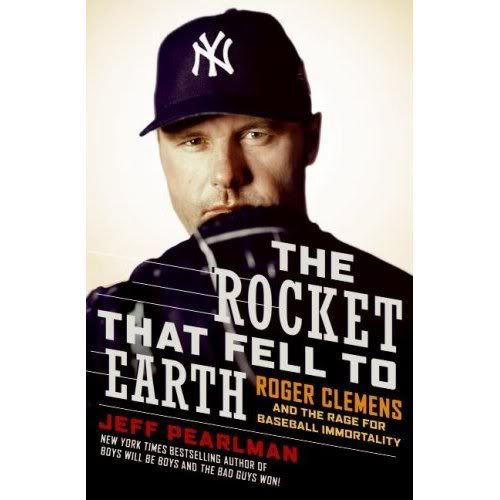
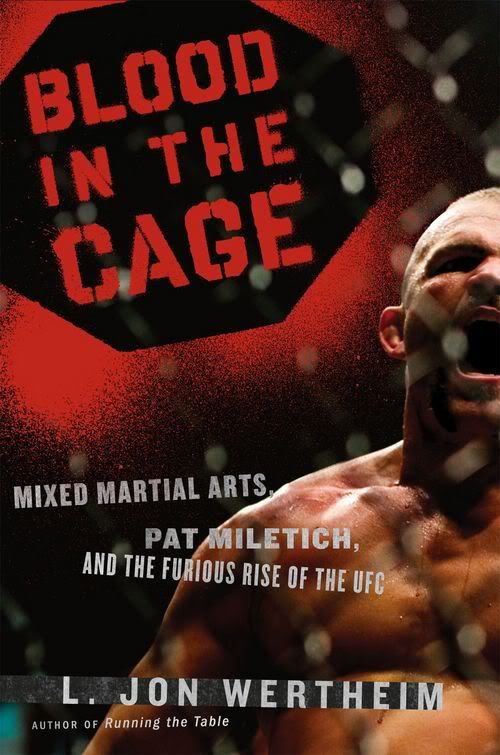
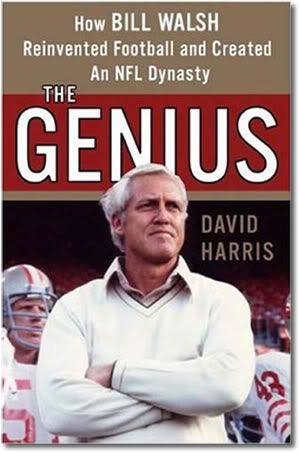
The spirit has been willing, but the flesh is weak and the hours are never long enough, but here's some recent reads, offerings from authors Jeff Pearlman (yes, the Clemens book), L. Jon Wertheim and David Harris:

The Rocket That Fell To Earth: Roger Clemens And The Rage For Baseball Immortality
By Jeff Pearlman (348 pp.)
Amazon.ca: $22.04


The test of a book such as Pearlman's is whether there's enough there outside of what tends to stir up manufactured outrage.

Pearlman's books work on two levels. He'll always have a couple of fish to throw to the hungry seals tied to the 24-hour news cycle and make for some juicy excerpts on at Yahoo! Sports. Try as one might, there's no forgetting the passage in his last book, Boys Will Be Boys, that 1990s Dallas Cowboys star Charles Haley masturbated in front of teammates or that Pro Football Hall of Famer Michael Irvin stabbed a fellow player in the neck. Of course, recounting dirt isn't writing; it's typing.

Unless the author cares about the people he/she is writing about, you don't have a book worth plunking $20-30 on; you have Richard Ben Cramer's Joe DiMaggio biography from about 10 years ago. Rocket works by inviting the reader to re-imagine Roger Clemens as part tragic hero, part baseball geek.

The Clemens sports fans have come to know and loath, except when he was pitching for your favourite team, is more Ogre than nerd. Pearlman quotes author Pat Jordan describing the pitcher's much-hyperbolized workout regimen as "mindless activity for a mindless person."

The first couple hundred pages, though, explore how Clemens kind of matured backwards as a ballplayer and as a person. That mushroomed into everything which has made him seem like the American Idiot (steroids, retiring, unretiring and re-retiring, jumping from team to team, jumping into bed with a briefly famous country-music cutie, and so on).

Clemens, as most ball fans know, developed pinpoint control before developing a major-league fastball, which runs counter to the usual maturation for power pitchers. He was also, as Pearlman details, a wise beyond his years teen, which might surprise people who remember his 38-year-old self throwing part of a broken bat at Mike Piazza during the 2000 World Series.

Thanks to dogged reporting, Pearlman unearths details like how at age 16, Clemens attended a local high school championship game with his brother, Randy, with the understanding he would transfer to the school which won the game. He cast his lot with the team which had lost: "The players were crisp, disciplined and uncommonly professional."

It was the kind of informed decision that can be beyond people much older than 16. It explains how Clemens was "never the thinking man's athlete, there was some intelligence about him, along with this drive to become a once-in-a-generation pitcher.

Unfortunately, as the book relates, he had a funny way of showing his intelligence. Clemens prevailed against all odds (he didn't get a single NCAA Division I scholarship offer coming out of high school) by putting in the time and being smart, on some level. Once he received his due, becoming a big man on campus at the University of Texas, a first-round draft pick and winning his first Cy Young at age 24 with the Boston Red Sox, Clemens started to lapse into into adolescent behaviour and outright jackassery.

The addiction to being Roger Clemens took hold, especially as he outgrew a childhood of relative poverty. Pearlman, who knows what scandalizes but also knows people deserve some benefit of the doubt, is a perfect tour guide to two-decade-long train wreck. Clemens' fatal flaw seems to be that, like most geeks, he could never quite explain himself to the norms (here one remembers the "misremembered" comment). He was doomed in the court of public opinion all along, which all built up to him and his former trainer, Brian McNamee, more or less agreeing to a policy of mutually assured destruction.

Rocket helps humanize Clemens. No one will be printing up "Free Roger" T-shirts if he ends up facing federal perjury charges in the U.S., but the Roger Clemens you come to know will keep you rapt for 300-plus pages.

Recommendation: Twenty-two bucks is pretty reasonable and it certainly would work as an Easter or Father's Day gift. Pearlman's first three books each made it to paperback, so hopefully Rocket will too, although this is a much tougher market for sports titles.

Blood In The Cage: Mixed Martial Arts, Pat Miletich, And The Furious Rise Of The UFC
by L. Jon Wertheim (251 pgs.)
Amazon.ca price: $21.39

Blood In The Cage probably is one of the more important sports books of 2009, even if it was actually published in December.

It raises the question of who knows less about the UFC, the people who swear by it or those who swear it's a sure sign of the downfall of western civilization. Werthheim, who mostly covers tennis for Sports Illustrated (tennis is a blood sport disguised as a refined game; that's why they wear all-white attire at Wimbledon), is a convert to mixed martial arts. However, he's not preachy about it, like a lot of its fans. It's just that a sports fan in 2009 has to accept MMA as part of the sportsgeist. If anything, it's not growing as fast as it could.

The heart of the first half of the book is Pat Miletich -- whom you could say was an Ultimate Fighting champion before they became famous -- and is now a respected trainer, running a gym in his hometown in Iowa. UFC president Dana White is at the heart of the second half.

Miletich's story hints at why some people recoil from the UFC, although Wertheim wisely goes about telling a fast-moving story instead of taking side trips into sociology. It is worth wondering if some people recoil from UFC because there's no feeling of separation like there is when you're reading about an NBA or NFL player who overcame poverty. Most of its fighters are from a fairly middle-class upbringing and, as any fan of The Ultimate Fighter knows, had to fight to prove something they cannot define.

One common thread, though, seems to be a turbulent home life. It hits too close to home when the athletes simply grew up in a dysfunctional family like, well, everyone. Similarly, you could argue the sport has risen because, in a lot of smaller American towns, the loss of well-paying manufacturing jobs has left a lot of young white men at loose ends with how to define their roles.

Anyway, enough eggheading it up. The sections on Miletich, whose first 30 years of his life included the death of a sibling, his parents' divorce, a string of dead-end job and the occasional dumpster-dive, are very well-done, and you should come away with an appreciation of what makes a fighter tick. Wertheim also takes time to explain how various combat sports, including grappling and jiu-jitsu, were melded together to create what's now known as MMA, defeating the idea it's some designer sport.

Appropriately enough, for a book about a sport that is officially less than 20 years old, the book is pretty open-ended. Wertheim punches holes in the myth that Dana White's leadership saved the UFC from folding,, but he gives its controversial president plenty of credit. He does ultimately wonder if White will be good for the sport in the long run: "Can an organism continue to grow if it doesn't always expose itself to light?" That's a pretty prescient comment, considering White is currently having to apologize after a vlog where he says "fuck" 42 times in less than eight minutes and uses anti-gay slurs. That line pretty much predicted White's gaffe.

Wertheim has another book due out May 7 called Strokes of Genius: Federer, Nadal and the Greatest Match Ever Played.

Recommendation: Bug your neighbourhood librarian for it, or get it in paperback. It's written more for a general audience than a hardcore fan.

The Genius: How Bill Walsh Reinvented Football and Created An NFL Dynasty
by David Harris (384 pp.)
Amazon.ca: $18.90

Harris' 10th book is an adulatory look at the late Bill Walsh, who died in 2007 at the age of 75.

There's a bit of an Outliers vibe to Walsh's story. Malcolm Gladwell seized on the idea that if you spend 10,000 hours working to become good at something, it's practically an inevitability. Walsh, who coached the San Francisco 49ers to three Super Bowl championships in the 1980s (they won a fourth the year after he retired), waited much longer than he should have to become a NFL coach. Harris does a good job relating why that was, how Walsh looked critically at how people did things in a business and a sport where orthodoxy tends to rule the day. (One of the great quotes in the book: "Bill changed the way NFL teams practiced.")

Harris fills in the kind of details that show that Walsh seemed almost destined to re-design how offensive football was played in the NFL. Like many coaches, he was a frustrated quarterback; as a high school football player, he seldom got to play QB since his family moved a lot and coaches in those days seldom let left-handed people play the position. As a young high school coach, Walsh had his teams running the three wide receiver formations decades before it was commonplace in the NFL. His first jobs at the college and the pro level both came on the defensive side of the ball. That kind of football curriculum vitae no doubt helped Walsh.

The Genius is not a warts-and-all portrait. Walsh's personal life is barely mentioned, which is a stark contrast to the definite NFL coach bio, David Maraniss' Vince Lombardi bio, When Pride Mattered. (A key difference there was Maraniss was writing about someone long after he was dead; Harris had access to Walsh during his final two years.) There's probably a little too much space given to play-by-play details of 20-year-old football games. Cripes, if you want to know how the 49ers beat the Dallas Cowboys in 1982, the entire winning drive is on YouTube.

Those are small misgivings. It's a pretty thorough bio of the greatest coach in NFL history, pure and simple.

Recommendation: Check the library or wait until it comes down in price, unless you're a total NFL nut.

Thursday, April 02, 2009

Clemens and Cito: Fascinating reading, or misreading ...

Toronto will never be a true sports city until it learns to laugh stuff like this off.

Blue Jays manager Cito Gaston making an unflattering anatomical comparison with Roger Clemens over decade-old events got a lot of play today. The funny part, if you read the Jeff Pearlman book a certain way, the author did not say flat-out that Clemens got Gaston fired in 1997. Gaston is mentioned by name only twice in the entire book. It's not even the most scandalous thing Pearlman says about Toronto as a sports city.

(Pearlman addresses it: "What my book says is that Clemens had a heavy hand in the hiring of Tim Johnson, Gaston's eventual replacement. But that didn’t take place until well after Gaston was gone.")

It's a good thing for Cito and the friendlies in the press corps to run with. Ripping a disgraced drug cheat a new cornhole is the ultimate in low-hanging fruit, but it's damn entertaining:
"Author Jeff Pearlman made the allegation in his new book The Rocket That Fell to Earth and adds that Clemens pushed for the hiring of Tim Johnson, who was fired after one season for lying about his military service." — The Canadian Press

"Pearlman says Clemens vetoed qualified men such as Davey Johnson, Paul Molitor, Willie Randolph and Larry Bowa. Instead, he backed the hiring of Tim Johnson, who was fired after one season for lying about his fictional military service record."
— Sun Media
Here's what it actually says in the book, on pgs. 204-205:

Pearlman notes that Clemens approached the Jays about signing Jose Canseco before 1998 season, which they did, even knowing, as then-GM Gord Ash said, "what the history was been there." At the time, people would have taken that to mean Canseco was injury-prone and that he had played for the Oakland Athletics when they were one of the Jays' rivals:

Pearlman adds:
"That wasn't Clemens' only tinkering. Having fired manager Cito Gaston with five remaining in the 1997 season, the Blue Jays held an extensive search for a replacement, interviewing such Grade-A candidates as Davey Johnson, Larry Bowa, Paul Molitor and Willie Randolph. But who did Ash and Co. end up hiring? Tim Johnson, an unexceptional yet bubbly man who had just finished guiding the Triple-A Iowa Cubs to a 74-69 mark. Rarely considered big-league managerial timber, Johnson possessed three major attributes:
  1. Gobs of boyish enthusiasm. 'I'll communicate with each of players every day,' he vowed upon being hired, 'Even if it's just to say, Hi, how's the family?'
  2. He had been a coach with the Red Sox when Roger Clemens was there
  3. Clemens really liked him."
It sounds more like the front office made its choice knowing what would make their highest-paid player the happiest, like that has never happened before in pro sports. Reality sandwich, people, sorry it doesn't jibe with What Should Be.

It doesn't say Clemens tried to get Cito Gaston fired, it just says he was fired. Pearlman's books are exhaustively reported, so if that did happen, chances are he and the reporters he had helping him might have flipped over that rock.

The only other mention of Gaston comes a few earlier, it notes that Clemens knew the manager was "a strategic lightweight" before he decided to join the Jays. That's an opinion that many people would have agreed with before Toronto's baseball clock became permanently stuck at 11:39 p.m., Oct. 23, 1993.

Pearlman is pretty smart. Reading between the lines, saying, "That wasn't Clemens' only tinkering," which seems like a direct accusation, could also just be a a transition to a new paragraph. Either way, it seems like it was put it out there like a bucket of fresh fish for a bunch of baying seals and let the reporters in Toronto connect the dots, you know, the way they didn't 11 years ago when Tim Johnson was telling people he fought in Vietnam and half the Blue Jays team was goosed up on steroids.

The biggest takeaways from the two chapters on Clemens' Jays years was that he found an absence of celebrity and tabloid culture in Toronto. He got annoyed when National Golf Club actually expected him to pay his green fees ($1,000 for a foursome) and just wouldn't take 10 Red Sox-Jays tickets in lieu, like a lot of posh courses in the U.S might have.

More tellingly, Pearlman also notes that playing in Toronto meant he had no reason to worry about people unearthing the skeletons in the closet.
"Clemens had found the right place for a guy trying to keep his personal life off the radar. He certainly didn't have to worry about the Toronto Star or The Globe and Mail digging up dirt about Mindy McCready or any of the other women he was involved with. He also didn't have to worry about the second major scandal (for lack of a better word) in his life — the rapid decline of his brother, Randy, whose drug addiction was a tightly guarded secret restricted to family members." — pgs. 192-93
Granted, that is not Sportscentre-sexy. Taken one way, it makes Toronto sound less like a world-class city than a hockey-obsessed Hooterville, so that's why you're not hearing it repeated breathlessly.

The bottom line is Pearlman is an awesome writer and the Clemens book compares favourably with his other three efforts. Here is hoping this juices his Canadian sales, as it were, since there's a lot more to it than recounting all the nasty things he's done. He is supposed to be appearing on Drunk Jays Fans podcast in the next little while, so there will be a chance for discussion.

Think about, though: It's well-established that in 1998 the Blue Jays had about half the team on steroids, had two of baseball's most disgraced drug cheats in their lineup, one of whom was nailing a Woman Not His Wife who was also a chart-topping country singer. However, Cito Gaston is saying Roger Clemens tried to get him fired when he was presiding over a fourth straight losing season and it's a bloody outrage.

Oh, well, it makes Ottawa seem less parochial by comparison, which takes some doing. (The bar has been raised awfully high, or low, in the last little while.)

Some of us younger old fogeys still maintain there's a value to actually reading an entire book from start to finish and in that order. I'll try to have a review up in the next couple days.

Related:
Gaston has foul memories of Rocket (Sun Media)
Cito launches Rocket (Globe & Mail)
Cito Gaston has sharp words for Roger Clemens; Book on Clemens says he pushed Jays to fire Gaston in '97 (Morgan Campbell, Toronto Star)

Wednesday, March 25, 2009

Cooking the Books: Feschuk, Grange lampooning Leafs

Mike Myers failed to wring great mirth from the Toronto Maple Leafs' 40 years in the hockey desert, but Toronto sportswriters Michael Grange and Dave Feschuk are going to try.

Hockey Book Reviews has the low-down on their joint effort, which will be published at the start of the 2009-10 NHL season:
Leafs AbomiNation: The dismayed fans' handbook to why the Leafs stink and how they can rise again - Dave Feschuk and Michael Grange have an interesting book coming. It looks like it could almost comical - the listed price: $19.67.
This could be a big seller in Ottawa, especially at that price.

It is the first book for the Star's Feschuk and The Globe & Mail's Grange, if memory serves. Each of them, as you know, usually has the basketball beat at their papers, so they probably should bring a fresh take on MLSE's hockey operation.

Their vigour and willingness to take this all the way should be saluted. It beats becoming passive-aggressive about the Leafs, or having to pretend not to care about Canada's dominant sports franchise, save for occasionally being prolix about the permanent stain of Harold Ballard or the legacies of Wendel Clark and Doug Gilmour.

Incidentally, on the sports publishing front, you should check out the excerpt from Jeff Pearlman's The Rocket Who Fell To Earth, his biography of Roger Clemens. All efforts are being exhausted to secure a review copy.

Tuesday, February 24, 2009

Zen Dayley: Buttoning up for Bonds

The question with the Barry Bonds trial has always really been if the juice is worth the squeeze.

The big story today is that Bonds' personal trainer, Greg Anderson, ain't talkin', even if means going back to jail. That could be bad for the federal prosecutors, who normally in the U.S. win about 95% of their cases, taking advantage of the conservative judiciary at the federal court level (the president's party tends to have much more impact on the federal courts than the big show in Washington, D.C.).

Anderson zipping it out of loyalty to Bonds would put the feds' case "on serious life support." (Dave Zirin.) It is understandable if you're disgusted that Anderson won't testify, especially if it turns out in 10 years that Bonds promised to make it worth Anderson's while . The white-hat guys have spent five years trying to bring Bonds down, when he's no threat to the public morality, let alone safety. That is more obscene that one swollen head.

This, that and the other:
  • The Tao of Stieb is saying what most Jays fans are thinking: Put Alex Rios in centrefield and Vernon Wells in right. Cito Gaston (whom Jeff Pearlman believes will be the first manager fired) tends to be loyal to his guys (remember Devon White hitting in the 2-hole during the '93 stretch drive while two Hall of Famers flip-flopped in the 3 and 6 spots?), so it's possible Wells stays put, but really he should move.
  • Baseball Prospectus' Jay Jaffe has a must-read about the Yankees being "shockingly out of touch with a fan base that it's trying to bully into spending beyond their means during hard economic times." Eighty-five bucks for a seat behind the foul pole, people.
Related:
Greg Anderson’s pledge of allegiance (Dan Wetzel, Yahoo! Sports, Feb. 22)
Bonds' personal trainer expected to remain silent (The Associated Press)
The US v. Barry Bonds (Dave Zirin, The Nation)

Tuesday, January 27, 2009

Top 5: Pearls of wisdom

Jeff Pearlman's new gig fairly demands some sort of tribute, since he's one of those sportswriters you wish you could touch with a 39½-foot pole.

For his and our sake, Sports Illustrated better figure out how to put Pearlman front and centre.
"This is just my take, but it seems the network/website/magazine became obsessed with adding every big journalism name out there. So it started unloading tons and tons of money on the Rick Reillys and Howard Bryants of the business. Those guys are, of course, wonderful talents. But at some point, ESPN seemed to be hiring for the sake of hiring. They treated journalists in the way sports organizations treat players — gobbling up 'free agents' without much thought. Now, they’re loaded with big names, but is the finished product that much better? Probably not."
Along with his biography of Barry Bonds bio and thumping good reads about the 1986 New York Mets (The Bad Guys Won) and 1990s Dallas Cowboys (Boys Will Be Boys), Pearlman has produced some first-rate stuff for ESPN.com. His stuff speaks for itself, but it's like he's able to bring the point home that a sports figure does not cease to be interesting once he or she is no longer playing, without hitting people over the head with by being overly obvious.

Assuming Mr. Pearlman wouldn't mind, here's five gems among many from his body of work:
  1. Fifth and Jackson (September 2008)— A retrospective on the slain California Angels outfielder Lyman Bostock, 30 years after he was shot to death.

  2. From a Benz to a bike; the rise and fall of Clayton Holmes (January 2008) — It's a big myth that journalism leads to public good, but after Pearlman's empathetic profile of former Dallas Cowboy Clayton Holmes, the former Super Bowl-champion cornerback made an effort to get his life turned around. Of course, only Holmes could rescue himself, but who knows if he got a nudge from someone taking an interest in his life.

  3. Joe Kennedy is gone, but not forgotten (March 2008) — A look at the widow of former Blue Jays pitcher Joe Kennedy and the support network she found through people in baseball.

  4. Turning a critical eye to the ol' alma mater (August 2007) — One of the more welcome trends in sports media is that writers who don't claim to have all the answers and work through their own blind spots. Pearlman turned the focus on himself, questioning why in a decade of inveighing against Native American team nicknames, he'd never objected to his old high school being the Indians.

    In hindsight, this one resonates. My old high school's sports teams are the Ernestown Eagles. In Don Marks' book They Call Me Chief: Warriors On Ice, he talks about how there was a large dispute in the mid-1990s when a reserve-based Junior A hockey team in Lebret, Sask., opted to call itself the Lebret Eagles. The use of bird imagery is a very sensitive issue among aboriginals. It was not surprising, yet still embarrassing to have gone through 30-plus years not knowing this. It doesn't mean ESS should change its name, but just as it's good to know the Kingston Frontenacs' historical namesake had a tie to slavery, it's good to be aware.

  5. Nothing meek about Meek's game (June 2007) — Remember Chaminique Holdsclaw, who was supposed to turn women's basketball on its ear in the late '90s? She had a couple good seasons and pretty much faded away, as she dealt with clinical depression. People don't forget.
Pearlman also believes Tim Raines should be in the Baseball Hall of Fame. Hopefully, all of this speaks to the man's ability to get people to use their heads in ways they didn't know they had. Reading Pearlman at SI.com will be a treat.

Related:
Goodbye, ESPN.com; hello, SI.com (Jeff Pearlman.com)

Tuesday, November 04, 2008

Pearls of wisdom, and Michael Irvin anecdotage

The lads over at Hugging Harold Reynolds have an interview posted with Jeff Pearlman about his book on the 1990s Dallas Cowboys, Boys Will Be Boys.

Wednesday, October 15, 2008

Snark break ...

Hey, if you don't like the results of the federal election, just wait another 2½ years -- three, tops.

It turns out that after that notorious Sports Illustrated interview in 1999, John Rocker called up Jeff Pearlman.. The only problem was that he had the wrong Jeff Pearlman.

C'est la vie, Canada: The New York Times profiles Matt Stairs and gives his birthplace as St. John, New Brunswick. (At least it didn't say "St. John's.") Granted, The Times has been known to make stuff up.

Does NDP Leader Jack Layton ever not say "kitchen table" in the first minute of a speech? It's enough to make you pound your shoe on top of, well, the kitchen table.

The Wildcat formation, which is really just the old 1940s single wing, is taking the NFL by storm. Al Davis and the Oakland Raiders must be ticked. They've only been running an outdated offence for 20 years.

The Redskins signed Shaun Alexander. He's old and worn-out. He'll fit right in, in Washington.

This post is worth nothing, but this is worth noting:

  • There will be a second Kids In The Hall movie coming out in January 2010. There's a whole new generation whose heads need crushing.
  • Hoops Addict was at the Raptors' win over CSKA Moscow last night.
  • A reason to cheer for every NCAA men's college basketball team. What, there wasn't time to do one for every women's team. (Courtnay Pilypaitis on the Vermont Catamounts and Steph MacDonald of the Canisius Golden Griffins, there's two.)
It's not sports, but it's just too good to ignore:

Tuesday, September 23, 2008

Herschel Walker: They were all in on it! Worlds are colliding

Most everyone loves a good conspiracy theory.

Here's one, via the estimable Jeff Pearlman and a football fan named Craig Greenwood, that's an absolute lulu. It's possible that this is an elaborate hoax, but Pearlman is also quite busy promoting a book, so it can be safely ruled out -- somewhat.

Not to oversell it, but it's a 27-parter that almost defies skimming over. It involves the late NFL commissioner Pete Rozelle, in conjuction with the Double J himself, Jerry Jones and much-reviled former Minnesota Vikings GM Mike Lynn, in a NFL that was very different from today. (All of this was coming after the scab football fiasco in 1987.)

Everyone remembers the Herschel Walker trade in October 1989. It helped the Cowboys with becoming The Team of the '90s. It helped the Vikings with being the Vikings.

Walker proved not to be the Vikings' golden ticket to a Super Bowl title. The Vikings still have not been to the Super Bowl since Jan. 9, 1977, five days after the Sagers of RR 1 Napanee welcomed a bouncing baby boy into the world. Boo hoo, end of story for anyone's who cursed with having a life, or maybe not ...

"Then Rozelle speaks again. 'The Vikings with general manager Mike Lynn and the Cowboys with Jerry Jones right here have already come to terms with a trade that the networks say is favorable enough for what they want.' (Hey for what all I know the networks could have written the terms of this trade.) Rozelle continues, 'Now Mike Lynn has agreed to be the "fall guy" for this trade for other considerations. The considerations are, Mike Lynn becomes president of the new World League of American Football that our league will have running in a few years and the other thing the Viking’s management wants is a Super Bowl played in their stadium in 1992.' "
In a desperate hour, who set her or his mind to "race" and wondered if something was up? One need look no farther than, oh, the last 100 years of popular entertainment to know that people want to believe.

The NFL had slipped as a TV property over the run of the 1980s. There were many factors, but one, according to Greenwood, was the decline of the Dallas Cowboys, the league's most recognizable brand. In 1989, they were well on their way to becoming the first NFL team to lose 14 straight home games (see, Detroit Lions fans, it can get worse). Or as he puts it:

"Since Jerry Jones came into the league a year ago we have

  1. A new commissioner in the league after the old one quit unexpectedly.
  2. A blockbuster trade that comes out in Jerry Jones’ favor that the new commissioner OKs after being in office just a short time.
  3. A strange place to have a Super Bowl that happens to be in the same place as the team that Jones' (team) traded with to get the favourable trade.
  4. A new television contract that pays almost double per year as the one before it when everyone said it would be less."
You know the rest of the story. By the time the implications of The Trade became clear, Mike Lynn had left the Vikings to run the late and lamentable World League of American Football. The Cowboys and the NFL, meaning, W-LAF-fed their way all the way to the bank and three Super Bowl titles.

In the interest of full disclosure, and not to put myself into the story, but in 1989 I was just getting into football. The Philadelphia Eagles seemed like an OK team to follow. Sports Illustrated's NFL preview issue had arrived in the mailbox with a supercool picture of Randall Cunningham ("The Ultimate Weapon"). He and Cris Carter were a pretty dynamic duo, easily understood in a child's eyes.

The following year, Buddy Ryan made his infamous "all he does is catch touchdown passes" pronouncement and cut Carter, who signed with the Vikings. Two years after that Herschel Walker ended up with the Eagles. A few years later, when Randall Cunningham came out of retirement -- and how is he not in the Pro Football Hall of Fame? -- he ended up with the, wait for it, Minnesota Vikings ...

You see where this is headed? The conspiracy deepens.

Related:
A Herschel Walker conspiracy theorist (JeffPearlman.com)

(Footnote: Someone has to invent a word for the phenomenon of, as a sports fan, finding out about something that predates your experience rooting for the team. Case in point: In early 2004, one of those nights Robert Frost would not have written about if he'd had to experience a Prairie winter, some late-night channel-surfing turned up an rerun of the early Saturday Night Live on Global Winnipeg.

It was not long after this happened. The great Vikings quarterback Fran Tarkenton was hosting and it soon became apparently that this was from right after the Vikings' fourth Super Bowl loss.

Fran Tarkenton was wearing something no NFL quarterback before 1970 or after 1980 would have been caught dead in -- something like a sweater with a picture of Snoopy on it. He started talking about how the Vikings would not let losing the Super Bowl get them down, how they would be back there next year -- and "we'll probably lose again."

Talk about This Is Your Life moment.

Monday, July 28, 2008

Cooking the Books ...

The spirit has been there to add sports books reviews to Out of Left Field for quite some time -- and that day is finally here.

Promise you this: The reviews will neither be timely nor professionally written, but will be helpful if you’re looking for some new reading material or for a gift for the sports-loving bookworm or book-loving sportsworm in your life. This is open to commentators – if you want to write a review, or merely have a recommendation, fire off an e-mail to neatesager@yahoo.ca.

That's probably enough of an introduction. This edition of "Cooking the Books" (the title was Keith Borkowsky's idea) includes titles by Pat Jordan, Will Leitch, Kenny Mayne, Ralph Mellanby and Deadspin editor Clay Travis, after the jump.

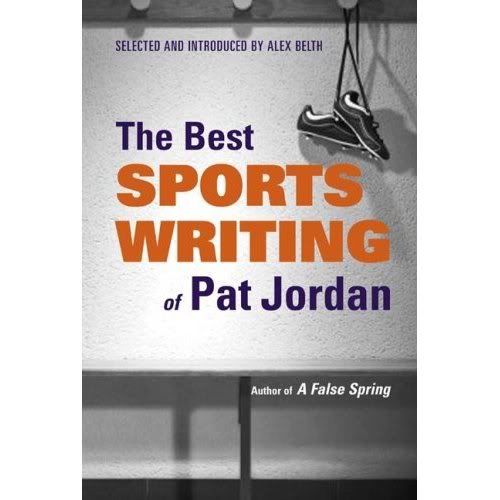
The Best Sports Writing of Pat Jordan
By Pat Jordan with Alex Belth (editor)
Amazon.ca price: $17.61

Gay Talese is said to have popularized fly-on-the-wall literary sportswriting with the Joe DiMaggio profile back in 1966. Jordan has perfected the craft. It's made him the sportswriter’s sportswriter and enabled him to keep his own hours, but it's worked against achieving the fame and fortune of Rick Reilly, say.

Jordan just disappears so thoroughly into his subject and is such a straightforward writer that it's easy to forget how many major pieces flowed out of his fingertips. That piece where the famously reticient Hall of Fame pitcher Steve Carlton talked about the "12 Jewish bankers" who control the world? That was Jordan. That article when Deion Sanders' mother called her famous son's future wife "trash"? Jordan. Three guesses who got sued in the early 1980s by Steve and Cyndi Garvey for a profile that basically left readers to infer that baseball’s poster couple were on the verge of splitting up – which they did, inside of a year later.

There’s a lot the wound-and-the-bow to Jordan’s choice of topics. Since he pitched in baseball’s minor leagues, pitchers are a favourite subject, so along with Carlton, there’s in-depth looks at Roger Clemens, Rick Ankiel (when he had his control problems) and the author's friend, Tom Seaver.

The scenes with Seaver provides insight into the mind of an elite ballplayer. It put Blue Jays ace Roy Halladay's recent uncharacteristic "Groundhog Day" comments into some perspective. Jordan and Belth, the editor, subdivided the book into two sections, Fame and Obscurity, so there's plenty of variety if you prefer to read the book piecemeal, one chapter at a time. Another masterstroke was a Q-and-A between Belth and Jordan that explains interviewing and journalism better than a reporter with 20 years' experience ever could.

Recommendation: If you only buy one book about sports this year, make it this one. It's perfect for a true sports connoisseur or anyone who is interested in writing, period.

God Save The Fan: How Preening Sportscasters, Athletes Who Speak in the Third Person, and the Occasional Convicted Quarterback Have Taken The Fun Out of Sports (And How We Can Get It Back)
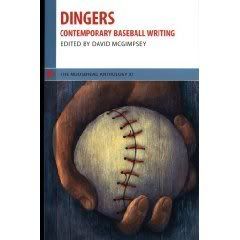
By Will Leitch (founding editor, Deadspin)
Amazon.ca price: $16.35

Some would say that title tail ended up wagging the content dog in God Save The Fan. Leitch was rapped because many reviewers believed that his criticism of the American sportscape came up short with the pars construens, where one makes constructive suggestions about how to change a singularly rotten system.

That overlooks the reality that any good Gen-Xer writer born after 1975 knows the most you can hope to do is change attitudes. Whatever God Save The Fan lacked in remedies is made up for the fact that it rides along on a wave of indignation that sustains it across 200-odd pages -- no mean feat. It's the same vibe that makes offerings from comedians such as Bill Maher or the late George Carlin readable, not to mention, re-readable. Including a glossary that tweaks each major pro team’s fanbase? ("Raptors, Toronto: Quite pleased, actually, that Vince Carter pulled that stunt because it opened up an outlet to release anger, in a polite Canadian way, of course." It's nice to think this had something to do that item.) That's what Carlin might do to avoid getting too preachy and keep making with The Funny.

The energy is enough. The thrust of Leitch's rally-the-troops argument to sports fans – "It's about embracing the matters you do have control over" – shines through loud and clear. ESPN, or TSN, isn't going to change. But we can.

Recommendation: God Save The Fan is apparently due out in paperback early next year. You could wait a few months and save a few bucks. It would make a good gift for someone who likes sports, but not to the point where they would read a book about it. It also should be required reading for anyone who’s contemplating working in the sports industry.

Dingers: Contemporary Baseball Writing
The Moosehead Anthology 11
Edited by David McGimpsey
Amazon.ca price: $13.83

Books directed to those oddball Canadians whose favourite sport isn't played on ice are few and far between, so on that alone, Dingers is worth having on your radar screen.

Short-story collections can be hit-and-miss. This offering from DC Books, has a few misses, but hey, that's inevitable for a book dedicated to sport where a hitter who fails six times out of 10 is a superstar.

The one story that I kept coming back to was Ian McGillis' "Who Needs Your Stinking Pennant?" An Expos fan, McGillis explores the phenomenon of how, as a fan of a team, "the position of the one being stomped upon is a place that can grow comfy; even reassuring."

That might be the most honest sentence ever written about being a diehard sports fan. It's bound to end poorly -- especially in the case of the late and lamented Expos -- but there's a security in knowing ahead of time. It's something that's appreciated more and more over time, as you get farther and farther away from the adolescent who expects championships to just fall out of the sky (i.e., like 90% of Toronto sports fans).

Dingers also includes selections from Dave Bidini, George Bowering and the Governor General's Award-nominated Kevin Connolly.

Recommendation: It's probably too scattershot a collection for some tastes, but there's enough good stuff there to look for it at a library or a second-hand store.

Walking With Legends: The Real Stories of Hockey Night in Canada
By Ralph Mellanby with Mike Brophy
Amazon.ca price: $16.48 hardcover, $14.56 paperback (due Sept. 1)

Mellanby's memoir was a timely read. It was picked up shortly after CBC Sports’ Hockey Night in Canada wrapped up its coast-to-coast cornfest for the summer.

It’s part memoir, part insider account, but a big takeaway – intended or not – is the rebuke of Canada’s longest-running sports series. Mellanby and Brophy use the behind-the-scenes stories of the show's stars from the ’60s,’70s and ’80s to illustrate the vision he had for Hockey Night in Canada – a truly national broadcast, that was educated and opinionated (in that order), which prided itself on being ahead of the curve in producing good sports television and wasn't afraid to take a stand.

Considering the current state of HNIC, it’s almost like unearthing a secret history to read that Mellanby hired Helen Hutchinson as the show’s first woman host some three decades before Cassie Campbell working as a colour commentator practically provoked a national outcry. He also introduced a World Hockey Report as an intermission feature. Mellanby also tells of how he tried to convince NHL owners to adopt rules intended to make the game faster and more exciting – such as allowing coaches to only change players on the fly, not during stoppages in play. (One warning is that Mellanby is a bit of a figjammer, but it takes one to know one.)

It’s fair to say he never would have stood for HNIC obsessing over the Leafs, hired P.J. Stock as a so-called studio analyst or let the talent's egos get bigger than the show. If you don’t need that, though, Mellanby – who was part of the TV production of both the 1972 Canada-USSR Summit Series and the 1980 Miracle on the Ice – has more than enough anecdotes about the famous games and names – broadcasters and players – to be entertaining.

Recommendation: At $29.95 in hardcover at Chapters, Walking With Legends was veering way too close to the typical overpriced bit of tripe from the Canadian hockey mafia. It's best to wait for the paperback edition or visit a library. It's an essential read for any long-time hockey fan who is interested in TV production.

An Incomplete and Inaccurate History of Sport: … and other Random Thoughts from Childhood to Fatherhood
By Kenny Mayne
Amazon.ca price: $17.61

This came out just in time for Father’s Day and well, no one ever went broke by preying on the average white guy’s strained relationship with his Pops. "What to get Dad? Hey, look, that guy from ESPN who always does those off-beat segments that are cute-funny but not actually laugh-out-loud funny has a book out? Maybe he’ll like that instead of some Old Spice."

The hell of it is that on some level, it works, somewhat.

Recommendation: Stick with the Old Spice on Father's Day next year.

Dixieland Delight: A Football Season On The Road In The Southeastern Conference
By Clay Travis (co-editor of Deadspin)
Amazon.ca price: $12.05

Canadians always view big-time college football in the U.S. the same way a shopaholic looks at Saks Fifth Avenue – nose pressed up against the glass, looking at something extravagant that you'll never know for yourself.

Whatever the reasons, we're not the type to abandon ourselves to tailgating, filling an 80,000-seat stadium, figuring out which school has the most beautiful women and placing the origin of Bama 'Bangs. That might be a good thing. Travis, with his irreverent style, is an ideal writer to take readers through a tour of all 12 SEC stadiums in the fall of 2006 -- the premise for the book was that he would travel without tickets, hotel reservations or even a map. As a graduate from the law school at Vanderbilt, the SEC's perennial doormat, Travis was aided by a plethora of former classmates who cheer for teams across the conference. (It's bit of an inside joke that, like most college football fans, Tennessee Volunteer-loving Travis cheers for a team from a school he didn't actually attend.)

This isn't a book for peeling back the onion on the South's obsession with college football, which is fine, since sports are supposed to be a respite from daily drudgery. Even at 384 pages, this goes down superbly -- you can get through it in a day and a half.

Recommendation: Dixieland Delight was a $6.99 find at a second-hand bookstore on Front St. E. in Toronto, so that might be the best way to seek it out. It's more accessible to a non-football fan than you would think.

Notes

Jeff Pearlman, the author of (among other works) of the Barry Bonds bio Love Me, Hate Me, has a blog on his eponymous website. Without it, I wouldn't have found it until much later that his Boys Will Be Boys: The Glory Days and Party Nights of the Dallas Cowboys Dynasty, will be published by HarperCollins on Sept. 1 … the Washington Post has reviewed Stefan Fatsis' much-anticipated A Few Seconds of Panic: A 5-foot-8, 170-pound, 43-year-old Sportswriter Plays In The NFL ... Joe Pelletier has a site called hockeybookreviews.com.

Monday, March 10, 2008

TAKING SPORTS SERIOUSLY DRIVES YOU TO DRINK

The feature on Gregg Zaun at ESPN.com kind of touches on some personal and professional frustrations.

For starters, it was the second time in about a week a U.S. publication had a profile on a Jay that you're probably unlikely to read in a Canadian newspaper any time soon. Please don't take that as a slam. Yours truly is guiltier than most of failing to change that across the past decade. Bear in mind, though, there's the layers of senior editors and publishers who care more about catering to functioning illiterates* than chewing on the old Dan Jenkins adage, "The dumber the world gets, the more the words matter."

Most importantly, there's what people are willing to share. Americans, since they're so big on celebrity and redemption, are very much into the whole idea of a public confessional, while Canadians favour stiff-upper-lip stoicism and not wanting anyone to know your business, since we all know each other, right?

Not only that, but the sports writing culture in Canada has always been geared toward being shallow. Taking sports seriously, putting it in a larger context, is just too, too American. So the horizon becomes the doors of a hockey arena. It's as if you couldn't expect a Canadian to write about sports the way the best U.S. writers do, unless their name is Stephen Brunt -- and he's just as rooted in the Brit all-things-considered approach, besides.

That's why, as previously noted, there is no Canadian equivalent to Will Leitch. It never changes. A fellow writer who went to journalism school in the late '70s telling this story. Around that time, The Globe and Mail wanted a young sports columnist since dour dispatches of who won and who scored had become passe (although, three decades on, you can still pick up a the sports section of a daily in a small city -- the Brantford Expositor, to give a random example -- and find the same old tired story).

What did they do? Instead of trying to find out if there was a Canadian version of Rick Telander, they got an American, Allen Abel. It never changes.

Anyway, there is a levelling effect that comes with reading about Zaunie's time in a bottle. In 2004, when he'd just been released by the Expos, Zaunie was not much different from a certain sports editor at a small-town daily who was also "wasted way too many nights at the bar."

Now one of those guys is making more than $3 million a year. Perhaps there is hope yet.

Related:
The Steroid Era begets the Skepticism Era (Jeff Pearlman, ESPN.com; via The Tao of Stieb)

Thursday, March 29, 2007

BATTER UP: NEW YORK METS

Counting down the seconds till Opening Day when life begins anew involves providing a "starting nine" for all 29 major-league teams, plus the Tampa Bay team... whatever it's called this week. Presenting: The New York Mets.
  1. Their window to win another World Series is small: However, it has little to do with their aging lineup -- Julio Franco, age 48; Tom Glavine, 41 and Moises Alou, 40, among others. The Mets have two years left at Shea Stadium before moving into the lavish $420 million Citi Field. Frankly, the thought of the Mets being housed in a state-of-the-art stadium and winning the World Series there is scary. If it's going to happen again, it better happen at Shea.

    Shea is the last of the 1960s and '70s city-built stadiums. It's a concrete sea replete with the eardrum-assailing din of airplanes taking off and landing at La Guardia Airport. Mets fans, though, have given it character, and it always projected a different air of New York than that other ballpark over in the Bronx. From here, it's the late '60s-'70s-'80s New York of Billy Joel and Lou Reed songs, or Times Square before Disney got it meathooks into it.

    The Mets have always kind of existed more for the misfits and the poets. Shea Stadium, plus mostly bad teams, have helped create that vibe and once the Mets leaves, a little more of it will be gone for good, so the Mets need to win the World Series this year or next before moving into the new ballpark and becoming a little more like a lamer version of the Yankees.
  2. Proof they're morphing into the Yankees: MetsGrrl has expressed displeasure with the team's season-ticket ads, which feature an uninspired design and simply say, "See 81 Games. Minimum" -- implying the Mets are a sure bet to play in October. Careful, Mets management. People might think you're cocky.
  3. I don't see it happenin': The Mets have never successfully defended a division title and that won't change this year, even coming off a National League-best 97 wins. It all comes back to the all-important balanced strength. Half of the everyday players -- Carlos Beltrán, Carlos Delgado, José Reyes and David Wright -- need no introduction for fantasy league obsessives. After that, it gets hazy, especially whenever manager Willie Randolph writes Paul Lo Duca into the lineup as the No. 2 hitter, or when anything is hit toward Shawn Green in right field.
  4. The pitching is all kinds of dodgy: The Mets starting staff resembles Fort Lauderdale at this time of year -- anyone who is neither old (41-year-old Tom Glavine and Orlando Hernandez, listed at 37, wink-wink) or young and unpredictable (John Maine, Oliver Perez) sticks out like a sore thumb.

    Maine (6-5, 3.60 ERA) last season does not seem ready to be a No. 3 starter on a contending team. Hardball Times has pointed out, his strikeout rate doesn't really support the low hit rate he yielded last season, and he's prone to giving up the gopher ball.

    New York's bullpen also pitched over its head last season. Relievers tend to regress from one year to the next. That's just the way she goes.
  5. That's why they're called the Amazin's: It's been 45 seasons and the Mets are still waiting for a batting champion, a National League MVP and the franchise's first no-hitter. Even more astoundingly, last season Mets pitchers hit a franchise-record 62 batters, but not one was named Craig Biggio (source: Plunk Biggio).
  6. You can never go home again for a rehab assignment: Wright grew up a Mets fan since its Triple-A team was in his hometown of Norfolk, Va. The Mets just switched their affiliation to the New Orleans Zephyrs.
  7. Retro Mets: Rick Aguilera (right-handed pitcher, 1985-89) and Dwight Gooden (right-handed pitcher, 1984-94) get the nod since both sum up the saga of the '86 team which every North American male who was between the age of eight and 14 that fall supported.

    Aguilera had a central role in one of the '86 Mets' greatest acts of arrogance. Like the '85 Bears with their Super Bowl Shuffle, the '86 Mets had a video. Actually, they had two -- one the team created and another, Get Metsmerized. The latter is not on YouTube, which might be justified since as Jeff Pearlman noted in his book The Bad Guys Won, Aguilera was its sole saving grace. His teammates variously sounded like "a teenage prom queen," "97 percent unintelligible," and "as if he's chewing on rocks." Aguilera's verse was as follows:

    When they want a batter filled with terror
    They call on me, Rick Aguilera
    Slider's hot, I'm on the mound
    With cool control I mow 'em down

    Aguilera was later one of many good players then-Mets general manager Frank Cashen traded away in a vain bid to recapture the magic of '86. He was sent away in a 1989 trade for Frank Viola that gave the Twins some key parts of their 1991 World Series team. As for Doc Gooden, greater minds have already told the story of Doc's drug problems and dashed potential.
  8. Need-to-know: Teams with big-name offensive stars who play in major media markets are always overrated. The Mets, who had everything go right in '06 until the NLCS -- Pedro Martinez's elbow woes nothwithstanding -- are riding for a fall. The scenario which seems likely is a team that scores a ton of runs, but won't be able to get anyone out or buy a hit in a 2-1 game. The hitting, though, is good enough that it will prop the Mets up until GM Omar Minaya acquires pitching help. The Mets likely won't repeat, but the wild card spot should provide a soft landing.
  9. Lastly a FYI on behalf of Keith Hernandez: First of all, contrary to how Newman on Seinfeld told it, on June 14, 1987 the Mets played the Pirates and Hernandez was 2-for-4 with a double and home run while handling 12 fielding chances flawlessly. Secondly, he is a cool guy and still totally sponge-worthy at age 53, even if Elaine Benes wasn't wavin' him in. It's her loss, Mex. Solidarity, 'cause in a way, we all played first base.


That's all for now. Send your thoughts to neatesager@yahoo.ca.

Wednesday, June 07, 2006

WATCHING BASEBALL REALLY IS A GUILTY PLEASURE

Even the author's beloved Blue Jays are not above suspicion -- but it can be safely assumed that steroids and HGH have not fueled the K.C. Royals' 14-42 record.

What's illuminating about the Jason Grimsley HGH revelations isn't the news itself – it’s how people learn to deal.

The scariest aspect isn't just that the ex-Diamondbacks reliever being implicated in a U.S. federal steroids probe that might – nay, will - stick to baseball.

This is rich. You have a veteran player and a federal affidavit with blacked-out names. This will have legs. Yet at the same time, every fan knows it exists. It’s just a question of whether baseball gets it right this time, or tries to play defence on this one and sweep this latest scourge of the sport under the rug. Last year showed the sport was beneath embarrassment – and now this happens.

Sixty per cent of respondents to an ESPN poll believe Barry Bonds/BALCO is far worse. Just how Grimsley and Bonds are separate when it's all part of one mass investigation is beyond me. However, the poll numbers are illuminating, since it seems to reveal how baseball fans can pretend this away.

Nearly 95% believe Grimsley was entirely truthful when he said "boatloads" of players are using HGH – but about 60% are saying they don't develop suspicion "when you see a player have a huge game or go on a long streak."

Really, how else are you supposed to deal with it? Baseball’s hamfisted attempt to put a gloss over the steroids scandal last year makes every fan a little bit guilty. We are taking pleasure in a sport that you know has been altered by drug cheats, knowing that there are strings attached. Sure, there have been some failed steroid tests, but save for Rafael Palmeiro, it's almost always a minor leaguer or the 11th man on the pitching staff. Paraphrasing what Bob McCown noted on The Fan 590 a couple weeks ago: it's odd how this bigger, better net has yet to catch any really big fish.

You know something is going on, but you’re in no position to do anything about it. Well, you could watch less on TV, or go to fewer games, and some people do pack the willpower for this, but a lot of us are weak, so we compromise – like when you see an angry parent grab a small child by the arm or think better of correcting some moron who refers to a woman as a "bitch."

The media, as Jeff Pearlman noted in a Slate article last Friday, is complicit too. Very complicit: "A little more than one year removed from congressional hearings that produced the most humiliating images in the game's history, baseball writers have a duty to second-guess everything. Instead, everyone is taking (Albert) Pujols' test results at face value. Have we forgotten that Barry Bonds has never failed one of Major League Baseball's drug tests?"

Eerily enough, within 48 hours after Pearlman's piece appeared, Pujols went on the disabled list with a strained oblique injury -- the type of injury that can be a symptom of being overly muscle-bound. His Cubs counterpart and rival for NL MVP honours, Derrek Lee, has missed much of this year after enjoying a 2005 season that far surpassed his previous performance. Of course, you can't say this is evidence either player did anything indecorous. That’s the hell of it all.

As Pearlman acknowledges, it's extremely hard for a beat writer to raise these questions. Put yourself in the shoes of the Toronto Star’s baseball guy, Geoff Baker, who just received a National Newspaper Award for an investigative series that detailed the prevalence of steroids among teenaged baseball prospects in the Dominican Republic.

Now Baker has to go about his job in the Jays clubhouse, on their turf, poking his nose in their business with his questions.

As a Jays fan, do I think steroids have, or have ever had, or might in the future, have a presence in the organization? Sure – the Jays have had a minor-leaguer fail a test and it’s hard to believe they would be any different from the other 29 major-league clubs.

That's the upshot until such time that we're positive we have drug-free sport. Or we could go completely the other way and understand that athletes are going to try to use every opportunity to get better, and that we'd be better off trying to control steroids and HGH and reducing the long-term side effects of using performance enhancers. Until then, any ballplayer who has a sudden jump in performance is suspect. Just look at the comments over at Deadspin -- it's gotta be him .... no, it's him.

Just compare the improvement in the OPS (on-base and slugging averages) of three players so far this season compared to all of last year:

Player A: .929 vs. .818 in’05
Player B: .918 vs. .744
Player C: .962 vs. 729

Those players are Frank Catalanatto, Reed Johnson and Gregg Zaun, all platoon player types on my Blue Jays. None have the body types that scream, “Steroid Users.” Neither does the lanky Alex Rios, who fits the Dave Winfield / Darryl Strawberry mould of the tall player who isn’t so muscle-bound that his body can’t handle the fluid movements baseball requires. But the current climate means that Rios has to be second-guessed when he has as many homers this season as he had in all of his first year-and-a-half in the majors.

It takes a unique skill set to be able to play major-league baseball, and once there, you have to work your ass off to stay there. It’s just that until such time that baseball has a testing policy that passes the smell test – or that sports and society drops the pretense of pretending about drug cheats, admits it’s all for the money – you just won’t know who’s clean and who isn’t.

Is that going to happen? No. It’s all about the plausible deniability.

You’ll have to compromise until Bud Selig and the boys take their heads out of the sand and stop trying to win the P.R. game. Learn to like it.

June 7, 2006
Ottawa, Ont.
neatesager@yahoo.ca