Showing posts with label Cooperstown. Show all posts

Tuesday, January 04, 2011

Blog blast past: The annual Tim Raines rant ...

Robbie Alomar should take his rightful place in Cooperstown on Wednesday when the Baseball Hall of Fame vote is announced. What of another table-setting switch-hitter who played in Canada? From Jan. 5, 2010 ... apologies to the people mentioned by name. The meds are doing their job, thank you for asking!

Seeing as, "Numbers can be presented so many ways, folded into so many origami shapes," so it's understandable a baseball writer might twist it around after being bombarded with an "avalanche of numbers" during the lead-up to Wednesday's Baseball Hall of Fame election results. Jeremy Sandler should get the BBWAA honour for being a wee bit off-base.

"The obsession over numbers 'proving' Hall of Fame worthiness also leads to inauthentic comparisons. Tony Gwynn was a first-ballot selection with a .388 on-base percentage, 1,383 runs and 319 steals. Thus, one could argue Tim Raines should not be languishing with 22% support with his .385 OBP, 1,571 runs and 808 stolen bases."

(Two paragraphs later)

"Every player needs to be evaluated on his own merits against the best players of his era and of all time. To do this, numbers will tell part of the story, but will never tell the whole story."
Did anyone else see that? It seems as if (and please don't read this as a personal attack, it just happens to be one article that came to attention) the argument is for wanting to one day live in a world where we rate each ballplayer against the best players of his era, but without making "inauthentic comparisons" such as one between Tim Raines and Tony Gwynn. You should just be able to find "what lies beyond what the mere calculations can show."

From the department of, "yeah ... no," you cannot compare Raines to Gwynn just because one was a National League outfielder born in 1959 and the other was a National League outfielder born in 1960, a whole eight months apart! You may not compare a player who was a MLB regular from 1981-98 with someone who was a regular from 1984-99 just because they each:
  1. Played a corner outfield spot and some centrefield;
  2. Spent their peak years in the NL at about the same time (1983-87 for Raines, '84-89 for Gwynn);
  3. Usually batted in a similar place in the lineup (91% of Gwynn's career plate appearances and 90% of Raines' were hitting first, second or third);
  4. Hit similarly well in the leadoff spot (Gwynn OPSed .823, Raines OPSed .813)
  5. Hit similarly well in the 3-hole (Gwynn OPSed .860, Raines .856)
  6. Had similar short-and-squat builds (Raines was listed at 5-foot-8, 178 lbs.; Gwynn, 5-11, 199);
  7. Batted from the left side (Raines was a switch-hitter);
  8. Had a son of the same name make the major leagues;
  9. Had a son of the same name make the major leagues as an outfielder;
  10. Went into coaching after retiring as a player. Yep, totally inauthentic.
This is half about a fondly remembered former Expo getting his due (Jeff Blair: "... the lack of support for Raines is embarrassing") and half about media types who, present company included, get uber-defensive whenever something complex crops up. It is understandable. Some people don't like trying out new ways of seeing. Some cannot wait to see what's next.

Staying barely on-point, the argument is not that Tim Raines was better than Tony Gwynn.

The point is that they had contemporary careers where they each fulfilled the same role about equally well. Except Gwynn was not just a first-ballot inductee, as Sandler describes it, he was elected with 97.6% support three years ago. If you picture the Baseball Hall of Fame as the trendy new nightspot, Gwynn was let inside the velvet rope post-haste. Raines is standing out in the cold while the doorman pretends to scan a clipboard. Raines ... Raines ... Raines ... don't see it.

As Joe Posnanski, whom Sandler cites in his column without even a hint of irony, noted," ... there are only 26 players in baseball history who have received 90% of the vote, and that list does NOT include: Frank Robinson, Joe DiMaggio, Al Kaline, Mickey Mantle, Sandy Koufax, Yogi Berra, Bob Gibson, Walter Johnson and Warren Spahn."

Gwynn had the high batting average and the 200-hit seasons (a hitting feat you know is vital since Barry Bonds, Babe Ruth and Ted Williams accomplished it a combined never). Raines had the bases on balls, sick stolen-base success rate and scored more runs. Same aims, different means.

Raines' argument is not airtight; no one's is. However, the same out clauses that are applied to him have been overlooked for other players. For instance, one sympathetic sportswriter said of Raines, "Should get more votes than he does, but unfortunately his peak years were mostly spent on mediocre teams." Raines' teams finished above .500 in 12 of his 15 seasons as a regular, compared to 8-of-16 for Gwynn. For pity's sake, Ryne Sandberg played on only three winning teams in his whole career. No one ever mentioned that when he was on the ballot, since he played for the Chicago Cubs and was a clean-cut white guy.

Anyway, the song remains the same with Tim Raines. He received 24.3% support in 2008, 22.6 in 2009. Billy Williams, the 1960s and '70s Chicago Cubs outfielder, received similar support (23.4%) in his first go-around in 1982 and was elected five years later. For some reason, he kept gaining about 10% each year. It has not happened for Raines. It needs to this year or next.

The second part of this is feeling personally frustrated at working in the media and being surrounded by people who are rigid when fluidity is needed, especially when people can call BS so conveniently. It is disappointing to hear Jeff Blair, who is always a great read, say he "will not vote for a player on subsequent ballots if I didn't vote for him on the first."

There are issues with how some ballplayers have crept up to around 20% support to eventually getting the necessary 75% (Jim Rice was a classic example), but come on, Jeff. What, no one should ever re-evaluate their critical opinion, especially if new shit has come to light, man? In other fields, academe, film and literary criticism, people change their minds all the time. They decide they liked a book or movie, or that they hated it. about a book or movie they didn't like the first time around. It's called being human.

Getting back to baseball, you have to be careful not to beat people over the head with sabremetrics. It has found its rightful place. It is just a gas to see poor Jeremy Sandler projecting that he's threatened. Sorry to come off like a graduate of the Harry Neale School of Knowing What Everyone Is Thinking, but here is a grown man who says, "People do not live and die with their favourite players because of mathematical formulae. Adjusted ERA or VORP never made a kid put a poster on his wall." One, as if that proves anything and two, did anyone argue that we should hang our arses on trying to see the world through a child's eyes?

Yeah, when you were a kid, you were drawn to specific ballplayers for all sorts of reasons, but no one voted to put George Bell into the Hall of Fame because he had an awesome Jheri-curl and once tried to do a flying karate kick on a Boston Red Sox pitcher named Bruce Kison.

You grew up, kind of, and you learned to use your mind, instead of losing it when faced with complexity.

Enjoy election day. Please keep an eye on how big a leap Mark McGwire takes. By 2 p.m., Roberto Alomar should be a Hall of Famer. Sweet.

Wednesday, January 27, 2010

Andre Dawson and availability bias

Please skip the cross-border shin-kicking and go straight to what was left out of the contrived debate about Andre Dawson's Hall of Fame plaque.

Dawson went there when, in conversation with a couple Chicago sports talk radio chuckleheads, he said he told the powers-that-be in Cooperstown: "I tried to explain, perhaps, the impact of what really catapulted me to Hall of Fame status, and pretty much what my preference was."

Typically, the articles have stated Dawson played longer with the Montreal Expos (1976-86), but won a National League MVP award with the Cubs. Being a former MVP probably did factor into the BBWAA's Chicago outfit, so-called, keeping his name in the discussion.

However -- and no one seems to talk about this -- Dawson or any Cubs player of that era had one huge advantage in MVP voting. In that era, from the late 1970s through the early '90s, the Chicago Cubs and Atlanta Braves each had almost all of their games broadcast on superstations (WGN and TBS) which were available to most U.S. cable subscribers and parts of Canada. Hear this out.

That wrinkle of the pre-digital era has probably been forgotten. It's been on my mind for a few weeks, but what hat a player has on his plaque is a trifle. I know that, because even as a serious baseball nut, I had to check whether Nolan Ryan represents the Texas Rangers, California Angels or Houston Astros on his plaque.

Everyone has the Internet and can compare traditional and advanced statistics. Serious Seamheads shell out for the MLB Extra Innings package. In Dawson's day, most teams only got North America-wide exposure if they were featured on the NBC Game of the Week, or ABC's equivalent, Monday Night Baseball.

The two franchises' ubiquity on cable TV even seeped into popular culture. There's a circa 1990 Simpsons episode where Homer, moved by Lisa's infectious moralizing, decides to cut the family's illegal cable hookup. Bart rhymes off all the reasons not to, "Monster trucks! Tractor pulls! Atlanta Braves baseball! Joe Franklin!"

Will Ferrell once said he got the idea for a Harry Caray impersonation, because when he came home for lunch around noon California time, he would flip on the Cubs telecasts on WGN.

Before MLB went to three divisions in 1994, it briefly discussed keeping two divisions and having the Cubs and St. Louis Cardinals play in the National League West with Atlanta and Cincinnati moving to the NL East. The Cubs' ownership refused because it would hurt their local TV revenues.

Coincidentally or perhaps not, the Braves and Cubs were overrepresented in the post-season awards in those days. In a 10-year span, 1982-91, those two franchises accounted for five MVP awards, even though only the '91 Braves reached the World Series. Dawson, as you need no reminder, won his award while playing on a last-place Cubs team. The BBWAA also votes for the Cy Young Award. The Cubs had three during that rough timespan (Bruce Sutter in 1979, Rick Sutcliffe in '84 and Greg Maddux in '92 before he won three more with guess who, the Braves).

Picture a hard-working beat grunt from an eastern city in 1987 on a West Coast road swing. He wakes up around 11 a.m. Pacific, understandable after covering a night game. The Cubs, who still played all day games at home, would be on TV. He would see Andre Dawson hitting all those home runs (49 that season, the most any player had hit since George Foster slammed 52 in 1977) and driving in all those runs, and it's not hard to go from there to casting a MVP vote for him, even though the Cubs could have finished last without him.

That is not meant to call out anyone well after the fact. The very definition of availability bias is people tend to go with the first information they receive. It's good to dig or try to build a more layered argument, but who has the time? They went with what they got first and it has carried down the line.

You can even see it in the coverage now, which typically has omitted that Dawson was second in MVP voting twice while with the Expos (1981 and '83 behind Dale Murphy of, wait for it, the Atlanta Braves). His only other top-10 finish also came in Montreal. That has been left out, even in Canada, since many media outlets just run the same wire service articles as every other website as part of their strategy for giving users something unique.

Dawson being MVP runner-up in Montreal twice, in a sense, is more impressive than winning it once in Chicago. The Expos were an afterthought to U.S. media and fans. Allen Barra once wrote that Tim Raines being selected to seven all-star teams while playing for Montreal was like winning the Pulitzer Prize while writing for a newspaper in North Dakota. It is somewhat Sisyphean to explain this to most Americans, who tend not to realize the one-sided natures of their conversations of the rest of the world (Eddie Izzard: "... in other countries; you do know there are other countries?).

The short answer is Cooperstown got this right and if you want to go there, it is a little pathetic for Chicago media to put a waiver claim in on Dawson's legacy. Far be it to say that's their egotism talking. Just now, Chicago media personality (and former Raptors TV voice) Chuck Swirsky was on the FAN 590 in Toronto, his former station, saying "the majority of baseball fans" remember Dawson as a Cub and that he performed "on the biggest stage in baseball, Wrigley Field," which hasn't hosted a World Series game since the year the Second World War ended. Please. That's just a reflection of selective memory.

Canadian sports likers get to see the Expos get a day in the sun. (Colby Cosh had the best line on Twitter: "The Andre Dawson news is great. Haven't been this happy since Ugueth Urbina announced he would enter prison as an Expo.")

The larger point is that in honouring past greats, baseball writers and fans tend to let themselves be controlled by factors they should be controlling for. They get caught up in whether someone lasted long enough to reach some arbitrary round number (300 wins, 500 home runs, 3,000 hits), or how he fared in MVP voting. We are well-aware how media members who votes for awards of this nature are fallible.

However, there probably hasn't been enough attention devoted to how playing for a team which had games aired coast-to-coast helped Dawson in 1987. He got a MVP award, and that helped keep his name out there until he was finally elected. Not that there's anything wrong with that, so long as it's properly acknowledged.

Related:
Dawson may wear Cubs hat for speech (ESPNChicago.com)

Friday, January 08, 2010

Happiness is a naked Richard Griffin; make BBWAA voting public

The Baseball Writers' Association of America shouldn't mind being transparent, since they're so easy to see through.

It wasn't worth writing a rage-filled post on Wednesday over a childhood idol, Roberto Alomar, being forced to wait a year to enter the Baseball Hall of Fame. Two days after the fact, though, it cannot be internalized. What comes to mind is a line Matthew Broderick said in Election, right before Jim McAllister's life fell apart the way the voting process has across the past decade where borderline candidates (Andre Dawson, Bruce Sutter) have got in while stone-cold locks (Alomar, Tim Raines) play left out: "We're not electing the pope here."

You gotta keep it in perspective, eh? We're not electing the pope here. Who gets a plaque in a museum is not as important as Parliament being prorogued, whether airport security officials knowing what you look like naked will stop a terrorist or even how Boise State might have done vs. the Alabama Crimson Tide. It also hints at how the Hall of Fame election process needs to be done out in the open. Doing it in a way that dates from a long-gone era is not working.

Start with one fix: Everyone's voting record should be public the second results are announced, the same with elected officials in politics or with a publicly traded company in the business world. This is the way of the world, the naked corporation. (While we're here, who are some of the people on voter rolls?)

The guts of the matter is not the "who's smarter?" game between Seamheads or even which player was hosed. It's that just desserts delayed are just desserts denied, for anyone who cares about the game. A few of BBWAA's bad apples have shown absolute power corrupts absolutely. (
Glenn Dickey
: "Writers love the feeling of power they get from denying a worthy candidate — and yes, that is very sick.")

Making the ballots public might cut down on the high-horse routines. It was a hoot-and-a-half to see the apologias coming out Toronto about the Alomar snub, while American writers were rightly outraged. (It's like the U.S. guys were actually more sensitive to what Robbie meant to a generation of Canadian ball fans.) One, apparently taking readers for village idiots (his term not mine) who can't do a Google News search, insisted there is no special cachet associated with going in on the first ballot and that it was right Alomar has to wait (even when he said the complete opposite four days earlier). Another came off like he was 50-something going on five, all but sticking his tongue out: "At the risk of offending those who think only statistically, (Andre) Dawson and his weak on-base percentage (.323) got this vote on the basis of my actually having watched him play." In fewer words: Nah-nah-nah-nah-nah.

The point is that people who write like that forfeit the right to secrecy. It is pretty obvious the secret ballot is more about media privilege than recognizing a great baseball player. An I've-got-mine arrogance runs through it all Those who think only statistically? ... writing, Whatever happened to reasonable discussion on baseball issues? just a few grafs after smearing the FAN 590's Mike Wilner? Come on. Wilner, to his credit, took it in decent humour.

Small wonder, then, that a smart guy such as Jeff Blair seems so cranky about it all. How funny is it, by the way, that one guy calls it "ridiculous" to suggest voters take five minutes to make their selections when Blair wrote, "All told it takes a couple of minutes?"

Such smugness calls to mind Henry Hill in GoodFellas, after Tommy (Joe Pesci) got whacked:
"And there was nothing that we could do about it. Batts was a made man, and Tommy wasn't. And we had to sit still and take it ... It was real greaseball shit."
Making the ballots public might address a few of the issues:
  1. Make it about the players again.

    Secrecy has caused distrust and made the process to become less about whom the BBWAA actually manages to vote in than, in the aftermath of the announcement, rooting out who didn't vote for someone (remember Corky Simpson, the dork who left Rickey Henderson off his ballot?), who didn't vote for anyone or who actually cast a vote for David Segui.

    A lot of the writers know it, too, as Bob Klapisch had the grace to admit:
    "It is hard to argue with anyone who thinks the BBWAA has lost its way, especially when Jay Mariotti taunted the organization to throw him out after failing to vote for anyone.

    "Appearing on ESPN's Around the Horn, Mariotti said, 'If (Blyleven and Dawson) haven’t gotten in for years and years I cannot vote them in now,' although he admitted he voted for both players in 2008.

    "That's the sort of recklessness that sharpens the fangs of those who already distrust the media. Alomar? He’ll be making his acceptance speech in July 2011, but the BBWAA’s politics stood between him and first-ballot induction."
  2. Keep the hypocrites down to one face per person.

    Some obnoxious as they are obtuse types would have you believe it does not matter whether Alomar goes in this year, 2011 or 2024.

    Right. As Bob Sansevere put it, there is "a block of Hall of Fame voters who are self-anointed keepers of the Hall. They have been given the power to decide someone's fate and, right or wrong, they are going to wield it.

    "Some of these voters believe no one should ever be a unanimous pick, and no one, not even Babe Ruth, ever has been.

    "Some believe no one should be elected in his first year of eligibility, which I'm sure is what kept Alomar and (Barry) Larkin out."

  3. Track the bloc voting.

    The one voter I had do a drive-by on a few paragraphs ago did note voters identified with two media capitals with two MLB teams, Chicago and New York, have a lot of sway. Andre Dawson might still be waiting if his most famous season (winning National League MVP in 1987) had not come with the (cough, last-place) Cubbies. Alomar played with the Mets and White Sox and didn't exactly set the world on fire.

    We deserve to know if that is a factor. It is a sad commentary if Bert Blyleven has waited this long because he couldn't get traded to the right city back in 1975. Of course, if he'd been on the Cubs, his winning percentage would be even worse, ha-ha.

  4. Get them to leave the goddamn goalposts in the ground.

    Full disclosure would stop — take it away, Jonah Keri — "voters who game the system, whose cognitive dissonance and egos drive them to make up arbitrary rules about who should and should not get in based on their own whims. Forget PED-linked players for a second. We see players fall short because some voters don't find it proper to vote in anyone but Hank Aaron on the first ballot. Other voters decide they’re moral watchdogs, so they're going to make one of the greatest second basemen of all-time wait, because he once did something rude and insulting on TV."

    One wouldn't go far to say the "political statement" (Dan Lamothe, Red Sox Monster) that 26.3% of the BBWAA made by not voting for Alomar had a generational element. There's no age minimum (or ceiling) for solipsism! It does seem a little more Gen-X to be non-judgmental, realize what Alomar did was not that bad, and ask people be judged on their own merits rather than some kindergarten-worldview concept of character, like Drunk Jays Fans said:
    "Alomar’s vote total is 'pretty damned good,' Griffin tells us. “And for someone to say that writers don't know what they are doing and to ask "how could the writers leave him out while Dawson with his lousy on-base percentage is in" (on his ninth try) is silly.'

    "It is??? ... I thought they were voting on who deserves to be in baseball’s Hall of Fame based on the merits of his career as a baseball player — not sure where I got that crazy idea from! — and if the group entrusted with deciding whose career merits it the most chooses Andre Dawson over Alomar, Raines and Blyleven, then it would seem to me that there is something fundamentally wrong with this group and their concept of what makes a baseball player good."
    Lamothe said much the same:
    "When someone like (Alomar) misses out because voters want to make a political statement, it's time to find voters who will simply and objectively look at the numbers and check the appropriate box. Immediately. Before one of them gets strung up from the flag pole by pitchfork-wielding baseball fans who are sick of the sanctimonious crap."
    Oh, and as for Griffin's insistence that first-ballot, second-ballot, doesn't make a difference? Check out this part of that Klapisch column:
    "Alomar would’ve been the first Puerto Rican player to be inducted into Cooperstown by the normal election process – Robert Clemente was posthumously admitted less than three months after his death in 1972.

    Ray Negron, a friend and adviser to Alomar, said, 'People on the island had been preparing for this for weeks, months. It’s one thing to say you’re in the Hall of Fame, another to say you’re a first-ballot player. It wasn’t easy for Robby or anyone else to say, Wait ’til next year.' "
  5. Rewarding those who are caught up to the curve.

    There is gratitude for the baseball writers who are only too happy to debate and defend their choices. They're probably closer to the majority in the BBWAA.

    They, like most of us, know being in the media doesn't give you all the answers. It's good for a sportswriter to have your feet held to the fire as part of informing and entertaining people (the second part is why it's bogus some media outlets don't let reporters vote for awards and such; it drives debate).
It probably will not happen but it should. When the process is so far gone that the best second baseman of the past quarter-century cannot get in on the first crack, it tears the lid right off the jar.

Alomar will be elected in 2011, but the memory should linger. Personally, it took two nights to get the words together. There was too much worry of saying something regrettable or coming up with a diamond variation on Don Cherry's line that some people wouldn't know a hockey player if they slept with Bobby Orr. In other words, make your own Albert Pujols analingus pun, dammit!.

Besides, traditional media, Twitterati, blogs such as Circling The Bases, you name 'em, were all over this on the day of the snub. It was impossible to find anyone who could defend Alomar not getting the requisite 75% (not to go off on a purpose-defeating rant). True, his 73.7% was very strong by the standards of first-time candidates, but MLB Network's Bob Costas expected him to be "somewhere above 80%." For someone who cares about this stuff, waiting a year will not ease the sting, sorry.

Apologies for taking this long to channel rage into something productive. Meantime, the BBWAA is going to have to become transparent, sooner rather than later.

If they're so sure and smug in what they're doing, they won't mind in having their ballots made public. After all, we're not electing the pope here.

Tuesday, January 05, 2010

Confidence bordering on obnoxiousness with Alomar, Dawson

Roberto Alomar and Andre Dawson, a Blue Jay and an Expo, forming the Baseball Hall of Fame's 2010 induction class — it could happen.
— some fat, dumb and bald guy this time last year
Thank goodness Cooperstown is only a four-hour drive from a border crossing, eh!

Roberto Alomar is overqualified for the Baseball Hall of Fame, if anything. It is almost like you can't feel an euphoria because it's his just desserts.

A gut feeling is he and Dawson receive somewhere around 80% support, which is all it takes. (Terence Moore, one U.S. columnist, says it will be only those two, apologies to Bert Blyleven if that is the case.)

Anyway, Stephen Brunt found the words to evoke the Blue Jays' early-1990s salad days and it is a must-read. Meantime, some Canadian OMDs have finally clued in about two years too late about Expos great Tim Raines' bona fides, and then there are those how try to be authoritative while misrepresenting the facts (Ryne Sandberg was elected in his third year on the ballot).

Throw in the late, great Tom Cheek finishing first in the fan balloting for the Ford C. Frick Award and well, Cooperstown could have that Canada-rama in August, which probably has the people at the Hall of Fame quaking a bit over their bottom line.

Alomar received 11-of-12 votes from staffers at the Chicago Tribune and USA Today, if that is any kind of straw poll.

Just for fun, here is a Keltner test for Alomar which should remove all doubt.

Was he ever regarded as the best player in baseball? Did anybody, while he was active, ever suggest that he was the best player in baseball?

Some time around 1993, Sport magazine ran one of those Barry Bonds vs. Ken Griffey Jr. comparison articles that monthly sports magazines ran to compensate for the time lag (and you wonder why they folded). Tony La Russa said neither, Alomar was the best player in the game. And he's a genius.

Retrospectively speaking, Alomar topped the AL in win shares in 1992 (34) and 1999 (35). That's cribbed from a 2004 Matthew Namee article that notes that around '93, "with the possible exception of Barry Bonds, Roberto Alomar was the most complete package in baseball. He was a switch-hitter who hit for a great average, drew a bunch of walks, had good power. He stole a ton of bases and was rarely caught, and he was a Gold Glove middle infielder.

Was he the best player on his team?

He was the best player on the 1991, '92, and '95 Jays (the latter because someone had to be), the 1996 Baltimore Orioles and 1999 and 2001 Clevelands.

Was he the best player in baseball at his position? Was he the best player in the league at his position?

Yes. He won 10 consecutive Gold Gloves at second base (1991-2000) and added four Silver Slugger awards.

Did he have an impact on a number of pennant races?

He was on seven post-season teams during an 11-year stretch, plus a 90-win Cleveland team which fell one win short of the post-season in 2000.

The '00 Indians were a .500 team at the end of July. They went 40-22 (.645) across the last two months to almost catch the Oakland Athletics, with Alomar hitting a practically Pujolsian .370/.437/.557 to spur the charge.

In 1997, he hit .500/.532/.800 in September to help the Orioles finish two games ahead of the Yankees for the AL East flag.

Was he a good enough player that he could continue to play regularly after passing his prime?

No. The New York media has never let it drop that Alomar hit a wall at age 34 and endured "a discouraging turn with the Mets in 2002 and 2003, when he hit just .265 over 222 games." Ryne Sandberg was 34 when he quit the Chicago Cubs mid-season in 1994; he returned to play two middling seasons.

Is he the very best player in baseball history who is not in the Hall of Fame?

Toss-up between him and Raines.

Are most players who have comparable career statistics in the Hall of Fame?

Five of his 10 most comparable players
are in the Hall of Fame and the very much active Derek Jeter is one of the other five, so yes. Alomar and, wait for it, Tim Raines are the only post-1950 players with 1,500 runs scored who have not been inducted.

Do the player's numbers meet Hall of Fame standards?

Alomar's 193 on Bill James' HOF monitor is 47th-best all-time, the highest of anyone who played entirely in the expansion era and entirely at second base. (Joe Morgan is 60th.) Alomar is 50th in HOF standards, putting him in a class with Morgan and Craig Biggio.

Only Bonds scored more runs during Alomar's first 14 seasons in the majors (ESPN.com).

Is there any evidence to suggest that the player was significantly better or worse than is suggested by his statistics?

The fielding stats which are now taken for granted were not readily available in the 1990s. Alomar's fielding reputation might have been inflated, especially since he had benefit of playing more than half his games on artificial turf from 1991-95.

People over the last 10 years have accepted that stolen-base success rates are more important than just raw steal totals, so Alomar's 81% success rate counts for more than his total, 474.

Is he the best player at his position who is eligible for the Hall of Fame but not in?

Biggio is not yet eligible.

How many MVP-type seasons did he have? Did he ever win an MVP award? If not, how many times was he close?

Put it this way: Dustin Pedroia was the American League MVP in 2008 as a second baseman who OPS-plused 122. Alomar had six seasons where he OPS-plused 129 or better, scored 100 runs and received a Gold Glove.

God only knows why he had little traction with MVP voters during his Toronto years, when he finished sixth three years in a row.

He never won the MVP Award. His best finish was third in 1999 (tied with Manny Ramirez and ahead of sixth-place Derek Jeter, who should have won), followed by a fourth in 2001. He also finished sixth from 1991-93 with the Jays, largely since the voters of the day tended to go for RBI guys.

How many All-Star-type seasons did he have? How many All-Star games did he play in? Did most of the other players who played in this many go to the Hall of Fame?

He had 13 all-star type seasons, 1988 and 1990-2001. He was selected 12 times; in 1988 he had the best season ever by a 20-year-old second baseman (The Hardball Times), but was overlooked for the All-Star Game since he started the season in the minors and was playing for a going-nowhere San Diego Padres team.

Off-hand, the 12 appearances ranks well with several first-ballot inductees who played in the AL in the 1980s and '90s: George Brett made 13 all-star teams, then there are Wade Boggs (12), Dave Winfield (12), Rickey Henderson (10), Eddie Murray (8) and Paul Molitor (7). The other same-era second baseman who's in the Hall, Ryne Sandberg, had 10 selections. Barry Larkin played in 12, but one was a courtesy invite in his final season.

Most people who went to the All-Star Game as often as Alomar have gone to Hall of Fame, usually with not much debate.

If this man were the best player on his team, would it be likely that the team could win the pennant?

The '91-92 Blue Jays each won 90-plus games and the AL East. The '96 Baltimore team, the first wild-card entry to win a playoff series, reached the American League championship series. In 1999, Alomar tied for third in MVP balloting while helping Cleveland to a 97-65 record one win off the AL's best.

What impact did the player have on baseball history? Was he responsible for any rule changes? Did he introduce any new equipment? Did he change the game in any way?

None especially, although he was among the many great Puerto Rican players who have reshaped the sport. He would be the first elected (the late Roberto Clemente was a special case).

Did the player uphold the standards of sportsmanship and character that the Hall of Fame, in its written guidelines, instructs us to consider?

Yeah, the spitting incident. Only two lives were really affected by it and John Hirschbeck moved on long ago, telling the New York Daily News recently, "It's long over with and a lot more good has come out of it than you can ever believe. If that was to cost Robbie the Hall of Fame, I would feel awful."

Friday, July 24, 2009

Zen Dayley: Bill James, 'your grandchildren are going to be steroid users'

Thank goodness Bill James can put into words what the rest of us can't.

James has written an essay, "Cooperstown and the 'Roids," for billjamesonline and the Bill James Gold Mine 2010 annual which argues that all those disgraced PED-using pariah ballplayers are going to be in the Baseball Hall of Fame — Mark McGwire, Alex Rodríguez, Roger Clemens, Sammy Sosa, Rafael Palmeiro and "probably even Barry Bonds." It's available as a PDF and The Sporting Blog and TheScore.com blog have linked to it. For the most part, it's new to people who don't go down the rabbit-holes which are the hardcore Seamhead sites, plus the Hall of Fame's induction day is on Sunday, so it's topical.

James is far from the only person who has espoused a belief ballplayers affected by what he calls MLB commissioner Bud Selig's "periodic spasms of self-righteousness" will be judged more fairly over time. A lot of people have felt that way for the past couple years while listening to kneejerkers in the media prattle on about PEDs.

It's hard to argue their points, oversimplified though they might be. However, the way some commentators have Plasckhed on and on about fans moving on before sportswriters gave them the OK has never set right. It goes double when it contradicts what a writer said previously. Thank god for Bill James:
"The fact is that, with time, the use of drugs like steroids will not disappear from our culture. It will, in fact, grow, eventually becoming so common that it might almost be said to be ubiquitous. Everybody wants to stay young. As we move forward in time, more and more people are going to use more and more drugs in an effort to stay young. Many of these drugs are going to be steroids or the descendants of steroids.

" ... we can reliably foresee a time in which everybody is going to be using steroids or their pharmaceutical descendants. We will learn to control the health risks of those drugs, or we will develop alternatives to them ... If you look into the future 40 or 50 years, I think it is quite likely that every citizen will routinely take anti-aging pills every day.

"How, then, are those people of the future — who are taking steroids every day — going to look back on baseball players who used steroids? They're going to look back on them as pioneers. They're going to look back at it and say 'So what?'
At that point, all the moralizing you've heard over the past few years won't have a leg to stand on.
"The argument for discriminating against PED users rests upon the assumption of the moral superiority of non-drug users. But in a culture in which everyone routinely users steroids, that argument cannot possibly prevail. You can like it or you can dislike it, but your grandchildren are going to be steroid users. Therefore, they are very likely to be people who do not regard the use of steroids as a moral failing. They are more likely to regard the banning of steroids as a bizarre artifice of the past."
Whether the self-improvement of future generations actually involves "steroids and their pharmaceutical descendants" is beside the point. For all we know, genetic enhancement might be the future. That is no different from a moral/ethical standpoint, and that is James' focus.

The normalization of steroids is merely the first argument. The others are as follows.
  1. Eventually, some players who have been associated with steroids are going to get into the Hall of Fame.

    Right now, the "extreme position" that no steroid users should ever be inducted still holds sway. Mark McGwire's weak support in his first two years on the ballot is a case in point. The man hit 583 home runs and he's 12th all-time in park-adjusted OPS, but he hasn't cracked 25% on the ballot.

    However, it only takes one. Basically, as James says, once there is "no longer a firm consensus at an extreme position, there (is) an fluid standand that moved inevitably toward more and more openness ... It was like a battle line that disintegrated once the firing started. The important of holding the battle line, in old-style military conflict, was that once the line was breached, there was no longer an organized point of resistance."

  2. History is forgiving. Statistics endure.

    James uses the example of 1960s and '70s slugger Dick Allen, who was kind of the Albert Belle or Milton Bradley of his time, a productive power hitter who was a hothead and careened from team to team. Allen dropped off the Hall of Fame ballot when he was first eligible despite having the numbers, albeit over a relatively short career. However, the Veterans' Committee might put him in someday.

    Another example is Shoeless Joe Jackson. There was a time when it was unfathomable a player banned for life would ever be inducted, but more people than not believe he should be in posthumously. Professional lobbyists are working to get Jackson into Cooperstown, almost 60 years after his death.

    People forget, in time.

  3. Old players play a key role in the Hall of Fame debate. It seems unlikely to me that aging ballplayers will divide their ex-teammates neatly into classes of 'steroid users' and 'non-steroid users.'

    Some players who are quote-unquote untainted will be elected. They will speak up for teammates. Off the cuff, Pedro Martínez lobbies hard for Manny Ramírez. Pudge Rodríguez goes to bat for Palmeiro. Mike Mussina, Mariano Rivera or Randy Johnson speaks up for Alex Rodríguez, and so on and so on.

  4. ... was there really a rule against the use of Performance Enhancing Drugs? At best, it is a debatable point.

    That is the big matzo ball hanging out there for the steroids = cheaters crowd. James notes:
    " 'Rules,' in civilized society, have certain characteristics. They are agreed to by a process in which all of the interested parties participate ... The 'rule' against Performance Enhancing Drugs, if there was such a role before 2002, by-passed all of these gates. It was never agreed to by the players, who clearly and absolutely have a right to partipate in the process of changing any and all rules to which they are subject."
Perhaps the rank-and-file of sports columnists who make a fetish out of simplicity don't want to hear it. When it comes to grey areas with the Steroid Era, a lot of them are like the grown-up brat played by Isla Fisher in Wedding Crashers, holding their breath, sticking their fingers in their ears and stomping their feet until Daddy, played by Christopher Walken, gives in and says, "OK, I will go along with your vision of baseball as it existed when you were 11 years old and say no steroid users in Cooperstown."

Andrew Stoeten of Drunk Jays Fans fame made a good point that James has added "a layer of complexity that we can't just barge our way around by screaming that PEDs are illegal and whoever did them is a cheater." It's an important arrow to have in the quiver.

People are coming around. Former Chicago White Sox pitcher Jim Parque wrote an op-ed where he confessed to using human growth hormone to try to come back from an injury. He now runs a youth baseball academy, and as he told it, enrolment went up after he told people he had taken HGH and regreted it.

People are forgiving. The Hall of Fame might, as Craig Calcaterra noted, be "owed just as much reverence as Wal-Mart, Google, Congress or any other useful yet ultimately self-interested institution," but ultimately it is going to reflect the principles of society of general. It will take pressure and time. The pressure will likely be economic; as Pete Rose said in February, what's going to happen if in 10-15 years, no players are getting in? It's hard to have an induction weekend when there was no one to induct.

Related:
The Hall of Fame: it's all about the money (Craig Calcaterra, Circling The Bases)

Tuesday, July 07, 2009

Mannywood, Air McNair and the death of manufactured outrage

You live in a moral grey zone. You don't exit it when you are in sports fan mode.
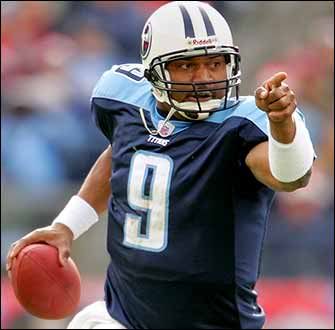
That is the ketchup answer — covers everything — for whatever has been said in the past week about Manny Ramírez and the late Steve McNair. Some sportswriters based in the cities where Manny has hung his do-rag, Boston and Los Angeles, were apoplectic that Ramírez got a hero's welcome when he returned from a 50-game suspension for a positive drug test. Less than 24 hours after Ramírez rejoined the L.A. Dodgers, McNair, who played QB in the NFL for 13 years, was found dead next to the body of his 20-year-old girlfriend. As you know, McNair was still married to the mother of his four children (and God forbid that U.S. lawmakers realize allowing a 20-year-old, not much more than a child really, to buy a handgun is a really bad policy it's a bad idea to have a society where a 20-year-old can easily get a gun).

The common thread is how to deal when sports get crowded by stupid reality again. Once and for all, it is time to divest oneself of the notion that sports fans, much less sports writers get to play the ethics and morality squad. We don't.

Honestly, distancing oneself from the scribbling practised by the likes of the L.A. Times' Bill Plaschke and Boston Globe's Dan Shaughnessy, is about the best thing a sports nut can do. It's not clear if they really hate Manny Ramírez, or if it's just a routine, a face-dance. Either way, very little of it is needed.

Life is too short for both hate and for pundits who substitute shtick for trying to honestly convey what an event was like. When did manufactured outrage replace telling the shades-of-grey truth? As a L.A. Times user, reading Plaschke rail about, "Manny did the time, but what about the crime?" is a little like a pivotal scene near the end of The Shawshank Redemption. You know it. Red (the Morgan Freeman character) tells off a parole board official over the meaning of the word "rehabilitated."
"I know what you think it means sonny. To me it's just a made up word. A politician's word so that young fellas like yourself can wear a suit and a tie and have a job."
That is really part of what we're talking about. It's not whether Ramírez's return proves standards have gone all to hell. It's about respecting that ultimately, everyone gets to assert their own terms, not adhere to society's, like Red/Morgan Freeman did with his redemption. This is about getting rid of a sportswriting construct where the columnist fulminates over What Should Be, which has made Bill Plaschke semi-rich.

The hero's welcome Manny got in places such as Albuquerque while playing a few tune-up games in the minor leagues was not reason to go off half-cocked. Americans have always loved outlaws, from Wild Bill Hickok to Barry Switzer. This was not going to change on the say-so of some sportswriters who wanted Manny to do their jobs for them by being all teary and apologetic.

Honestly, Dan Shaughnessy comes off less like a gatekeeper (an outmoded old-media concept) and more like an out-of-touch grouch.
"The longer this goes on, the more it seems that the only people who care about steroids are Hall of Fame voters, a handful of baseball purists, and perhaps those players who have not cheated and now feel like suckers.

"I called the commissioner to ask him about Manny getting the Charles Lindbergh treatment in San Diego (site of his first game back with the Dodgers).

" 'The only comment I have on that score is that fans everywhere will have to make their own value judgment,' said a disgusted Bud Selig. 'That certainly is out of our control. That’s all I'll say on that.' "
Far be it to say there was another way to take Selig's comment that "fans everywhere will have to make their own value judgment." No one who was not privy to the conversation know that the MLB commissioner was really "disgusted."

Perhaps Selig, in the parlance of our time, actually dared to address baseball fans as if they are adults. Maybe those aggrieved Hall of Fame voters, rather than act above the rabble who pay for tickets and the MLB Extra Innings package, ought to heed the people who support the whole pro sports apparatus with their discretionary income. Just because you memorized baseball stats as a kid and that influenced your choice of profession doesn't mean you have superior reasoning skills.

Thankfully, there are a few who can better channel their rage and get a post up about this much sooner, such as ShysterBall. ("What all of these columns seem to boil down to is anger at the fact that there has been no sturm und drang associated with Manny's suspension. The minute baseball actually discovers and penalizes a major star in a drama-free and orderly fashion, however, everyone gets bent out of shape.") There is also Charles Pierce, who wrote a wicked piece for Slate on Monday pointing out that if anything, Ramírez betrays the general attitude toward steroids, exposes the big lie.
"... it was of a piece with Manny's greatest gift as a professional athlete — his innate ability to make everything about baseball that is self-reverentially loathsome look ridiculous. In the great, hushed temple that baseball is perennially building for itself in its own mind, it's Manny's who provides the dribble glasses, the whoopee cushions, and the exploding cigars. It is his holy mission to take the living piss out of the self-important, the moralistic, and the people who cling to baseball in order to defend their inherent right to be 13 years old for the rest of their lives. So, there he was, an Albuquerque Isotope, selling out the ballpark and, by all accounts, happy as a clam.

"... the great steroid hunt is almost solely an intramural problem between baseball and its various acolytes. The overwhelming number of baseball fans — who, given the economic problems of the moment, are filling ballparks in reasonably overwhelming numbers — have quite obviously made peace with what happened in the game over the past 20 years. Manny Ramirez was treated as though he'd pulled a hamstring or tweaked a tendon. Now, he's back. That's the way things are going to be from now on."
No one says you have to like what has gone on in baseball any more than you have to like hearing that McNair was found dead next to a Woman Not His Wife.

This is not an apologia for anyone. There is no hair-splitting about the nature of Ramírez's cheating. Steroid experts say the fertility drug he tested positive for is one that "every steroid dealer carries." It is in the same vein with McNair. Not to speak ill of the dead, but there is little to no defending someone straying outside her/his marriage.

The question is why, as a sports lover, one would assume the best about a NFL player, whom you only know through TV images on Sunday afternoons and the odd Monday night, along with some touchy-feely PSAs for the United Way. It might be best to presume everyone, whatever their many virtues while in the moment doing their thing, is flawed like everyone else. One of the most perceptive comments in that vein came from the Chicago Bears defensive end, Adewale Ogunleye:
"Life is not a game. Football is a game. You can't expect a guy to make pinpoint decisions the way he would as a quarterback. I'm not condoning anything but at the end of the day, he's a human being."
You know this already, but there are other, better options to have as heroes. Point being, people need to let up a little on the knee-jerk judgments. Meantime, and everyone does this in sports (present company included), it's important not to conflate ability with character.

You cannot keep real life from seeping into sports. If anything, sports seeps into real life. The desperate traditional media might be getting high-school catty, but you don't have to play ball. You just have to accept, hey, in this age you have to stickhandle through a lot of weirdness and shamelessness, kind of like the protagonist in Douglas Coupland's JPod.

I am not advocating for everyone to have lower personal standards for her/his conduct. If anything, it's as important as ever to try to set a good example. But if you're going to have people on that we should expect unambiguous virtue from sports figures, you're dead wrong.

Thank you, Manny Ramírez, and thank you, Morgan Freeman.

Monday, June 08, 2009

Randy Johnson joined the 300-win club: Now let us never speak of it again

(It would be a good idea to get this post up before Randy Johnson pitches again. — Ed.)

Judging a pitcher on his win total is like judging a marriage solely on its longevity.

It's a nice milestone, nothing more. It has taken a few days to make order of some half-thoughts, but there was no joy in Sageritaville after watching and reading the coverage of Randy Johnson's 300th career win. All the fuss played into the useless fetish baseball broadcasters and writers have with arbitrary round numbers.

It's long past time to get weaned off that dependency. The media has a job to increase understanding or stimulate thought, not just say what happened. They punt on that responsibility when they use 300 wins, a .300 career batting average or 3,000 hits for a hitter or 500 home runs (pre-Steroids Era) as a crutch. A player should be judged on what he did in his peak seasons, not on the final totals.

The irony here is that the same mindset that leads to Randy Johnson being feted has worked against Bert Blyleven taking his rightful spot in the Hall of Fame since he won only 287 games (but pitched 60 shutouts, struck out 3,771 batters and was nails in post-season for World Series-winning teams in Minnesota and Pittsburgh).

Another irony is that it has sunk the candidacy of the man who tagged Johnson with the nickname "The Big Unit," former Montreal Expos leadoff hitter Tim Raines. Raines hit only .294. He had only 2,679 hits (but he on-based .385, 16 points higher than Paul Molitor, and scored 1,500 runs. Almost every player who's done that has been elected to Cooperstown, nice contradiction, eh).

Besides, we no longer need a pitcher's win total to know what we need to know about him. There are better tools. It is understood that earned-run average, thanks to the work done by Voros McCracken (the creator of DIPS, defence-independent pitching statistics), is not even a tell-all. Baseball broadcasts now include on-base percentage for batters and WHIP for pitchers. Yet here we are, in 2009, putting emphasis on a statistic that's less a reflection on the man and more on how the game is played. It's mind-blowing.

Batting averages and pitchers' win-loss records still have value as conversational shorthand, since it's easily understood. Saying the Blue Jays' Roy Halladay is the majors' first 10-game winner this season will not die out. Nor will saying, "the guy's only hittin' .245," not, "he's on-basin' .285."

However, wins are mostly a function of how the game was played during a particular timeframe, like all baseball statistics. It's why you don't see anyone bat .420 anymore as was commonplace before 1930. No one is belting 36 triples in a season, like Owen Wilson did for the 1912 Pittsburgh Pirates.

Johnson unwittingly pointed out as much when he joked to Yahoo! Sports that he had, "Two-hundred-and-eleven more (wins), to catch Cy Young," who pitched 100 years ago.

It seems somewhat illuminating that another 300-game winner, Greg Maddux, is said to have been pretty blasé about getting to the milestone. One of the beat reporters who covered Johnson's so-called milestone win also covered Maddux's, related:
"When Greg Maddux won his 300th in San Francisco, it was one of the most anticlimactic events I've ever witnessed. Maddux didn't even come out on the field to shake hands with his Cubs teammates.

At least Johnson really embraced the significance of the accomplishment, tipped his cap to the few hundred fans in the ballpark, celebrated on the field and offered plenty of thoughtful things to say to the media. It felt like an important day, and that sensation was lacking when Maddux joined the club." (Emphasis mine.)
Far be it to suggest that a 300th win isn't a big a deal if Greg Maddux didn't think it was a big deal when he was the guy getting his 300th win. Maddux is pretty smart, probably smarter than a lot of journalists who covered his career. (His brother, Mike Maddux, is also a very intelligent baseball mind, having made over the Texas Rangers pitching staff despite the difficulties posed by their home ballpark.)

Perhaps that is one of those instances where the journos need to use a little more intelligence. That probably is the frustrating part, admittedly. Everyone ought to know better. Winning 300 is more of a footnote to Johnson's career. Resetting the bar for Hall of Fame induction at 275 or 250 is no better It still amounts to putting emphasis on an almost meaningless statistic. You might as well say a NFL quarterback must complete 60% of his passes to earn induction into the Pro Football Hall of Fame.

A better question than, "Will we ever see another 300-game winner?" is, "Will we continue to care about winning 300 games?" Besides, as Joe Posnanski pointed out Sunday in a much better-written post, all of us seem to have forgotten Mike Mussina retired with 270 wins last fall.

Point being, the sooner those round-number milestones are jettisoned, the better. People have the ability to make a reasoned decision about how good someone was. The crux of it is that focusing on 300, .300, 500 or 3,000 means a a career is being evaluated based on someone's willingness to stretch out the crummy, wind-down portion of his career, the way Craig Biggio did in 2007 so he could get to 3,000 hits. (Three thousand hits is something that really has to go, since it completely ignores the value of the base on balls as an offensive weapon.)

Mussina left on his own terms when he was still capable of pitching for 2-3 more seasons. It seems like Mussina did a cost-benefit and decided leaving the game on his own terms trumped pitching with diminished skills for the sake of giving sports media drones something to write about.

That's completely understandable, especially if an athlete is a perfectionist. Blue Jays fans adore Roy Halladay not just because he's nails, but because of what he does to be so nails — the dedication, the focus. Halladay, who's at 141 wins at age 32, has an outside shot at 300. There will come a day though when he won't be able to pitch as effectively. Picture a 44-year-old Doc chucking for some mediocre West Coast National League team in 2021, trying to get his 300th win (although you can't assume that's what he would want). Now does it seem so special?

Besides, last Thursday is not even among the top 10 Randy Johnson moments, for Pete Toms' sake.
  1. His first career no-hitter with the Mariners (June 2, 1990, Seattle). It established him as a pitcher to look out for. You know the joke, too: His father was upset that he walked six batters.

  2. Striking out Rickey Henderson three times in one game (May 16, 1993, Oakland). Mariners fans might remember this since Johnson took a no-hit bid into the ninth inning before Lance Blankenship broke it up with a single to shallow right field. In the long run, it might be more noteworthy that he struck out Hall of Famer Rickey Henderson three times on his way to a 14-strikeout night.

    Now, quickly, do you know what Floyd Bannister, Jim Clancy, Roger Clemens and Mike Flanagan have in common? The correct answer is not, "They all pitched for the Blue Jays," because Bannister didn't, nor is it, "Who are four people who have never been in my kitchen?" Those are the only other pitchers who ever whiffed Rickey Henderson three times in one game when the greatest leadoff hitter of all time was in his prime. That's a great trivia question.

    Clancy did it Sept. 23, 1981, Bannister on Aug. 11, 1982, Flanagan on (Sept. 30, 1985) and Clemens did it twice on Sept. 9, 1987 and Sept. 15, 1988.

    For all intents and purposes, Henderson's prime is assumed to have ended some time before May 31, 1995, when the immortal Erik Hanson turned the trick.

  3. Scaring the poop out of John Kruk in the 1993 All-Star Game (July 12, 1993, Baltimore). Give a rare chance to deal to a left-handed hitter, Johnson took full advantage when John Kruk came up to bat. The video is priceless. The first pitch was over Kruk's head. Second pitch, fastball down the middle. Kruk waved helplessly at the next two, just to get out of there.

  4. Pitching the Seattle Mariners into the 1995 playoffs (Oct. 2, 1995, Seattle). Johnson fired a complete-game three-hitter to help the Mariners beat the California Angels 9-1 in a one-game AL West playoff, capping one of the great late-season comebacks in . The Mariners overtook the Angels after being 12½ games out as late as Aug. 20, winning the last 11 games Johnson started.

  5. Coming out of the bullpen on one day's rest in the Mariners' series-deciding win vs. the Yankees in the '95 playoffs (Oct. 8, 1995). It might as well have been the point where the term "nails" was coined. The Mariners were playoff first-timers going up against the Yankees, who were in the post-season for the first time since 1981. New York won the first two games at Yankee Stadium. Johnson, on three days' rest, won Game 3 and the Mariners won the next night to force the decider. Tied 4-4 in the ninth in the Game 5, manager Lou Piniella summoned him out of the bullpen and he went three innings until Edgar Martinez hit the winning two-run double. Piniella later said he'd asked Johnson if he would be available to pitch to one batter, "just as a gentleman's way of getting him in there."

  6. Striking out 19 batters in a game twice in one season (June 24 and Aug. 8, 1997, both at Seattle). He lost the first time he did it, so it was almost like he had to do it a second time.

  7. Striking out 20 batters in a game (May 8, 2001, Arizona). It's cool to a Seamhead because it required a special ruling before it was clear it would count as tying the record for a nine-inning game. Johnson came out after the ninth with the score tied, having struck out eight of his last nine hitters to get to 20. Since the game went to extras and since baseball takes its record book so damn seriousl, it wasn't clear if he would be considered to have tied Clemens' and Kerry Wood's record for most strikeouts in a nine-inning game. A couple days later, the powers-that-be did the right thing.

  8. Winning three games in a single World Series (Nov. 4, 2001, Arizona). A great feat since it reaches across time to the days when pitchers would start three games in a World Series, to Bob Gibson in 1967 or Christy Mathewson in 1905. Johnson won games 2 and 6, and then came back to win Game 7 in relief of Curt Schilling, with whom he shared Series MVP honours.

  9. Pitching a perfect game (May 18, 2004, Atlanta). Struck out 13 of 27 Braves hitters, including future Hall of Famer Chipper Jones all three times.

  10. If it has to be included... That time he killed the bird.


Sunday, April 05, 2009

Batter up: Texas Rangers

It's that mystical, wonderful time of year where you commit to a baseball team who you know fully well won't win. This season, in honour of an popular Internet meme, we'll present 25 things that are tangentially about each team. At bat: The Texas Rangers.
  1. Owner Tom Hicks says it's a "non-event" that he didn't make a payment on a $525-million US loan and it's all part of a negotiating strategy. Please don't try this at home if you have student loans with a Canadian bank; they'll take your thumbs. Hicks, according to ever-reliable Phil Rogers, might sell 49 per cent of the Rangers.

  2. Josh Hamilton's 130-RBI season was well-earned; his quote, unquote RBI percentage of 20.7% was second in the majors to Kansas City's David DeJesus, of all people. Your guess is as a good as any as to what Hamilton will do for a follow-up.

  3. There is a lot to like about the Rangers, but probably not this summer. Their farm system is deep. It's just a matter of when righty Neftali Feliz and lefty Derek Holland become a 1-2 punch par excellence, like Edinson Volquez and John Danks might have been if Texas hadn't traded each of them.

  4. There will be a good game of Guess The Attendance come July and August when the Rangers are out of contention, the NFL's Cowboys are in training camp and the U.S. economy is still going the way it's going.

  5. Twenty-year-old Elvis Andrus is opening the season as the starting shortstop. It seems a bit much to expect him to hit much this season.

  6. Michael Young won a Gold Glove and was bumped from short to third base, but it's pretty standard knowledge it was a bad pick. Even Derek Jeter had a higher UZR, for pity's sake.

  7. In a world gone mad, you need immutables, like knowing the Rangers are usually a good bet to have the worst team ERA in the majors (5.37 last season).

  8. Ian Kinsler, who hit .319/.375/.517 and scored 102 runs during an all-star season in '08, is continuing a noble tradition of productive second basemen who came to play, not to stay. The Rangers have had some heavy hitters play second, such as Young, Julio Franco and Alfonso Soriano, but the franchise leader in games played at the position is Bump Wills. Kinsler, going by his UZR, might have to be bumped to another position.

  9. More than one Texas media outlet has reported the Rangers play nine of their first 12 games against teams which were below .500 last season, implying they'll get on a roll and contend all season. Urgent, much?

  10. Finding out DH Hank Blalock is only 28 brings to mind those college basketball players who seem like they've been around for eight years. His stats from the past two seasons (.290/.347/.524, 35 doubles, 22 homers in 466 at-bats) suggest he can still contribute if his surgically repaired shoulder allows him.

  11. Leftfielder David Murphy absolutely raked when he came up in late 2007, which might have created unrealistically high expectations. His batting average on balls in play after he joined the Rangers was above .400 (the mean is around .290; everyone finds it eventually).

  12. Neftali Feliz was the highest-ranked right-handed pitcher in The Baseball Prospectus Top 100 Prospects, coming in at No. 6 on the overall list. He gets some good leg drive, doesn't he?


  13. Vicente Padilla was the team leader in ERA last season at 4.74. His runs average was 5.26 (some sources are realizing it's a silly tradition to let the pitcher totally off the hook for runs that were scored thanks to fielders' errors).

    This will be a good point of reference when Feliz and Holland are blowing away the competition in a few seasons.

  14. Rightfielder Nelson Cruz will probably put up some Texas-sized counting stats over the next few years, although the era of foolish franchises overpaying for that kind of player are over.

  15. Catcher Taylor Teagarden is not related to Aimee Teegarden (Friday Night Lights' Julie Taylor), insofar as they spell their names differently.

    The stock line with Teagarden is Mickey Tettleton with Gold Glove catching and throwing skills (yep, Baseball Prospectus again, like Stone Phillips, there's nothing they don't know).

  16. By The Beep's reckoning, their starting rotation has ranked 12th, 13th, or 14th in the AL for 10 years throwing. That's mediocrity you can set your watch to (and it's also exactly the same as No. 7, so don't bother pointing that out).

  17. Their Double-A team is the Frisco RoughRiders, which means there is yet another way to spell that name.

  18. They once had an owner, Eddie Chiles, who was noted for the slogan for his energy supply company: "If you don't have an oil well, get one!"

  19. Manager Ron Washington reportedly does not have the authority to pick his coaching staff, which doesn't augur well for his long-term employment.

  20. Hitting coach Rudy Jaramillo was the first recipient of Baseball America's Major League Coach of the Year award. Rebuilding Andruw Jones' swing (not to mention his strike-zone judgment) would be his greatest project.

  21. Derrick Turnbow, who was at one-time a lights-out closer for the Brewers, is somewhere in the recesses of Texas' farm system. He was named in the Mitchell Report, which does make one wonder how much eagerness there is to bring him back up.

  22. Omar Vizquel, at 42 years old, is twice starting shortstop Elvis Andrus' age. A big yes-but whenever someone argues the 11-time Gold Glove winner should be in the Hall of Fame is that he only received one MVP vote his entire career.

    Someone somewhere thought Vizquel was the eighth-best player in the AL in 1999. Matt Stairs got a ninth-place vote that season, for Pete's sake.

    Ozzie Smith got into Cooperstown primarily on his fielding work, but he collected MVP votes in six seasons and was runner-up once.

  23. You can't talk about the Rangers without talking about the Cowboys, who dominate the sporting interesting in Dallas/Fort Worth. The scoreboards at the new Cowboys stadium, will cost more than it did to build their old stadium in 1971. They'll measure 160 by 71 feet and be suspended over the field. It's either disgusting or it's nirvana.

  24. Dubious Rangers trivia: The franchise has been around since 1961 and has not been in the World Series; they also have the longest post-season losing streak at nine games, dating back to October 1996.

  25. You're not ready for ball season until you listen to Brad Holman, a pitching coach in the Rangers system, perform The Loyal Fan. You're just not.


Tuesday, March 24, 2009

Zen Dayley: Schilling was one Hall of a pitcher

History will probably be kind to Curt Schilling, who was often kind to history.

No doubt some of the hagiography for Schilling, who announced his retirement this morning on 38 Pitches, will note he was always grateful to those who came before him. He had the good sense to at least position himself as someone who still evoked what it was like to be a fan (use Alex Rodriguez as a straw man right here).

He named one of his children after Lou Gehrig. he once proudly owned a Brooklyn Dodgers jersey of his pitching coach, Johnny Podres. He also tried to bridge the jocks vs. nerd divide through his involvement in the Seamheads Historical League. There was also his stand, which might have been a bit preachy, that Roger Clemens should have had to prove his innocence when he said he didn't use steroids. He also campaigned for George W. Bush (win some, lose some), but a lot of people would like to take that one back.

The question becomes if a pitcher with just 216 career wins, who received Cy Young Award votes in only four seasons, will find favour with Baseball Hall of Fame voters. There might be a halo effect if he's perceived as someone who pitched during the Steroids Era and came out clean as a bean. Having played in Boston and having been on playoff teams in six of his last eight seasons won't hurt, either. Give us a hour, and we'll run a Keltner test.

Was he ever regarded as the best player in baseball? Did anybody, while he was active, ever suggest that he was the best player in baseball?

No.

Was he the best player on his team?

He was probably the best player on the 1997 Phillies, because someone had to be (they finished 68-94). He was on the same staff as Randy Johnson in Arizona, which answers that question.

Was he the best player in baseball at his position? Was he the best player in the league at his position?

No. Schilling was runner-up for the Cy Young Award three times, in '01-02 behind Johnson and in 2004 to Johan Santana in the American League. He only received five first-place votes in his career. He won his only ERA title in 1992 with the Phillies.

Did he have an impact on a number of pennant races?

He was on seven playoff teams ('93 Phillies, 2000-02 D-Backs and '04-'05-'07 Red Sox). He was exceptional during the stretch drive in '93. Schilling went 7-1 with 3.71 ERA after August 1, and the Phillies won 12 of his last 15 starts as they hung on to finish three games ahead of Montreal.

Schilling was only so-so in 2000 after going to Arizona in a deadline deal. In '01, when Arizona won the NL West by two games, from Aug. 1 on he won seven of his last eight decisions, posting a 2.74 ERA with 101 strikeouts (and just 11 walks) in 82 innings.

In '02, the Diamondbacks won the division by 2½ games over the Barry Bonds San Francisco Giants. Schilling won six starts in a row during a stretch in June and July. He also beat San Fran three times out of four that season, including a game in early September which gave Arizona an 8½-game lead with just 23 remaining.

Was he a good enough player that he could continue to play regularly after passing his prime?

Yes. He pitched effectively (15-7, 3.97 ERA, 1.216 WHIP) as a 39-year-old for the Red Sox in 2006, working more than 200 innings. At age 40, he was half-decent in 2007 (9-8, 3.87, 1.245) and helped win an elimination game in the league playoffs against Cleveland.

Is he the very best player in baseball history who is not in the Hall of Fame?

No. Among eligible players, Tim Raines is ahead of him.

Are most players who have comparable career statistics in the Hall of Fame?

Yes, with a but. Only three of his 10 comparables are in the Hall of Fame, and it took some intense lobbying to get two of them, Don Drysdale and Catfish Hunter, inducted. The most comparable player to Schilling is actually Kevin Brown, who's probably not electable.

Schilling pitched 3,261 innings and ERA-plused 127 (i.e., his earned-run average was 27% above league average over his entire career). Brown pitched 3,256 1/3 innings with the same ERA-plus, and he won't get within a hundred miles of being elected when he goes on the ballot in 2011. He wasn't exactly Mr. Congeniality.

However, first-ballot Hall of Famers Bob Gibson and Tom Seaver each ERA-plused 127, the same as Schilling did in a higher-scoring era. Schilling outperformed the league average by more than his contemporaries Mike Mussina (123) and Tom Glavine (118), whom he'll be measured against when he appears on the Hall of Fame ballot. He's tied with John Smoltz, whose ERA probably benefited from the four seasons he spent as a one-inning reliever.

It is odd how Schilling and Mussina's career arcs dovetail. Schilling had 216 career wins but had three 20-win seasons. Mussina, who got an earlier start and avoided injuries, had 270 wins, but won 20 only once.

Do the player's numbers meet Hall of Fame standards?

Yes, but it's complicated. Schilling toes the line on three of the four Jamesian tests, but kills it on the HOF Monitor, scoring 171 (100 means the player is a worthy candidate and 130 says he's a lock).

Voters will also be asked to consider that Schilling is one of only two pitchers to amass more than 3,000 strikeouts with fewer than 1,000 bases on balls, the other being Hall of Famer Fergie Jenkins. Schilling's strikeout-to-walk ratio, 4.38, is the highest for anyone who pitched after 1900. Wins are a

Is there any evidence to suggest that the player was significantly better or worse than is suggested by his statistics?

This is a chance to swing the question around to his post-season performance, though we need not mention the Bloody Sock. Schilling deserved the reputation Jack Morris had a post-season performer more than Jack Morris. He was 10-2 with a 2.23 ERA in 19 post-season starts, striking out 120 and walking just 25 in 133 1/3 innings. He was MVP of the National League playoffs in 1993 (Mitch Williams blew the save in both of his starts, but the Phillies won both games) and co-World Series MVP with Johnson in 2001.

As Baseball Digest Daily noted, Schilling's teams never lost when he started in a game where faced elimination. He pitched 39 1/3 innings when his team had to win to keep its season going and posted a 1.37 ERA, just four bases on balls and 33 strikeouts.

BDD's Craig Brown, did the initial number-crunching but omitted Oct. 21, 1993, when Schilling shut out the Blue Jays 2-0 in Game 5 of the World Series, buying Philly another 48 hours' life before "touch 'em all, Joe." Schilling scattered five singles and three walks over nine innings. This came against a team which hit .335/.405/.568 in the series' other five games, and he shut them out.

Is he the best player at his position who is eligible for the Hall of Fame but not in?

The temptation is to go with Blyleven.

How many MVP-type seasons did he have? Did he ever win an MVP award? If not, how many times was he close?

Not, he didn't; he's a pitcher. He was 14th in the NL balloting in 1997, 10th in both 2001 and 2002 and 12th in the American League voting in 2004. Please keep in mind that since the wild-card era began in 1994, only one starting pitcher (Pedro Martinez in '99) has had a top-three finish in MVP voting.

How many All-Star-type seasons did he have? How many All-Star games did he play in? Did most of the other players who played in this many go to the Hall of Fame?

He had seven such seasons — 1992, when he won the NL ERA title but was overlooked despite a 2.75 ERA at mid-seasoned. He was picked from from 1997-99 and again in 2001-02 and '04.

A gut instinct says that's a bit low. It Is About The Money, Stupid noted Mike Mussina was selected to only five all-star teams. John Smoltz is looked at a legit HOF candidate and has been selected for eight All-Star Games. Pedro Martínez has been selected for eight.

If this man were the best player on his team, would it be likely that the team could win the pennant?

Not likely, although he and The Big Unit were the best the 2001 Diamondbacks had when they won the World Series.

What impact did the player have on baseball history? Was he responsible for any rule changes? Did he introduce any new equipment? Did he change the game in any way?

Well, he was an early adaptor when it came to interacting with fans.

Did the player uphold the standards of sportsmanship and character that the Hall of Fame, in its written guidelines, instructs us to consider?

By all accounts, yes. Major League Baseball has three awards for, loosely paraphrasing, players who combine on-field performance with strong work in the community: The Hutch Award, the Roberto Clemente Award and and Lou Gehrig Memorial Award. Schilling has received all three. That probably will work in his favour.