Showing posts with label Don Sanderson. Show all posts

Wednesday, January 21, 2009

Ken Holland's words: It has to start somewhere, it has to start some time

The lid was almost screwed on tightly on the fighting in hockey debate, but it might have been ripped off for at least a couple more news cycles.
"The biggest thing with our sport is you look at the other major sports — football, basketball, baseball — you're ejected from the game for fighting. They have a different culture ... We've had a different culture, history and tradition ... I think we should revisit it, because of what happened with that young player (Don Sanderson) in Ontario."
— Detroit Red Wings GM Ken Holland, at globesports.com
This might be sidetracked by people pointing out that's easy enough for Holland to say. The Red Wings have had the fewest fighting majors in the NHL by a factor of two. That is a bit of a logical fallacy, discrediting the person instead addressing her/his argument.

Holland's words are welcome to fans who are numbed to hearing this discussion invariably degenerate into an exchange of insults, "knuckle dragger" and "Neanderthal" on one end, "tree hugger" and "granola eater" on the other. Holland is also easier to side with than Pierre McGuire, who give him credit, is has stood his ground (although one of his corporate brethren calling it "intestinal fortitude" is a bit much; it's sports broadcasting).

It seems like 10 years ago, you would have never heard that from a NHL executive, so it represents progress. Holland wasn't calling for a ban, mind you. The premeditated fights, where two players line up for a faceoff and thrown down their gloves as soon as the puck is dropped could stand to go. Fights which are a honest outgrowth of emotion, spur of the moment, after a cheap shot on a teammate, is going to harder to outlaw.

At least Holland and McGuire, among others, are showing leadership, which might segue into a recent discussion over whether Don Cherry merits induction in the Hockey Hall of Fame. At first shrug, one might say, "Sure, why not?"

There's a reasonable case for Grapes. A counter-argument is that Hall of Fame is supposed to reflect greatness (stop laughing at the mere thought of this about an institution that has Harold Ballard in the builders' category). As Cox Bloc noted, Cherry does not rate induction in the HHOF since he has never used his pulpit for much other than the bullying variety. Putting him in confuses celebrity with greatness:
"At just about every turn, Don Cherry has been wrong about the direction of the game, preferring outdated shibboleths to innovation and progress. How can you honour a builder who would, given his choice not build the game but tear it down and return it to the Eddie Shore era? Cherry's done about as much to build good hockey as his buddy Mike Milbury did to build a dynasty on Long Island.

"Would baseball honour a commentator who was best known for opposing batting helmets, supporting beanballs and benchclearing brawls, and baiting Hispanic players at every opportunity?"
The point, sorry for repeating myself, is that attitudes change slowly and people need to have an open mind. The common refrain with violence in hockey is that we never learn in Canada. The New York Times sent a correspondent to Whitby, Ont., in the aftermath of Sanderson's death and found it's as if some fans, not all, haven't learned anything:
"... the crowd of a few hundred rippled with excitement. The audience seemed to have forgotten that the Dunlops lost a teammate to fighting only two weeks earlier. A fan of the Dundas Real McCoys leaned over to his friend. 'Did you see that right hook?' he said. 'Did you see him go down?' "
That kind of pleasure was never harmless to begin with, but at least that is hitting home. Again, busting on hockey is not going to change things, nor is grandstanding or taking a hard line. Small actions are needed. Stay in your seat when a fight starts at a junior or pro game. If you're watching at home, get up and leave the room. It can have a bigger impact than you might think, just like one GM saying maybe it's time to really get to the heart of the matter.

Related:
Red Wings' GM open to debate on fighting (Allan Maki, globesports.com)
Player’s Death Revives Debate on Fighting in Hockey (Katie Thomas, The New York Times)
Put Cherry in the Hall (From The Rink)

Sunday, January 18, 2009

Hockey logic...

There is journalist and reader fatigue from the Great Canadian Hand-Wring over hockey violence, but you can stand for one more editorial.

Karlo Berkovich, a veteran sportswriter at the Waterloo Region Record, took the starch out of of some of the game's leaders, notably NHLPA boss Paul Kelly and OHL commissioner David Branch, whose league has banned players taking off their helmets before fighting.
"...you could also read (no doffing your helmet rule) another way -- that Branch is perfectly fine with fighting; he just wants fighters to keep their helmets on, not only to avoid injury but, c'mon, so one day, when a (Don) Sanderson incident happens in the OHL, the league can avoid a lawsuit.

"As for (the NHLPA's Paul) Kelly, he's hilarious. It's imperative that players must be protected from hits to the head. He's talking cheap shots, elbows to the chops (which the sainted best leader in the history of the known cosmos, Mark Messier, is always praised for). Those are no-no's. Hits to the head via a punch in a fight? Hey, by all means, boys, feel free. And take off your helmets while you're at it.

"(Kitchener Rangers player Mike Mascioli's) quote about not being happy about it because jobs will be lost is also unintentionally a scream. How about he look at it another way: learn to play properly and you'll have no worries.

"Not that any of this will convince any of the lunatics who continue to run the asylum, though. So to come full circle, let 'em. It could be -- as we've now, unfortunately, experienced -- their funeral."
One big sticking point seems to be that Branch and Kelly are fine with half measures; in the former's case, anything to make this go away at least until next season. They're both politicians, versed in the art of the possible, and they have to manage the egos of some of those short-tempered puckheads, so there is some understanding.

Journalistically, there is some hypocrisy. It's one thing to have a good argument and not to attack people rather than their points, but it's better if you learn it, live it, love it. It is tough not to think that some of the same commentators who are coming on all serious now were the same ones who would be chuckling away in the press box when a scrap broke out on the ice.

Personally, I'm the exact opposite. When a fight starts, the hands stay folded in my lap, but there is awareness that until the rules change or the hockey mentality changes, a team which doesn't have an enforcer s vulnerable to opponents taking liberties with their players. On Dec. 12, the day Don Sanderson was critically injured, that was a topic of discussion on Kinger's show, Offsides, with respect to the Kingston Frontenacs. Their players were being run all over the ice because management, in its wisdom, had traded away tough guy Peter Stevens. Thankfully, no Kingston player has been seriously injured, either from an overly aggressive check or from fighting.

Once again, the changes that would work to eliminate fighting from hockey go way beyond rule changes and some editorializing journalists. Good on Berkovich for telling it like it is.

(Hockey Night in Canada clip captured by MisterDB from Fronts Talk. whose YouTube channel is a veritable treasure trove of Kinger's between-periods interviews on TV Cogeco in Kingston.)

Related:
Hockey fighting: The lunatics run the asylym, so let 'em (Karlo Berkovich, Waterloo Region Record)

Thursday, January 15, 2009

Junior hockey is uncool; what are you gonna do about it?

Reducing a sporting issue to a spitting contest between Toronto media personalities is an easy way out, even when it is Mike Toth and Steve Simmons.

Junior hockey players get the rock-star treatment for two weeks during the world juniors and are afterthoughts 24 hours later, especially in the GTA. Toth, of Rogers Sportsnet and the FAN 590, had his say a week ago today. Sun Media's Simmons, on the following day, had a column headlined, "Apathy greets juniors," which began, "It is Thursday night at the Powerade Centre and for every seat that is occupied at least five are left empty."

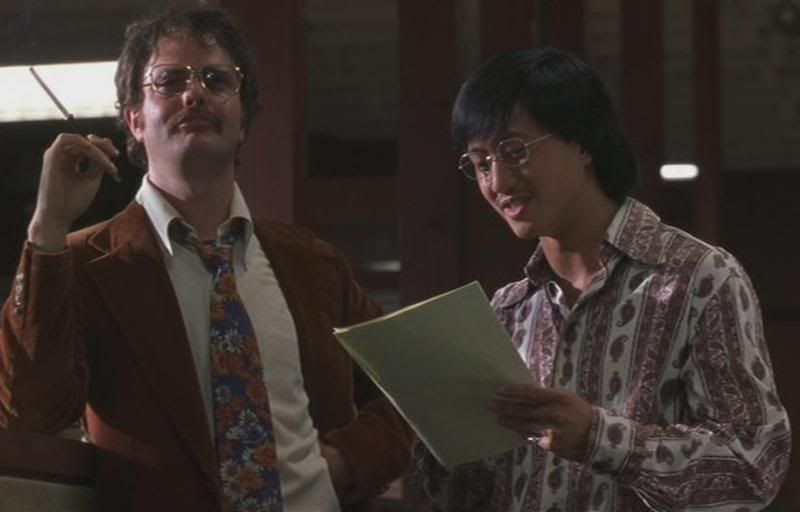
(You can almost picture Rainn Wilson as a Rolling Stone editor in Almost Famous -- "Mmmmm, dark. Lively.")

Simmons' column was referred to as a "disgrace" during a rather pointed editorial reply during a subsequent Rogers OHL broadcast. Please leave personalities out of this, since it's a good topic (and our own Duane Rollins made a point to go see for himself when the Brampton Battalion and Mississauga St. Michael's Majors played at 12 noon on a weekday so classes of schoolchildren could witness major junior hockey in all its splendour).

Simmons was blasted a bit. Presumably some people would not mind hearing him accused of ripping the attendance when he had "never been in the Brampton Centre prior to that game."


That being said, Toth at least dared to run his hand along the fourth wall of every story about low attendance at OHL games in Toronto -- namely, how well these franchises do to turn first- and second-generation Canadians on to hockey? Simmons, no disrespect, goes on about "tak(ing) the easy highway drive for the least expensive entertainment you'll find everywhere," which seems to gloss over the fact that most Toronto sports fans, especially younger ones, rely on public transit when they're going to see the Raptors, Leafs, Blue Jays or TFC. It also assumes people who live close by Brampton's arena, which is located in a huge South Asian enclave, won't.

It's not even apparent that those transit options are handy for either the Battalion or Majors. Toth, who granted has come on a little strong on the subject in the past, at least waves hello to the elephant in the room, the question of growing the fanbase:
"Toronto is completely multi-cultural and sporting allegiances include everything from soccer to cricket. Brampton and Mississauga also have huge ethnic populations and many people from the two communities have never been inside a hockey rink.

"To their credit, both the Battalion and Majors are reaching out to new Canadians. For example, the two teams staged a special game for school kids earlier this year, featuring a 12.00 p.m. face-off on a Wednesday afternoon."
It is something of a common opinion among younger media types that stepping into an OHL arena often feels like a time warp. The crowd skews older and more homogenous. Between the incessant playing of Jock Jams '95 over the P.A. and the fact Larry Mavety is still GM of the Kingston Frontenacs, it is something straight out of another century.

There's no excuse simply accepting that it won't change. Look at it this way. It's not mandatory you should adopt the favourite sport when you're relatively new to a country. However, if you were a sports-mad Canadian who had relocated to England, what would you check out first: The local soccer team's game, even if it was down in League Two, or a game between the Coventry Blaze and Hull Stingrays?

People look to sports as a cultural touchstone and will turn to what's popular -- socially approved mass movements and such. People come to Canada, they do take to the NHL. It's only right to wonder why that doesn't carry over to the major junior teams in the country's largest city, instead of going on about the Battalion's "disturbingly ugly green uniforms" and inveighing against teenagers being traded in junior hockey (although it's hard argue the players are not pawns in the grand scheme).

At least Toth tried to move the debate forward. It is also worth asking if how the OHL's a keep-your-helmet-on rule, which will probably reduce fighting, might affect attendance. There might short-term pain. It might also change some impressions of the sport among people who are missing the hoser gene that makes you stand up and cheer when two 19-year-olds start whaling on each other at centre ice, although granted, fighting has not been banned.

Point being, the whole low attendance issue is worth getting into. It happens to involve two media personalities who have sizable jeering sections, so there's a little something for the haters, plus knowing that Rainn Wilson was in Almost Famous will win you drinks at bars and cocktail parties.

Related:
A Toronto thing (Mike Toth, sportsnet.ca, Jan. 8)
Previous:
Forcing them to care. That always works (Nov. 13, 2008)

Saturday, January 10, 2009

Hockey violence: New meaning to left-wing lock

The old line about how youth condemns, maturity condones seems germane after reading a semi-screed about hockey violence in the Saturday Star.

Most of us who are thinking, feeling people realize there is something a little twisted about cheering when two 19-year-olds fight at a major junior hockey game. The guilt is evident in how many synonyms exist for it — donnybrook, punch-up, brouhaha, mêlée, tussle. That doesn't constitute a "venomous, backward support for brawling," as the Star screedster, Sarah Barmak, claims.

It's an understanding that there is only what is, not what should be. Once again, for people who think they can pontificate on the Canadian zeitgeist even though they've never stepped out of their Toronto mindset (Barmak is a former editor at the U of T paper, The Varsity): "The notion of clean hockey in Canada is a pipe dream, unless the sport drops sharply in social import."

One would hope that some day that wouldn't be the case, but Barmak's bombast about hockey being a "bar room-style bloodsport" is not going to serve that purpose. It's only going to make a bigger wedge between the people who still defend fighting and those who have an open mind about banning it.

Change comes gradually, not from belittling people and quoting academics who actually claim that, "The NHL has not had a history of violence until quite recently." Gordon Russell of the University of Lethbridge, has evidently never heard of Eddie Shore or Red Horner, both of whom set records for penalties — and are both in the Hockey Hall of Fame. He's never heard of Sprague Cleghorn, either.

Do some research, people. The major misunderstanding of pieces of Barmakian bombast, beyond the obvious left-of-centre literalism, is not appreciating that every game has a view of the world attached. It's not like someone sat down one day and wrote out the rules of hockey and said, "Hey, let's allow fighting."

Hockey came into being in the late 19th and early 20th century, which was a time of social tension that goes way beyond our contemporary understanding. Canadians — and perhaps Barmak's apparent failure goes to show how poorly Canadian history is taught — weren't always so nice and genial.

In those days, there was virulent English-French tension (ever heard of D'Arcy McGee?), the Riel Rebellion, the struggle for women's suffrage, the Winnipeg General Strike and so on. Life was tough if you weren't a white man and we are so much better off that is not the case anymore. The idea that sports was a healthy release for male aggression, for boys to be boys, was also in vogue in that era in between the Civil War in the U.S. and the First World War. Of course, that was later discredited a thousand times over, but that doesn't mean it can be discounted for shaping the hockey mentality.

That helps explain why hockey has evolved differently in the U.S., Scandinavia and continental Europe. It is not media-inculcated; it's not because of big money, except to people who like to hate on the media and big money.

As for the apologists who point out that Canadians watch the World Juniors en masse even though it has no fighting, please. The short duration of the tournament, the automatic ejection for fighting, the unwillingness of U.S. and European players to drop their gloves and the panopticon effect of saturation media coverage all act to keep a lid on the rough stuff. No one fights at the World Juniors because there is so much emphasis placed on the games and so many people watching; it's a little different than a Saturday night game in Salmon Arm.

The fact also remains that the tournament took on a cultural significance for Canadians after one of our teams lost a gold medal for fighting. It would be too glib by half, but you could take from that the World Juniors have come mean so much because we want to prove we can win a major hockey tournament without resorting to the lowest common denominator (well, there's that, plus what else is on during the holidays?).

The point is, you change in drips and drabs, not through badgering. Not to be a condescending dickhead about it, but a writer such as Sarah Barmak will get a lot farther by trying to understand instead of thinking the worst of anyone who doesn't read from her songbook.

This notion of hockey free from skulduggery is way, way off, but if people gradually get less and less animated when there's a fight, if the leagues increase the penalties for it, it will start to disappear. The fact two OHL players were each suspended a game this week for removing their helmets before a fight will do more good (although it's only a modest start) than anything so doctrinaire.

Related:
Canada, we have a problem: Our national game has become inextricably linked with brutal violence (Sarah Barmak, Toronto Star)
OHL takes a stand on helmets (Terry Doyle, Loose Pucks, Jan. 8)

Saturday, January 03, 2009

Don Sanderson's death: A swirl of thoughts

Far be it to expect people to stay from the fighting-in-hockey rubric on the day Don Sanderson died.

That is how the media works, for good or ill. No doubt you have your thoughts, so if you are so inclined, read the symposium and leave a comment.

Michael Den Tandt, Sun Media, "Hockey fights have to stop": "Proponents of fighting in hockey will argue that such accidents are exceedingly rare. They'll say that most hockey fights end with nary a bloody nose on either side. They'll repeat, as they always do, that fighting is an integral part of the game, without which it would be somehow less Canadian.

"Bollocks.

"Can anyone who has gotten a taste of World Juniors action in Ottawa in recent days doubt that hockey is better off without the incessant scuffles and mock battles that now impede the Canadian game, at virtually every level?

"Elite hockey players are just that. They're not trained fighters. Most have no idea how to throw a punch."

Ryan Hollweg, Toronto Maple Leafs forward, via citynews.ca: "It's part of the game and things like that happen sometimes. You gotta try not to think about it and go about your business."

Ken Campbell, The Hockey News, "Sanderson's death must re-open fight debate": "... if the people who run this game are unwilling or feel they are unable to do something about this blight on a great game, then perhaps it might be time for those who make the laws to do it for them."

Jamal Mayers, Leafs forward, via citynews.ca: "... it's a terrible story. It should never come to that. To think that it happened in somewhat of a recreational game makes it even tougher on the families and my heart goes out to everyone involved."

Roy MacGregor, The Globe & Mail: "Hockey discipline needs a fighting chance": "Accident or non-accident is not the debate here, but what can, and must, be done to remove as much violence from the game as would still allow hockey to be a collision sport requiring tenacity from its players.

"It seems simply obvious that heads require as much protection as possible in the game. This would include simply doing up the chin straps supplied with each helmet. (Though how not doing it up became a hockey "fashion" is as unfathomable, as is how doffing one's helmet before fighting became part of hockey chivalry.)"

Patrick, commenter at the Toronto Star: "Fighting is in NHL hockey because THE PLAYERS want it in. Until the 700 or so players in the nhlpa put up a protest fighting will never leave the NHL game.

Last, but not least, here's a take from someone who knew the young man.

Friday, January 02, 2009

Don Sanderson, 1987-2009, hockey player

Don Sanderson is dead. The 21-year-old defenseman for the Whitby Dunlops died last night from the injuries he received in a hockey fight Dec. 12.
At the heart of hockey's Code of Intimidation there has always been the silence. What happens in hockey stays in hockey. The shroud of silence blanketed those who got hurt and those that did the hurting. It was insurance, a guarantee that the outside world would never disrupt the comfortable culture of intimidation within the sport. The silence meant outsiders could never make a case against on-ice violence." -- Bruce Dowbiggin, The Meaning of Puck
Silence. Throughout the heartland of hockey violence is met with indifference and silence. If you never played the game, you can't understand.

Todd Bertuzzi was misunderstood by those liberal, urban sissies. He paid his price. Steve Moore was a whiny little punk. He should have known better than to hit a star with an open ice check. Clean or not, there had to be a price to pay. It was the code. A code that had been followed in hockey for generations and the same code Don Sanderson was following when he fought Brantford's Corey Fulton last month.

And now he's dead. What happens in hockey stays in hockey.

For years the mantra of the sport's apologists was that no one ever got hurt in a hockey fight. Fighting was to be encouraged. It helped stop players from engaging in truly dangerous practices like slashing and high sticking. Let the boys play.

It was a fluke. It could have happened anywhere, any time. It wasn't the fight that killed him, it was his head hitting the ice. My buddy knew a guy that hit his head off the ice while coaching his boy's novice team. Could happen to anyone.

We can anticipate the arguments. There is no need to tune into Coach's Corner for Sanderson's two-minute eulogy. He was a good Canadian boy. He wouldn't want the fuss. He certainly wouldn't want to be a martyr used by enemies of the game to attack the code. They never played the game.

We'd ask him what he thinks about it. Except he's dead. From a hockey fight.

So instead, silence. The code lives on.

What happens in hockey stays in hockey.

Related:
A Hockey Tragedy (Damien Cox, The Spin)
Previous:
The horror, the horror... frankly, it's beyond our ken (Dec. 15, 2008)

Monday, December 22, 2008

Snark break...

There had to be a better way ... and out of that, a new holiday was born...

It is funny how the Carolina Panthers defence didn't get a pass interference call against it all season until it really helped out the New York Giants.

(It also helped the Vikings, since next week is a nothing game for New York.)

True story: Retail outlets that have marked down their merchandise over the past few days refer to the practice as "Favreing."

Someone with a larger platform should connect the dots between Hockey Canada's shameless profiteering and forward Dana Tyrell's season-ending injury. Loading 18- and 19-year-old players up with three exhibition games to get ready for a six-game tournament tempts fate, but takes advantage of the teenagers, who aren't seeing a cut of all the revenue they generate for Hockey Canada and TSN. It's a lot to put on players that age and Tyrell's overexuberance might have cost him.

Scott Radley at the Hamiton Spectator did take on the World Juniors beast on Saturday. It was not far off from a post written here two years ago, which is fine as long as the message is getting to more people.
"That said, elements of the coverage are still way over the top. Let's be honest, as talented as many of the players are, a fair number will never play at this level again, no matter how often we're told about their heart, their special skills and their monster performances."
The upshot for Tyrell is that he did already sign his entry-level NHL contract two weeks with ago with the Tampa Bay Lightning, which is a wicked burn on their idiot owners.

Nolan Ryan, now the Texas Rangers' presidents, wants the team's pitchers to be more like him. They already do -- that's why they all have .500 records.

One possibility for the ECHL's Fresno Falcons, who are close to folding, is being transferred to a nonprofit organization. Only about half the U.S.-based NHL teams would fit the bill.

Please don't infer anyting about the sport from this: The contestant on Momma's Boys with the bigoted mother -- "Her no-go list included any girl who is black, Asian, Jewish, Muslim, tall, a 'fat-butt' or anyone from a broken home" -- is a college hockey player. Please don't make an overly obvious, tissue-thin connection.

You have to love how everyone's jumping all over a reporter in the NFL for crossing the line with a dumb question. The Detroit Lions have averaged four wins a season since 2002. The NFL's revenue-sharing system means they make money every year despite having a sucktacular team, but some reporter asking an inappropriate question, that's the outrage. The reality that you can be as bad as the Lions and not be forced to relocate is the obscenity.

This post is worth nothing, but this is worth noting:
  • There is still no good news about the condition of Don Sanderson, the injured Whitby Dunlops player.
  • You should click through to read this profile of Jerry LeVias, the first African-American football player in the Southwestern Conference.
  • For those of you who enjoyed Michael Lewis' The Blind Side, the subject of his book, Michael Oher, is doing pretty well.
  • Note to readers: Please say "yay" or "nay" as to whether you expect regular posting to continue through the holidays, so we know how to proceed from here until Jan. 2. Merry Christmas and a Happy Hanukkah.

Monday, December 15, 2008

The horror, the horror... frankly, it's beyond our Ken

The next sportswriting trope that has to go: The notion of hockey in Canada, free from skulduggery.

That thought has been rattling around for the past 24 hours, since news of a 21-year-old Ontario man named Don Sanderson (it was noted in today's Snark Break) suffering a critical injury in a senior hockey game last Friday in Brantford began making the rounds. Every sportswriter — present company very included — has written that column in the wake of some disturbing incident, calling upon people to realize there is a stain on the great game of hockey. The Hockey News' Ken Campbell, God love him, wrote a post this afternoon saying this is a reminder that it's only a matter of time until the NHL has a fatality from a fight. Someone could die from a cut from a skate blade, but they don't pad the skates with foam rubber.

It's a false sentiment based on an illusion that needs to be taken down. This idea that one day hockey in Canada will be free of all this is nothing but a cynical conjurer's canard. Well-meant sentiments aside, it won't prevent something like this from happening again to some obscure player in an obscure league.

There is a problem with unchecked aggression. The corrosive effect of the NHL and its media partners condoning violence (Colin Campbell's Wheel of Justice, Don Cherry's rhapsodizing about the swapping of knuckles and such) has probably shaped how people behave at rinks, but whether it's even the biggest influence is debatable. The loss of a sense of community, the disconnect people feel from each other, the swath that globalization has cut through rural Ontario, all of that can be seen as to contributors to how people carry on at the rink.

True there are places where the hockey culture is largely free of all this — college hockey, female hockey, the United States, Russia, Scandinavia, pretty much all of Europe, really. Football and rugby are contact sports with just as much head-knocking, but the level of respect shown toward opponents and officials is completely different.

The truth, which no one likes to confront, might be way beyond the ken of some ass-talking blog-writin' guy, but there is something so elemental about hockey that cannot be expunged. It's been there for more than a century, and there's as many explanations for it as there are poor bastards who were left with a permanent reminder of this cold, hard hockey truth. I've said it before, I'll say it again: We never learn. Sanderson's situation, while tragic, is not going to do anything to diminish any sportswriter, anywhere, from writing raptorously about the local team's enforcer, or a team's need for toughness (although holding off on it for a while would be a good idea). This is about what is, and not what should be.

This particular league had safeguards in place (as Campbell notes, the OHL senior league automatically ejects players for fighting, which is not the case in many amateur leagues). There will be more to come, including a ban on players removing their helmets before a fight (no one's said if this happened in Sanderson's case).

Point being. It still happened. Perhaps there's a counter-point that Sanderson, who previously played in a Provincial Junior A league that doesn't have fighting, was ill-equipped to be in a fight. It sounds monstrous, but so is the thought of parents losing their son.

It will happen again, and then it will happen again. The point is the notion of clean hockey in Canada is a pipe dream, unless the sports drops sharply in social import. The danger draws people in, for good and ill.

Related:
Latest fighting injury another warning for NHL (Ken Campbell, The Hockey News)
Is Don Sanderson story the wake-up call hockey needs? (LoosePucks.com)

Snark break... introducing the Poz Button

As you were renewing your subscription to The Daily Growl ...

The next step in the interactive sports-viewing experience will be the Poz Button.

Suppose you're watching a game and a team clearly outsmarts itself in a critical situation and gets smacked around by the sports deities -- as was the case with the Buffalo Bills yesterday. You'd hit the Poz Button and if enough people are like-minded, then something adverse will happen to the coach or manager, like a mild electric shock or having a bucket of green slime dumped on him, like in the old kids' show You Can't Do That On Television.

It wouldn't be for garden-variety physical errors. A pitcher hanging a curveball or a quarterback overthrowing a receiver is everyday. It would be reserved especially for when a team clearly avoided making a logical choice (and in this case, the Bills' coach for not much longer, Dick Jauron, overruled his offensive co-ordinator on the play call).

This idea first took root back in the spring. Joe Posnanski wrote a post about then-Jays manager John Gibbons intentionally walking one of the worst hitters in baseball, in order to set up a lefty-lefty matchup and a double play. (The next two hitters promptly got run-scoring hits to put the game out of the Jays' reach -- although granted, they were losing by one run in the eighth inning, so it probably was already.)

For anyone who needs a rehash since the other early NFL games available to most of Canada (Seahawks-Rams, 49ers-Dolphins and Lions-Colts) enthralling than the Bills-Jets games, Buffalo had the ball and a three-point lead just ahead of the two-minute morning.

Most teams call a running play there, make the other team use up its timeouts. Marshawn Lynch had been having his way with the Jets much of the afternoon, yet the Bills elect to trust J.P. Losman, the the shakiest gun in the AFC East, on a college-style rollout pass. He gets blindsided by a blitzing safety, Abram Elam, the ball bounces into the hands of the J-E-T-S Jets Jets Jets' Shaun Ellis who returns it for a touchdown. There is Brett Favre is on screen thrusting his hands heavenward like he actually had something to do with the game-winning play.


Dick Jauron deserved to get the green slime for that one. Please, make the Poz button happen. It would also come in handy when:
  • ... An opponent of the Raptors hits a three-pointer off the inbounds play following a timeout (the Sam Mitchell Memorial Special).
  • ... A NHL team gives up a short-handed goal after using one of its forwards as a point man on the power play.
  • ... A baseball team doesn't score a run after laying down a sacrifice bunt. Actually, this should be any time a team sac-bunts except when it's tied in the ninth inning or later.
  • A starting pitcher loses the lead after his manager lets him throw more than 110 pitches (another Gibbons specialty).
  • A football coach goes for a two-point conversion before the fourth quarter.
On to the fairly obvious, not overly funny jokes

The Arena Football League is all but dead, but it says it's not. How is Ottawa not trying to get into this league?

Former President Bush (start saying it now), after that shoe-throwing incident, said, "The war is not over, it is decisively on it's way to being won." Please note that he didn't say which country.

Best text message to send to a friend who cheers for one of the Minnesota Vikings' rivals: "The Bears could use a receiver like Bernard Berrian."

If Diogenes was around today, he'd wander the earth trying to find a Boston-area sportswriter who isn't going to vote for Jim Rice for the Baseball Hall of Fame.

Red Sox reliever Hideki Okajima ran in the Honululu Marathon on the weekend. He finished in six hours 10 minutes, about the same length of time of the average game started by Steve Trachsel.

Headline from the Serious Sports News Network: "Former college journalism major furious with fantasy football leaguemates due to lack of appreciation of weekly newsletter."

Last but not least, please pass the hat around for New York Mets owner Fred Wilpon. He might not be able to afford that ivory back-scratcher.

This post is worth nothing, but this is worth noting: