Showing posts with label Crime and Punishment. Show all posts

Saturday, January 16, 2010

Media furore about Mike Danton playing CIS about prison record, not age

(Cross-posted from cisblog.ca.)

Thankfully, the media is not in charge of setting CIS eligibility policy.

There is some told-ya-so with the predictable, kneejerk media uproar over Mike Danton joining the Saint Mary's Huskies. No preening pleased-with-himself pundit was going to pass up taking a run at Danton. Not fulminating over a felon of a former NHLer playing Canadian university hockey, that is like getting a breakaway and dumping the puck into the corner.

Recruiting Danton flew in the face of someone's ideal of CIS hockey, even if that is not supported in actual fact. As Rob said in the comments, if this was a 29-year-old named "Mark Denton," no one would care. That is why CIS should stay the course and ignore the reactionary drive-by media.

Another truth: Danton's age and experience (92 NHL games) are being used as a crutch to cover up the real source of discomfort.

Some of the coverage panders to — perhaps reflects — society's prejudices about ex-cons rejoining society. It also shows the discomfort about confronting how the hockey world was such an enabler for David Frost. People don't want a reminder of what the despicable Frost got away with, so Danton and now SMU are being guilted by association.

That's the only conclusion there is after seeing the major cherry-picks some sportswriters resorted to this week.

The Globe & Mail, which cares so much about CIS it has stopped covering it regularly, has had three articles in the past two weeks pertaining to the average age of university hockey players. Edmonton Journal scribe John McKinnon called Danton a "ringer" and dredged the Jarret Reid saga that occurred more than a decade ago at St. FX. Damien Cox of the Toronto Star apparently couldn't be bothered to ask what the rules are: "Excuse my ignorance, but doesn't 161 games of pro hockey somehow make a player still able to play in the CIS? Could Chris Chelios play for U of T if he so desired?" (Answer: No, and by the way, there was a player in CIS, Jared Aulin, who had 224 NHL and AHL games under his belt when he made a comeback in Canada West.)

McKinnon didn't bother to explain why Saint Mary's should be judged over what happened more than a decade ago at another university in Nova Scotia. What is this, guilt by Grade 3 geography?

No one out of McKinnon and The G&M's reporter James Christie and columnist Roy MacGregor condescended to actually quote a coach of a Top 10 team. They also did not point out something about Saint Mary's coach Trevor Stienburg noted by a Halifax writer, Rick Howe:
"Interesting sidebar story about Trevor Steinburg growing up in Ontario and his father's parole board job. Steven Truscott lived in the Steinburg home for awhile after his parole. Truscott of course was eventually cleared of any involvement in the 1959 death of Lynne Harper."
That might have been something to mention as part of the "ethical debate."

The heart of the matter is the media could inveigh against the average age in CIS hockey and of having players with pro experience each year at University Cup time, but they don't. Only now is it suddenly a big deal. Last March, UNB coach Gardiner McDougall's national champion V-Reds last season included 26-year-old Dustin Friesen. Coach Clarke Singer's runner-up Western Mustangs had three 25-year-olds on their roster.

By the way, if this is such a "dirty little secret" in Cox's phrasing, how come it's on the Internet?

Cox or MacGregor could have said something then. They didn't, because it did not involve Danton. As Rob put it:
"Everyone who's crying over how unfair it is, how it's men-vs.-boys ... they really don't care that Danton is older than 'normal'; they care that he was just in prison for trying to have someone killed."
To hazard a guess, if asked coaches might have pointed out Danton is a rare case. The current setup works. It's favourable to CIS coaches and is player-friendly, a rarity in amateur hockey.

If coaches have a problem, it probably speaks more to their competitive nature. Basketball coaches did not like it last year when CIS gave former Syracuse guard Josh Wright a year of eligibility back when he joined the Ottawa Gee-Gees. They were worried what it meant for their team, pure and simple. They didn't go off half-cocked about the rules.

Also, if you ask an 18-year-old what his goal is in hockey, and chances the answer will be, "To play as long as I can." Any player that age who could hack it in CIS, which McKinnon calls "clearly a step up from major junior," should have his pick of junior teams.

Come to think of it, committing to play CIS straight from high school instead of waiting a few years could be foolish. It cuts 2-3 years off someone's competitive hockey-playing life. No wonder guys stay in junior and keep their options open. Duh.

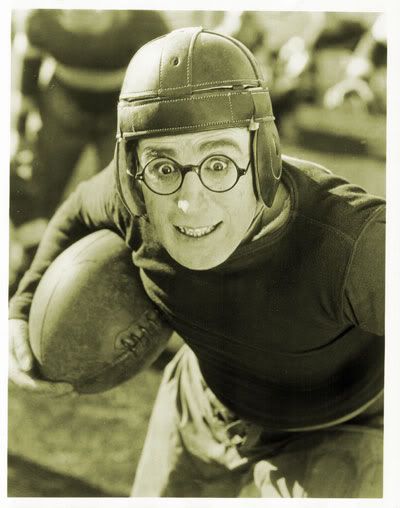
Perhaps that is too practical and pragmatic for media types. Their vision seems to be of some puck-chasing 21st-century analogs to Harold Lloyd in The Freshman populating CIS rosters. You wonder if the improved quality of play in the university game makes them nervous, since it makes it harder to justify giving it token coverage.
Instead, they talk to people who refuse to accept what they knew and loved 20, 30 years ago is gone (what a metaphor for the newspaper industry). For pete's sake, Christie's main source was retired Mount Allison AD Jack Drover.

Please. Talk about counting on the average reader's unawareness of CIS. Drover is the stodge who presided over the death of men's hockey and basketball as CIS sports at Mount A and the crippling of the football program. He folded the hockey team at Mount A over concerns of "increased professionalism" in AUS, for crying out loud.
" ... the controversial move by St. Mary's (sic) raises the hackles of Drover and others who oppose ex-pros and mature Major Junior A players being allowed to play Canadian university hockey, effectively freezing out recent high-school graduates.

" 'Most students are 18 to 23, and mostly from the regional area where the university is located," said Drover, who coached for 25 seasons and last summer retired as athletic director. 'The rosters of CIS men's hockey teams do not represent this principle. Measures must be taken to resolve this.' "
Drover did not elaborate on why why this "must" happen outside of his desire to turn the clock back to 1979:
"There has to be a decision of the athletic directors that the roster has to represent the student profile ... You get more student support if the roster (represents) the student profile instead of recruiting with the buzz phrase 'daycare provided.' "
First off, that crack about "daycare provided" is pretty rich. The student-athlete who brought the most media attention to Drover's old school, Mount A, the past couple years, football star Gary Ross, has been rightly celebrated for balancing football and school with being a married father of three. You can't have it both ways, Jack.

The way Christie's article is written also does not make if clear whether one (untenable) solution is actually being considered seriously, or was thrown out off the cuff by a source or the writer.
"One solution would be to ban ex-pros altogether and to deduct one year of university eligibility for each year of major junior hockey played. CIS executive director Marg McGregor indicated the Danton situation will cause hockey coaches to discuss eligibility guidelines at the national championships in March."
So, agreeing to weaken teams and accepting a lower calibre of play will increase attendance and student support? Also, a four-year major junior player would get one season of eligibility. Who would even bother to come?

Furthermore, there is zero cause-and-effect between the makeup of a team's roster and student support. If students aren't turning out, it's part the team's record, part poor marketing, part greater demands on students' time and part the revolution taking place with sports consumption. (That link comes from, guess where, The Globe & Mail.)

In the U.S., whether players represent the student profile is a non-factor. Go count how many of those Boise State Broncos are from actually from Idaho.

In Canada, there are dozens of basketball, football, soccer and volleyball teams whose roster fits the quote, unquote student profile. That doesn't spur student support. Winning and convincing people the gym, rink or football stadium is a fun place on a Friday or Saturday drives fan support.

It's better if a team can win with hometown kids, but it's not an end-all. It's a more-power-to-them that Carleton's Dave Smart has built a basketball dynasty with scarcely one player from outside Eastern Ontario.

By Drover's logic, Bruce Langford's Simon Fraser Clan hoops juggernaut isn't playing fair since main cogs such as Kate Hole, Laurelle Weigl and Matteke Hutzler are from Alberta and Ontario. Yeah, that's some real skulduggery, getting ambitious athletes to leave their regional area to play for a powerhouse. What's that called, again? Oh, yeah, coaching!

Meantime, men's hockey coaches work within the unique symbiotic relationship between the CHL and CIS. The CHL gets a bargaining chip in their bid to keep players away from the NCAA. Athletes have a post-junior playing option. University coaches also get the benefit of working with more physically and emotionally mature athletes.

What's not to understand? There is no way of getting the toothpaste back in the tube until such time arrives that there is a total shift in how university athletics is supported in Canada. That is way off on the horizon.

MacGregor says CIS being a destination of choice for Canadian athletes is are "All goals any Canadian will support," but we aren't putting our money where our hearts supposedly are. If that people would be pounding on their elected representatives' doors asking why we aren't funding full athletic scholarships.

Please keep in mind this is coming from a site which would benefit if CIS hockey was as big as the NCAA. Imagine if Taylor Hall, everyone's No. 1 pick in the 2010 NHL draft, was spending his draft year playing for the Windsor Lancers instead the Windsor Spitfires.

Here are the really bad parts of MacGregor:
"(W)hile this is admirable, it has the effect of sending players 20 and older into the university ranks, making it difficult for a 17-year-old freshman to crack a lineup made up of players who have already played major-junior hockey and are already mature men.

"In the case of 29-year-old Danton ... this gap between man and child is even more alarming. The notion of a still-growing high school graduate challenging a mature man with three years of NHL hockey to his credit is simply preposterous. No wonder the academically and athletically gifted Canadian high school graduate looks south before looking around home."
Seventeen-year-old freshmen (an American term, ironically) seldom crack the lineup anyway since 22-year-old seniors are bigger and stronger. By MacGregor's logic, let's restrict all CIS sports to teens, even though undergrads can easily be 22 or 23 without having done an extra year anywhere.

Ten minutes of clicking through HockeyDB reveals the truth. The "17-year-old freshman" (MacGregor) and "the kid who graduates high school on time and would like to attend university at the age of 18 and perhaps play for his school" (Cox) does not exist. Did you notice the subtle cheap shot there, implying all CIS players are academic deliquents?

The average age of Saint Mary's team this season is 23.1. The youngest player, second-year forward Andrew White, was born in 1988.

The youngest regular in the eight-team AUS in 2008-09, Dalhousie's Shawn Frank, turned 20 midway through the season (Jan. 6). The youngest player in Canada West, Alberta's J.P. Szaszciewicz, turned 20 five months before the season started. There were a handful of teenagers in the larger OUA. Strange as it sounds, if someone that age could handle the pace of the CIS game, they would be playing junior hockey somewhere.

It would have been nice if MacGregor had faced those facts, or at least done some simple math:
"As for 'professionalism,' the rules are mild — one year of eligibility lost for every year of pro — which still leaves Danton with two years eligibility for university hockey.

"A 31-year-old varsity player?"
Actually, if Danton suits up this season, his eligibility runs out in March 2011, when he is 30. That doesn't mean other 31-year-olds can't suit up for CIS teams, but someone that old playing university sports is just such a rarity.

This is getting to be a wordy and belated post, apologies. There was some uncertainly whether it was needed on a niche site such as ours. Ultimately, there had to be a response, since the traditional media blew this out of proportion and painted a false picture of hockey and Canadian Interuniversity Sport. Danton going to SMU isn't really a sports story. It's about how society accepts ex-convicts, which is more of a news story.

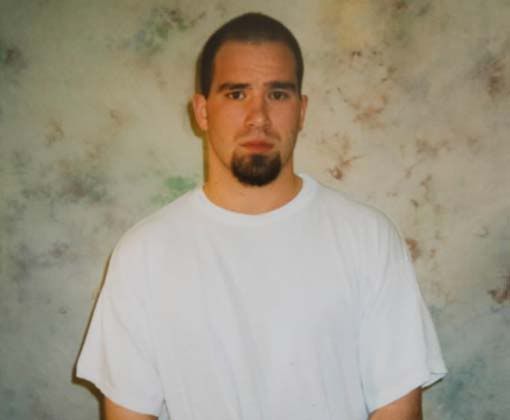
Not everyone would take the chance Steinburg (pictured) and Saint Mary's athletic director Steve Sarty are taking. As a disclaimer, this is more of press criticism than an endorsement.

Saint Mary's has staked a lot on Danton. There probably will have to be some boundaries for dealing with the media. Stienburg will have to put boundaries on how Danton, a former NHL agitator who was good for a 100-plus penalty minutes a season, conducts himself on the ice.

You do not have to be onside with this, let alone nominate them for sainthood. However, it would be great if the media worked to get past their prejudices, its guilt about the Frost saga, and tried some clear thinking. They could have at least made a token effort to understand the new reality of CIS hockey. Instead, they ended up doing a lot of talking and zero listening. Shame on them.

Related:
Former university coach assails Danton ruling; CIS team rosters, currently without age limitations, should better reflect the student profile, Drover argues (James Christie, The Globe & Mail)
Using Danton as a ringer is disgraceful (John MacKinnon, Canwest News Service)
CIS needs to use common sense about allowing 29-year-old former pro to play (Roy MacGregor, The Globe & Mail)

Wednesday, July 22, 2009

American Needle vs. the NFL: Don't be so sure

It's a fair bet that most who have picked up on the American Needle v. NFL U.S. Supreme Court case have never read farther than Lester Munson's ESPN.com story which predicted a court win in the U.S. will hasten the apocalypse. Pro sports owners "will rule the world," as Doug Farraway just said on the FAN 590, Jim Balsillie will never be able to get a NHL team, no team will be able to improve through free agency.

Smart Football described Munson's tone as "all hysterical and apocalyptic," and the The Sporting Blog also had a very reasoned rebuttal pointing out that Munson was guilty of "a misunderstanding of the economics of the thing — the NFL and other pro sports leagues already auction off television packages as collectives."

It's damn entertaining to jump to wild conclusions for the sake of a 40-minute block of all-sports radio (look, Farraway just said they might as well bring back Eddie Shore!)

The rub is many people are just hearing about this, and Munson might have spread it on thick to get attention. The way some have spoken, it's like this is a walkover touchdown for the NFL. Please. No one knows how a court is going to rule, even if the SCOTUS leans more than a bit to the right politically. The SCOTUSBlog passed on an important take-home. The Supreme Court "sought first to get advice from the U.S. Solicitor General," before it elected to take the case. That is unusual:
"Ordinarily, when everyone involved in a case, plus outsiders, agree that the Court should review it, that is quite persuasive with the Court. But the Justices are looking for some legal advice before they act.

"When the Court asks the Solicitor General for the government’s legal views on a case, it often takes months for that office to respond. The Court does not set deadlines for such briefs. The new leaders of the Solicitor General’s office in the Obama Administration will determine what schedule they plan to keep."
Long story short, in a general sense, courts do not tend to award ultimate victory to one side in these matters. They also tend to be hands-off when it comes to how sports leagues manage their affairs, even when it's a practice which would be ruled illegal in other walks of life (i.e., entry drafts).

No doubt the big ball-and-stick leagues would love to reduce their player costs and increase what they charge for tickets and merchandise. You just don't know how a court will rule.

Antitrust case could be Armageddon (Lester Munson, ESPN.com)

Monday, July 06, 2009

Sentenced to the Island ...

No doubt a lot of in-the-know people were aware what Ontario Hockey League player was convicted of manslaughter in the death of 15-year-old Manny Castillo in a high school rugby game two years ago.

Long story short, the player received a year's probation and 100 hours' community service. Canada's Youth Criminal Justice Act is what is, so one cannot say explicitly who it was. Apparently it was decided that being drafted by a certain NHL team was punishment enough. Suffice to say, if you do not want to know who the player was, do not visit Chris Botta's blog.

(Update: Does it need to be explained that it was a joke to say being drafted by a certain NHL team is punishment enough?)

Related:
The Castillo verdict: Don't press the panic button (May 28, 2009)

Thursday, June 18, 2009

McKee among allegedly bilked NHL players

Chances are, you heard something about the some 19 NHL players suing a resort developer who took their money for an estimated $25-million US. He is said to have taken their dough and used it to throw put-Caligula-to-shame parties for baseball stars, most of whom you would think do not need help getting a little somethin'-somethin'.

Anyway, the St. Louis Blues defenceman Jay McKee, a native of Amherstview west of Kingston, is among the plaintiffs, many of whom seemed to have played for the Boston Bruins, Buffalo Sabres or Washington Capitals at some point. This is probably better topic for Puck Daddy.

Related:

NHLers: Our Cash Was Blown on MLB Porn Party
(TMZ)

Monday, June 01, 2009

(Late) morning with Mr. Canoehead...

Stuff that should bounce off you like raisins off an Oldsmobile ...

Wondering how new Montreal Canadiens coach Jacques Martin will handle the insatiable Quebec media after being in a southern U.S. city and big-small-town Ottawa for so many years. Roy Mlakar won't be there to ride herd.

Hockey fans who complain "superstars get all the calls" in the NBA when the NHL did not suspend Penguins star Evgeni Malkin for starting a fight in the last five minutes of the game. Jeff Blair's suggested title for Colin Campbell: "NHL Vice-President and Director Of Figuring Out What’s A Cheap Shot." The greasiness was compounded by the fact the NHL announced Malkin was off the hook via a press release at 11:48 p.m. (literally, the 11th hour.)

Michael Vick being a contentious issue, while there is a barely a peep about current Atlanta Falcons player Quinn Ojinnaka being allowed to play in the NFL after he allegedly "spat at his bride, tossed her down some stairs and then threw her out of their Georgia home in the wee hours."

What Vick did was carried out over a number of years, but it's not as if striking a woman is completely random. Take it away, Bud Poliquin:
"What Vick, Ojinnaka's former Atlanta teammate, did to become a pariah will forever and properly be considered heinous. Training dogs to fight, and then executing those who don't win, is certainly reprehensible . . . and Vick has the shattered life, career and finances to prove it.

"But at the end of the day, shouldn't battering people be more prominently placed in the great photo of disgraces than any act of abusing (and, yes, killing) dogs? And isn't battering people made even more abominable when the alleged batterer is a 6-foot-5, 305-pound man, and the identified batteree is a woman of significantly less height and ballast?
The knowledge that HBO, which passed on Mad Men and Breaking Bad, has given Joe Buck his own show.


Conan O'Brien debuting tonight as host of The Tonight Show. The commitment NBC has made to Conan is truly amazing. They've given him the best lead-in that petty jealousies can buy.

(Lord, please forgive anyone whose reaction to seeing Jay Leno sign off last Friday night was to scream at the TV, "The show should have gone to Letterman in the first place!" The line of succession should have gone Carson-Letterman-Conan. It's a pain that never ends.

It's a sin to say that about Leno. Like Stewie Griffin once said, the fact is the man is out there every night with fresh material and he's charming.

Last but not least, having to be the guy who makes this joke: "Kingston Frontenacs defenceman Erik Gudbranson was taken in the Continental Hockey League draft today. Playing in Russia would be an easy switch since he's already in junior hockey's Siberia." So much for trying to quit making Frontenacs jokes.

(Kingston's own Taylor Hall was taken too. Three OHLers were taken and two had Kingston ties. Crazy.)

Thursday, May 28, 2009

The Castillo verdict: Don't press the panic button

There a couple ways to go with the story about "a major junior hockey player with an Ontario Hockey League team" (Toronto Star) being convicted of manslaughter in the death of 15-year-old Manny Castillo in a high school rugby game two years ago.

The first is to tell people not to panic about ramifications for collision sports. The fallout could be positive, if this leads to a more no-nonsense approach with regard to aggressive behaviour, without veering into nanny-state tactics or zero tolerance. Like Jason Whitlock says, "Social agenda does not trump truth." The second, since everyone has a little of the dirty gossip in her or him, is to wonder who is the hockey player; and wonder if hockey should get off scot-free in this since the killer presumably would have had to spend more time on the ice than on a rugby pitch to become a top-level player. (Wondering who it is not that important.)

Please keep in mind will have an impact in future cases, since Canadian jurisprudence is founded on the rule of precedent (which is why it's somewhat immaterial if the victim's parents did not wish to see the killer prosecuted; what if it happens again?). One practical application might be in terms of how much liability insurance cash-strapped schools have to carry in order to have a football, hockey or rugby team. As well, if this ruling had come 10 years ago, Todd Bertuzzi's fate could have been different:
" 'The force applied by the defendant was not within the rules of the game ...' the judge said. '... dangerous play inside or outside of the rules is not acceptable ... The defendant intentionally applied force that was outside the rules of the game or any standard by which the game is played. Manny did not explicitly consent to that force, and I am satisfied beyond any doubt that no such consent can be implied.' "
However, for our understanding here needs to be balance between realizing unchecked aggression which cost Castillo his life has no place in sports, but aggression will always have some place. Athletes need to go into a game realizing there are limits. It's not clear if Castillo's killer had listened to that lesson.

It is notable what the rugby coach at the victim's school, Lorne Park Secondary, said to The Star about how this should be handled:
"Coach Peter Mashinter said he could not support a review of contact sports in high school.

" 'It's all about preparation. You need the right people and experienced people,' he said. 'What happened (with Castillo) was an isolated incident. I don't think we need to drastically change things now.

" 'It's the coach's, players' and referee's responsibility to keep things in control. If you have a proper, disciplined team that plays the game the way it should be played, sure there will be injuries, but it will be played right.' "
That would be scoff-worthy if it was said by a hockey guy, complete with the usual word-vomit about "listen(ing) too much to outside influences when they don't know the spirit of the game, the culture of the game."

A honest, heartfelt belief is that people in football and rugby have been doing a good job with taking preventative measures. Football has cracked down on blows to the head, on dangerous tackling techniques that have caused paralysis or death (leading with the head).

As for rugby, Canada's men's national team coach, Kieran Crowley, was also quoted saying he couldn't recall an on-field fatality in his sport. It bears noting rugby, which sort of has that old-boys spirit about it yet has been much more welcoming to girls and women playing, is less imbued with the Domination Culture (hat tip: Chuck Klosterman) that imbues hockey and the Big 3 American team sports. There's more of an all-for-one spirit, a principle that you don't take advantage of a physically weaker or less experienced player. (One of the fascinating parts of rugby is that when the referee stops play, he or she will often explain to the players what they were doing incorrectly.)

The point is there will have to be some measures taken, but honestly, this was isolated. People are smart enough to realize Manny Castillo's death was somewhat isolated, and it's not cause for high schools to stop offering collision sports.

(As a sidebar, yes, one can wonder who is the player. The Globe & Mail story notes, "He has short blond hair." He is 18 years old, from Mississauga and would have started playing in the OHL after the assault occurred in 2007, since major junior teams typically bar players from taking part in other sports where they could incur an injury. That's as far as I'm willing to narrow it down.)

Related:
Teen guilty in rugby death (Bob Mitchell, Toronto Star)
Teen rugby player guilty in game death; Judge rules ‘playing field is not a criminal law-free zone' (Globe & Mail)

Friday, May 22, 2009

He's paid his debt, but there could be Bills in his future

In case you were wondering where any loose talk about the Buffaronto Bills signing Michael Vick sprang from (The Score's Tony Ambrogio mentioned the possibility during a report from the team's mini-camp), there was an item about on Pro Football Talk.
"The Bills want to win. Now. Whether it’s because owner Ralph Wilson is feeling a Leon Hess-style sense of urgency or whether coach Dick Jauron feels a Rich Kotite-style sense of urgency or a combination of both, the Bills are going all in.

"They offered receiver Terrell Owens $6.5 million guaranteed at a time when no one else was willing to pay him $6.50.

"And a league source tells us that the Bills made a very aggressive play for defensive end Jason Taylor immediately after Taylor was cut in March by the Redskins.

"... As to the potential backlash from signing Vick, consider the fans' reaction to the arrival of Terrell Owens.

He's already gotten the key to the freaking city."
Be that as it may, Vick is probably an even-money met to eventually return to the NFL. Even the New York Daily News is onside with letting him back into the league. The recently retired coach Tony Dungy, who is pretty non-threatening, has kind of become his advocate, taking up Vick's cause in the media with appearances on The Dan Patrick Show and an article in S.I.

Incidentally, on the subject of crimes and misdemeanours committed by NFL players (it would be nice if all those products of Domination Culture who run the 40-yard dash in 4.5 seconds and throw themselves around with reckless abandon were also wired to stay on the straight and narrow, but that ain't happening), the league is being reactive about the frequency of players arrested for ddrunk driving. A San Diego Union-Tribune story said earlier this month claimed there 73 players on NFL rosters who had been stopped for drunk driving. That's two players per team, about 4% of the league.

The league's efforts could be part of greater awareness that getting behind the wheel while impaired is such an anti-social act (remember the PSA which likened driving drunk to pointing a loaded gun at a room full of people?). The Ontario government recently increased the penalty for people who blow just .05, just below the legal limit of .08. It doesn't do any good to get sucked into a debate about what's worse, dog fighting or drunk driving (so just don't), but it's odd where the line gets drawn..

Anyway, getting back to Vick, the Jacksonville Jaguars said yesterday they are not interested in signing him. Of course, the other team with a feline-derived nickname, the Carolina Panthers, are more commonly known as the 'Cats. That meant ruling out the headline, "Dog killer won't play with Cats."

(So, so sorry. Going on about 3 hours' sleep.)

Related:
Keep An Eye on Buffalo As A Mike Vick Destination (Pro Football Talk, May 19)

Friday, May 01, 2009

Guy Lafleur: Two minutes for piling on...

It is tough to be the parent of someone who is an adult in the eyes of the legal system and a child in seemingly every other sense.

Please keep that in mind when you read about Quebec hockey legend Guy Lafleur being convicted of giving contradictory evidence during his troubled son's bail hearing. It's the difference between showing sympathy and showing compassion. It is the easy way out for anyone who's in the media (which is all of us) to just to do a drive-by on him. It is a valid news story, but there are lines that should not be crossed and frankly, this is one of them.

It's acceptable that it's real journalistic dynamite whenever a big sports star is found to have feet of clay. Guy Lafleur was the last transcendent Montreal Canadiens goal scorer who radiated that Gallic élan, and he certainly has lived his life in the public spotlight. Despite all that, a gut feeling is that regaling oneself over this crosses the line. Having a troubled adult son to deal with is the ultimate Catch-22; do you try to rescue her or him, do you show tough love, do you cut 'em loose?

One can only assume what has gone through Guy Lafleur's mind during this ordeal. He isn't the first big sports star whose progeny had trouble sticking to the straight and narrow, or secreting their own identity. Mark Lafleur isn't the first person to have trouble after being given everything by his parents, especially since he has Tourette's Syndrome.

Honestly, though, this is for them to sort out, not for some cheap yucks. Hey, you know the saying: As long as they spell your name right.

Related:
Guy Lefleur's Idiot Son Gets His Old Man In Trouble With The Law (Dashiell Bennett, Deadspin)
Guy-lty (Four Habs Fans)

Monday, April 20, 2009

Top 5: Splendid spliffers...

It is 4/20, so apropos of that, there should be a Top 5 of sports' greatest stoners.

Few are taken aback by pot-smoking anymore, and paraphrasing North Dallas Forty, which came out in 1979, players take much stronger stuff just to get out of the locker room. Even conservative judges think it's totally bogus the U.S. government won't allow for medicinal purposes, which raises the question why the hell it was front-page news when a picture surfaced of the Olympic swimmer of Michael Phelps sucking on a bong. Talk about cognitive dissonance.

Any athlete who breaks this fourth wall always ends up taking heat from his bosses and having to put up with ridicule from dealers in the small joke trade.

The point is, there have been a more than a few athletes who were partial to the wacky tabaccy. Maybe a few kids read this and realize, hey, pro athletes are human, they have vices too. We're all a little screwed-up. Robert Parish, the erstwhile Chief of Boston Celtics fame, was left off this list, but there's plenty of others.

MARK STEPNOSKI, NFL offensive lineman

The five-time Pro Bowl centre enjoyed a long and productive NFL career with the Houston Oilers and Dallas Cowboys, and upon his retirement in 2001, became head of the Texas chapter of NORML, the National Organization for the Reform of Marijuana Laws. He said he'd started smoking in high school, often to help him relax after games. Stepnoski's explanation was as straightforward as the Cowboys' famed lead draw play to Emmitt Smith: "I'd rather smoke than take painkillers."

FERRIS FAIN, baseball player

An oldie but a goodie. Fain was a two-time American League batting champion, winning in 1951 and '52 with the old Philadelphia Athletics. He didn't hit very many home runs, but his numbers suggest he had plate discipline out the yin-yang, since his career on-base percentage was .424 (he even led the league in OBP one season, when Ted Williams was off flying planes in the Korean War).

Thirty years after leaving baseball, though, Fain, was twice arrested for growing marijuana and eventually did 18 months in a California state prison. He played the moral-relativism card, though, telling reporters in 1994:
"I never abused or shot anyone. I was just trying to make a buck. What I did was far less harmful than a bartender getting you boozed up and then letting you out on a highway where you might kill someone. I know how bad that stuff can be."
JOSH HOWARD, NBA forward

Granted, some would say, "The Entire NBA" should get a spot on its list. That's more of a commentary on how we tend to believe the worst about public figures. They show less and less of their true personalities and have a legion of professionals paid to highlight their good qualifies, so it's only human nature.

Howard broke a fourth wall a while ago when he straight-up told Michael Irvin, then of ESPN, that he smoked marijuana. He didn't even act like it was a big deal: "I just let him know that most of the players in the league use marijuana and I have and do partake in smoking weed in the off-season." In other words, Josh Howard should be rewarded for his honesty. It's like something Bryant Gumbel once said, We complain about guys giving cookie cutter answers to questions, and then there is outrage when someone speaks his mind

Estimates of how many players smoke range from 30 per cent (2005 Rocky Mountain News survey) to 60 per cent (2001, then-Raptor Charles Oakley).

RICKY WILLIAMS, NFL running back

Many fans have felt a kinship to Williams, the walking contradiction who projects a blissed-out hippie mien even though he's one of the top power runners in NFL history. It's a good reminder that people can't be put into small boxes, although any time before about 2005 or '06, you would have got your ass kicked for suggesting it.

Williams was said to have tested positive for marijuana four times, which ultimately led to him being suspended by the NFL and having to come up to Canada for a one-season sojourn with the Toronto Argonauts. The fact the NFL considers weed a banned substance is kind of strange. No This is the league where fans and media react to a player getting a four-game ban for steroid use pretty much the same way they do when someone's out a month with an injury.

RANDY MOSS, NFL wide receiver

Being a New England Patriot and catching touchdown passes from Tom Brady has helped erase the rough edges around the most prominent graduate of Rand University. At the end of the day, if you win, people look at you differently. That's what is.

Moss, who's been this ass-talker's favourite football player since 1996, his freshman year at Marshall, had the exact opposite of the Midas touch during his years as a Minnesota Viking. There was the squirting of an official with a water bottle, bumping a meter maid with his car, the mock mooning, the "I play when I want to play" and last but not least, being honest with Gumbel during a 2005 interview.
"I have used, you know, marijuana ... since I've been in the league….But as far as abusing it and, you know, letting it take control over me, I don't do that, no ... hopefully ... I won't get into any trouble by the NFL by saying that, you know. I have had fun throughout my years and, you know, predominantly in the offseason."
That's pretty much forgotten now, as Moss has image-rehabbed his way to a bust at the Pro Football Hall of Fame. Point being, he smoked weed and he's still considered a consummate professional, one of the best to ever play the game.

So, to all you kids out there, now that you know you can do it and still take care of business, please, don't do it.

Tuesday, March 31, 2009

Last thing he'll wanna do is hang around there

Mike Danton is apparently back in Canada and in a jail that is not so far from his tormentor, Dave Frost:
"After petitioning to be moved to a Canadian prison since 2005, Danton finally got his wish on March 19th as he was transferred to Kingston Penitentiary.

"Under Canadian law, Danton is now eligible for full parole."
Anyway, the Hockey God should have plenty to say.

(Update: Kingston reporter Rob Tripp, who's a digger if ever there was one, says Danton's likely at Millhaven Pen. But was it Millhaven Maximum Security?)

Related:
Danton transferred to Canada, now eligible for parole (TSN.ca)

Wednesday, March 11, 2009

Sympathy for the devil ...

Seeing the Guy Who Traded Gretzky up on fraud charges touches on the validity of ultimate charity.

The erstwhile Peter Puck has spent the last 30 years passing the buck, usually leaving someone else to do the clean-up — like the Canadian Deposit Insurance Corporation had to do in the 1980s when it forked out $359 million after Fidelity Trust Co. went under (Brent Jang, reportonbusiness.com, Dec. 23, 2008), or when the Alberta government spent more than $200 million during the 1990s on a bailout for his meat-packing company. That's the ugly side of his self-styled, free-wheeling entrepreneurship. Another truth is that it was capitalists such as Pocklington, Ben Hatskin in Winnipeg, Marcel Aubut in Quebec and Howard Baldwin in Hartford who, as the owners of the World Hockey Association teams which came into the NHL in 1979, helped make over a staid sport, for a time. There's forgiveness, we're just arguing how small a degree.

What Peter Pocklington is accused of doing — hiding assets during a bankruptcy proceeding. It is relatively penny-ante, compared to say, Bernie Madoff, but keep in mind that such malfeasance don't push people's buttons like violent crime.

The kicker, though, is that Pocklington's financial pinch was reported exhaustively by The Globe & Mail 10 weeks ago. It opened on with a recollection of the day last July when a burned former business partner named Naomi Balcombe and three U.S. marshals seized several of his assets, leaving his condo "as bare as Whoville in the wake of the Grinch." Thing is, few sports junkies, present company included, took much notice. It was two days before Christmas and the public appetite for seeing the mighty having fallen probably wasn't what it is today.

Today is really an epilogue. It sort of speaks to the amusing side of this, that it's actually hard to put down feelings of sympathy toward Peter Puck. He's 67 years old, he might end up doing hard time and he's reaped the whirlwind of the greed-is-good mantra that's permeated our society for the past three decades. Now we're in a fix and he's in a worse one. It looks good on him, but don't forget how we, by our actions, turned a blind eye to such behaviour for so long. Ultimately, to hell with him, it's okay to enjoy seeing him taken down. It's part of a great cleansing.

Related:
Ex-Oilers owner Pocklington charged with fraud (Canwest News Service)
Peter Puck's last stand (Brent Jang, Globe & Mail Report on Business, Dec. 23, 2008)

Wednesday, February 04, 2009

Tech, Money & Sports: Michael Phelps vs. The United States of Idiocracy

I've had it. That's it. I'm done.

To borrow a phrase from one of my favourite blogsters, Chez from Deus Ex Malcontent, just get out the guillotine for those who are attacking Michael Phelps. Or find some industrial strength twine and sew up their mouths. In Obama's World, morons across America (and Canada) need a collective, very hard kick in the ass.

It's not news anymore that eight-time Beijing Olympic gold medalist Michael Phelps was caught with a bong. I won't go into the pros or cons of pot smoking, or whether this was simply misplaced youth having too much fun during an age of omnipresent digital cameras and viral news stories.

It's more likely that Phelps – a man-child of epic proportions who has been one of the very few bright spots for America on the world stage as of late – was simply careless or naïve enough to not realize how careful an international celebrity like him has to be when it comes to letting loose. After all, this is America we’re talking about: A country that loves to tear them down as fast as they rise up.

One false move, one ill-advised photo and it’s over. Human nature dictates we're more likely to remember one single bad thing than a thousand (or in this case, 14, counting Phelps' six golds in Athens in 2004) good things a person has done.

Unfortunately for Phelps, he’s caught in the perfect storm of a) being an alleged role model, although it’s highly debatable if athletes have any obligation whatsoever at being role models simply because they’re athletes; b) a very successful Olympian, and c) caught smoking weed.

Of course, none of this is about morality, in spite of what shrill Ann Coulter-wannabe Elizabeth Hasselbeck (full disclosure: if I were Keith Olbermann, she’d be on my personal list of Worst People in The World everyday) thinks. Her bully pulpit on The View notwithstanding, she and the reactionary forces at work in the Richland County (S.C.) Sheriff’s Office seem in a time warp when it comes to pot use.

Pot use in North America is rising, not declining. Walk-of-life folk openly support and watch corporately made stoner comedies such as Harold and Kumar Go To White Castle, Knocked Up or Pineapple Express.

Most people with even a modicum of common sense aren’t going to get too wrapped up over a guy toking up when they might do it themselves (if Phelps was caught, say, doing a bump or shooting up, we wouldn’t be having this conversation, would we?). Hell, it’s even arguable that pot smoking is hardly a behaviour that should be condemned in comparison to the incredibly unhealthy behaviour of Phelps eating McDonalds' every day (funny how McDonalds is also a major Olympic sponsor, of course).

Naturally, this has everything to do with money.

Phelps is perhaps the single most influential brand mover – to borrow marketing lingo – in global sports today, aside from David Beckham, Ronaldo and possibly Derek Jeter. He has global reach with his supported brands – especially in, of all places, China (hey, the Chinese really took to Phelps even while he crushing the mostly Chinese competitors, strangely enough).

Sure, Phelps’ corporate image is no longer squeaky clean or predictably dull (only Corporate America could possibly think predictably dull is a sure-fire approach to business). But this isn't a bad thing for Phelps. He’s humanized himself beyond the superhuman feats he accomplished in Beijing. He’s more real now than he’s ever been before.

So far, Phelps’ sponsors like VISA are sticking by him. Sensible, intelligent sponsors will see this for what it is: a young guy who let loose for the right reasons at the wrong time.
